
Direct Answer: A dental estimate is a projection based on what your insurance reports about your plan that day. The final bill reflects what the plan actually paid after the claim is processed.
You walked out of the office with a printed treatment plan and a number at the bottom. A few weeks later a statement shows up with a different number, and your first thought is that somebody made a mistake.
Almost nobody explains this part to patients, so here it is plainly. A dental estimate is a projection, built from what your insurance company reports about your plan on the day we ask. It is not a bill, and it is not a promise from the insurer.
My position after years of these phone calls: for anything bigger than a filling, ask for a pre-treatment estimate in writing before you schedule. Insurance questions make up a steady share of the calls that come into our office off Frank Lloyd Wright Blvd, and the gap between two numbers almost always traces back to one of four ordinary causes. I’ll walk through each one so you can look at your own paperwork and spot which applies.
What a dental estimate actually is, and what it isn’t
When you sit down at checkout, the front desk is doing something fairly mechanical. They take the procedure codes for the planned work, pull up what your plan reports as its coverage percentages, subtract what the plan says you have left, and show you the difference.
That math is only as good as what the insurance company tells us that day. Plans update, employers change contracts mid-year, and a claim from another office can post a week later and change everything.
So the estimate is a careful projection of your share. The final bill is what is left after your plan actually processes the claim and reports what it paid.
This is also why I push our team to get estimates to patients promptly and in writing. One Scottsdale patient put it simply in a review: “They were timely at giving my estimate to me as promised.”
A few things worth knowing about how that number gets built:
- Coverage percentages are reported by the plan, not set by the dental office
- Your remaining annual maximum is a moving target that updates as claims post
- Live benefit checks catch most surprises, which is why we verify coverage while new patients are still on the phone
- Nothing is final until the claim comes back
Reason 1: Your plan pays toward a cheaper material than the one in your mouth
This one catches more North Scottsdale patients than any other, and it has a bland industry name: alternate benefit, sometimes called a downgrade.
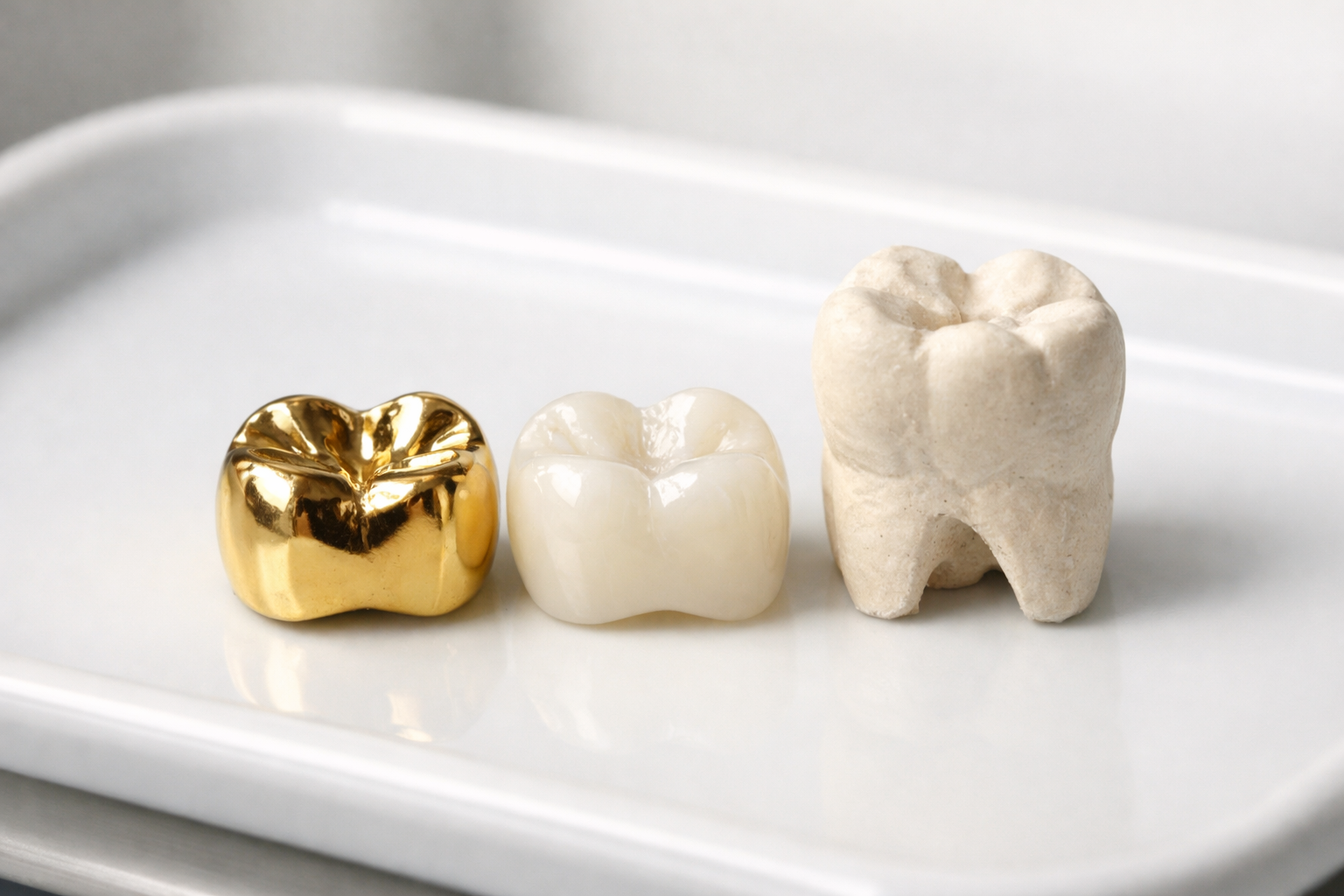
Here is how it plays out. You need a crown on a back molar. We recommend a stronger, better-looking material because of where the tooth sits and how you bite. Your plan covers crowns, but it only pays at the rate of a less expensive material.
The tooth gets what it needs. Your plan just contributes less than you assumed, and the difference lands on you.
You’ll see the same thing with fillings. Many plans still pay toward silver amalgam on back teeth even when a tooth-colored composite is placed.
None of this means anyone did something sneaky. It means the plan has an opinion about materials, and that opinion lives in your plan documents rather than on the estimate.
If material choice matters to you, it’s worth understanding that not all dental crowns are the same before you decide. Ask the office directly: does my plan apply an alternate benefit to this code?
Reason 2: Your annual maximum was smaller than you thought
Most dental plans cap what they will pay in a benefit year. Across the general market, that cap commonly falls somewhere in the $1,000 to $2,000 range, and it has barely moved in decades. Your own number is in your plan documents.
Here’s the part that trips people up. Unused benefits do not roll over. And earlier claims in the same benefit year quietly eat into the cap before you ever sit down for the big work.
Industry research suggests only around 2.8 percent of PPO members ever reach their annual maximum, which means most patients have no instinct for how fast a crown or an implant consumes it. The CareQuest Institute has estimated that roughly 32 million U.S. adults have dental needs that exceed their plan’s annual limit, and nearly half of those who hit the cap say it stopped them from pursuing more treatment.
That math matters in a city with Scottsdale’s age profile. The median age here sits near 49, more than ten years above the national median, with something like 64,000 residents aged 65 or older. That is exactly the age band that needs crowns, implants, and periodontal maintenance in the same year.
If you’re already close to the ceiling, here’s what happens when your plan maxes out mid-treatment.
Reasons 3 and 4: Timing rules and what we find once the tooth is open
Frequency limits and waiting periods are the third cause. Plans decide how often they will pay for a service, not whether you need it.
Two cleanings per benefit year is typical. Crowns often carry a five to seven year replacement clock. New plans frequently have a waiting period before major work is covered at all.
When a claim gets denied under one of these rules, the plan is not saying the treatment was unnecessary. It’s saying too soon. That wording difference matters when you call to ask about it.
The fourth cause is the honest one. Sometimes the work changes once the tooth is open.
We plan from an exam and X-rays, and those tell us a lot. But decay under an old filling can run deeper than the image suggested, and a tooth planned for a filling sometimes needs a crown instead. A different procedure code means a different number.
When that happens, you should hear about it before we proceed, not on a statement. If a plan ever feels like it changed without explanation, a second opinion visit on a crown or treatment plan is a completely normal thing to ask for.
Four Reasons a Dental Number Moves, Side by Side
Use this to match what you’re seeing on your own statement to the cause behind it.
| What happened | What it looks like on paper | What to ask the office |
|---|---|---|
| Alternate benefit (downgrade) | Plan paid a lower amount than the estimate for the same procedure | Does my plan downgrade this code to a cheaper material? |
| Annual maximum used up | Plan paid partial or nothing late in the benefit year | How much of my annual maximum is left today? |
| Frequency limit or waiting period | Claim denied as too soon, not as unnecessary | When does my plan allow this service again? |
| Treatment changed during the visit | A different procedure code appears than the one estimated | Can I see an itemized breakdown by code? |
The Tool Most Patients Never Ask For By Name
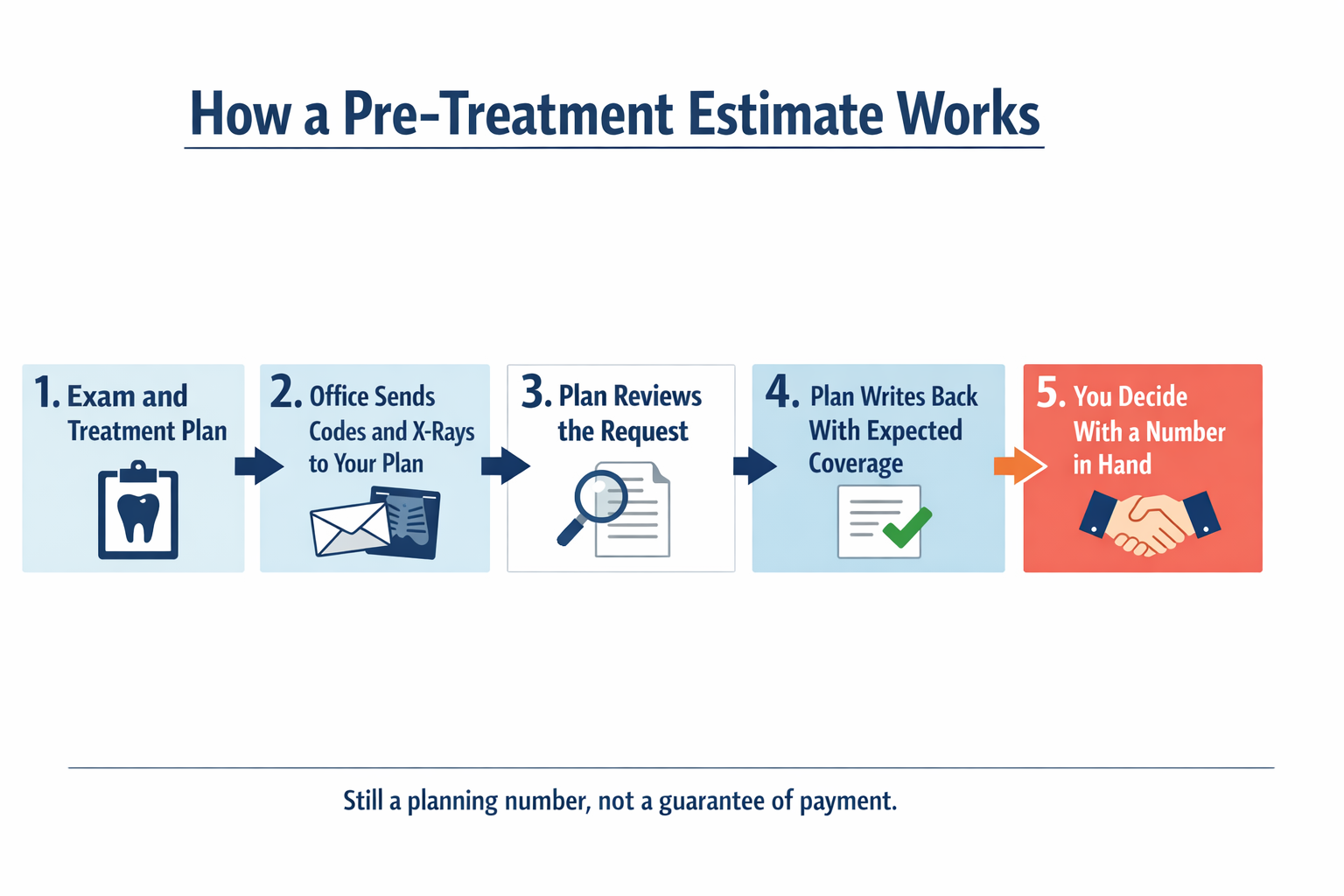
A pre-treatment estimate puts the plan’s expected payment in writing before any work starts. Here’s how the process runs.
Ask for a pre-treatment estimate before the big stuff
A pre-treatment estimate, sometimes called a predetermination, is when the office sends the proposed treatment and any needed X-rays to your plan before the work starts. The plan writes back with what it expects to cover.
Here is the sentence to say, whether you’re calling an office in the Shea Corridor, McCormick Ranch, or anywhere else in the Valley:
“Can you submit a pre-treatment estimate to my plan before we schedule this?”
It’s worth the wait for:
- Crowns, including same-day crowns for patients who qualify
- Single implants and full-arch work
- Veneers and staged cosmetic treatment
- Anything spread across several visits
It mostly just delays care for a routine cleaning or a small filling, where the coverage is predictable and the dollars are smaller.
I’ll be straight about the limit. Even a pre-treatment estimate is a planning number. The carrier’s own patient handout says so, noting that a predetermination is not a guarantee of final payment because eligibility and remaining benefits are confirmed when the actual claim is processed.
Still, it closes most of the gap. And it turns a vague answer into something you can read.
Why the calendar changes the number in Scottsdale
The same treatment plan can produce two different patient portions depending on which side of January 1 the work lands. This market is unusually sensitive to that.
If you’ve barely touched your benefits and the year is almost over, starting now may let you use this year’s maximum and next year’s on staged treatment. If you’ve already used most of the cap, waiting a few weeks can save you real money. Here’s where unused benefits actually go on December 31.
We can only model that once we know what your plan has already paid out this year. That’s the first thing to ask about.
Winter residents add a wrinkle. People arriving from late October through March are often working with a benefit year that started somewhere else, under a plan from a home state. If that’s you, what fits in a four-month Scottsdale stay is worth reading before you plan treatment.
And if you have no plan at all, you’re not stuck. One caller recently asked whether we had a savings plan for an uninsured family member, which is a very common question here. Membership plans work differently than insurance, and the office can share current figures.
The bill already landed and it’s bigger than expected. Now what?
Calling to ask about a charge is a normal phone call, not a confrontation. Most of these get resolved in a couple of minutes because the front desk can pull up your account while you’re still on the line.
Work through it in this order:
- Ask for an itemized breakdown by procedure code, not a total
- Put it next to the explanation of benefits your plan mailed you
- Find the line where the plan paid differently than predicted
- Ask whether the claim can be resubmitted with more documentation, like additional X-rays or clinical notes
Money moves the other direction too. When a plan pays more than predicted, you’re owed a credit or a refund.
One patient called our office about a charge on her card she didn’t recognize. It turned out to be an insurance payment, not a billing problem, and the whole thing took one short conversation.
Another called the day after her visit because a receipt she’d been promised hadn’t arrived. We emailed it while she was on the phone. These are the calls we’d rather get than have somebody stew about a number for three weeks.
Frequently Asked Questions About Dental Estimates and Final Bills
Is a dental estimate legally binding?
No. An estimate reflects what your plan reports at the time it’s created. The binding number comes after the claim is processed and the plan reports what it actually paid.
How long does a pre-treatment estimate take to come back?
It varies by carrier, but a few weeks is a reasonable expectation. That’s why it makes sense for crowns, implants, and staged work, and usually doesn’t make sense for a cleaning you need next month.
My claim was denied as too soon. Does that mean I don’t need the treatment?
Not at all. Frequency limits and waiting periods are contract rules about how often a plan will pay, not clinical judgments about your tooth. You can still have the work done and pay the difference, or wait until the plan’s clock resets.
Why do you verify my insurance on the phone before scheduling?
Because it saves everyone a surprise later. Checking benefits live while you’re still on the call means the estimate you get is built on today’s information rather than last year’s, and you can make a decision with real numbers instead of a guess.
What if I can’t afford the portion the plan doesn’t cover?
Say so out loud. A treatment plan can often be sequenced so the urgent work happens first and the rest follows in a new benefit year. For patients without insurance, a flat-fee membership option exists, and the office can walk through what’s included and what it currently runs.
Want the number in writing before you decide?
If you’re weighing treatment and the cost is the part holding you up, that’s a reasonable place to pause. Our office on Frank Lloyd Wright Blvd in North Scottsdale can verify your benefits, explain what your plan is likely to pay, and submit a pre-treatment estimate before anything gets scheduled. You’re welcome to call 480-621-4040 or visit trinitydentalcares.com when you’d like to talk it through.