
Direct Answer: A second opinion on a dental crown is a fresh exam. A new dentist reviews your written plan and X-rays, takes new images if needed, checks your bite, and explains what they see.
Almost every second opinion call I take starts the same way. Someone walked out of a dental office holding a printed treatment plan, sat in their car in the parking lot, and something about it did not sit right.
Sometimes it is one crown. Sometimes it is a root canal plus three or four restorations quoted all at once, and the number at the bottom of the page is the part that stopped them cold. One caller from the Shea Corridor said it plainly: she was getting a second opinion on a crown from another dentist and wanted a fresh set of eyes.
That is a normal thing to ask for. Below I will walk through what records to gather, why two honest dentists can look at the same tooth and land in different places, what the visit itself involves, and how the fee and insurance side usually works around North Scottsdale.
Wanting a Second Opinion on a Dental Crown Is Normal, Not Disloyal
People worry that asking for another look is some kind of betrayal. It is not. Dentists request and send records for each other constantly, and a good portion of the phone traffic at our Frank Lloyd Wright Boulevard office is exactly that: offices trading X-rays and chart notes for shared patients.
Second opinions come up most often when:
- The plan involves more than one or two teeth at once and the total feels overwhelming
- The tooth in question does not hurt and never has
- The recommendation changed after switching to a new office or a new provider at the same office
- A crown or filling was placed recently and is already being called a problem
- The patient felt rushed and did not get to ask questions
None of those mean the first dentist was wrong. They mean you have a question that has not been answered yet. Patients across Paradise Valley and McCormick Ranch do this with cardiologists and roof estimates without a second thought, and teeth deserve the same care.
If you want the background on why crowns get recommended in the first place, it helps to read what a crown recommendation actually means before you sit in a second chair.
Get the Plan in Writing and Request Your X-Rays First
This is where most people stall out, and it is the easiest part to fix. You are entitled to copies of your own dental records and images, and asking for them is a routine request, not a confrontation.
Call the first office and ask for two things:
- The treatment plan in writing, with tooth numbers listed for every recommended procedure
- Copies of your recent X-rays, sent digitally to the second office or emailed to you
Tooth numbers matter more than people expect. Without them, you end up comparing two plans that both say “crown on an upper molar” and you cannot tell whether the dentists are even talking about the same tooth.
On imaging, there is a shelf life. If your X-rays are more than several months old, or if the images are low quality, the second office will most likely take new ones anyway. Bitewings and a focused image of the tooth in question are usually enough for a crown question.
One more note for anyone driving in from Scottsdale Mountain or the Village at Frank Lloyd Wright: request the records a few days ahead. Front desks handle these all day, but they are not instant.
Why Two Honest Dentists Can Disagree About the Same Tooth
This is the part patients find genuinely reassuring, so I explain it early in the visit.
Research published in the Journal of the American Dental Association surveyed 1,777 dentists and found real variation in how likely they were to recommend a single crown. For a back tooth that already had a root canal, agreement was close to total, around 94 percent. But when the question was how large an old filling has to get before a crown makes more sense than another filling, opinions spread out considerably.
That same study also found dentists in the Southwest were more likely to recommend a crown than dentists in other regions. If you live in Scottsdale and you are comparing two local opinions, that is worth knowing rather than guessing about. You can read the published research summary on crown recommendation variation yourself.
So what is actually driving the difference? Usually philosophy about how much healthy tooth structure to preserve, and how much risk of fracture a dentist is willing to sit with. A more conservative dentist may want to rebuild and watch it. A more protective dentist may want to cover the tooth now, before a cusp snaps off and the repair gets bigger.
Both are defensible positions. Neither one makes the other dentist dishonest.
What to Bring to a Second Opinion Visit
Showing up with these four things turns a vague conversation into a specific one. Most of it takes one phone call to gather.
| What to Bring | Why It Matters | How to Get It |
|---|---|---|
| Written treatment plan with tooth numbers | Lets both dentists discuss the exact same teeth | Ask the first office for a printed or emailed copy |
| Recent X-rays | Shows what the first dentist was looking at | Request a digital transfer between offices |
| Your symptom history | Pain, cold sensitivity and biting pain change the diagnosis | Write down when it started and what triggers it |
| Your insurance card and plan name | Determines whether a second exam is covered this benefit period | Have the card handy when you call to schedule |
What Happens During a Second Opinion Appointment
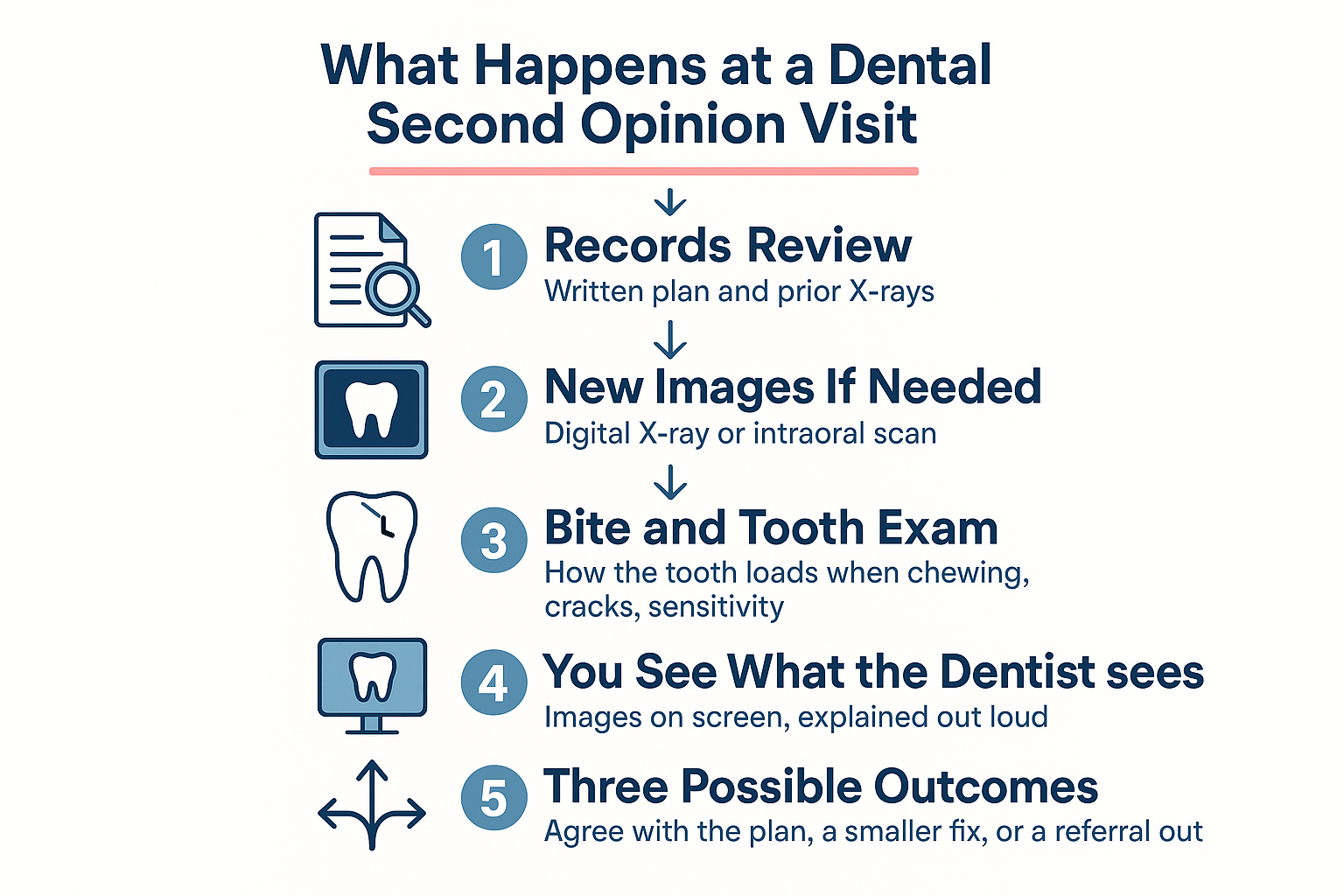
Here is the sequence most second opinion visits follow, start to finish, so you can picture it before you walk in.
What the Visit Itself Looks Like
A second opinion appointment is a real exam, not a quick glance. Here is the shape of it.
We start with your records and your story. Then, if the imaging is old or incomplete, we take new digital X-rays or a scan of the area in question.
From there the exam focuses on the tooth and how it works:
- How the tooth is loaded when you chew and whether the bite is putting extra force on it
- Whether there are crack lines, wear facets, or a cusp that flexes under pressure
- How much natural tooth is left under the existing filling
- Cold and bite testing if there is any sensitivity
- The health of the gum and bone around the tooth
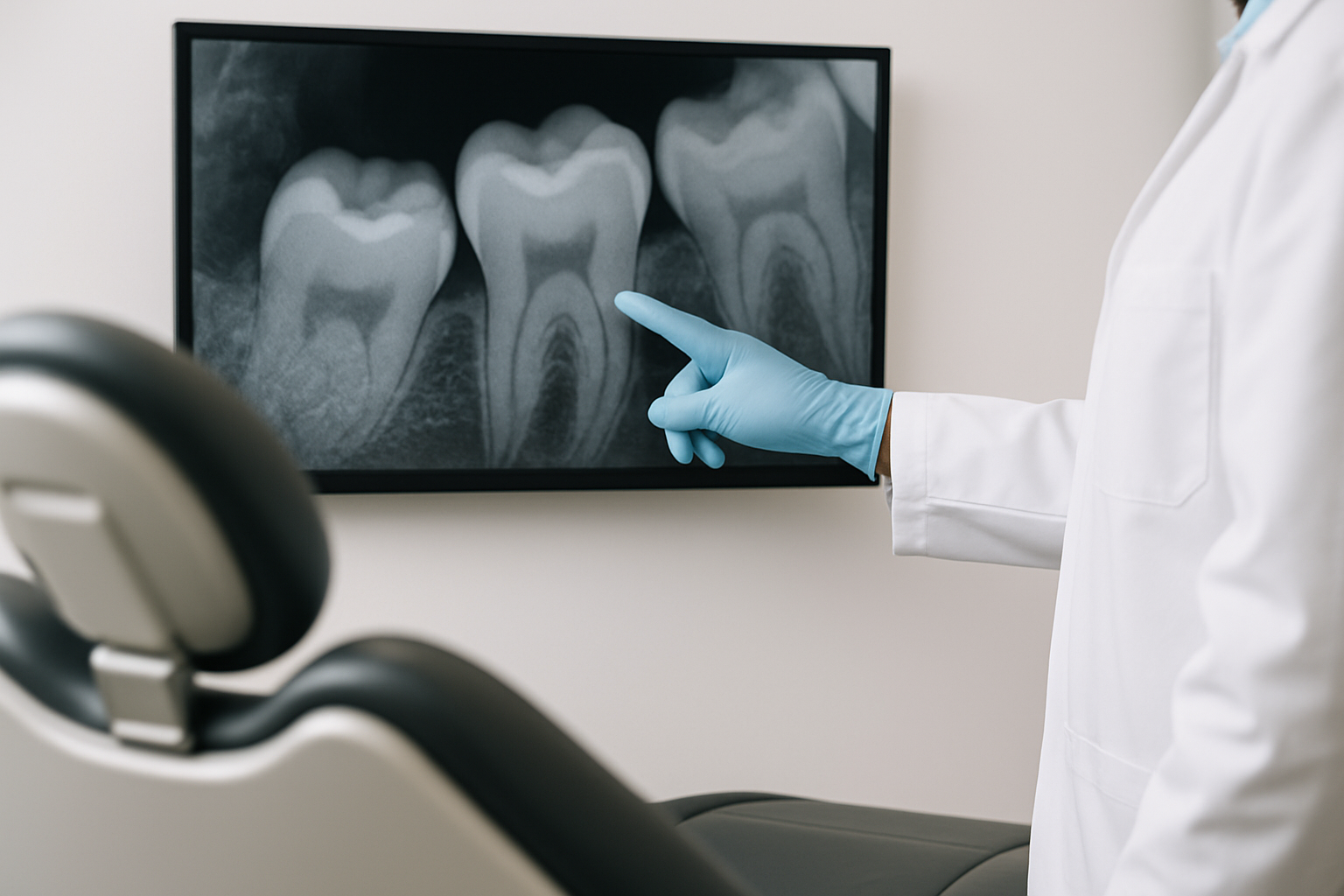
Then comes the part that matters most to hesitant patients: the dentist turns the screen and points at the image, showing you what they see and why it leads where it leads. A review from one of our patients captured this well. “Dr. Fink is friendly, on time, and does a great job explaining potential issues/concerns and provides options.” – Mary D.
A fair second opinion can end three ways. Sometimes it confirms the original plan. Sometimes a smaller fix will hold. And sometimes the honest answer is a referral out to a specialist.
The Fee, the Insurance, and Why People Skip This Step
Cost is the number one reason patients talk themselves out of a second opinion. I would rather explain the fee than have someone skip the visit and guess about a crown.
A second opinion or new patient exam fee reflects real work, and around the Scottsdale market these visits generally run in the low hundreds depending on what is included. The main drivers are:
- Exam time with the dentist, not just a hygienist check
- Imaging, since new X-rays or a scan are often needed
- A written plan you can actually compare against the first one
Policies vary on whether a consultation fee gets credited toward treatment if you move forward. That is a completely fair question to ask when you call, and any office should answer it plainly.
On insurance, callers here name plans like Delta Dental, Cigna, MetLife and BCBS Federal all the time. Many plans cover a second exam within a benefit period, but in network versus out of network changes the math significantly, and every plan counts exams differently.
The only reliable move is to call with your card in hand and let the office verify your specific plan before you book. For patients without insurance, ask what cash options or membership plans exist, because that often changes the picture.
What to Do When the Two Plans Don’t Match
Say you now have two written plans that disagree. Here is how I would handle it.
Consider letting the second dentist examine you before you share the first diagnosis. If you want a genuinely independent read, hold that information until after the exam, then compare notes. Most dentists will not be offended by this.
Ask each dentist to explain their reasoning out loud. Not the procedure, the reasoning. Why this tooth, why now, and what happens if you wait six months. If the answer is confident and specific, that tells you something. If it is vague, that tells you something too.
Treat pressure to decide today as a signal to slow down. Real emergencies exist, and a cracked or infected tooth does need attention. But a tooth that has been quiet for years rarely requires a same-day decision.
Also know the practical middle ground that almost nobody mentions: some teeth can be photographed and watched at your next cleaning instead of treated today. Documenting a questionable filling and comparing it in six months is a legitimate answer, not a stall.
If a crown does turn out to be the right call, understanding how long a crown should hold up and what the recommended material tells you makes the conversation a lot easier the second time around.
Frequently Asked Questions About Getting a Second Opinion on a Dental Crown
Is it rude to get a second opinion on a crown?
No. Dental offices trade records for shared patients every single day, and most dentists expect it on larger treatment plans. You do not owe anyone an explanation for wanting another look at your own teeth.
Do I have to tell the second dentist what the first one recommended?
You do not have to lead with it. If you want the most independent read, let the exam happen first, then share the original plan and compare. Either approach works, and both are common.
Can I get copies of my X-rays from my previous dentist?
Yes. Patients are entitled to copies of their own dental records and images. Call the office, ask them to send the images digitally to the second office, and give them a few days. If the images are more than several months old, expect the new office to take fresh ones anyway.
Will my insurance pay for a second opinion exam?
Often, yes. Many plans allow a second exam within a benefit period, but in network versus out of network changes what you pay out of pocket quite a bit. Call with your plan name and card handy so the office can verify your specific benefits before you book.
What if both dentists agree I need the crown?
Then you have your answer, and that peace of mind is worth the visit on its own. Plenty of patients come in for a second opinion, hear the same recommendation explained a different way, and finally feel comfortable moving forward.
Can a second opinion review work that was already done?
Yes. We see patients regularly who are unhappy with a crown, filling or bridge that did not go as planned, and want an honest assessment of where things stand and what the options are.
Thinking About a Second Look at Your Treatment Plan?
We see second opinion patients regularly at our North Scottsdale office on Frank Lloyd Wright Boulevard, and because this is a single dentist practice, Dr. Fink personally reviews the case and stays with it rather than handing it to whoever is on the schedule that week. Patients from the Shea Corridor, McCormick Ranch and Paradise Valley have left more than 100 Google reviews averaging 4.93, and thorough explanations come up again and again. If you would like your plan reviewed, Trinity Dental Care can be reached at 480-621-4040 or at trinitydentalcares.com.