
Direct Answer: Many dental plans allow more than two cleanings a year during pregnancy as a frequency exception. It is plan specific, so a dental office can verify your benefits before you book.
A patient called our front desk a while back wanting to move her cleaning up on the calendar. She was pregnant, her gums had started bleeding a little when she flossed, and she wanted to know if her insurance would pay for more cleanings than usual.
Our team pulled her benefits while she was still on the phone. Her plan did allow additional cleanings during pregnancy, and she walked away with an appointment instead of a maybe.
Most people assume two cleanings per year is a hard ceiling that applies to everybody. It usually isn’t. Below I’ll walk through why gums change during pregnancy, how to actually verify an extra cleaning benefit, and one calendar detail that matters a lot for Scottsdale families whose pregnancy spans a year-end.
Two Cleanings a Year Is a Plan Rule, Not a Health Rule
The “two per year” number people repeat is a frequency limit written into most dental plans, not a medical standard. It’s a billing rule, and billing rules have exceptions.
Pregnancy is one of the more common ones. Plans often allow a third cleaning, and sometimes a fourth, when there’s a documented reason the patient needs closer monitoring.
Here’s what that looks like in practice for the patients I see from the Shea Corridor, McCormick Ranch, and the neighborhoods around Frank Lloyd Wright Blvd:
- Their plan lists two routine cleanings per benefit year as standard
- A separate clause allows extra preventive visits under specific conditions
- Pregnancy, gum disease history, and diabetes are the conditions that show up most often
- The exception is almost never automatic, someone has to ask for it
That last point is the one that costs people money. I’ve had patients pay out of pocket for a cleaning they were entitled to, simply because nobody checked. If you’re pregnant and wondering whether a third cleaning is covered, the answer is not on a blog page. It’s in your specific plan documents, and a dental office can read them for you.
Why Your Gums Change During Pregnancy
This is the part patients most often blame themselves for, and they shouldn’t. I’ve had women apologize to me for bleeding gums while they were brushing and flossing more carefully than they ever had.
Higher hormone levels during pregnancy change the way gum tissue reacts to plaque. The same amount of plaque that your gums shrugged off a year ago can now trigger swelling, tenderness, and a little bleeding when you brush or floss. The American Dental Association’s patient resource on pregnancy and dental concerns explains this shift and notes that more frequent cleanings may be needed during pregnancy.
That pattern has a name, pregnancy gingivitis, and it is common. It is not a sign you’ve been careless.
More frequent professional cleanings are one of the standard responses, because the goal is keeping mild inflammation from turning into something that needs real treatment. If you want a sense of what those visits involve, I’ve written about what actually happens at a dental exam and cleaning in a separate piece. And since gum health connects to the rest of your body, what your gums say about your overall health is worth a read too.
How to Verify an Extra Cleaning Benefit Instead of Guessing
Insurance questions are one of the top reasons our phone rings. Callers name plans like Delta Dental, Cigna, MetLife, Humana, and BCBS Federal, and the frequency rules for cleanings are written differently in almost every one.
Some plans count cleanings per calendar year. Some count them every six months from the last visit. Some allow a pregnancy-related extra visit with no documentation, and others want a note in the chart.
So the honest process looks like this:
- Tell the dental office you’re pregnant and roughly how far along
- Ask them to call your plan and confirm cleaning frequency and any pregnancy exception
- Ask what your out-of-pocket portion would be for a third visit, since that depends entirely on the plan
- Ask whether the exception needs to be noted before the appointment or can be filed after
Most offices will do that benefits check at no cost before you commit to a time. One of our patients wrote that her experience was great “from the first phone call asking questions about insurance coverage,” and that is genuinely the easiest part of this to handle. If you’re paying cash instead, what paying out of pocket looks like in Scottsdale covers that side of it.
What to Ask When You Call About Cleaning Frequency
These are the four questions that actually settle the matter. Anything less and you’re still guessing.
| What to Ask | What You’re Looking For | Who Can Answer It |
|---|---|---|
| How many cleanings does my plan allow per year? | Whether it’s calendar year or every six months | Your plan, or the dental office on your behalf |
| Does my plan allow a pregnancy frequency exception? | A yes or no, in writing if possible | Your plan’s benefits line |
| What would I owe for a third cleaning? | Your coinsurance percentage and any deductible left | Dental office after a benefits check |
| When does my benefit year reset? | The date your annual maximum starts over | Your plan documents or ID card |
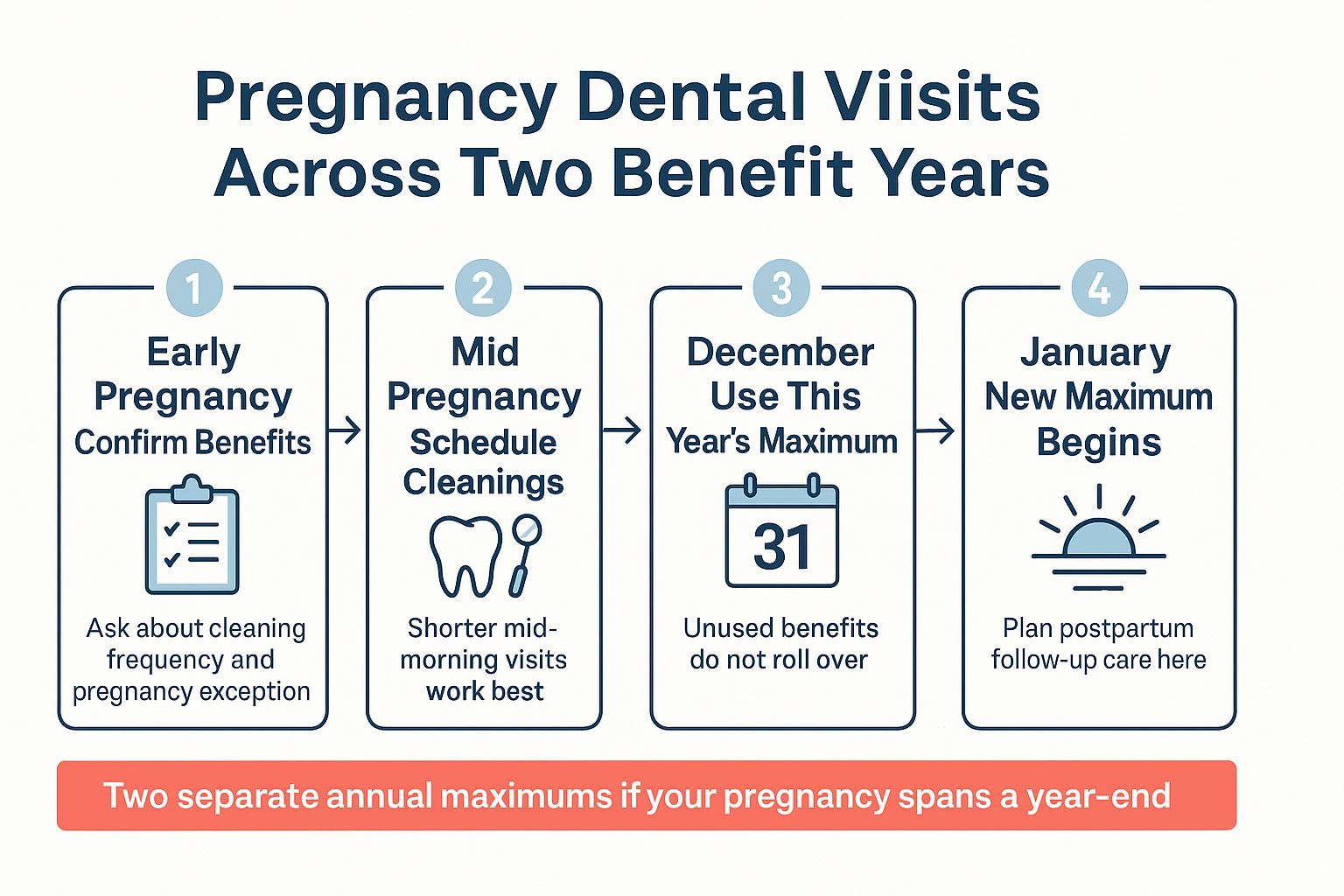
Mapping Your Visits Across Two Benefit Years
If your due date falls anywhere near the start of a year, this calendar detail is worth knowing months in advance.
The Year-End Reset Scottsdale Households Keep Missing
Most dental plans reset January 1, and unused benefits do not roll over. They disappear.
That matters more than usual during pregnancy. If you’re due in February or March, your preventive visits in December and the ones in January fall under two completely separate annual maximums.
For a patient mapping out several cleanings, a possible filling, and follow-up care after delivery, that’s real money sitting on the table. Spreading the work across the year-end line can mean you never bump into a single maximum at all.
The catch is timing. December is the busiest month on our schedule every year, partly because half of North Scottsdale remembers their benefits at once and partly because the winter residents are back. If you wait until mid-December to figure this out, the appointment you want may not exist.
I wrote more about this in where unused dental benefits go after December 31, and if you’ve already hit your cap, what happens when your annual maximum runs out covers the options from there.
What Usually Gets Done Now and What Patients Often Save for Later
I get this question constantly, and I want to be careful here, because the right answer comes from a conversation between you, your dentist, and your OB. But I can tell you what the pattern usually looks like.
Commonly handled during pregnancy:
- Routine exams and cleanings
- Gum health monitoring and oral hygiene guidance
- Needed restorative work like a tooth-colored filling or a crown, when leaving it alone would mean more trouble later
Frequently scheduled after delivery:
- Professional teeth whitening, in-office or take-home
- Veneers and other elective cosmetic work
- Full smile makeover planning
The reason elective cosmetic work tends to wait is simple. There’s no clinical reason to rush it, and most patients would rather do that work when they’re not also managing fatigue and nausea.
One thing that genuinely changes how we plan a visit: telling the office how many weeks along you are when you book. It affects appointment length, positioning, and what we recommend putting off.
Comfort Is a Scheduling Decision, Not Just a Chairside One
Plenty of patients were already uneasy about the dental chair before pregnancy. Add fatigue, nausea, and a more sensitive gag reflex, and a routine cleaning can feel like a lot.
Most of what helps happens before the appointment starts:
- Shorter mid-morning visits, when nausea tends to be less of a factor
- Sitting slightly more upright instead of fully reclined
- Telling your hygienist about nausea triggers, like certain flavors of polishing paste, before anything goes in your mouth
- Breaking a longer appointment into two shorter ones
- Bringing water and asking for breaks whenever you want one
None of that requires special equipment. It requires a hygienist who asks and a schedule with enough room to accommodate the answer.
One first-time patient put it this way in a review: “This is my first visit. I was so impressed with the beautiful office and the beautiful people and my hygienist did a wonderful job on my teeth. She was very gentle and thorough.” That’s the standard worth looking for. If nerves are the bigger hurdle, what you can do about dental anxiety before your appointment goes deeper on it.
Frequently Asked Questions About Dental Cleanings During Pregnancy
Will my insurance definitely cover a third cleaning while I’m pregnant?
Not definitely. A pregnancy-related additional cleaning is usually a plan-specific frequency exception, which means some plans allow it and others don’t. A dental office can call your plan and confirm it before you come in, which is a lot better than finding out afterward.
My gums bleed a little when I floss now. Is that normal during pregnancy?
It’s common. Higher hormone levels change how gum tissue responds to plaque, so gums can get swollen and tender even when your home care hasn’t changed at all. It’s still worth having looked at, because the point of extra cleanings is keeping mild inflammation from progressing.
Should I just wait until after the baby is born for everything?
For elective cosmetic work like whitening or veneers, waiting is a reasonable choice and a lot of patients make it. For cleanings and for problems that would get worse if ignored, waiting usually isn’t the better plan. That’s a conversation to have with your dentist and your OB together.
Do I need to tell the office I’m pregnant when I book?
Yes, and please include how many weeks along you are. It changes appointment length, how we position the chair, what imaging we take, and what we recommend scheduling for later.
What if my dentist is out of network for my plan?
Frequency rules and exceptions still exist, but your out-of-pocket share will usually be higher. Ask for a benefits breakdown in advance so you know the number before the appointment rather than after.
Want Your Benefits Checked Before You Book a Cleaning?
Our North Scottsdale office is a single-dentist practice, which means the same dentist and the same small hygiene team see you through the whole pregnancy and the visits that come after it. Patients tell us regularly that being listened to is the reason they stayed. If you’d like someone to read your plan’s cleaning frequency rules before you pick a time, call 480-621-4040 or visit trinitydentalcares.com and we’ll take a look.