
Direct Answer: Bonding works well for small chips on teeth with healthy enamel and can often be done in one visit. Veneers suit larger chips, worn or discolored teeth, but require permanent enamel removal.
It usually happens on something small. A piece of ice, a fork hitting a tooth at the wrong angle, a crusty roll that turned out harder than it looked. Nothing hurt, so you went on with your day.
Then you saw a photo that evening and the corner of your front tooth was clearly gone. That sinking feeling is the part patients describe to me most often, and it has almost nothing to do with pain.
People call our North Scottsdale office about chipped and broken front teeth as if it were an emergency, even when there’s no discomfort at all. And plenty of them admit they waited months first, either because they felt embarrassed or figured a cosmetic chip wasn’t worth taking up an appointment slot. It is, it’s normal, and it’s fixable. Below I’ll walk through how the choice between dental bonding vs veneers actually gets made.
Before anything else: is the chip only cosmetic?
A chip almost always looks worse than it feels and sometimes goes deeper than it looks. Those two things can be true at the same time, which is why the first step is an exam rather than a repair.
When I look at a chipped front tooth, I’m checking a short list:
- How much enamel is left on the edge and the back side of the tooth
- Whether there’s a crack line running up toward the gum, which changes the plan completely
- Whether the nerve is irritated, tested with cold and by tapping the tooth
- How the tooth meets its opposing tooth when you bite and slide your jaw side to side
- Whether decay is hiding under the chipped area
A clean chip on the enamel edge is a straightforward cosmetic repair. A chip that’s part of a deeper fracture is a structural problem, and bonding over it just delays the real conversation.
This is also where sensitivity gets sorted out. If cold air on the patio in January makes that tooth zing, that’s information worth having before we pick a material. Our guide on whether your tooth situation is actually a dental emergency covers how we triage these calls, and if pain is the bigger issue, the common causes of tooth pain is a better starting point than this article.
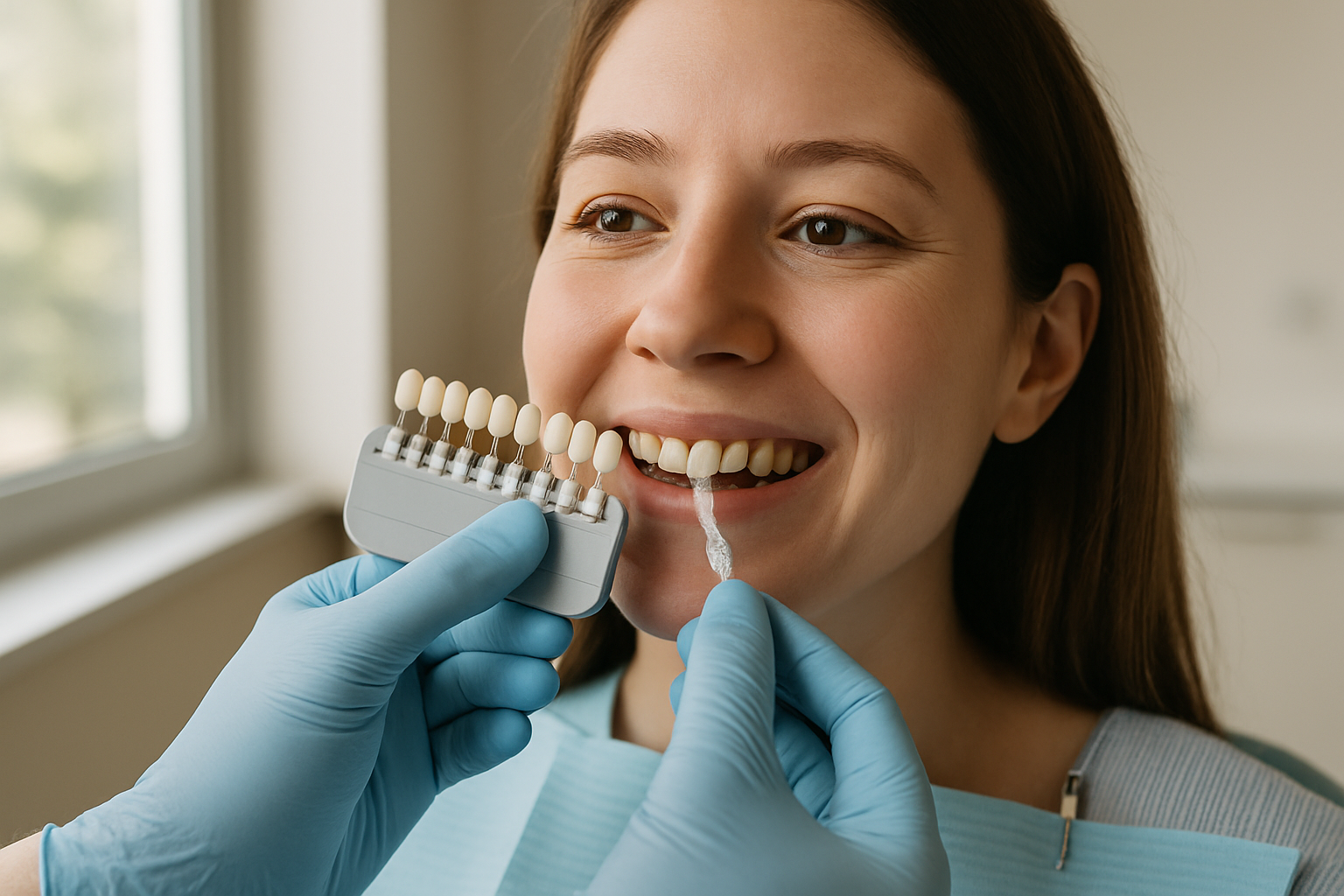
Dental bonding vs veneers: how the decision really gets made
Both options fix a chipped front tooth. They are not interchangeable, and the difference matters more than most people expect.
Composite bonding is tooth-colored resin placed directly on the tooth, shaped by hand, then hardened with a curing light. It’s usually done in a single visit and removes little or no healthy tooth structure.
A porcelain veneer is a thin custom shell made by a lab and bonded over the front of the tooth. It generally requires removing some enamel first, which is why the ADA’s patient resource on veneers notes the treatment is not reversible. Once enamel is gone, that tooth will always need something covering it.
Here’s what actually drives my recommendation:
- How much enamel remains. Bonding needs sound enamel to grip. A large chip with thin walls left behind holds a veneer or crown better than it holds resin.
- Where the chip sits. A chip right on the biting edge takes real force every day. Small edge chips bond well. Big ones on an edge that carries your bite tend to pop off resin.
- Whether the tooth is also worn or discolored. If a tooth is short from years of wear or stained deep in the structure, bonding fixes the shape but not the color story. That’s usually where porcelain earns its keep.
- One tooth or several. A single chip on an otherwise healthy tooth is a bonding conversation. Four front teeth that no longer match each other is a different plan entirely.
And then there’s grinding. A lot of adults clench at night without knowing it, and decades of that wears edges flat. The ADA flags grinding and a deep overbite as reasons veneers can be a poor choice, and I agree. If someone is grinding hard, I would rather do a conservative repair and protect the bite than commit them to porcelain that keeps fracturing.
If the answer turns out to be more than one tooth, when a single procedure stops being enough explains how those plans get sequenced.
Bonding vs Porcelain Veneer at a Glance
This is the comparison I end up sketching on paper for patients almost every week.
| What matters | Composite bonding | Porcelain veneer |
|---|---|---|
| Visits | Often one appointment | Typically two, with lab time between |
| Tooth structure removed | Little to none in many cases | Enamel removal required, not reversible |
| Best for | Small to moderate chips, healthy enamel | Larger chips plus wear, deep discoloration, several teeth |
| Stain resistance | Can pick up stain over time | Resists stain better |
| If it chips later | Usually polished or patched | Generally replaced, not repaired |
| Grinding or clenching | Can be a reasonable compromise | Often a reason to avoid or add a nightguard |
The real question: will it match the tooth next to it?
This is what patients care about most, and it’s the part that gets glossed over in most explanations. Nobody wants a fix that announces itself.
Matching a single front tooth is harder than doing several at once. When I redo four teeth together, I control every variable. When I repair one, I have to match a neighbor that has been living in your mouth for forty years.
Three things have to line up:
- Shade, which is rarely one flat color. Most front teeth are more translucent at the tip and more opaque near the gum.
- Translucency at the edge, the slight gray-blue you see where light passes through enamel. Miss this and the repair reads as chalky.
- Surface texture and shine, the fine ridges and reflection pattern that make a tooth look like a tooth instead of a tile.
So at the exam we do shade selection in natural light, not just under the overhead lamp. Overhead operatory light flatters everything, and then you walk out into the Scottsdale sun and see something different.
We also check the bite carefully before anything is bonded. If your lower teeth strike the repaired edge when you chew or slide sideways, that repair will come off, and it’s better to find that out with articulating paper than three weeks later at dinner.
The patients I see from Montana Ranch, McCormick Ranch, and along the Shea Corridor tend to research heavily before they come in. In my experience they’re more afraid of an obvious, overdone result than they are of the procedure itself. So I’d rather tell someone up front that a single-tooth match will be very good but may not be invisible from six inches away, than promise perfection and have them notice it in a photo. Honesty about limits builds more trust than a guarantee ever will.
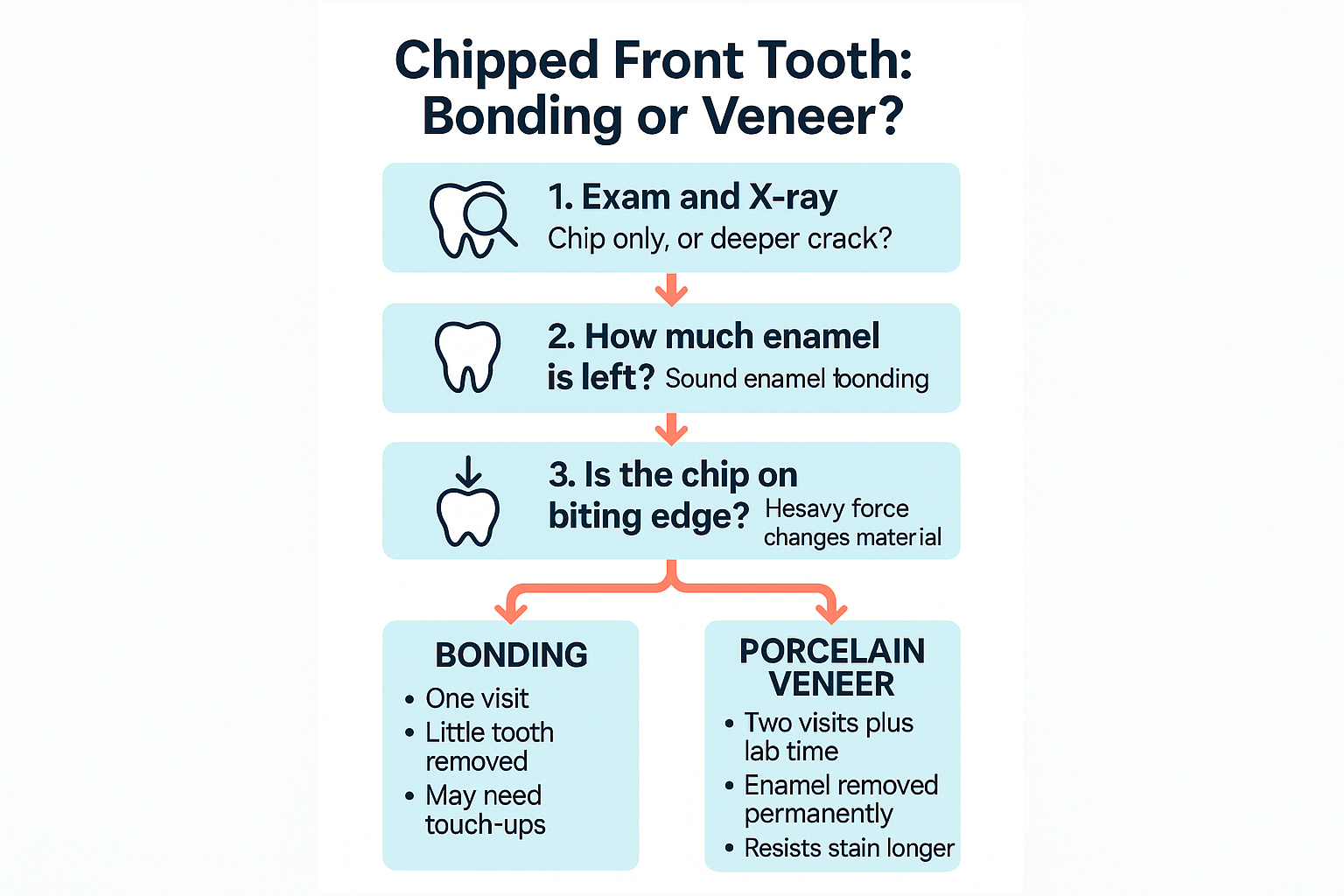
How the Choice Gets Narrowed Down
This is the same logic I walk through out loud in the chair, laid out as a simple flow.
Lifespan and upkeep, honestly
This is where regret usually comes from, so I’d rather be blunt about it.
Composite bonding can stain. If you’re the coffee-every-morning type, or you enjoy red wine, the margins of a bonded repair will pick up color faster than your natural enamel does. Bonding can also chip again.
The upside is that it’s generally easy to deal with. Polishing brings back most of the luster, and small re-chips can often be patched at a routine visit rather than starting over.
Porcelain resists staining much better. But when porcelain fails, it gets replaced rather than repaired, and that means new lab work and another appointment.
For anyone who grinds, a nightguard usually becomes part of the plan either way. It’s the cheapest insurance in dentistry.
A useful mental model: bonding is a lower-commitment repair that may need touch-ups over the years. Porcelain is a longer commitment with a higher upfront investment of tooth structure, time, and money. Neither one is the “right” answer in a vacuum. And if your bigger concern is overall color rather than shape, the stains whitening won’t fix is worth reading first, because whitening has to happen before any repair is shade-matched.
Cost and timing: what moves the number and when to start
I won’t quote a figure here, because a chip on one tooth and a chip on a tooth that also needs a filling underneath are two different treatments. What I can do is explain what moves it.
The factors that drive cost for a chipped front tooth:
- One tooth or several. Multiple teeth cost more in total but often match better.
- Chairside composite or custom lab-made porcelain. Lab fabrication is the bigger line item.
- Whether the tooth needs other treatment first, like decay removal or gum work.
- Whether the repair is tied to damage and function or is purely aesthetic.
That last point matters for insurance. Cosmetic work is frequently not covered unless it’s tied to actual damage or function, which is why we regularly field questions from out-of-network and cash-pay patients who want to understand the whole picture before committing. We’ll verify your plan when you call, and there’s a membership option for patients without insurance. For anything involving a quote, ask us directly rather than guessing from a website.
On timing, plan earlier than you think you need to:
- Bonding can often be completed in a single appointment.
- Porcelain typically means weeks for lab work plus a second visit.
So if you have a Scottsdale wedding coming, family photos scheduled, or you’re trying to get things handled before local school calendars restart in mid August, start the conversation with several weeks of runway. Rushing cosmetic work on a front tooth is how people end up with a result they tolerate instead of one they like.
Why it matters who follows the tooth over time
A front tooth repair isn’t a one-and-done transaction. It’s a result that has to age alongside the tooth next to it.
In our office, the same dentist plans the cosmetic work, does the shade matching, and checks that repair at your cleanings for years afterward. Nobody hands your front tooth to whichever provider happens to be rotating through that week.
The thing patients bring up again and again is being given choices instead of one take-it-or-leave-it recommendation. One long-time patient put it this way in a review:
“Dr. Fink is friendly, on time, and does a great job explaining potential issues/concerns and provides options. I love the proactive approach and attention to detail.” – Mary D.
That’s the standard I’d want as a patient too. If you’re curious who should be doing this kind of work in the first place, who is actually qualified to place veneers goes into the training question in more detail.
Frequently Asked Questions About Chipped Front Teeth
My chipped tooth doesn’t hurt. Do I still need to be seen?
Yes, and sooner than most people think. A chip with no pain can still have a crack running deeper or exposed dentin that decays faster. An exam and X-ray tell us which one you’re dealing with, and that’s a short visit.
Is dental bonding reversible?
Largely, yes, and that’s its biggest advantage. Bonding usually removes little or no enamel, so if you decide later you want porcelain, you haven’t burned a bridge. Veneers are the opposite: once enamel is removed, that tooth will always need a covering.
How long does bonding on a front tooth last?
It varies a lot by where the chip is, how hard you bite, and what you drink. Edge repairs on a heavy bite live a harder life than repairs tucked away from force. Plan on periodic polishing and the possibility of a touch-up rather than assuming it’s permanent.
Will insurance pay for fixing a chipped front tooth?
Sometimes, when the repair is tied to actual damage and function rather than appearance alone. Purely cosmetic changes are often excluded. We verify your plan on the first call so you know where you stand before treatment is scheduled.
I grind my teeth. Are veneers off the table for me?
Not automatically, but grinding is a real reason for caution, and a nightguard would be part of any plan. In a lot of cases I’d rather start with a conservative repair, get the grinding managed, and revisit porcelain later than commit someone to something that keeps fracturing.
How soon should I come in if I have an event coming up?
For bonding, a couple of weeks of lead time is usually plenty. For porcelain, give yourself at least four to six weeks because of lab time and the second visit. Earlier is always easier than later.
Thinking about getting that chip looked at?
If you’ve been living with a chipped front tooth for a few weeks or a few years, the first step is just an exam to see what you’re actually dealing with. Consultations for chipped front teeth are available at our Frank Lloyd Wright Blvd office in North Scottsdale. When you’re ready, you can reach us at 480-621-4040 or at trinitydentalcares.com.