
Direct Answer: A single procedure stops being enough when fixing one problem reveals or leaves behind others — or when your goal is a complete smile change, not just a repair.
A lot of patients come in asking about one thing — maybe a chipped tooth, some staining, or a crown that’s been bothering them for years. And sometimes, that one thing really is the whole story. But more often, fixing that one issue opens the door to a bigger conversation about what’s actually going on.
For patients in North Scottsdale — whether you’re in McCormick Ranch, the Shea Corridor, or anywhere along the Frank Lloyd Wright corridor — that bigger conversation is one a lot of people have been putting off. Life gets busy. You patch what’s urgent and move on.
The question this article answers is a practical one: how do you know when a single procedure is genuinely the right call, and when are you just delaying something bigger? There’s no shame in either answer — but knowing the difference saves you time, money, and unnecessary chair time down the road.
The Most Common Reason One Fix Isn’t Enough
Teeth don’t fail in isolation. When one tooth has a problem, the surrounding teeth, your bite, and your gum tissue have usually been compensating for it — sometimes for years.
A cracked molar, for example, might be the only thing you notice. But by the time that crack becomes symptomatic, the tooth has often shifted slightly, the opposing tooth has worn unevenly, and the gum around it may be showing early signs of irritation. A single crown addresses the crack. It doesn’t undo what happened around it.
The same is true on the cosmetic side. If you whiten your teeth but have two front teeth with old composite fillings, those fillings won’t respond to whitening gel the same way natural enamel does. You end up with uneven results that a single whitening session can’t fix — and that’s not a failure of the whitening, it’s just a matter of sequence and planning.
The situations where a single procedure genuinely falls short tend to follow a pattern:
- Multiple teeth are affected, not just one
- The problem you see is a symptom of something structural underneath
- Your goal is a cosmetic change across several teeth, not a single repair
- An older restoration (filling, crown, bridge) is failing and compromising adjacent teeth
- You have active gum disease that needs to be addressed before any other work begins

When Cosmetic Goals Require More Than One Step
This is where a lot of patients get surprised. They come in thinking they want veneers on two teeth, and they leave understanding why that two-tooth plan might create a mismatch they’d notice every time they smiled.
Cosmetic dentistry works best when it’s planned as a whole — even if it’s completed in stages. The difference between a cosmetic touch-up and a real smile transformation often comes down to whether the work was designed around your full smile or just the most visible problem.
Here’s what that typically looks like in practice. A patient wants to fix a discolored tooth near the front. We whiten first — because if we place a veneer or crown before whitening, we’re matching a shade that’s about to change. Then we address the restoration. In some cases, gum reshaping is needed so the tooth proportions actually look natural. What started as “fix one tooth” becomes a 2–3 step process over 6–8 weeks — but the result is a tooth that actually belongs in your smile.
None of this means every cosmetic goal turns into a major production. You don’t have to fix everything to love your smile again — but the plan should be intentional, not reactive. The difference is whether you’re making decisions tooth by tooth or looking at the full picture first.
Restorative Work: When the Damage Has Spread
Restorative dentistry — crowns, fillings, implants — follows a clear rule: the longer a problem waits, the more it costs to fix. This isn’t a scare tactic. It’s just how teeth work.
A small cavity that could have been handled with a $200–$350 tooth-colored filling can become a cracked tooth requiring a crown in the $1,200–$1,800 range if it’s left alone for two or three years. If that crack reaches the root, you’re now looking at a different procedure entirely — and potentially tooth loss.
For patients who’ve already lost one or more teeth, the decision of how to replace them also has downstream effects. A single missing tooth causes neighboring teeth to drift. If two teeth are missing and they’re not adjacent, a single implant won’t address both. Multiple tooth implant options exist specifically because these situations require a coordinated approach, not a one-off solution.
The practical takeaway: if a dentist tells you that your treatment plan involves more than one procedure, ask them to explain the sequence and why each step matters. A good answer will show you how the steps depend on each other — not just a list of things that need to be done.
Single Procedure vs. Multi-Step Treatment: A Side-by-Side Look
This isn’t about complexity for its own sake. It’s about whether the goal can actually be achieved in one visit or genuinely requires a sequence.
| Situation | Single Procedure May Work | Multi-Step Usually Needed |
|---|---|---|
| Minor surface staining | Yes — professional whitening | Only if old restorations don’t match |
| One cracked or damaged tooth | Yes — crown or filling depending on severity | If the bite or adjacent teeth are also affected |
| One missing tooth with healthy neighbors | Often — single implant | If bone loss or gum issues are present first |
| Smile appearance across multiple teeth | Rarely — spot fixes look uneven | Yes — veneers, whitening, or crowns planned together |
| Old failing restorations (3+) | No — each repair alone misses the pattern | Yes — full assessment and staged plan |
| Active gum disease + cosmetic goals | No — gum health must come first | Yes — always treat foundation before aesthetics |
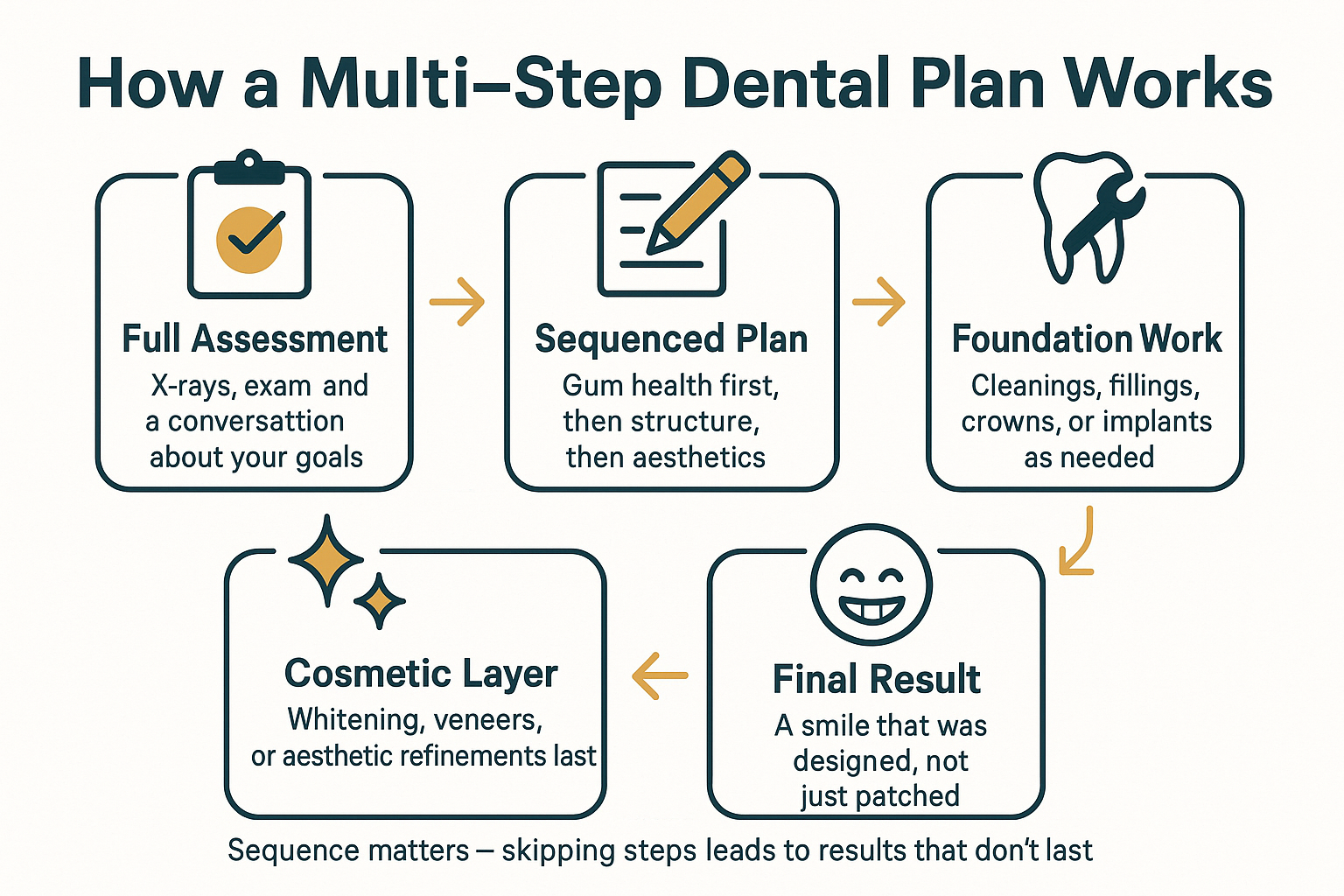
How a Multi-Step Smile Plan Actually Works
Most multi-procedure treatment plans follow a logical sequence. Here’s how that process typically unfolds from first conversation to final result.
The Role of Gum Health in Everything Else
This is the part patients don’t always expect to hear. If your gums aren’t in good shape, almost nothing else can be done well — or at least, not in a way that lasts.
Gum disease affects roughly 47% of adults over 30 in the U.S., and in North Scottsdale’s dry desert climate, chronic dry mouth and dehydration can quietly make gum issues worse over time. Scottsdale gum health trends show that a meaningful number of patients come in thinking they need cosmetic work, only to discover active inflammation underneath.
Why does this matter for the single-vs-multi-procedure question? Because placing a veneer or crown over compromised gum tissue is like painting over a water stain without fixing the leak. The cosmetic work looks fine at first — and then the gum recession, shifting, or infection undermines it within a few years.
Addressing gum health first isn’t an upsell. It’s what makes the rest of the work worth doing. Routine dental cleanings catch early gum issues before they change the whole treatment picture — which is exactly why skipping those regular appointments ends up costing more, not less.
Frequently Asked Questions About Multi-Step Dental Treatment
How do I know if I need a full treatment plan or just one procedure?
The honest answer is that you probably won’t know until after a thorough exam — and that’s okay. A good dentist will look at your full mouth, not just the one thing you came in for, and tell you clearly what they see. If multiple issues are present, they’ll explain which ones are urgent, which can wait, and how they connect. You’re not obligated to do everything at once.
Does a multi-step plan mean I have to pay for everything upfront?
No. Most multi-step plans are completed in stages over several months, and payment follows the same timeline — you pay as each phase is completed. It’s worth asking your dental office about financing options if the total plan feels like a lot to look at all at once.
Can I just fix the most visible problem and stop there?
Sometimes, yes. If the other issues are minor and stable, addressing just the visible concern is a reasonable choice. But if the underlying problems are likely to progress — or if they’ll affect the longevity of the work you just had done — your dentist will tell you that directly. The goal is never to pressure you into more treatment, but to make sure the work you do invest in actually holds up.
Why does gum health have to come before cosmetic work?
Because cosmetic restorations sit at the gumline. If the gum tissue is inflamed, receding, or diseased, it will continue to change shape after the cosmetic work is placed — and that means the margins of your veneers or crowns will eventually show, shift, or fail. Healthy gum tissue is what keeps cosmetic results looking the way they should for years, not just months.
What does a realistic timeline look like for a multi-step plan?
For most patients, a moderately complex plan — gum treatment, a few restorations, and some cosmetic work — takes 3 to 6 months from start to finish. More involved cases, like full-arch implant work, can take 6 to 12 months or longer. Your dentist should give you a clear timeline at the planning stage so you can schedule around your life, not around their availability.
Is it normal to feel overwhelmed when a dentist presents a big treatment plan?
Completely normal. Many patients feel that way, especially if they’ve been putting off dental care for a while and things have added up. A good dental office will walk you through the plan clearly, prioritize what actually needs attention first, and never make you feel judged for where things stand. If you leave a consultation feeling pressured rather than informed, that’s worth paying attention to.
Ready to Get a Clear Picture of What Your Smile Actually Needs?
If you’ve been wondering whether the one thing bothering you is connected to something bigger — or whether your goals are realistic with a single visit — the best place to start is a honest, no-pressure exam. Our team at Trinity Dental Care works with patients across North Scottsdale, from McCormick Ranch to the Shea Corridor, to help them understand exactly what’s going on before making any decisions. Call us at 480-621-4040 or visit trinitydentalcares.com to schedule a consultation and get a clear, straightforward plan.