
Direct Answer: A cosmetic result looks natural when the shade, shape, and number of teeth treated are planned around your specific face, not a generic template. Ask to see a preview before any irreversible work begins.
The most common thing I hear from patients considering cosmetic dental work is some version of the same fear: ‘I don’t want it to look obvious.’ They’ve seen the results that scream ‘veneers’ from across a room, teeth that are too white, too uniform, too perfect in a way that looks nothing like real enamel. That fear is completely reasonable, and it deserves a real answer before anyone agrees to anything.
This isn’t about whether cosmetic dentistry can look natural. It absolutely can. The question is how you evaluate a plan before any irreversible work is done, so you walk in confident instead of hoping for the best. If you’re somewhere between ‘I want to improve my smile’ and ‘but I’m not sure I trust the outcome,’ this is the framework I’d walk you through.
Summer in Scottsdale brings a steady wave of patients thinking about weddings, family photos, reunions, and other events where their smile is going to be on camera. The timeline pressure is real. But the patients who get results they genuinely love are the ones who take time to ask the right questions before the first appointment, not after.
Why Some Cosmetic Results Look Fake and Others Don’t
The ‘fake’ look almost always comes down to one of three things: a shade that doesn’t match the patient’s natural coloring, tooth shapes that don’t fit their face, or treating too many teeth when fewer would have been more than enough.
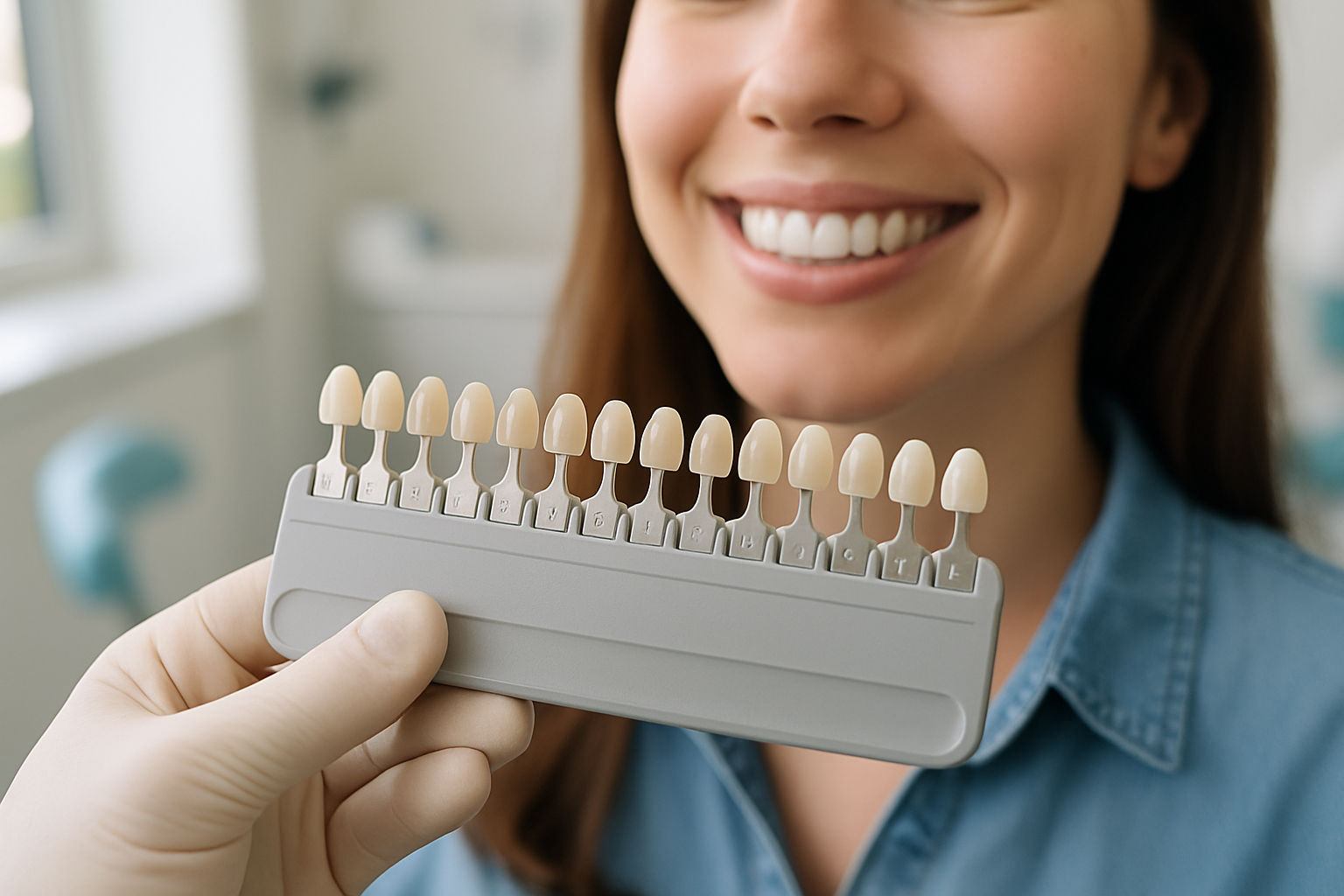
Shade selection is where a lot of cosmetic results go wrong. A bright, cold white looks natural on almost no one. The teeth that read as real tend to be slightly warm, with some translucency at the edges. A good cosmetic plan accounts for your skin tone, your eye color, and the way light hits your face, not just a shade chart numbered from lightest to darkest.
Tooth shape and proportion matter just as much. Natural teeth aren’t identical. The central incisors are wider than the lateral ones. There’s usually a slight size difference from left to right. When every tooth is the exact same shape and length, the result looks like a dental display model rather than a real smile. A conservative approach preserves as much of your natural tooth structure as possible, which is one reason that options like dental bonding or minimal-prep veneers often look more natural than aggressive full reshaping.
The number of teeth treated is something patients rarely think to ask about. Treating six teeth when only two needed attention creates visible contrast with the surrounding teeth. A well-planned cosmetic result accounts for what your whole smile looks like when you laugh, not just the two teeth directly in front.
Questions to Ask Before You Say Yes to Any Cosmetic Plan
A dentist who takes time to explain the plan before touching your teeth is giving you a meaningful signal. One of our own patients put it well: ‘I trusted Dr Fink and left it all in her hands.’, judy k. That kind of trust doesn’t happen by accident. It comes from a dentist who earns it by being specific and transparent upfront.
Here are the questions worth asking at any cosmetic consultation:
- Will I see what the result looks like before any irreversible work is done? Digital imaging or a trial smile mockup lets you visualize the outcome before a single tooth is touched. If the answer is no, ask why.
- How many teeth will be involved, and why that number? More isn’t always better. A good answer explains exactly which teeth need treatment and what happens to the surrounding ones if fewer are treated.
- What’s the most conservative approach that still gets me the result I want? Minimal-prep or no-prep options preserve more natural tooth structure. A dentist who goes straight to the most aggressive option without explaining alternatives is worth questioning.
- What material will be used, and how does it interact with light? Porcelain and zirconia behave differently. The material choice affects how lifelike the result looks, especially in photos and outdoor light.
- What does maintenance look like long-term? Natural-looking results tend to hold up better when the maintenance plan is realistic for your actual habits.
If a consultation runs through all of these and you still don’t feel like you have a clear picture of what the outcome will be, that’s worth paying attention to. You can also read more about who is actually qualified to place veneers, because the person making these decisions matters as much as the plan itself.
The Natural-Looking Cosmetic Result Checklist
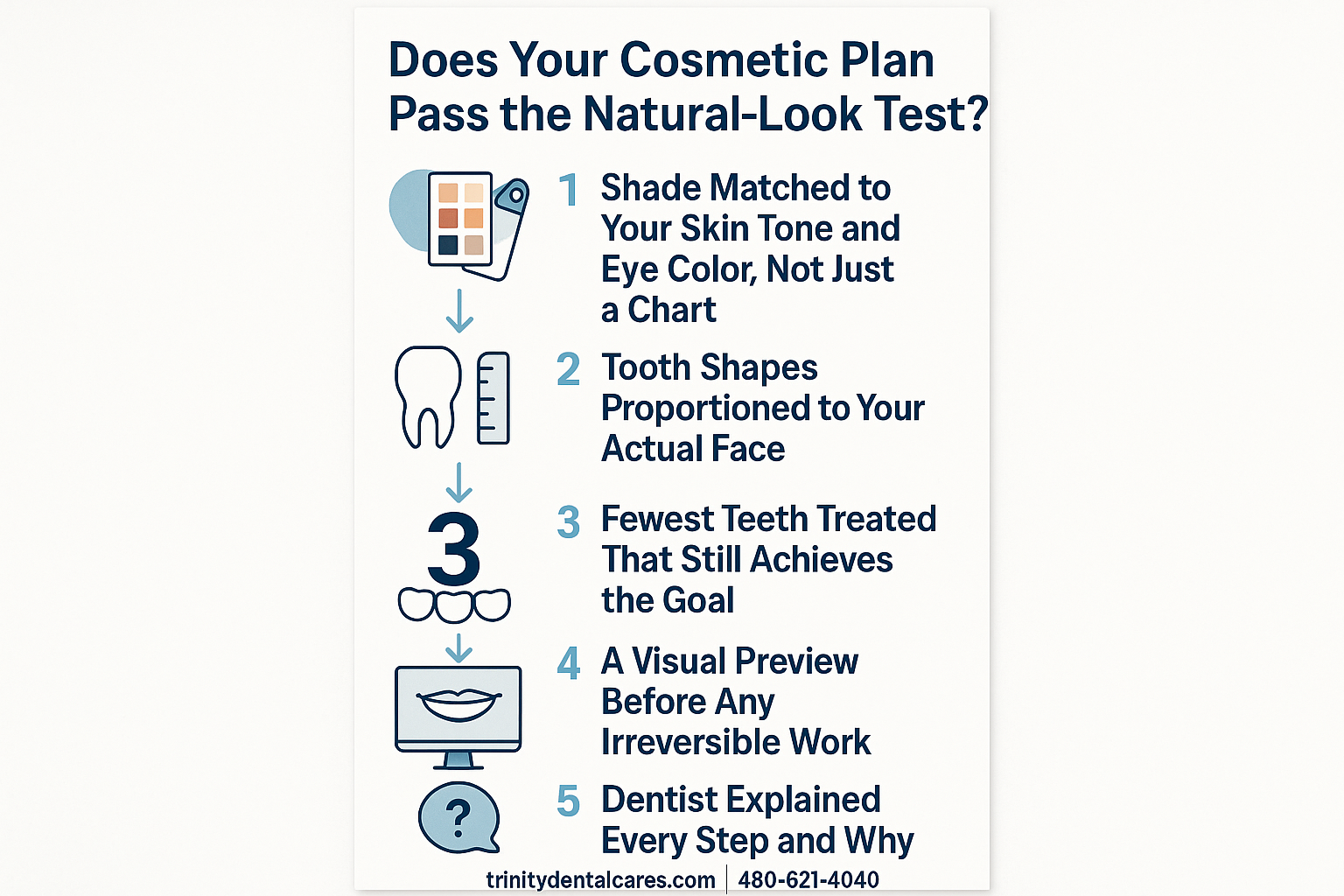
Before committing to any cosmetic dental plan, run it through these checkpoints. A result that holds up across all five is one you’re likely to love long-term.
Conservative vs. Aggressive Cosmetic Approaches: What’s the Difference?
Not every cosmetic concern needs the same level of intervention. This comparison shows how different approaches affect the tooth and the result.
| Approach | Tooth Structure Removed | Best For | Natural-Look Potential |
|---|---|---|---|
| Dental bonding | None | Minor chips, small gaps, surface stains | High, blends with surrounding teeth |
| Minimal-prep veneers | Very little (under 0.5 mm) | Mild discoloration, slight shape changes | High, preserves natural translucency |
| Traditional porcelain veneers | Moderate (0.5 – 0.7 mm) | Significant staining, shape, or size changes | High when shade and shape are matched carefully |
| Full crown reshaping | Most of original tooth | Structural damage, large decay, or severe wear | Variable, depends heavily on material and planning |
Why Timing Your Cosmetic Plan Actually Matters
A lot of patients thinking about their smile are thinking about a specific moment, a wedding, a milestone birthday, a family reunion, or just wanting to feel good in summer photos. Scottsdale and the surrounding areas, including McCormick Ranch and the Shea Corridor, see a noticeable spike in cosmetic consultations from May through August, which lines up with exactly that kind of life-event motivation.
The patients who end up happiest with their results are the ones who plan with a realistic timeline, not the ones who try to fit everything into two weeks before an event. Some cosmetic treatments, like take-home whitening trays, can be started and finished in a reasonable window. Others, like veneers as part of a smile makeover sequence, involve multiple visits and a brief adjustment period.
Rushing a cosmetic plan increases the chance that something gets skipped, including the preview step that lets you catch problems before they’re permanent. If you have an event in mind, mention it early in the consultation so the plan can be built around a real timeline, not an optimistic one. The American Dental Association’s patient resources are also worth a look if you want a grounding reference before your first conversation with a dentist.
What ‘Conservative’ Actually Means in Practice
When I say conservative approach, I don’t mean settling for less. I mean a plan that does exactly what’s needed without going further than necessary.
A conservative cosmetic plan might look like:
- Whitening first to see how much improvement is possible without touching the teeth at all
- Bonding to address a chip or slight gap without removing any enamel
- Two or four veneers on the most visible teeth rather than eight or ten across the full smile
- Zirconia or ceramic crowns where structural support is genuinely needed, rather than veneers on teeth that are already healthy
Patients who’ve had extensive work done, like the reviewer who had ten teeth recapped and described the process as ‘done professionally and efficiently’, often note that what made it feel right was the trust they had in the explanation they received before starting. The outcome looked natural because the plan was built around their specific situation, not a generic cosmetic template.
If you’re wondering whether fewer procedures might get you where you want to be, that’s worth exploring. You can also read you don’t have to fix everything to love your smile again, it covers exactly that idea in more depth.
Frequently Asked Questions About Natural-Looking Cosmetic Dental Results
Will people be able to tell I had cosmetic dental work done?
It depends entirely on how the result is planned. Work that matches your natural shade, uses proportions that fit your face, and treats only the teeth that actually need it tends to read as ‘your smile, but better’ rather than ‘obvious dental work.’ The shade selection step is where most visible results go wrong, teeth that are too uniformly white or too opaque are what people usually notice.
Can I see what my results will look like before anything is done?
Yes, and you should ask for this. Digital imaging and trial smile previews let you evaluate the planned outcome before any irreversible work begins. If a dentist can’t offer any form of visual preview, that’s a fair thing to ask about before agreeing to proceed.
Is there a way to improve my smile without removing a lot of tooth structure?
Often, yes. Dental bonding removes no enamel at all and works well for minor chips, small gaps, and surface irregularities. Minimal-prep veneers remove very little tooth structure, typically under half a millimeter, and are a good option for mild discoloration or slight shape changes. The most conservative starting point for many patients is professional whitening, which doesn’t involve the tooth structure at all. A consultation can tell you which options are realistic for your specific situation.
How do I know if my dentist is recommending more treatment than I actually need?
Ask directly: ‘What’s the minimum number of teeth we’d need to treat to get the result I’m describing?’ A good answer gives you a specific number and an explanation of why. If the answer is vague, or if every option involves treating the maximum number of teeth, it’s reasonable to ask for a more conservative alternative to be explained. You can also read when does a single procedure stop being enough for more context on how these decisions get made.
Does the material used for veneers or crowns affect how natural the result looks?
Yes, meaningfully. Porcelain has translucency that mimics natural enamel well, especially in natural light. Zirconia is extremely strong and looks excellent, particularly for back teeth. The right material depends on which teeth are being treated, how much stress they take, and what your aesthetic goals are. A dentist should explain the tradeoffs for your specific case, not just recommend one material for everything.
I have an event coming up this summer. Is that enough time to do cosmetic work?
It depends on what you’re considering. Professional whitening, both in-office and take-home trays, can often be completed in a few weeks. Veneers or a more involved smile plan typically require multiple visits spread over four to eight weeks at minimum, sometimes longer depending on the case. Mention your event date at the start of your consultation so the timeline is built realistically from the beginning.
Ready to See What a Natural Result Could Look Like for You?
If you’re in North Scottsdale, McCormick Ranch, or anywhere along the Shea Corridor and you’ve been sitting on a cosmetic question, a conversation is the right first step. Our team at Trinity Dental Care takes time to walk through options before recommending anything, and Dr. Fink’s approach has always been to explain the plan fully before any work begins. You can reach us at 480-621-4040 or request a consultation at trinitydentalcares.com.