
Direct Answer: A dental crown is a cap that covers a damaged or weakened tooth to protect it and restore its function. Your dentist recommends one when a filling alone won’t hold the tooth together.
You went in for a routine checkup, maybe your first visit in a year or two, and your dentist said four words that sent your stomach dropping: “You need a crown.” If your first thought was cost, confusion, or quiet dread — that’s completely normal, and you’re not alone.
A lot of patients in North Scottsdale come to us having heard those words at another office and spent the drive home wondering what they actually mean. Is it serious? Can it wait? Is there a cheaper option? We want to answer those questions honestly, without the clinical language that makes dental appointments feel more stressful than they need to be.
This article breaks down the two things that matter most when you hear that recommendation: why your dentist is suggesting a crown and what the actual process looks like from start to finish. If you understand those two things clearly, the rest tends to fall into place.
Why Your Dentist Is Recommending a Crown (and Why It’s Usually Not Optional)
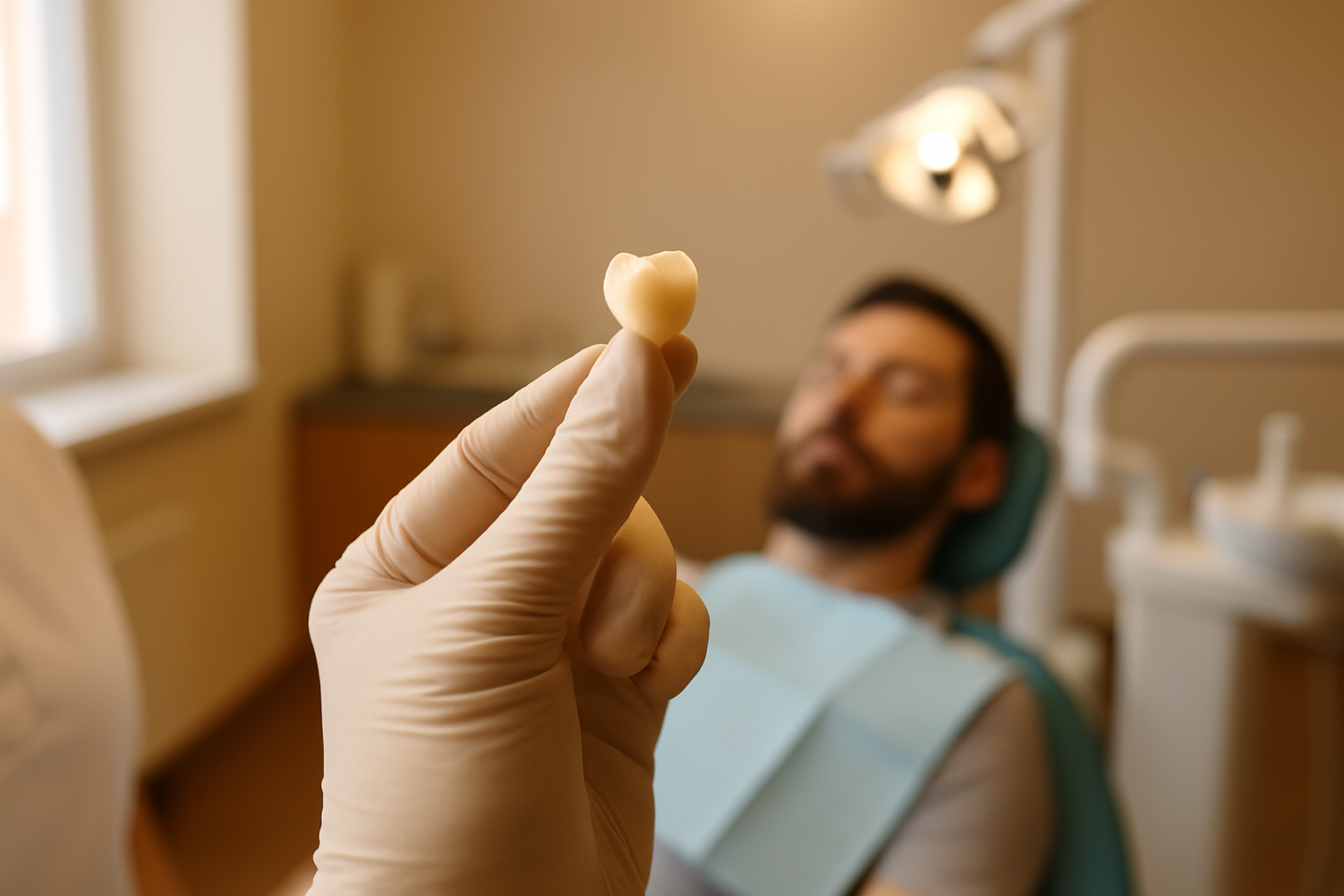
A crown gets recommended when a tooth has reached the point where protecting what’s left of it matters more than the tooth’s original structure. That sounds serious, and sometimes it is — but it’s also one of the most common restorative procedures in dentistry for a reason.
Here are the most common situations where a crown becomes the right call:
- A large cavity that’s taken up too much of the tooth for a filling to hold reliably
- A cracked or fractured tooth where the crack runs deep enough to risk splitting the tooth further
- A tooth that already has a filling — and that filling has failed, cracked, or allowed decay to sneak back underneath
- After a root canal, when the tooth structure becomes brittle and needs full coverage to survive
- A broken cusp or visible chip that leaves the inner tooth exposed
The question patients often ask is: can’t you just do a filling? Sometimes yes — but if you’ve already had a filling and it failed, or if the decay or damage covers more than about half the tooth’s surface, a filling probably won’t hold up under the pressure of everyday chewing. We go deeper on exactly that distinction in our article on what is the difference between a crown and a filling.
The short version: a crown wraps around the entire tooth instead of just filling in a hole. That full coverage is what gives it strength.
What the Crown Process Actually Looks Like
This is the part that surprises most patients — getting a crown typically takes two appointments, and the first one does most of the work.
Appointment 1 — Prep and temporary crown:
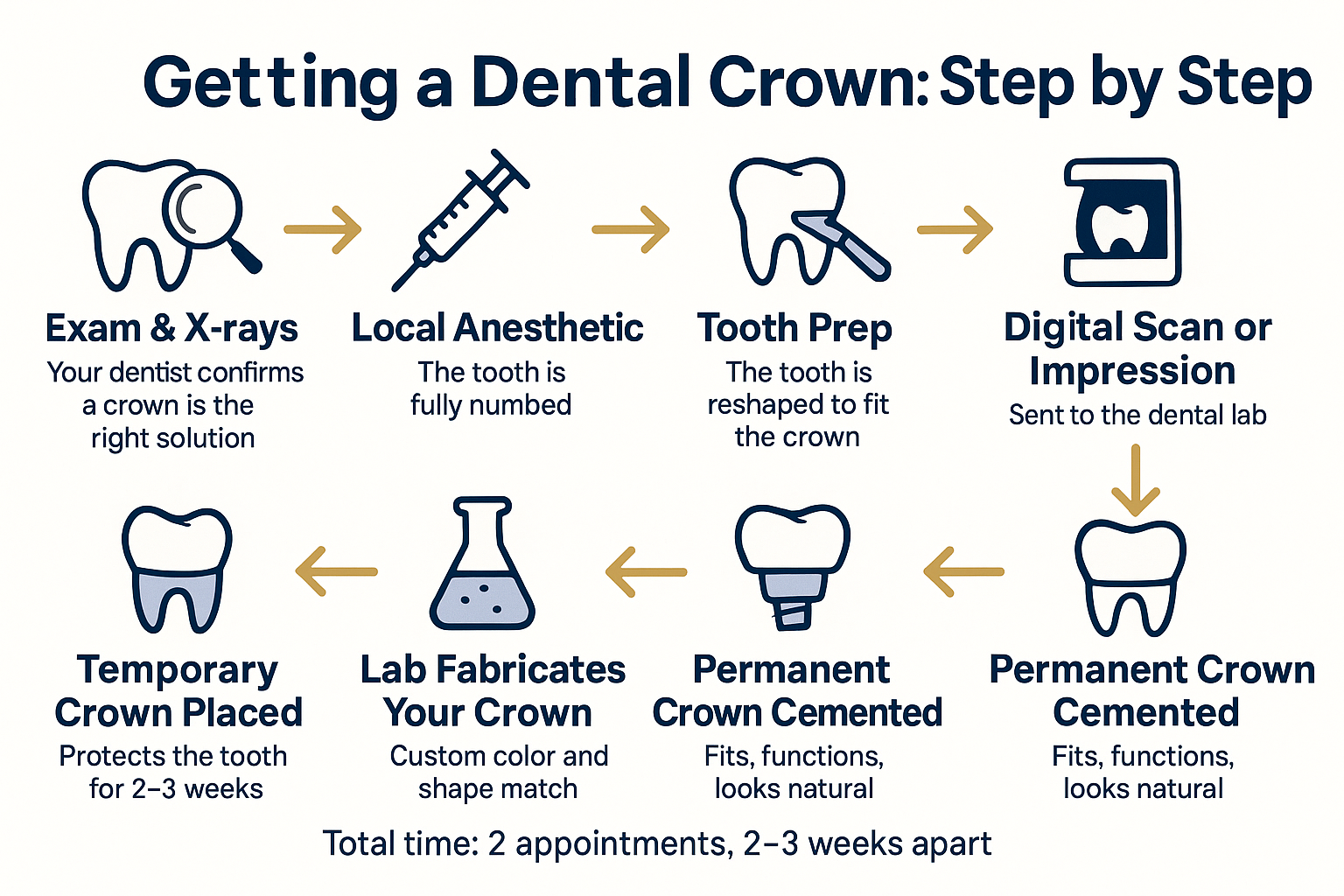
Your dentist numbs the tooth completely, shapes it down to make room for the crown, and takes a precise impression or digital scan. That scan goes to a dental lab where your permanent crown is custom-made. Before you leave, a temporary crown is placed over the tooth to protect it while the lab works — this usually takes 2 to 3 weeks.
Appointment 2 — Permanent crown placement:
The temporary comes off, your dentist checks the fit and color match, and the permanent crown is cemented in place. Most patients are done in under an hour.
A few things worth knowing about the process:
- You’ll be fully numb during prep — most people feel pressure but not pain
- The temporary crown is functional but fragile; avoid sticky or hard foods on that side
- Some sensitivity after each appointment is normal and usually fades within a few days
- The final crown, once cemented, feels and functions like a natural tooth
Modern tooth-colored crowns — specifically porcelain and zirconia options — are matched to your surrounding teeth so closely that most people can’t tell which tooth has the crown just by looking. If you want to understand the material differences in more detail, our guide to different types of crowns for teeth covers exactly that.
Crown Materials at a Glance: What Each Option Offers
Not all crowns are made the same. Here’s a straightforward comparison of the three most common crown materials so you know what you’re looking at when your dentist walks you through your options.
| Material | Best For | Typical Lifespan |
|---|---|---|
| Porcelain-fused-to-metal (PFM) | Back teeth needing strength with some aesthetics | 10–15 years |
| All-porcelain / ceramic | Front teeth where appearance matters most | 10–15 years |
| Zirconia | Back teeth needing maximum strength and natural look | 15–25 years |
| Gold alloy | Back molars with heavy bite pressure (rarely chosen today) | 20+ years |
The Crown Process: From First Visit to Final Result
This step-by-step breakdown shows what happens across both appointments — so you know exactly what to expect before you walk in.
What a Crown Costs in the Scottsdale Area — and What Insurance Usually Covers
Cost is one of the first things patients want to know, and we’d rather give you a real answer than a vague one.
In the North Scottsdale area, a single dental crown typically runs between $1,200 and $1,800 depending on the material and which tooth is being crowned. Zirconia and all-porcelain crowns sit toward the higher end of that range. A gold crown can run slightly lower on materials but is rarely requested anymore.
Dental insurance usually classifies crowns as a major restorative procedure, which means they’re often covered at 50% after your deductible — but there’s almost always an annual maximum (commonly $1,000 to $2,000) that affects how much you actually receive. If you’re near the end of your plan year and you’ve already hit part of that maximum on other work, the timing of when you schedule your crown matters.
A few things that affect your out-of-pocket cost:
- Which tooth — back molars take more force and sometimes require stronger (pricier) materials
- Whether a build-up is needed — if decay has eaten enough of the tooth, your dentist may need to rebuild the core structure before placing the crown, which is a separate billable procedure
- Your specific insurance plan — coinsurance percentages and waiting periods vary widely
If you’re wondering whether the crown is truly necessary or whether a different approach might work, our article on do I really need a dental crown or is there a better option walks through that question honestly.
How Long a Crown Lasts — and What Determines That
A well-placed crown on a healthy tooth base can last 15 to 25 years. Some patients keep theirs even longer. But the crown itself isn’t what usually fails — it’s what happens around it.
The most common reasons a crown needs to be replaced:
- Decay forming at the margin — the thin line where the crown meets the gum. If plaque builds up there regularly, decay can sneak underneath over time.
- Gum recession — as the gum line drops with age, the edge of an older crown can become visible or exposed, sometimes requiring replacement.
- Grinding and clenching — patients who grind at night put significantly more force on their crowns. A night guard makes a real difference here.
- The temporary crown was stressed — damage to the prepared tooth during the temporary phase can affect how the final crown fits.
The single biggest factor in crown longevity is the same as any other dental work: routine dental cleanings and daily home care. A crown doesn’t make a tooth immune to problems — it just gives it the best possible protection against them.
If you’ve already had a filling fail on a tooth and you’re wondering what comes next, that’s usually when a crown enters the conversation. We cover that scenario in detail in our article on what to do for a broken tooth filling.
Frequently Asked Questions About Dental Crowns
Does getting a crown hurt?
The tooth is numbed before any work begins, so most patients feel pressure rather than pain during the prep appointment. After the anesthetic wears off, some soreness and sensitivity around the tooth and gum is normal for 2 to 5 days. Over-the-counter pain relievers handle it for most people. If the sensitivity lingers past a week or gets worse instead of better, let your dentist know.
Can I wait on getting a crown my dentist recommended?
Sometimes a short wait is fine — a few weeks while you schedule and plan. But waiting months or indefinitely usually makes things worse. A cracked tooth can split further. A tooth with deep decay can reach the nerve and require a root canal on top of the crown. The underlying problem doesn’t pause while you decide.
Will my crown look like a real tooth?
Yes — modern porcelain and zirconia crowns are matched to the shade of your surrounding teeth. For front teeth especially, the match is close enough that most people can’t identify the crowned tooth in a photo. Your dentist will show you the shade options before the final crown is made.
What’s the difference between a crown and a cap?
They’re the same thing. ‘Cap’ is just an older, informal term patients have used for decades. Your dentist may use either word.
If I need a crown after a root canal, why can’t I skip the crown?
After a root canal, the tooth no longer has a live pulp supplying it with moisture and nutrients. It becomes more brittle over time and is significantly more likely to crack or fracture under normal chewing pressure. A crown covers and protects the whole structure, which is why dentists almost always recommend one following root canal treatment on a back tooth.
Does the tooth under a crown ever need more work later?
It can. A crowned tooth still has a root and surrounding gum tissue, which means it can still develop gum disease or decay at the margin where the crown meets the tooth. Regular checkups catch these issues early, before they require removing and replacing the crown.
Questions About a Crown Recommendation? We’re Happy to Talk It Through.
If your dentist has recommended a crown and you’re still not sure what to make of it — whether it’s the right call, what it’ll cost, or what the process will feel like — Trinity Dental Care welcomes those conversations. Dr. Fink takes the time to explain what she’s seeing on your X-rays and why she’s recommending what she’s recommending, so you leave with a clear picture, not more questions. You can reach our North Scottsdale office at 480-621-4040 or visit trinitydentalcares.com to request a consultation at a time that works for you.