
Direct Answer: Receding gums mean gum tissue has pulled back and exposed root surface, which has no enamel. Lost tissue does not grow back on its own, but recession can usually be stopped from getting worse.
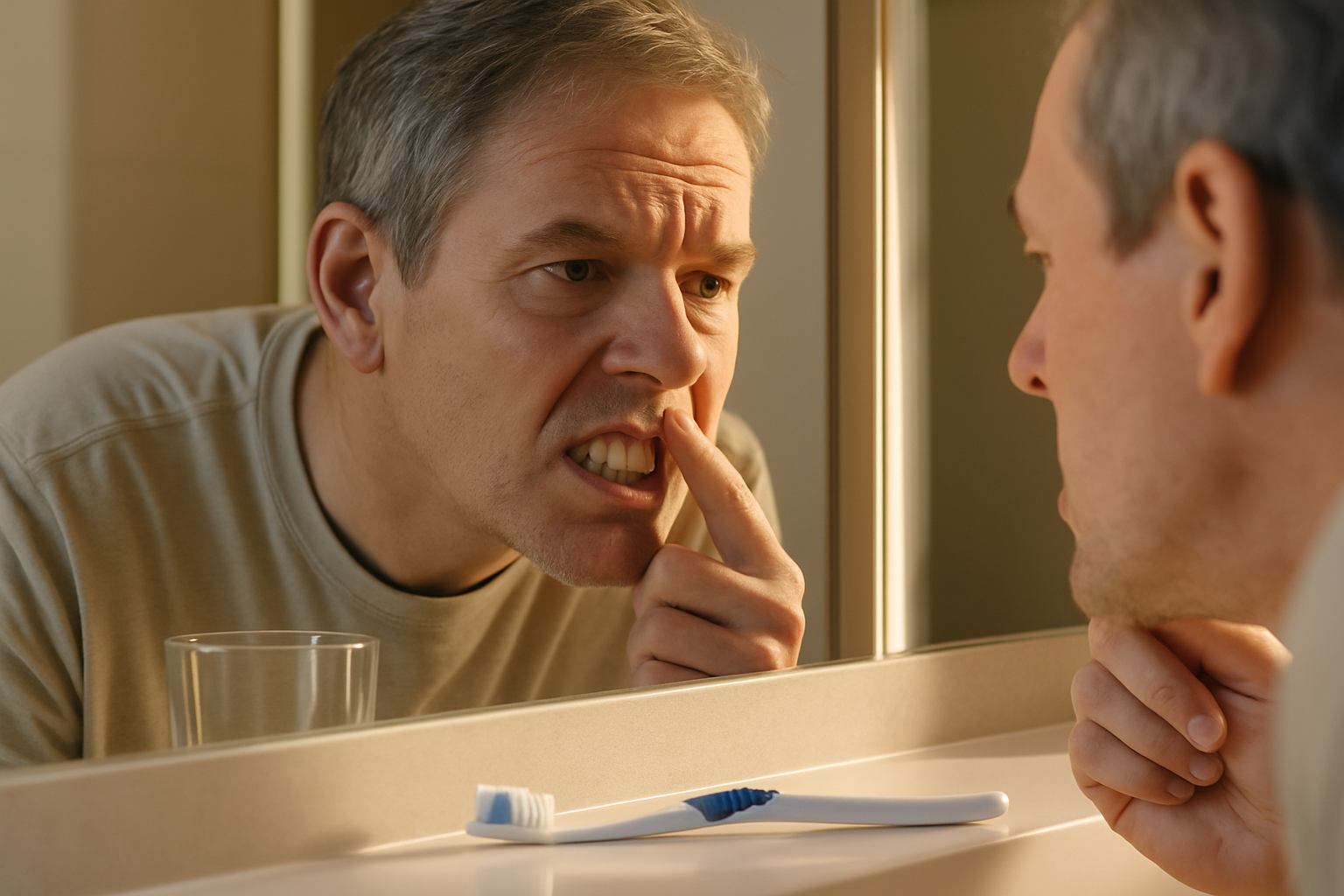
Most people do not walk in and say the word recession. They say a tooth looks longer than it used to, or that they can feel a small notch or ledge at the gumline with a fingernail.
Others notice it when a sip of iced tea makes one specific spot near the gum zing, while the rest of the mouth feels fine. That is usually the first clue, and it is a real one.
I see this constantly with patients across North Scottsdale, and the question underneath it is almost always the same: can I fix this, or is it permanent? The honest answer has two halves, and I want to walk you through both.
What Receding Gums Actually Feel Like Before You See Them
Gum tissue is supposed to sit right at the top of the crown of your tooth, covering the point where enamel stops and root begins. When that tissue pulls back, it uncovers root surface.
Root surface has no enamel over it. That is the whole explanation for the cold sensitivity, and it is why cold hits differently down near the gum than it does on the chewing surface.
Here is what patients describe to me most often:
- A tooth that looks longer or narrower than the one next to it
- A soft notch or step you can catch with a fingernail at the gumline
- A sharp, quick zing from cold water, ice, or cold air, usually in one or two spots
- A tooth that looks slightly more yellow near the gum, because root surface is naturally darker than enamel
- Floss that suddenly catches or drops lower than it used to between two teeth
This is different from gums that bleed when you floss, which is about inflammation. Recession is about tissue that is no longer there. You can have one without the other, and plenty of people have both.
The Part Most Articles Soften: It Does Not Grow Back
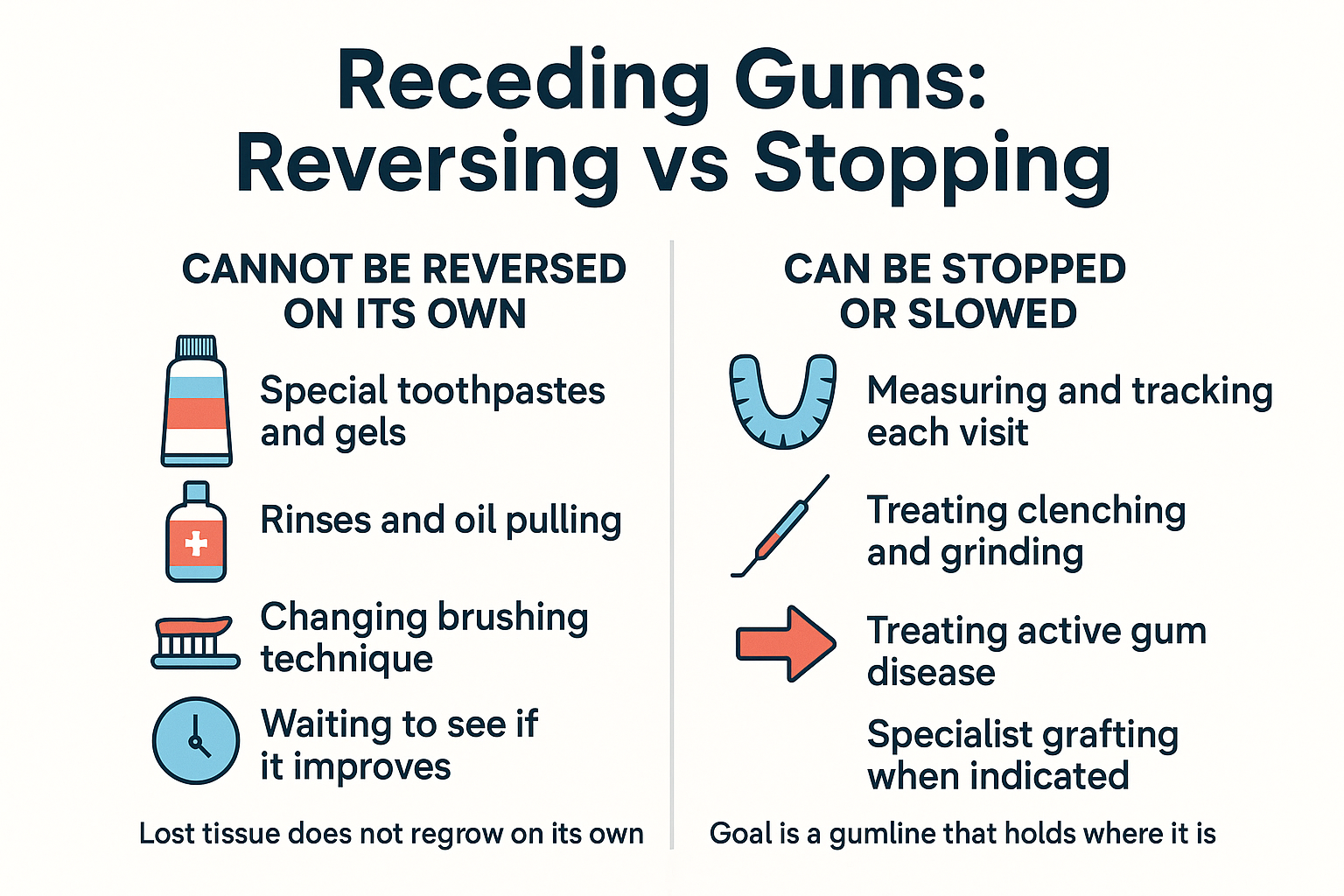
Gum tissue that has pulled back does not grow back on its own. No rinse, no oil, no gel, no toothpaste, and no change in brushing routine regrows lost gum tissue.
I say that plainly because the internet is full of products built on the opposite promise, and I have had patients spend a year and real money chasing one before they ever got measured.
What can absolutely change is whether the recession keeps moving. That distinction is the entire point of this article.
- Reversing recession means regrowing lost tissue. That does not happen on its own, and surgical grafting by a specialist is the only route that adds tissue back.
- Stopping recession means removing whatever is driving it so the gumline holds where it is. This is realistic for most people, and it is usually what we are aiming for.
Once you understand that difference, you stop shopping for a miracle and start asking the right question at your next visit: is this spot stable, or is it still moving?
Why It Happens, and Why It Is Usually Not Your Fault
Blame is useless here, and it is also usually misplaced. Recession almost never has one clean cause.
- Brushing force and hard bristles. Scrubbing sideways with a stiff brush wears tissue down over decades.
- Clenching and grinding at night. Constant flexing at the gumline stresses the tissue and the tooth structure under it.
- Gum disease that has been quietly active for years. Bone and tissue loss happen slowly and often without pain.
- Orthodontic movement from decades ago. Teeth moved outside the bone envelope can end up with thin coverage.
- Genetics. Some people simply started with thinner gum tissue, and thin tissue recedes more easily.
- Medications and health conditions that affect gum health and saliva.
The National Institute of Dental and Craniofacial Research lists older age, diabetes, tobacco use, genetics, and certain medications among the real risk factors for gum disease, and confirms that hardened tartar only comes off with a professional cleaning.
That age piece matters locally. Scottsdale skews older than the country overall, with a median age near 49 and roughly a quarter of residents over 65. A lot of my patients in Montana Ranch, McCormick Ranch, and the Shea Corridor are seeing this for the first time in their fifties or sixties without having done anything obviously wrong.
Reversing Versus Stopping: What Is Actually Possible
This is the single most useful distinction for anyone researching receding gums.
How a Dentist Actually Measures This, and How to Tell Monitoring From Treatment
This is where most patients get lost, and it is where skepticism is healthy. Plenty of people have sat in a chair, heard numbers called out, and walked away with a deep cleaning recommendation they were not sure they needed.
So here is what should be happening before anyone recommends anything.
The probing numbers. Your hygienist runs a thin marked instrument around each tooth and calls out depths in millimeters. Healthy pockets generally sit around 1 to 3 mm. Four millimeters with bleeding gets attention. Five and up usually means something is actively going on below the gumline.
Recession is measured separately. Pocket depth tells you how deep the space is. Recession tells you how far the gum has moved down the root. A tooth can have a shallow pocket and still show 3 mm of visible recession, which is a completely different problem from a deep pocket.
Photos and comparison over time. A single set of numbers is a snapshot. Two or three sets across visits tell you whether a spot is holding steady or creeping. When I can pull up an intraoral photo from a year ago next to today’s, the conversation stops being opinion.
What you should see on the screen before a recommendation:
- Your full probing chart, not just one scary number
- Bleeding points marked, since bleeding separates active disease from old damage
- X-rays showing bone levels, because gum recession without bone loss is a different case than gum recession with it
- A comparison to your previous numbers if you have been in before
If all of that is on the screen and the numbers are in the 1 to 3 range with no bleeding, monitoring is a legitimate plan. Come back, measure again, see if it moved. If pockets are 5 mm and up with bleeding and tartar below the gumline, a deep cleaning is treatment for something real, not a sales move. And if recession is advancing on a specific tooth, or the band of thick tissue at the gumline has gotten too thin, that is a periodontal referral for grafting, which belongs with a specialist.
Costs vary widely depending on how many areas are involved and what your plan covers, so ask for the specific codes and a written estimate before you agree to anything. If you are weighing this without coverage, what paying out of pocket looks like in Scottsdale covers the general landscape.
What the Numbers Usually Point Toward
General guidance only. Your own case depends on bleeding, bone levels, and how things have changed over time.
| What we find | What it usually means | Common next step |
|---|---|---|
| 1-3 mm pockets, no bleeding, slight recession | Stable, likely from brushing force or thin tissue | Regular cleanings, technique coaching, remeasure next visit |
| Recession unchanged over 2-3 visits | Old damage that is no longer progressing | Monitor with photos, treat sensitivity if present |
| 4-5 mm pockets with bleeding | Active gum inflammation below the gumline | Deeper cleaning discussion with chart and X-rays shown |
| Recession increasing visit to visit | Something is still driving it | Identify the cause, consider night guard, possible specialist opinion |
| Deep recession with very thin remaining tissue | Coverage may be at risk on that tooth | Referral to a periodontist for grafting evaluation |
Why Exposed Roots Are a Bigger Deal in the Desert
This part gets skipped in most national articles, and it matters here.
Root surface is softer than enamel and decays faster. Saliva is your main defense, because it rinses, buffers acid, and carries minerals back to the tooth.
Scottsdale winters are dry, indoor air is drier, and a large share of patients in this age group take medications that cut saliva flow. Blood pressure medications, antidepressants, antihistamines, and diuretics are common culprits.
Less saliva plus exposed root is the combination I watch most closely. A patient who never had a cavity in fifty years can develop root decay at the gumline within a couple of years once dry mouth enters the picture. If that sounds familiar, what the desert winter does to teeth goes deeper on the saliva side of it.
Technique Coaching Protects the Tissue You Still Have
Since lost tissue does not come back, the practical work is protecting what is left. Most of that happens with a hygienist, not in a chair with a drill.
That means reviewing brush pressure, brush type, the angle you approach the gumline with, and how you handle floss or a water flosser around an exposed root. Small adjustments, repeated daily for years, are what hold a gumline in place.
One patient put it well in a review: “Polly did a great job and appreciated her recommendations and explanation of strategies to use during flossing and use of water pik.” That kind of coaching is not filler. It is the treatment for the part you control.
Gum health is also tied to the rest of your health, which is worth understanding if you have diabetes or heart concerns. Your gums affect more than your mouth covers that connection.
Frequently Asked Questions About Receding Gums
Can receding gums grow back?
No. Gum tissue that has pulled back does not regrow on its own, and no product regrows it. Surgical grafting by a periodontist is the only way to add tissue back, and it is not right for every case. What most people can do is stop the recession from getting worse.
Is my hard brushing the reason this happened?
It may be part of it, but it is rarely the whole story. Clenching at night, long-standing gum disease, orthodontic movement from decades ago, and naturally thin tissue all contribute. Plenty of gentle brushers have recession and plenty of hard scrubbers do not.
Do I really need a deep cleaning, or is that an upsell?
Ask to see the evidence before you decide. You should see your full probing chart with depths in millimeters, marked bleeding points, and X-rays showing bone levels. Pockets of 5 mm and up with bleeding and tartar below the gumline are a real finding. If the numbers are shallow and there is no bleeding, ask why a deep cleaning is being recommended and what the alternative is.
Why does only one spot hurt with cold water?
Because that one spot has exposed root and the others do not. Root surface has no enamel covering it, so cold reaches the nerve pathways much more directly there. Sensitivity that is constant or throbbing rather than quick is a different situation and worth getting looked at sooner.
How fast does recession usually progress?
It varies enormously. Some spots sit unchanged for a decade, others move noticeably in a year when clenching or active gum disease is driving them. That is exactly why measuring and comparing across visits matters more than any single reading.
Want to Know If Your Gumline Is Stable or Still Moving?
The way we approach this at Trinity Dental Care is by measuring and tracking gum changes at every visit rather than reacting only when something starts to hurt, and by sending a case to a periodontist when it genuinely calls for one instead of keeping everything in house. Our North Scottsdale office on Frank Lloyd Wright Blvd sees patients for exams where those measurements get reviewed side by side with previous visits. If you would like your own gumline looked at, you can reach us at 480-621-4040 or at trinitydentalcares.com.