
Direct Answer: Whitening agents only work on natural tooth enamel. Crowns, fillings, veneers, and bonding will not change color, which can create a visible mismatch if you whiten without planning ahead.
This is one of the most common questions I hear right before someone commits to whitening, and honestly, it is one that most people do not think to ask until it is almost too late. The short answer is that whitening works on natural enamel only. It will not change the shade of a crown, a composite filling, a veneer, or any other dental material.
If you have a crown on one of your front teeth, or a tooth-colored filling somewhere visible, whitening the surrounding teeth creates a mismatch. The restored tooth stays its current shade while everything around it gets brighter. For patients across Scottsdale and North Scottsdale neighborhoods like McCormick Ranch and the Shea Corridor, this catches a lot of people off guard.
This FAQ is here to answer the questions we get regularly, from phone calls, from the chair, and from patients doing their homework before scheduling. If you have existing restorations and want a brighter smile, read this before you start.
Does Whitening Actually Do Anything to Crowns or Fillings?
No. Whitening gels work through a chemical reaction with the organic molecules in natural tooth enamel. Porcelain, ceramic, zirconia, and composite resin do not have that same organic structure, so the bleaching agent has nothing to react with.
According to the American Dental Association, dental materials like crowns and tooth-colored restorations are resistant to bleaching agents, meaning no amount of whitening time or product concentration will shift their color.
The practical problem is timing. If your crown was matched to your teeth before whitening, it will look fine, until your natural teeth get several shades lighter. Then the crown stands out. And once a restoration is placed, the only way to match it to a new tooth shade is to replace it.
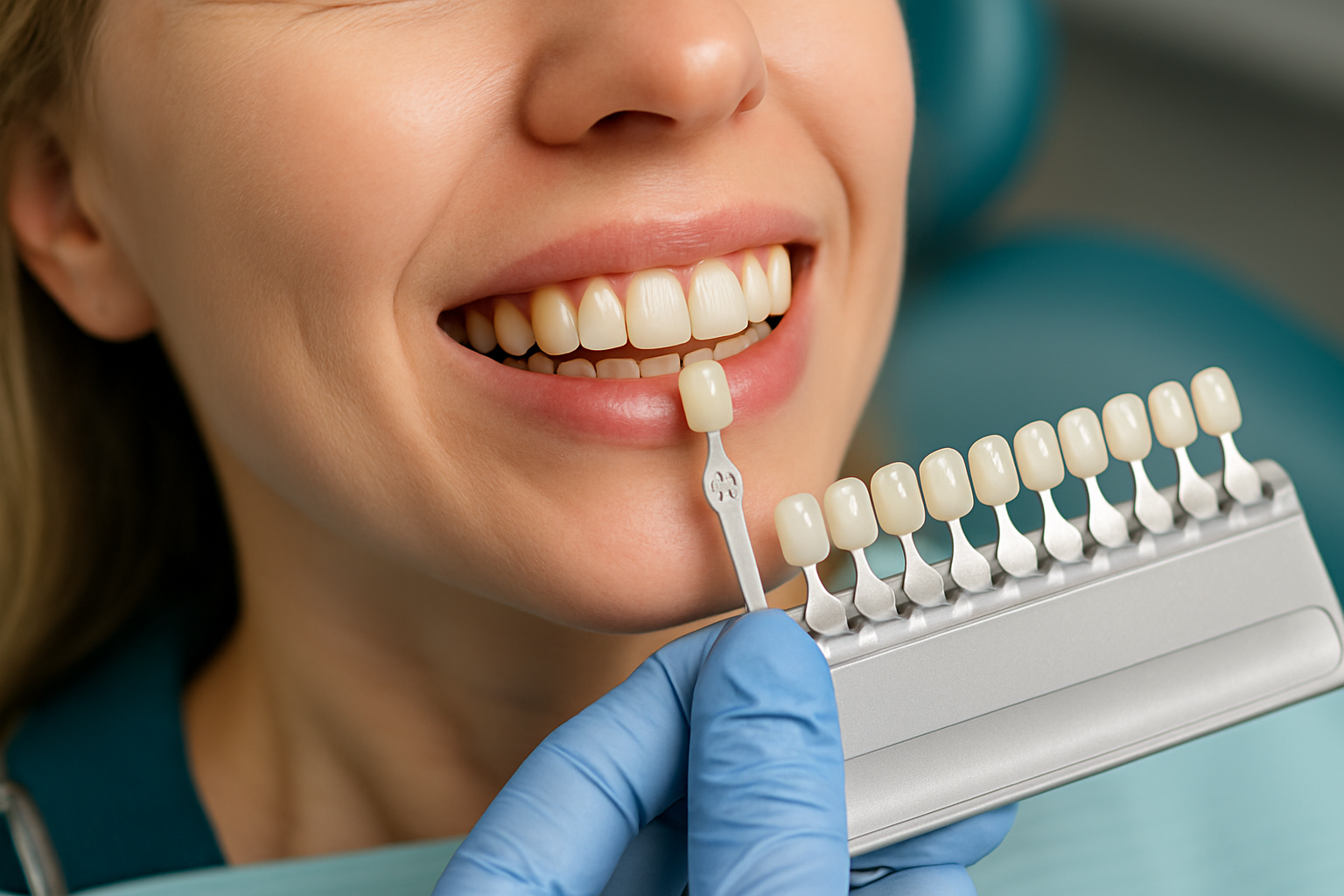
So What Is the Right Order If I Want Both a New Crown and Whiter Teeth?
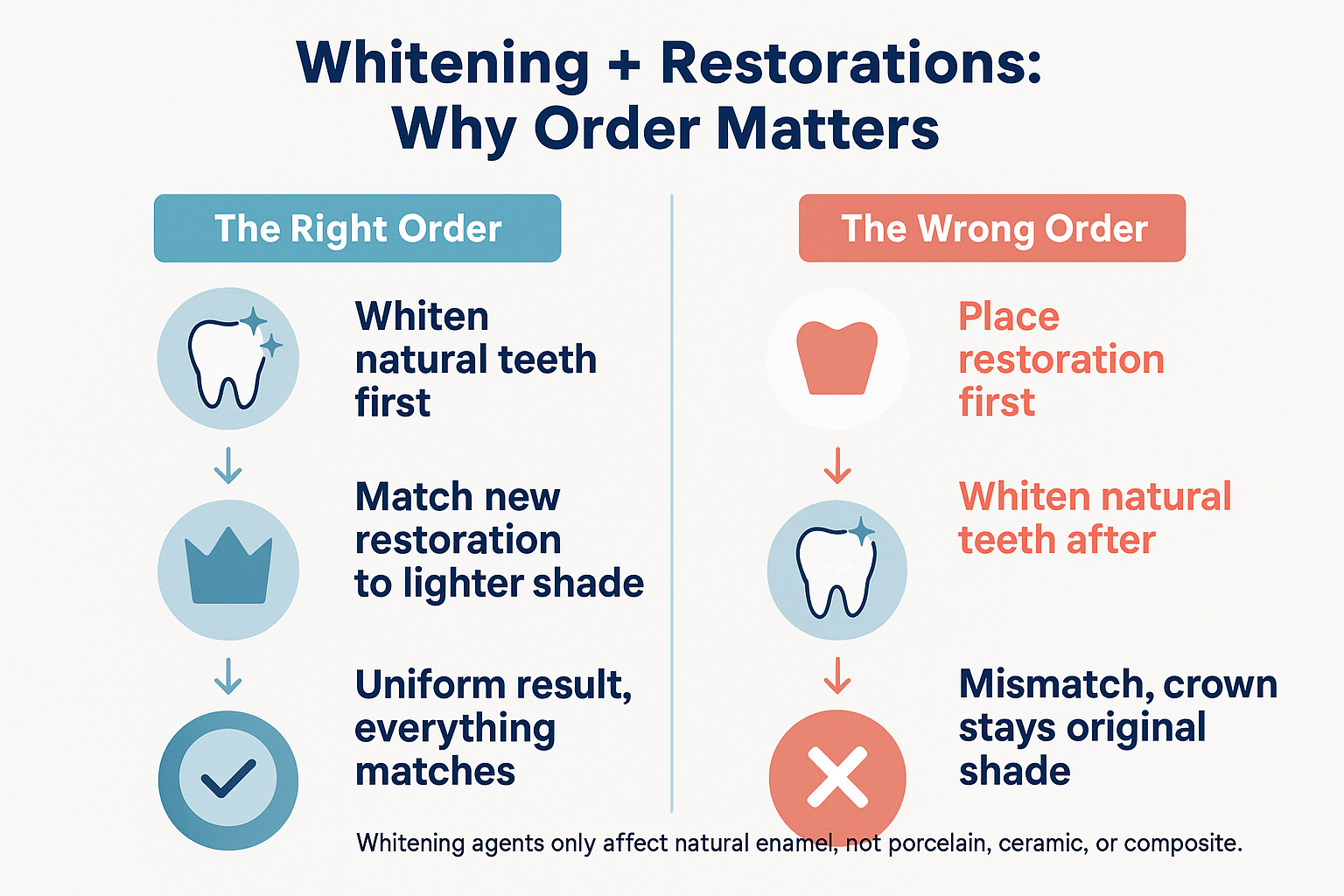
This is where sequencing matters more than most people realize. If you whiten first, we can match any new restoration to your fresh, lighter tooth shade. That gives you a uniform result that holds together.
If you do it the other way around, place the crown first, then whiten, the natural teeth will move lighter but the crown will not. You end up needing to replace the crown sooner than you otherwise would.
The same logic applies to other restorations in visible areas:
- Front-tooth composite fillings matched before whitening may look noticeably darker once surrounding teeth brighten.
- Bonding on a chipped or cracked front tooth will stay its original shade regardless of what the rest of your smile does.
- Veneers are shade-stable the same way crowns are, matched once, fixed at that shade.
For patients planning a smile makeover, getting the whitening step done first is almost always part of the sequence. It sets the target shade for every other cosmetic or restorative decision that follows.
If you are curious about how we think about natural-looking cosmetic outcomes, that article walks through the considerations in more detail.
The Right Order: Whitening and Restorations
This shows why the sequence of whitening versus placing a new crown or filling matters, and what happens when patients get it backwards.
Which Dental Materials Change Color From Whitening, and Which Do Not
A quick reference for the most common materials patients ask about before whitening.
| Material | Changes With Whitening? | What This Means for You |
|---|---|---|
| Natural tooth enamel | Yes | Responds to whitening gel, this is the target |
| Porcelain crown | No | Stays its current shade; can look darker if surrounding teeth whiten |
| Ceramic or zirconia crown | No | Same as porcelain, shade is fixed at placement |
| Composite (tooth-colored) filling | No | Will not lighten; can create visible mismatch on front teeth |
| Dental bonding | No | Fixed shade, needs replacement to match whitened teeth |
| Porcelain veneer | No | Color-stable; whitening won’t change it |
I Already Have Sensitivity, Will Whitening Make It Worse?
This is a fair concern, and it is worth separating professional whitening from the strips you grab off a drugstore shelf.
Over-the-counter products use lower concentrations of bleaching agent, but there is no supervision around contact time, fit, or whether your teeth are in good shape to handle whitening at all. That combination can lead to uneven results and increased sensitivity, especially if there are any areas of exposed root or worn enamel.
Professional whitening, whether in-office or through custom take-home trays, is different. We do a pre-whitening exam first. That lets us identify any sensitivity issues, areas of concern, or existing restorations that might affect your outcome. If someone needs a gentler approach or a lower concentration, we adjust before starting, not after.
In-office whitening also uses application techniques designed to protect the surrounding gum tissue, which is another factor that affects post-treatment comfort. The concentration is higher, but the process is controlled in ways that store products are not.
If you want to understand how long professional whitening results actually last, that is a good next read, especially for patients weighing in-office versus take-home options.
Frequently Asked Questions About Teeth Whitening With Crowns and Fillings
Will whitening work on my crown at all, even a little?
No. Whitening gels react with organic compounds in natural enamel, and crown materials do not contain those compounds. No whitening product, professional or over-the-counter, will shift a porcelain, ceramic, or zirconia crown lighter. If your crown looks darker after whitening, it is because your surrounding teeth got brighter, not because the crown changed.
I have a filling in a front tooth. Will it match after I whiten?
Only if it was shade-matched after whitening. If your composite filling was placed when your teeth were their current, un-whitened shade, it was color-matched to that baseline. Whiten now and the filling stays where it is while everything around it gets lighter. For visible front-tooth fillings, this is worth discussing before you start, sometimes a small filling replacement makes more sense than living with a patch of color that no longer matches.
My dentist mentioned I might need a new crown soon. Should I whiten before or after?
Whiten first, then place the crown. This is the sequence that gives you the most control. Once you have whitened and your shade has stabilized, usually two to four weeks after completing treatment, your new crown can be matched to your lighter teeth. Doing it the other way means committing the crown to a shade you are about to change.
What if I only have one crown and my other teeth are mostly natural?
You can still whiten, but go in with realistic expectations. Your natural teeth will respond. The crown will not. Depending on where the crown is and how noticeable the mismatch becomes, you might decide the improvement to your overall smile is worth it, or you might decide to replace the crown after whitening to bring everything into alignment. That is a conversation worth having at a consultation, because it depends on your specific crown location, its current shade, and your goals.
Is there any whitening product that works on dental materials?
No product currently available, prescription or consumer grade, changes the shade of porcelain, ceramic, zirconia, or composite restorations. Any product claiming to do that is overstating what the chemistry can accomplish. If you want a crown or veneer to look lighter, replacement is the only reliable option.
How do I know if whitening is even right for my situation before I commit?
A pre-whitening consultation is exactly what it sounds like, a chance to look at your whole mouth, map out where your restorations are, talk through your goals, and figure out the right sequence and product before any treatment starts. Every patient’s mix of natural teeth and existing dental work is different, and the right plan depends on that specific combination. There is no universal answer that works for everyone.
Ready to Figure Out What Whitening Can Actually Do for Your Smile?
If you have crowns, fillings, bonding, or veneers and want to know what a brighter smile realistically looks like for you specifically, a consultation is the clearest way to get that answer. We look at your existing restorations, talk through your goals, and map out a sequence that makes sense before anything starts. Patients from across North Scottsdale, McCormick Ranch, and the Shea Corridor are welcome to call us at 480-621-4040 or visit trinitydentalcares.com to request an appointment.