
Direct Answer: Dental implant healing happens in stages over 3-6 months. The first week involves manageable soreness and swelling, then the implant fuses with your jawbone over several months before a final crown is placed.
Most people who ask about dental implants want to know one thing before anything else: how long is this going to take, and what am I actually going to go through? It’s a fair question, and honestly, it’s the one I think deserves a straight answer before someone commits to the process.
What I’ve seen, working with patients across the Scottsdale area, is that the healing timeline surprises people, not because it’s harder than expected, but because the waiting period is longer than they imagined. The implant itself is placed in a single appointment. But the biology of fusing a titanium post to your jawbone takes time, and that window matters if you’re planning around a summer trip, a work schedule, or a life event.
This article walks through what each stage of healing actually looks like, what’s normal to feel, what’s not, and how to think about the process if bone loss has you wondering whether implants are even possible for you. No vague timelines, just what the healing stages actually involve.
Placement Day and the First Two Weeks
The day of implant surgery is usually less dramatic than patients expect. The area is numbed with local anesthetic, the titanium post is placed into the jawbone where your tooth used to be, and the gum tissue is closed around it. Most appointments run 1-2 hours, depending on whether any prep work like a bone graft is done the same day.
For the first 24-48 hours, expect swelling, some tenderness, and possibly light bleeding at the site. This is normal inflammation, your body responding to a surgical site the way it’s supposed to. Cold compresses, soft foods, and any prescribed or recommended medications manage most of this well.
By the end of week one, most patients tell me the soreness is minimal and they’re back to routine activity. Here’s what’s generally fine after that first week:
- Returning to a desk job or light daily tasks
- Walking and light activity
- Eating soft, non-crunchy foods on the opposite side
- Driving if you’re no longer on prescription pain medication
What to hold off on for at least 2 weeks: vigorous exercise, swimming, anything that significantly raises your blood pressure, and smoking, which can genuinely compromise how the implant integrates.
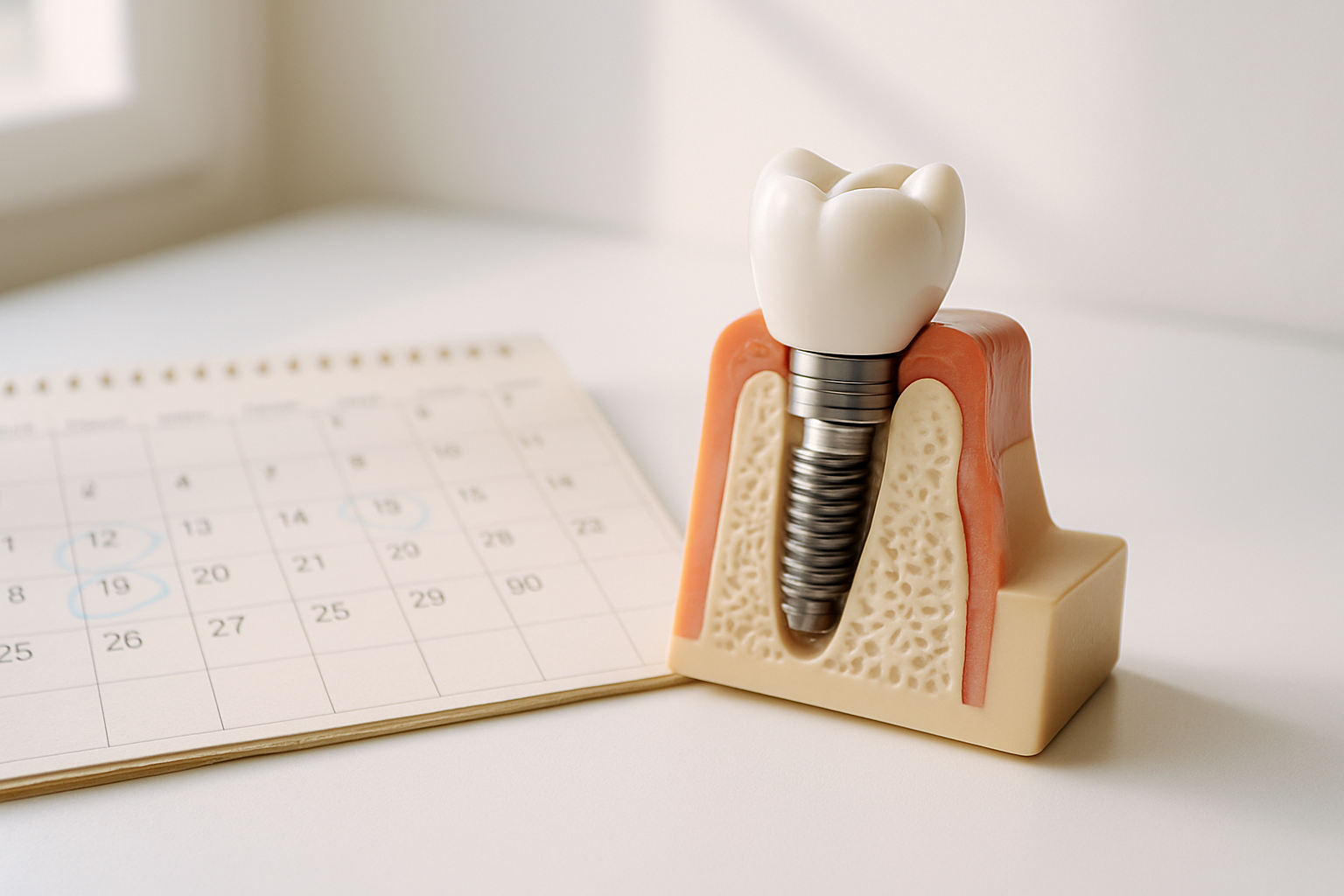
For North Scottsdale patients planning summer procedures, this timeline is worth mapping against your calendar. If you’re scheduling around July travel, placing the implant in late May or early June gives you real recovery time before you’re on a plane or hiking in the heat.
The Months in the Middle: What Osseointegration Actually Means
After the first two weeks, most patients feel fine. The soreness is gone, they’ve returned to normal eating habits, and it’s easy to forget there’s a healing process still underway. But this middle phase is the most important part of the whole timeline.
Osseointegration is the process of your jawbone growing around and bonding to the titanium post. According to research published through the National Institutes of Health, this process typically takes 3-6 months, and its success is what determines whether the implant becomes a permanent, load-bearing tooth or not.
During this phase, you’ll have check-in appointments to monitor healing. There’s no pain to manage, it’s just waiting and protecting the site. That means:
- No direct chewing pressure on the implant site
- Keeping up with brushing and flossing around the area
- Attending follow-up visits so the dentist can confirm the bone is responding well
- Avoiding habits that limit blood flow to healing tissue, including tobacco use
This is also the phase where a temporary restoration may be placed to fill the gap visually. It’s not the final crown, it’s a placeholder that protects the site and keeps surrounding teeth from shifting while osseointegration happens.
When the bone has fully fused with the post, the temporary is removed and the permanent, custom-made crown is placed. That crown is color-matched and shaped to blend with your surrounding teeth, which is the part patients usually look forward to most. If you’ve been thinking about what a restored smile could look like as part of a broader plan, this look at how cosmetic procedures work in sequence gives useful context on timing.
Dental Implant Healing at a Glance
This is a general reference for what each phase of healing involves. Individual timelines vary based on bone health, healing response, and whether additional prep work like grafting was needed.
| Phase | Timeframe | What’s Happening |
|---|---|---|
| Placement and early healing | Days 1-14 | Soreness, swelling, soft diet, rest |
| Initial recovery | Weeks 2-4 | Discomfort resolves, return to normal activity |
| Osseointegration | Months 2-6 | Bone fusing to titanium post, temporary crown in place |
| Crown placement | Month 4-6+ | Permanent custom crown seated after fusion confirmed |
| Long-term maintenance | Ongoing | Regular cleanings, exams, and implant monitoring |
What If You Have Bone Loss? You May Have More Options Than You Think
This is the question I hear most often from people who’ve been putting off an implant consult. They’ve been told, or they’ve read somewhere, that they might not have enough bone for an implant. And so they assume the door is closed.
It usually isn’t. Bone loss is common, especially in areas where a tooth has been missing for a while. The jawbone begins to shrink in the absence of a tooth root, sometimes within months. But there are two well-established approaches that address this.
Bone grafting adds bone material to the deficient area before or during implant placement. The graft material, which can come from various sources, gives your body a scaffold to grow new bone around. In some cases, grafting happens at the same appointment as extraction. In others, it’s a separate procedure that heals for a few months before implant placement can happen. This adds time to the overall process, but it’s a manageable step for many patients.
All-on-4 implants take a different approach entirely. This technique places four implants at specific angles in areas of the jaw that typically retain more bone, even in patients with significant bone loss. It’s designed for patients who need full-arch restoration and may not have the bone volume for individual implants across every missing tooth position. The angled placement is what allows it to work where traditional placement might not.
If bone loss has been the reason you haven’t booked a consultation, that concern is worth bringing up directly. The answer depends entirely on how much bone is present and where, which only an exam and imaging can determine.
Normal Healing vs. Warning Signs: What to Watch For
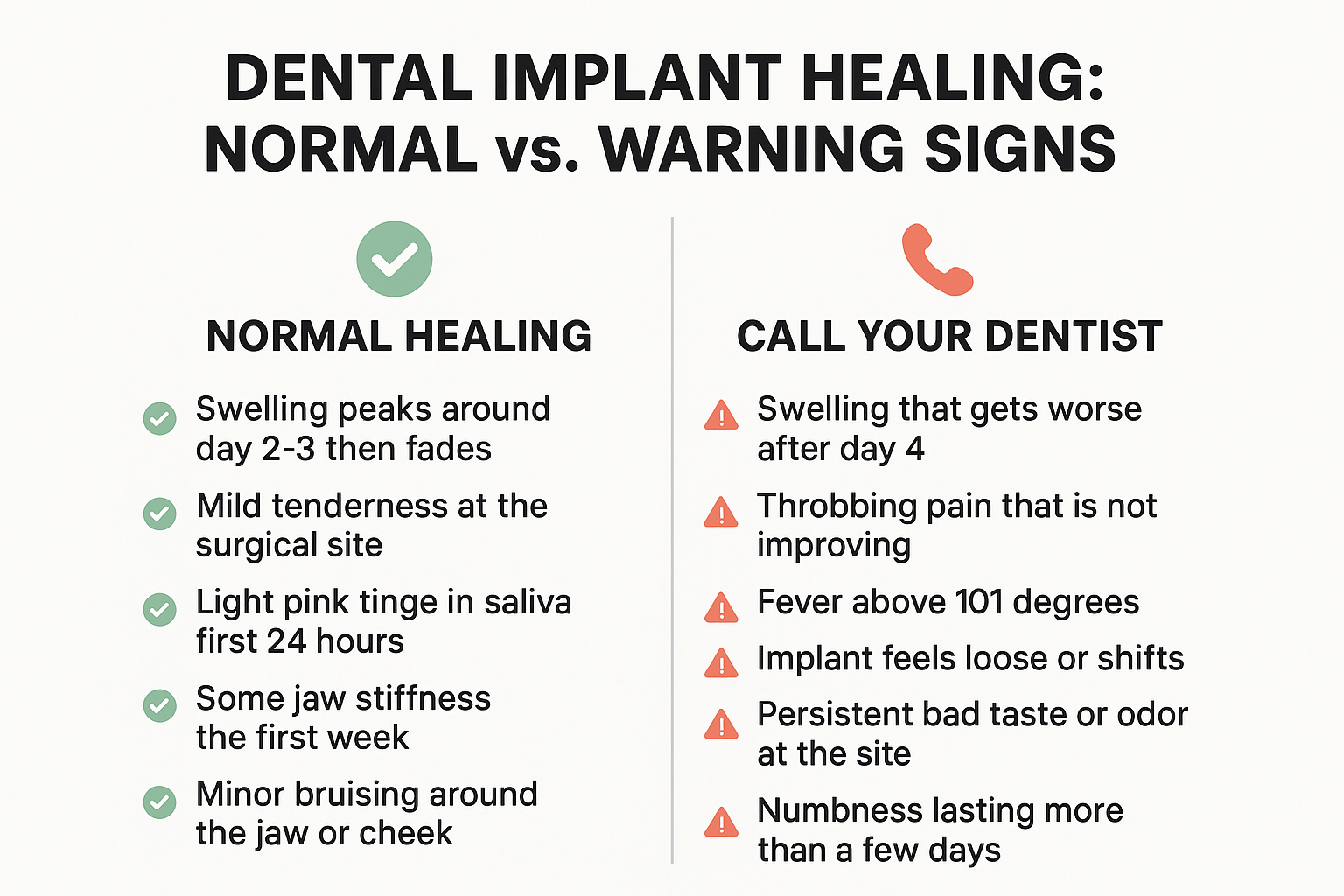
Knowing what’s expected versus what warrants a call to the office makes the healing period a lot less stressful. This breakdown separates normal sensations from signs that need attention.
What Implants Look Like 10, 15, and 20 Years Out
Implants are often described as a permanent solution, and in many cases that’s accurate. But the word permanent can set up unrealistic expectations, and I think it’s more honest to explain what the long-term picture actually looks like.
Prospective clinical studies tracking implants over 20 years show survival rates around 92%, which is strong. Most implants placed today will still be functioning two decades from now. But there are two things that affect that number.
First, the crown itself, the visible tooth portion on top, may need replacement before the implant post does. Crowns are durable, but they’re subject to the same wear as natural teeth. With good care, a crown can last 10-15 years or more before needing attention.
Second, peri-implantitis is a real risk. It’s an inflammatory condition around the implant that functions similarly to gum disease around natural teeth. It’s largely preventable with consistent oral hygiene and regular professional cleanings. Skipping cleanings around an implant is one of the fastest ways to shorten its lifespan.
The patients I see who get the most out of their implants long-term are the ones who treat it like a real tooth, they clean around it carefully, they keep their check-up schedule, and they don’t ignore early signs of gum trouble. If gum health is something you’ve been navigating, this piece on why bleeding gums aren’t something to wait out explains the underlying connection well.
Frequently Asked Questions About Dental Implant Healing
How long until I can eat normally after implant surgery?
Most patients are back to a mostly normal diet within 2-4 weeks, with soft foods in the first week or two. The real restriction is avoiding direct chewing pressure on the implant site during the osseointegration phase, which can last several months. Your dentist will give you specific guidance based on how your healing is progressing.
Can I travel after getting a dental implant?
Generally, yes, after the first week, most patients feel well enough for travel. If you’re flying, plan to be past the 72-hour mark at minimum, since changes in cabin pressure can increase discomfort at a fresh surgical site. Always bring any prescribed medications and your dentist’s contact information, especially for international travel.
I’ve been told I don’t have enough bone for an implant. Is that always the final answer?
Not necessarily. Bone grafting can rebuild volume in areas with significant loss, and the All-on-4 technique is specifically designed to work around bone deficiency in patients needing full-arch replacement. Whether either option applies to your situation depends on your specific bone structure, which requires an exam and imaging to assess.
How do I know if my implant is failing?
The clearest warning signs are an implant that feels loose or shifts when you press on it, persistent pain or throbbing that isn’t improving after the first week, swelling that gets worse rather than better after day 3-4, or a recurring bad taste or odor at the site. Any of these warrants a call to your dentist. When caught early, many complications can be addressed before they affect the implant itself.
Does it hurt when the permanent crown is placed?
Crown placement at the end of the healing process is typically straightforward and much simpler than the original surgery. The area is fully healed, and in most cases the appointment involves attaching the permanent crown to the abutment, discomfort is minimal. If you want more background on what a crown involves generally, this overview covers what a crown placement actually means.
How much does a dental implant cost in the Scottsdale area?
Costs vary depending on whether bone grafting or other prep work is needed, the type of implant (single versus full-arch), and the specifics of your treatment plan. Single implants in the Phoenix metro area generally involve different pricing than full-arch All-on-4 restorations. The best way to get an accurate number is to request a consultation where your specific situation can be evaluated and a real estimate provided.
Ready to Get a Clear Picture of Your Implant Options?
If you’ve been researching implants for a while and still have questions about your specific situation, bone loss, timing, what the process actually involves, a consultation is the place to get real answers. Trinity Dental Care serves patients across North Scottsdale, Paradise Valley, and the surrounding Scottsdale area, and we’re happy to walk through your imaging and explain what a realistic treatment timeline looks like for you. Call us at 480-621-4040 or visit trinitydentalcares.com to request an appointment.