
Direct Answer: No — fluoride treatments and sealants are genuinely useful for adults, especially those with dry mouth, gum recession, frequent cavities, or a lot of existing dental work.
Most people assume fluoride varnish and dental sealants belong in the pediatric wing — something you do for an eight-year-old’s new molars, not for a 45-year-old professional in North Scottsdale. That assumption costs some adults real money in fillings and crowns they didn’t need to get.
We hear this question more than you might expect. Patients call our office specifically asking about prescription-strength fluoride toothpaste by name — which tells us there’s a lot of genuine curiosity out there about stronger cavity protection for adults. The information just isn’t always easy to find in plain language.
This article focuses on two specific groups of adults who benefit the most from fluoride treatments and sealants, and why the math on prevention almost always beats the cost of treatment after the fact.
Why Dry Mouth Changes Everything About Cavity Risk
Saliva is your mouth’s built-in defense system. It washes away food particles, neutralizes acids, and delivers minerals back to your enamel after every meal. When saliva production drops, that entire system breaks down — and cavities can develop much faster than most people realize.
Dry mouth (xerostomia) is extremely common in adults over 40, and the cause is usually medication. Antihistamines, antidepressants, blood pressure medications, and diuretics are among the most common culprits. Diabetes also reduces saliva flow in many patients. In the Scottsdale heat, especially through summer, dehydration makes the problem worse.
Fluoride works by strengthening the mineral structure of enamel so it’s harder for acid-producing bacteria to break through. For someone with chronically reduced saliva, a professional fluoride varnish applied at a cleaning appointment is one of the most direct ways to compensate for what saliva can’t do on its own. It’s not a cure for dry mouth, but it’s a meaningful layer of protection that prescription toothpaste alone doesn’t fully replace.
If you’re on a long-term medication that causes dry mouth and you haven’t talked to your dentist about fluoride, it’s worth bringing up at your next visit. This is exactly the kind of conversation that routine dental cleanings are designed to make room for.
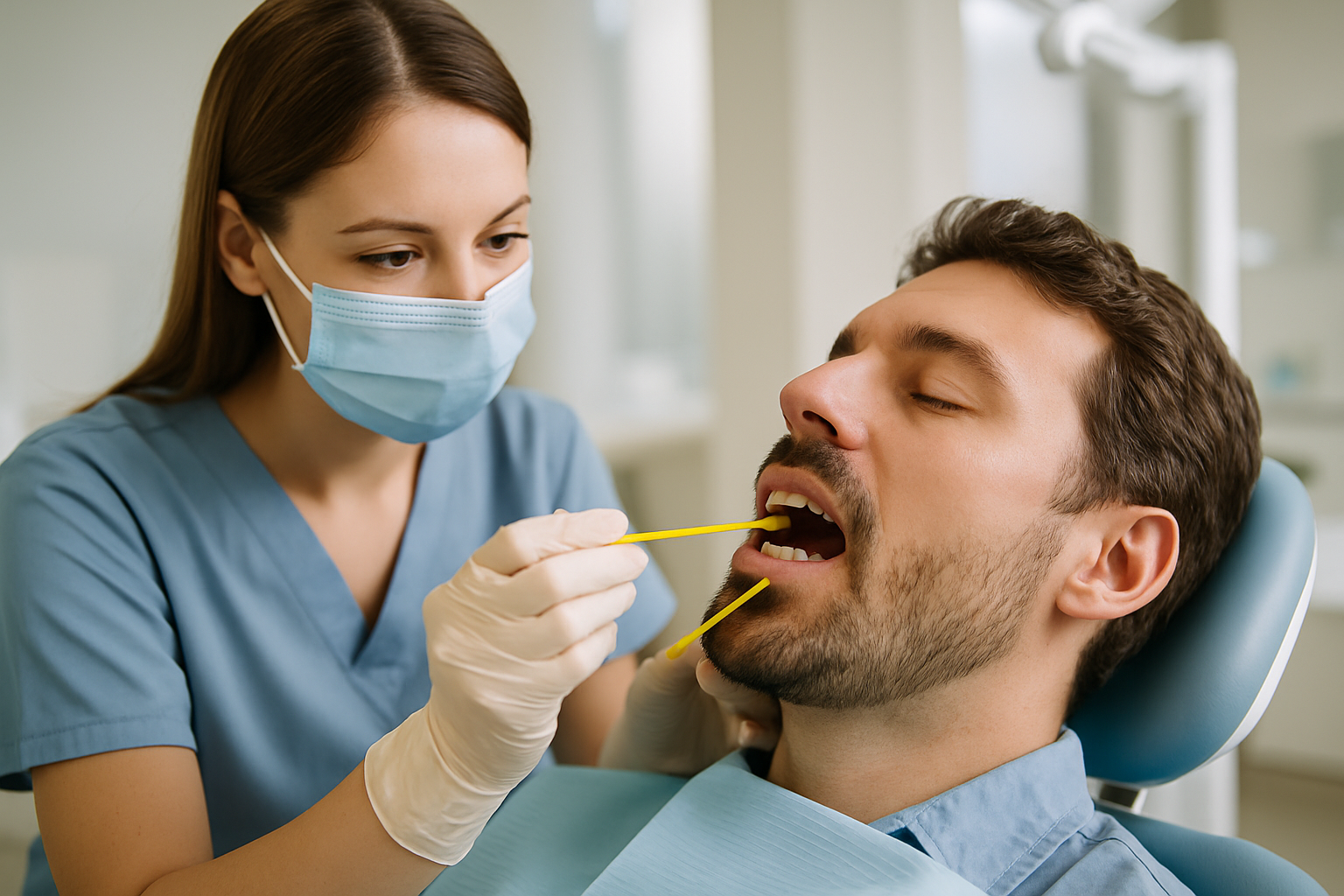
Gum Recession and the Root Surface Problem Nobody Talks About
Here’s something most patients don’t know: the root surfaces of your teeth are not covered by enamel. They’re covered by a material called cementum, which is significantly softer and more vulnerable to decay. When your gums recede — even slightly — those root surfaces become exposed.
Gum recession is common in adults for a variety of reasons:
- Years of firm brushing that gradually pushed gum tissue back
- Gum disease that has caused tissue loss over time
- Natural aging and tissue changes
- Previous orthodontic treatment that moved teeth beyond the bone
Once root surfaces are exposed, decay can progress much faster than on the crown of the tooth. The bacteria that cause cavities don’t have to work nearly as hard to get through cementum as they do through enamel. And because root cavities often develop in areas that are harder to clean and harder to see, they can be well-advanced before anyone notices.
Fluoride varnish applied directly to exposed root surfaces is one of the simplest preventive steps available. It’s quick — the application itself takes a few minutes — and it provides a meaningful reduction in the rate at which those softer surfaces break down. If you’ve been told you have some recession, this is worth asking about specifically. Our article on why bleeding gums aren’t something to just wait out covers the gum health side of this in more detail.
Which Adults Actually Benefit From Fluoride Treatments?
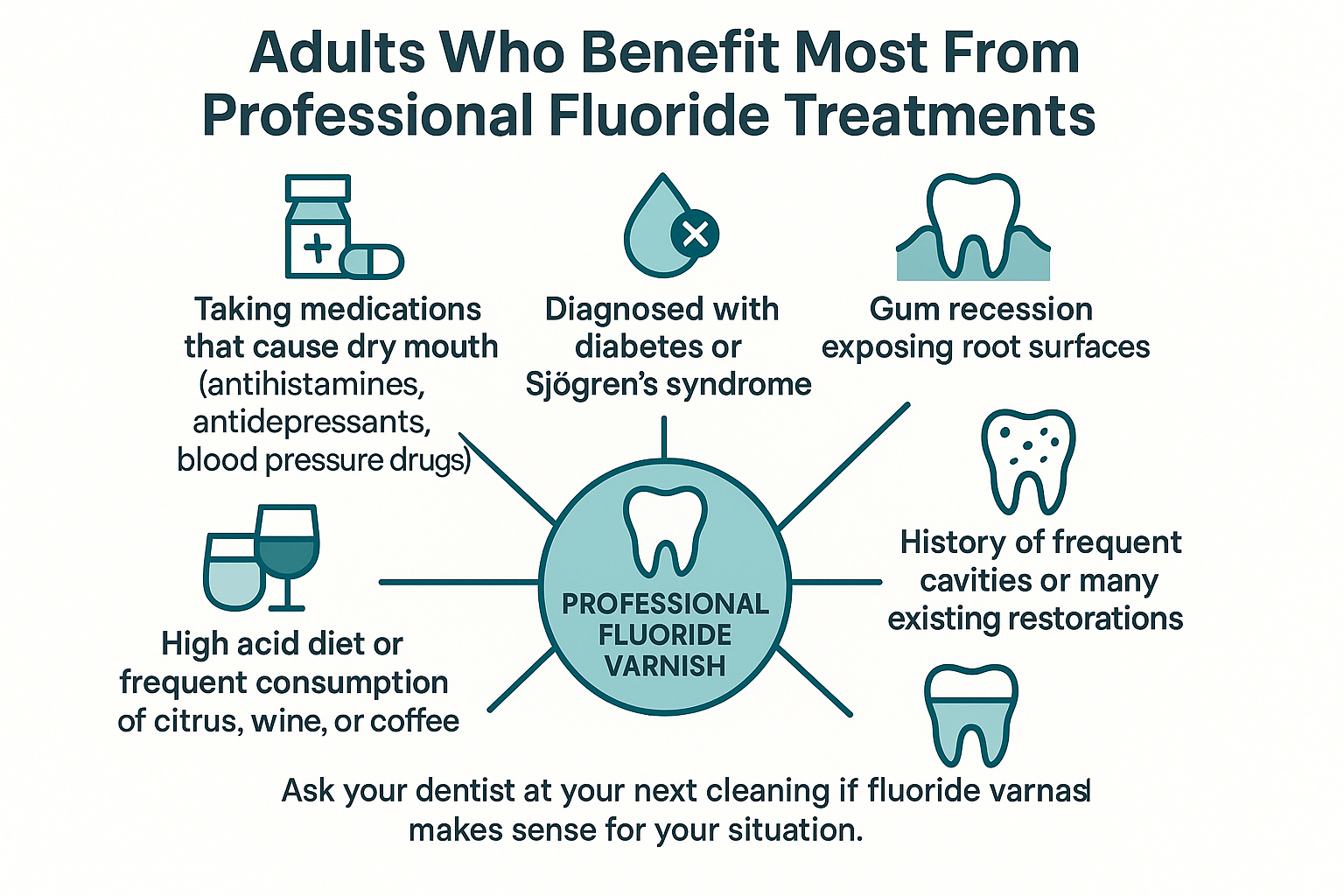
This quick reference shows the adult patient profiles where professional fluoride makes the most clinical sense.
What About Sealants — Are Those Actually Useful for Adult Teeth?
Dental sealants get marketed almost entirely to parents of school-age kids, but the logic behind them applies to adults too. A sealant is a thin resin coating painted into the deep grooves of a back molar. Those grooves are where most cavities start — they’re narrow enough that a toothbrush bristle can’t fully reach the bottom, so bacteria and food debris accumulate over time.
If a molar has deep, narrow grooves and no existing fillings or decay, a sealant can dramatically reduce the odds of a cavity forming there. That’s true whether the tooth belongs to a 10-year-old or a 42-year-old.
The adults most likely to benefit from sealants are:
- People who never had sealants as children and have unsealed molars with deep grooves
- Adults with a documented history of cavity-prone teeth
- Patients whose back teeth show early signs of enamel demineralization (the chalky white spots that precede a cavity)
Not every adult molar is a candidate. If there’s already a filling in the tooth, a sealant doesn’t add value. But for a clean molar with challenging anatomy, it’s a straightforward and inexpensive way to reduce risk significantly.
The economics here are worth considering honestly. Sealants and fluoride varnish are among the lower-cost preventive services in dentistry — both typically far less than the cost of a filling, and dramatically less than a crown. One patient we’ve treated needed a crown on a molar that had been slowly developing a cavity for years, and reflected afterward that a couple of prevention appointments would have changed the whole trajectory. That’s not an unusual story. The difference between a crown and a filling is significant in terms of both procedure and cost — and prevention is what keeps you in filling territory rather than crown territory.
Fluoride Varnish vs. Sealants: A Side-by-Side Look
These two preventive treatments are often confused or lumped together. They work differently and serve different purposes — here’s how they compare.
| Fluoride Varnish | Dental Sealants | |
|---|---|---|
| What it does | Strengthens enamel and root surfaces by delivering concentrated fluoride minerals | Physically fills and seals deep grooves in molars to block bacteria |
| How it’s applied | Painted onto teeth with a small brush; takes a few minutes | Painted into molar grooves and hardened with a curing light |
| Best for | Dry mouth, recession, high cavity risk, sensitive areas | Deep-grooved molars with no existing fillings or decay |
| How long it lasts | Renewed at each cleaning appointment (typically every 6 months) | Can last several years; checked at routine exams |
| Works on root surfaces? | Yes — this is one of its key adult uses | No — only applies to crown surfaces of back teeth |
| Typical adult candidates | Adults on certain medications, patients with recession or frequent cavities | Adults with cavity-prone, unrestored molars with deep anatomy |
The Honest Economics of Prevention
We want to be straightforward about this without overstating it: no preventive treatment eliminates all risk. Fluoride varnish and sealants are tools that reduce the odds of a problem developing — they don’t guarantee one won’t.
But the direction of the math is clear. A fluoride application at a cleaning visit is a small addition to an appointment you’re already there for. A sealant on a vulnerable molar is a procedure that takes one visit. A filling to address the cavity that formed because neither was done takes more time, more cost, and more of your tooth structure. And if that cavity reaches the nerve or fractures the tooth, you’re looking at a crown — or potentially something more involved.
For patients who have had several fillings over the years, this conversation is especially worth having. If your dental history shows a pattern of recurring decay, there’s usually a reason — and fluoride, sealants, and a closer look at saliva and gum health are where that conversation should start. You can also read more about what a deep cleaning involves if gum health is part of your picture.
Frequently Asked Questions About Fluoride and Sealants for Adults
Is professional fluoride treatment different from fluoride toothpaste?
Yes, meaningfully so. Over-the-counter fluoride toothpaste contains around 1,000–1,500 parts per million (ppm) of fluoride. Prescription-strength fluoride toothpaste goes up to 5,000 ppm. Professional fluoride varnish applied in the office is even more concentrated and stays in contact with the tooth surface longer than toothpaste does during brushing. Each option has its place — but they’re not interchangeable in terms of strength or delivery.
Will my insurance cover fluoride treatments as an adult?
It depends on your plan. Many dental insurance plans cover fluoride treatments for patients up to age 18 but not automatically for adults. Some plans do cover adult fluoride when there’s a documented clinical reason, like gum recession or high cavity risk. It’s worth asking your insurance company directly, or having our front desk check your specific coverage before your appointment.
I’ve had the same dentist for years and they never mentioned sealants for my teeth. Should I ask?
It’s a reasonable question to raise. Sealants are more commonly discussed during childhood, so they don’t always come up in adult appointments unless a dentist proactively reviews your molar anatomy and cavity history together. If you have deep grooves in your molars and a history of cavities, it’s worth asking at your next cleaning whether any of your unsealed teeth might benefit.
I take a daily antihistamine for allergies — is that enough to affect my cavity risk?
Potentially yes. Antihistamines are among the most common causes of medication-related dry mouth, and daily use does reduce saliva flow over time. The effect varies by person and by specific medication, but it’s something worth mentioning to your dentist. They can evaluate your saliva production and enamel health and tell you whether adding fluoride to your routine makes sense.
Does fluoride varnish taste bad or feel weird?
Most patients barely notice it. Modern fluoride varnishes come in mild flavors like mint or caramel, and the application is quick. The varnish has a slightly sticky texture when first applied, which resolves within hours. We typically ask patients to avoid hot liquids and hard foods for a few hours after application so the varnish has time to fully absorb — but that’s about the extent of any aftereffect.
Can sealants go over an existing small filling?
No — sealants are designed for tooth surfaces that are clean and intact. Once a tooth has a filling, the sealant doesn’t add protective value in the same way. This is one reason why catching a vulnerable tooth early — before the first cavity — is when sealants are most useful.
Want to Know If Fluoride or Sealants Make Sense for You?
The honest answer depends on your specific teeth, your health history, and what your last few years of dental records look like — and that’s exactly the kind of thing a thorough exam at Trinity Dental Care is designed to sort out. Dr. Fink takes the time to actually review your situation rather than running through a checklist, which is what patients from across North Scottsdale — from the Shea Corridor to McCormick Ranch — consistently tell us they value most. If you’d like to talk through your cavity risk or ask whether your back molars are candidates for sealants, call us at 480-621-4040 or visit trinitydentalcares.com to request an appointment.