
Direct Answer: A store guard is bulky, softens in the mouth, and often touches only a few teeth. A custom guard is made from your arch, sits thinner, and is adjusted so bite pressure spreads evenly.
Almost nobody looks up night guards on their own. The question shows up at a routine cleaning, when I point out flattened edges on the front teeth, a polished worn spot on a molar, or a hairline crack, and say the word for the first time.
Then you go home, see a twenty dollar option at the pharmacy on Shea, and reasonably wonder what the difference could possibly be. That is a fair question, and the honest answer is not “better plastic.”
I want to walk through what actually changes between the two, what drives the cost of a custom one, and the situations where buying any guard off a shelf is the wrong first move.
Why I Can See Grinding Damage You Cannot Feel
Being told you grind your teeth when you have no memory of doing it feels like a setup for a sale. I get that. Most grinding happens in sleep, and the people doing it rarely wake up aware of anything.
What I am reading is wear patterns, and they are visible to someone who looks at the same teeth every six months. Over time the changes stack up in a way a single visit would never show.
Here is what tends to give it away:
- Flat, matching edges on the upper and lower front teeth, where the biting edges have lost their natural shape
- Shiny, polished facets on the chewing surfaces of molars that catch the light differently than the rest of the tooth
- Craze lines, those hairline vertical cracks in enamel that show up under bright light
- Notches at the gumline, often paired with sensitivity to cold
- Chipping along the edge of a front tooth or the corner of an existing filling
I have patients in McCormick Ranch and the Shea Corridor who were certain they did not grind until I showed them photos from two years apart side by side. Nothing hurt. The enamel was still going somewhere.
Custom Night Guard vs Store Bought: What Actually Changes
Three things decide whether a guard gets worn every night: thickness, fit, and how evenly your bite lands on it. Everything else is secondary.
A boil and bite guard is molded in hot water at your sink. It is thicker, it softens again with body heat, and because it was shaped by pressure rather than your actual arch, it often contacts only a handful of teeth. Some people find that uneven contact makes them clench harder, not less.
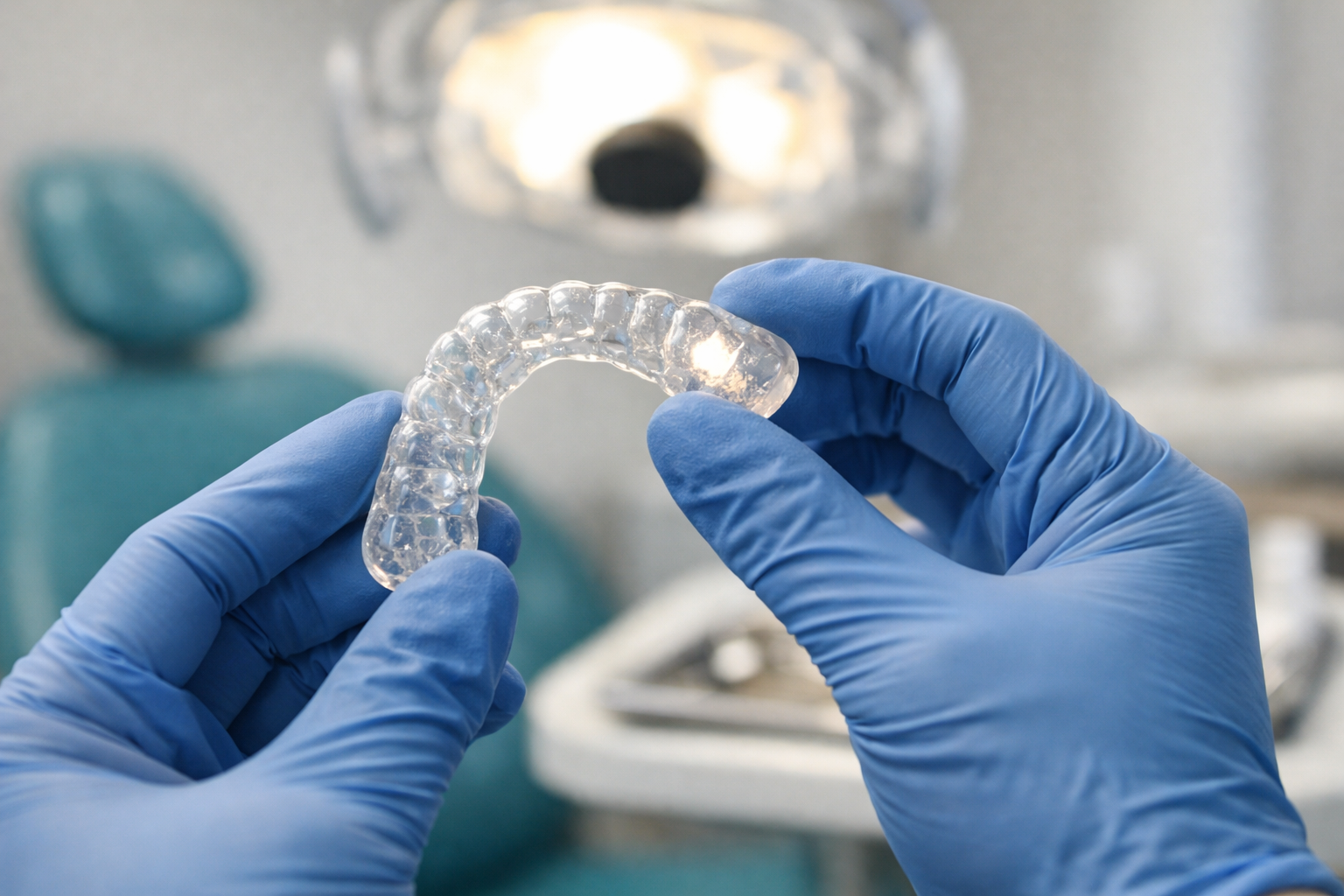
A custom guard starts from a digital scan or an impression of your real arch. It comes back from the lab thinner, it holds its shape, and it gets adjusted in the chair so pressure spreads across the arch instead of landing on two back teeth.
So what are you paying for? The fit and the adjustment, far more than the material. That is the part a drugstore cannot do.
I will also say the uncomfortable part out loud. A guard sitting in a drawer protects nothing, no matter what it cost. If a custom guard is uncomfortable, that is a reason to bring it back and have it adjusted, not a reason to give up on it.
Side by Side: The Differences That Matter
This is the comparison I end up drawing on the back of a treatment estimate a few times a month.
| What matters | Boil and bite from the store | Custom guard from a dental office |
|---|---|---|
| How it is made | Softened in hot water, shaped by your own bite pressure at home | Made from a digital scan or impression of your actual arch |
| Thickness | Noticeably bulkier, more material between the teeth | Thinner profile for the same protection in most cases |
| Bite contact | Often touches only a few teeth, contact can be uneven | Adjusted in the chair so pressure spreads across the arch |
| Material behavior | Can soften again with body heat over months | Holds its shape through normal nightly use |
| Typical lifespan | Months, depending on how hard you grind | Commonly a few years with care, heavy grinders wear through sooner |
| Cost | Lowest cost option, usually well under a hundred dollars at retail | Meaningfully more, varies by material and lab, ask for a written estimate |
What Goes Into the Cost of a Custom Guard
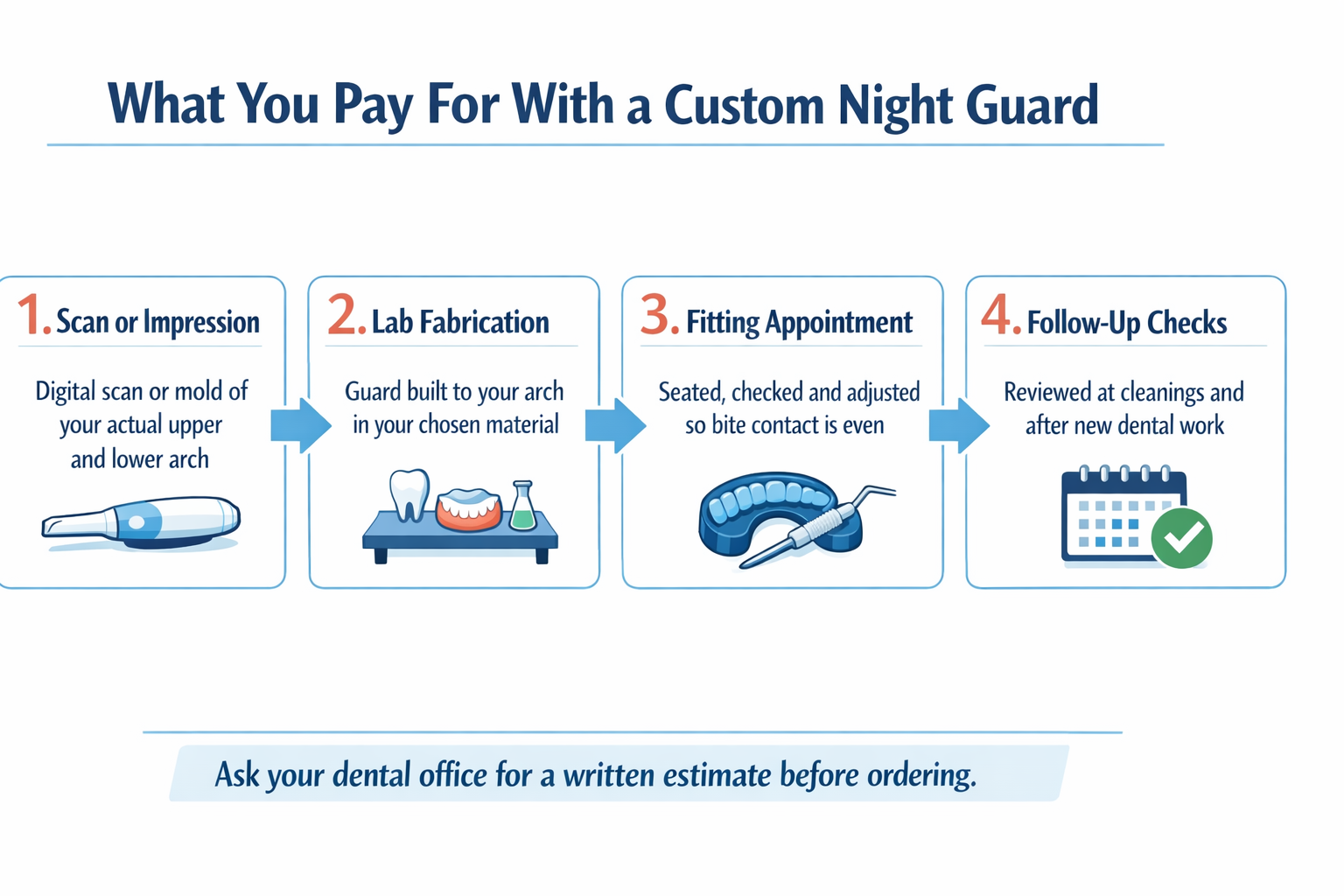
When patients ask why a custom guard costs more, it helps to see where the fee actually goes. These are the steps involved, not a price quote.
How to Think About Cost Without Guessing at a Number
I will not throw a figure at you here, because the real number depends on your arch, the material, and the lab. What I can tell you is what the fee usually covers: the scan or impression, the lab work, and the fitting appointment where the guard gets adjusted to your bite.
Cost questions come up on roughly one in twelve calls to our front desk, so you are not the only person price checking a recommendation. The written estimate is where the real number lives, and you are entitled to one before anything is ordered.
Two things worth asking about before you decide:
- Frequency limits. Dental plans that cover guards often pay for one only every few years. If yours was replaced recently, the next one may be out of pocket.
- Network status. What a plan pays can change depending on whether your dentist is in network, which is worth understanding up front. I wrote more about that in what changes when your Scottsdale dentist is out of network.
North Scottsdale patients tend to care more about how long something lasts than what it costs on day one. That is a reasonable way to weigh this one.
A Night Guard Is Not a One Time Purchase
This is the part almost nobody mentions at the handoff. Dentistry changes the fit of your guard.
A new crown, a new filling, or an implant crown changes the shape of your bite. A guard made before that work may not seat the same way afterward, and in some cases it will not seat at all. If you have a crown planned, bring the guard to that appointment so we can look at it together.
Guards also wear out in ordinary ways:
- They perforate, usually over a molar, which tells me exactly where the force is landing
- They warp in heat, and a car parked in a Scottsdale lot in July will do it fast
- They collect buildup without regular rinsing, brushing with a soft brush, and a dry ventilated case
So here is a simple habit. Bring the guard in its case to every cleaning and let your hygienist and dentist look at it. Uneven wear and thin spots are easy to spot and they tell a story about what is happening at night.
When a Shelf Guard Is the Wrong First Move
A night guard protects teeth from wear. It does not diagnose why the clenching is happening. Those are two different problems with two different answers.
There are situations where I would want someone looked at before anything goes in the mouth at all:
- Jaw joint pain, clicking, popping, or locking when you open or close
- Morning headaches paired with daytime jaw fatigue or soreness
- A bite that feels different than it did six months ago
- Loud snoring or suspected sleep apnea, where the wrong appliance can work against you
The National Institute of Dental and Craniofacial Research keeps a plain-language overview of temporomandibular disorders that is worth reading if the joint itself is bothering you.
None of that means something is seriously wrong. It means a twenty dollar guess at the pharmacy is not the right first step, and an exam is.
Frequently Asked Questions About Night Guards
Will a store bought guard damage my teeth?
For most people it will not damage teeth, but it may not help much either. The bigger risks are uneven bite contact that encourages harder clenching and a bulky fit that leads to the guard never being worn. If it is all you have tonight and your dentist has not raised any joint concerns, it is better than nothing while you ask about a custom one.
How long does it take to get a custom night guard?
Typically a scan or impression visit, then a short fitting visit once the lab sends it back. Timelines vary by lab and by material, so ask your office what to expect when you schedule.
I already have a guard from years ago. Is it still fine?
Maybe, and that is easy to check. Bring it in its case to your next cleaning. I look for thin spots, perforations over the molars, warping, and whether it still seats fully, especially if you have had a crown or filling since it was made.
Does insurance cover a night guard?
Some plans pay a portion and some do not cover guards at all. The detail that catches people is the frequency limit, meaning the plan may only pay for a replacement every few years. Ask the office to check your benefits and give you a written estimate before anything is ordered.
Upper or lower guard, and does it matter?
Both are used and the choice depends on your bite, your existing dental work, and what you can actually tolerate sleeping in. That call gets made at the exam, not off a shelf.
Wondering Whether Your Teeth Are Showing Wear?
If someone has mentioned grinding to you, or your old guard has been sitting in a drawer since before your last crown, an exam is the place to sort it out. Our team at Trinity Dental Care sees patients from across North Scottsdale at the Frank Lloyd Wright Blvd office, and we are happy to look at a guard you already own. You can reach us at 480-621-4040 or at trinitydentalcares.com when you are ready.