
Direct Answer: Saliva rinses acid off your teeth and puts minerals back into enamel. When flow drops for months, decay speeds up, often at the gumline and around existing crowns and fillings.
There’s a water bottle on the nightstand. At 3 a.m. your tongue is stuck to the roof of your mouth, your lips are cracked, and you take a few sips that never really help.
By morning your breath is worse than it used to be, and you’re sipping water all day without ever feeling like you caught up. Most Scottsdale patients chalk that up to the desert and move on.
But here’s the question almost nobody asks me: what happens to your teeth when saliva runs low for months at a time? That’s the real story behind dry mouth and tooth decay, and our driest, coolest stretch from late fall through early spring is exactly when it plays out.
The Link Between Dry Mouth and Tooth Decay Starts With Saliva
Saliva does a lot of quiet work you never think about. It’s not just there to keep your mouth comfortable.
All day long, saliva is:
- Rinsing away food before it sits on your teeth and feeds bacteria
- Buffering acid that bacteria produce after every snack, coffee, or glass of wine
- Putting minerals back into enamel between meals, which is a slow repair process called remineralization
- Protecting soft tissue so your cheeks, tongue, and gums stay comfortable
When flow drops, all four of those stop working well at the same time. Acid sits longer. Enamel doesn’t get its minerals back. Plaque sticks more easily.
The American Dental Association notes that reduced salivary flow raises the risk of cavities, enamel demineralization, and tooth sensitivity, which matches what I see in the chair.
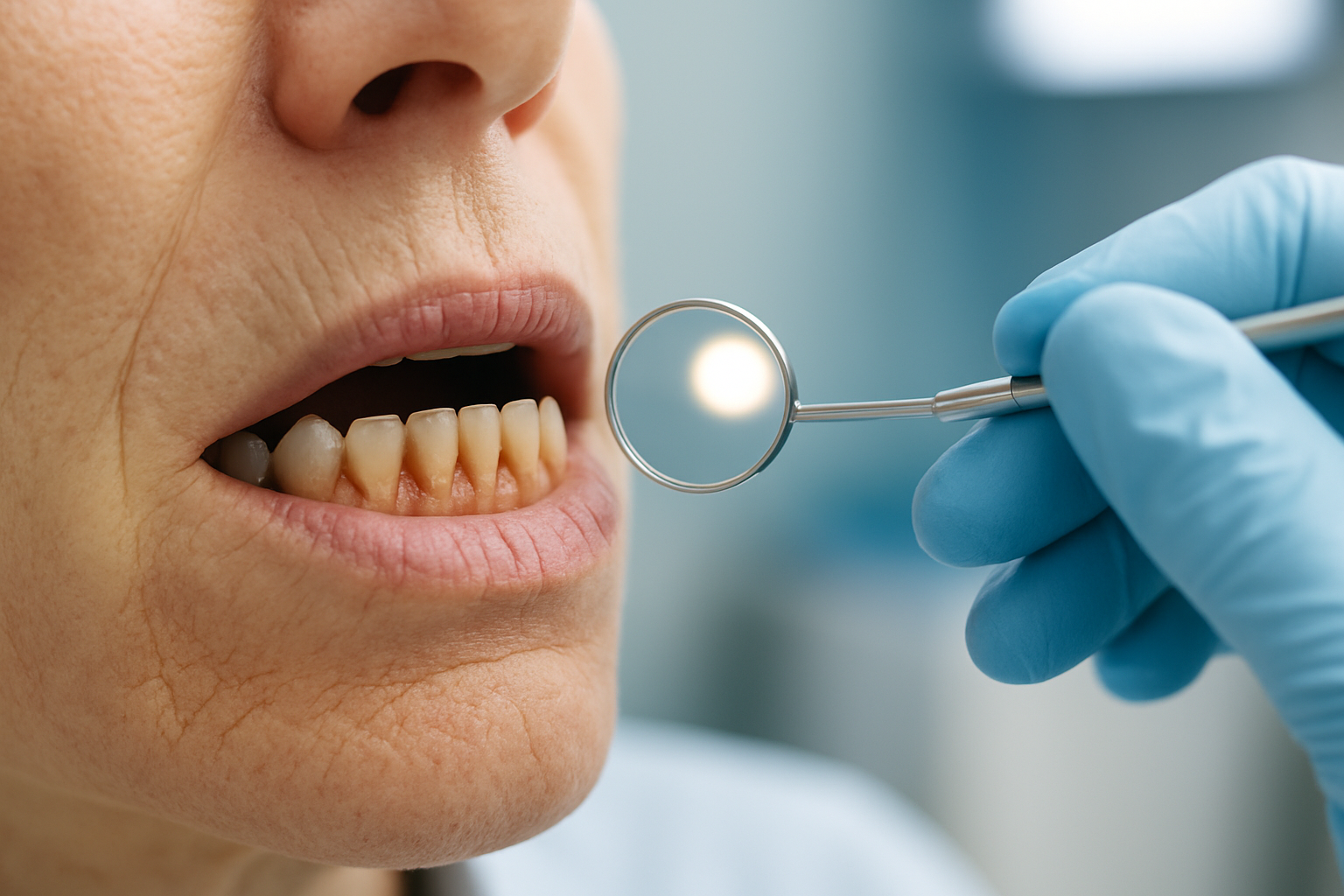
And cavities from dry mouth don’t always show up where you’d expect. They tend to appear along the gumline and on root surfaces, on teeth that have never given you a problem in fifty years. That’s why a patient who swears nothing about their brushing changed can hear about three new cavities at one visit.
Why Scottsdale Winters Are the Driest Stretch of the Year for Your Mouth
Summer gets all the attention here because of the heat. But the air is at its driest and coolest from late October through March or April, and that’s the window that matters for your mouth.
Then you add indoor heating. Running the heat overnight pulls even more moisture out of the air in the bedroom, and eight hours of that adds up night after night.
The everyday stuff in North Scottsdale piles on too:
- Mouth breathing on a morning hike in the McDowell Sonoran Preserve, when you’re working hard in bone dry air
- An afternoon on the golf course in the Shea Corridor or out near Scottsdale Mountain, sweating without really noticing
- Heat running all night, every night, from Thanksgiving into spring
Winter residents get hit hardest. Seasonal folks start arriving in late October, are mostly settled by mid-November, and stay through March or April. Many come from far more humid parts of the country where dry mouth was never a thing.
So someone who spends four to six months a year here is spending all of it inside the driest window on the calendar. If that’s you, it’s worth folding into the dental work you plan for a four month stay rather than waiting until you fly back.
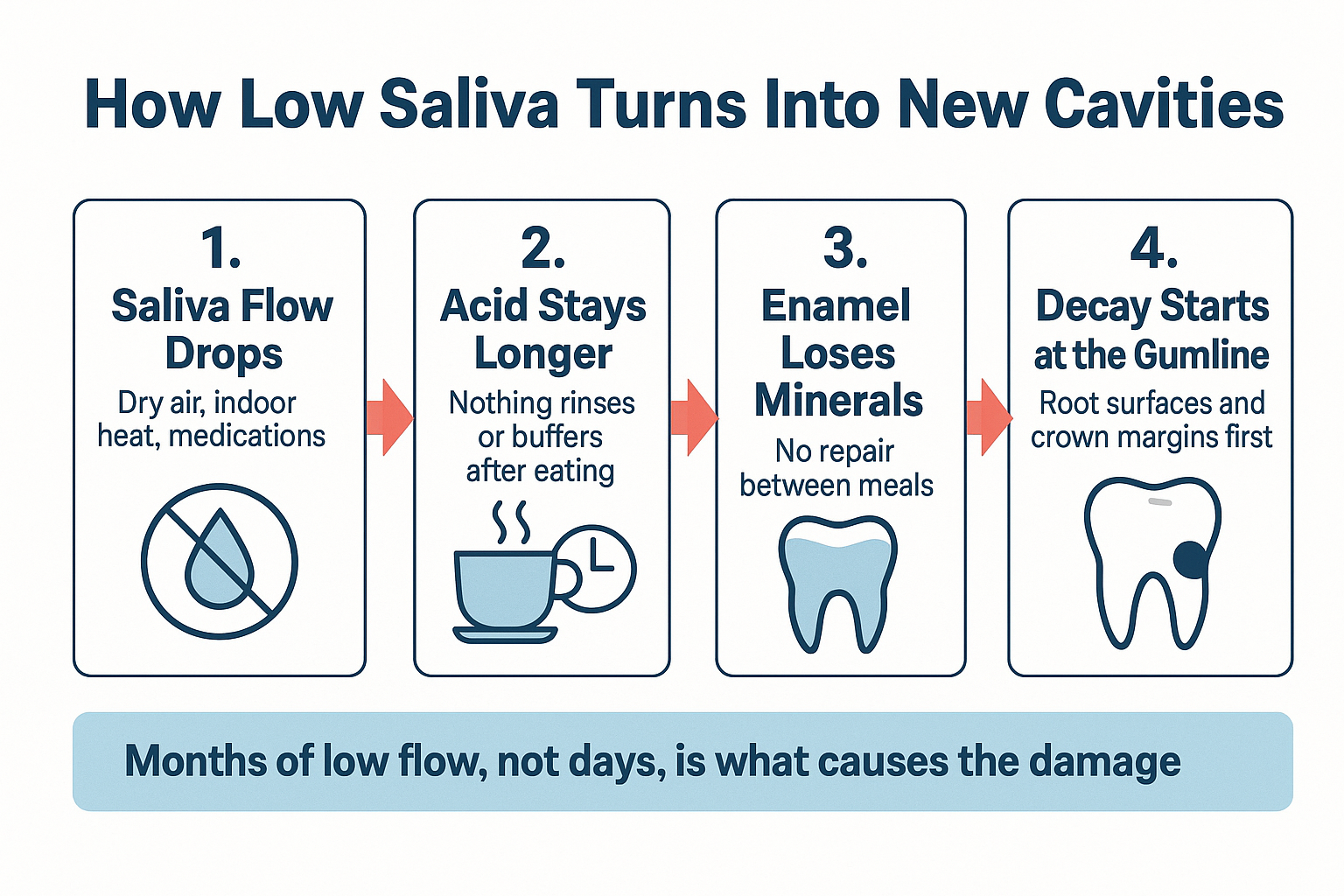
How Low Saliva Turns Into New Cavities
Here’s the chain of events, step by step, from a dry night to a new cavity at the gumline.
Medications Are the Most Common Cause I See
Climate makes dry mouth worse. Medications are usually what starts it.
Hundreds of common prescriptions list dry mouth as a side effect, and taking several at once compounds the problem. The ones that come up most often with patients in this age group:
- Blood pressure medications
- Diuretics
- Antihistamines, which get heavy use through Phoenix allergy season
- Antidepressants
- Bladder and overactive bladder medications
Scottsdale’s median age sits around 49, and roughly a quarter of residents are 65 or older. So this is not some rare situation here. On a typical day I’ll see it in several charts.
One thing I want to be direct about: nobody should stop or change a prescription because of a dental issue. That conversation belongs to the doctor who prescribed it.
The good news is the dental side of the risk can be managed either way. We don’t need you to change your medications. We just need to know what you’re taking so we can adjust how we protect your teeth.
Early Signs of Dry Mouth, Before the Cavities Show Up
Most patients notice one or two of these for months without connecting them. Here’s what each one usually points to.
| What you notice | What’s likely going on | Why it matters |
|---|---|---|
| Bad breath every morning, even after brushing at night | Bacteria multiplied overnight with nothing rinsing them away | Often the very first sign, and the easiest one to dismiss |
| Crackers, bread, or dry chicken are hard to swallow | Not enough saliva to break food down and move it | Suggests flow has dropped noticeably, not slightly |
| Food tastes different or flat | Taste buds need moisture to work properly | Commonly starts after a new prescription |
| More plaque at your cleaning than you used to have | Plaque sticks and hardens faster without saliva | Your hygienist usually spots this before you do |
| Sore spots under a denture that used to fit fine | Saliva creates the seal and the cushion | Fit problems are often dryness, not a bad denture |
Dry Mouth Goes After Your Existing Dental Work First
This part catches people off guard, so it deserves its own space.
A crown or a filling doesn’t get a cavity. But the margin, the seam where the restoration meets your natural tooth, is a vulnerable spot. It sits right around the gumline, it’s hard to clean well, and decay likes to start there.
In a mouth with normal saliva, that margin holds up for a long time. Well made crowns commonly last 10 to 15 years or more with good hygiene and regular checkups. In a mouth that’s been dry for a couple of years, decay can work its way under the edge much sooner.
That’s the repair almost nobody sees coming. The crown looks fine. Nothing hurts. And then an X-ray shows decay underneath it.
If it does reach that point, you’re into a conversation about whether to save the tooth or replace it, which is a much bigger decision than the one you’d face if we’d caught the dryness two years earlier. Gum tissue takes a hit too, and gum health has effects well beyond your mouth.
What Changes on the Dental Side Once We Know
Once dry mouth is identified, the plan shifts. Not dramatically, but in ways that matter over years.
What that usually looks like:
- Shorter intervals between hygiene visits, because plaque is building faster than it used to
- Prescription strength fluoride at home, which is a standard recommendation for dry mouth patients and goes well beyond what’s in a drugstore tube
- Sealants on adult teeth, which are not just for kids
- Checking root surfaces specifically at every exam instead of only looking where cavities usually form
- Swapping a few products, mainly alcohol based mouthwash and sugary cough drops, for sugar free versions
None of that is dramatic. But it changes the math on a mouth that’s spending five months a year in dry air.
Our hygienists tend to spend real time on this part, and patients notice. One review put it simply after a cleaning here: “appreciated her recommendations and explanation of strategies to use during flossing and use of water pik.” That’s the goal, sending you home with something concrete to actually do.
Frequently Asked Questions About Dry Mouth and Tooth Decay
Will drinking more water fix dry mouth?
It helps you feel better, but it doesn’t replace saliva. Water rinses, but it doesn’t buffer acid or carry minerals back into enamel the way saliva does. So sipping all day is fine, it just isn’t protection.
How fast can cavities form when my mouth is dry?
Faster than most people expect. I’ve seen patients go from a clean exam to several new cavities within a year after starting a medication that dried them out, with no change in their brushing or flossing. That’s why we shorten the recall interval instead of waiting to see what happens.
I only live in Scottsdale part of the year. Is this still my problem?
Arguably more so. Winter residents are here from roughly late October through March or April, which is the driest stretch of our year, and many come from humid climates where they never had to think about it. Four to six months of low saliva flow is plenty of time for decay to start.
Should I ask my doctor to change my prescription?
Not because of your teeth, and not without talking to them first. That call belongs to your prescribing physician. Bring the medication list to your dental exam instead so we can adjust the protective side of things around it.
Does dry mouth affect crowns, bridges, or implants?
It affects the natural tooth structure around them. Decay starts at the margin where a crown meets your tooth, and dryness speeds that up. Dentures are affected differently, since saliva creates the seal, so sudden sore spots in a denture that always fit well are often a dryness signal.
Thinking your mouth has been drier than it used to be?
A dry mouth conversation fits naturally into a regular exam. Bring your medication list, mention the 3 a.m. water bottle, and we can look at your root surfaces and crown margins with that in mind. Our office on N. Frank Lloyd Wright Blvd sees patients from across North Scottsdale, and you can reach us at 480-621-4040 or at trinitydentalcares.com to request a consultation.