
Direct Answer: Most dental insurance plans cover some implant-related costs, like the crown or extraction, but frequently exclude the implant fixture itself. Coverage varies widely by plan, and most patients pay something out of pocket.
One phrase comes up more than almost anything else when someone calls our office about implants: “I just want to make sure it’s covered before I schedule anything.” It’s a completely reasonable thing to want to know. And the honest answer is, it depends on your specific plan, in ways that most insurance cards don’t make obvious.
Dental implant coverage in Arizona is a patchwork. Some plans cover portions of the process, others exclude implants by category, and a few cover more than patients expect. The gap between what people assume insurance will do and what it actually pays is where most of the confusion lives.
This FAQ is built around the real questions our team hears from Scottsdale and North Scottsdale patients. I’m going to answer each one directly, without sugarcoating or alarm, just a clear picture of what to expect so you can go into a consultation knowing what questions to ask.
Frequently Asked Questions About Dental Implant Insurance Coverage in Arizona
Does my dental insurance cover dental implants at all?
Maybe, and the honest answer is that you need to check your specific plan, because the range is wide. Most private dental plans classify implants as a major restorative procedure, which means they fall into the highest cost-sharing category. That typically means the plan pays 50% of covered charges after your deductible, but only if implants are covered in the first place.
Here’s the part that catches people off guard: many plans cover the crown placed on top of the implant but specifically exclude the implant fixture itself, the titanium post that gets placed in the jawbone. So you might get partial reimbursement for one part of the process and nothing for another. The American Dental Association notes that implant coverage in private plans has grown in recent years, but exclusions are still common. Reading the summary of benefits for your specific plan, not just calling the 800 number and asking a general question, is the only way to know for sure.
What is an annual maximum and why does it matter for implants?
Your annual maximum is the most your insurance company will pay toward your dental care in a single benefit year, regardless of what you need. Most private plans set this somewhere in the range of $1,000 to $2,000 per year, though some employer plans are higher.
For a single dental implant, which can involve an extraction, bone grafting if needed, the implant post, a healing abutment, and a final crown, the total treatment cost often exceeds that annual maximum on its own. So even if your plan technically covers implants, you may hit your ceiling before the process is complete. Patients coming to us from North Scottsdale neighborhoods like McCormick Ranch or the Shea Corridor are often surprised by this. It’s worth knowing your remaining benefits before any major treatment starts.
What’s the difference between my plan covering the crown versus the implant post?
This is one of the most important distinctions to understand. A dental implant involves two separate components that insurance may treat very differently:
– The implant fixture, the titanium post surgically placed in your jawbone
– The implant crown, the visible tooth-shaped cap placed on top
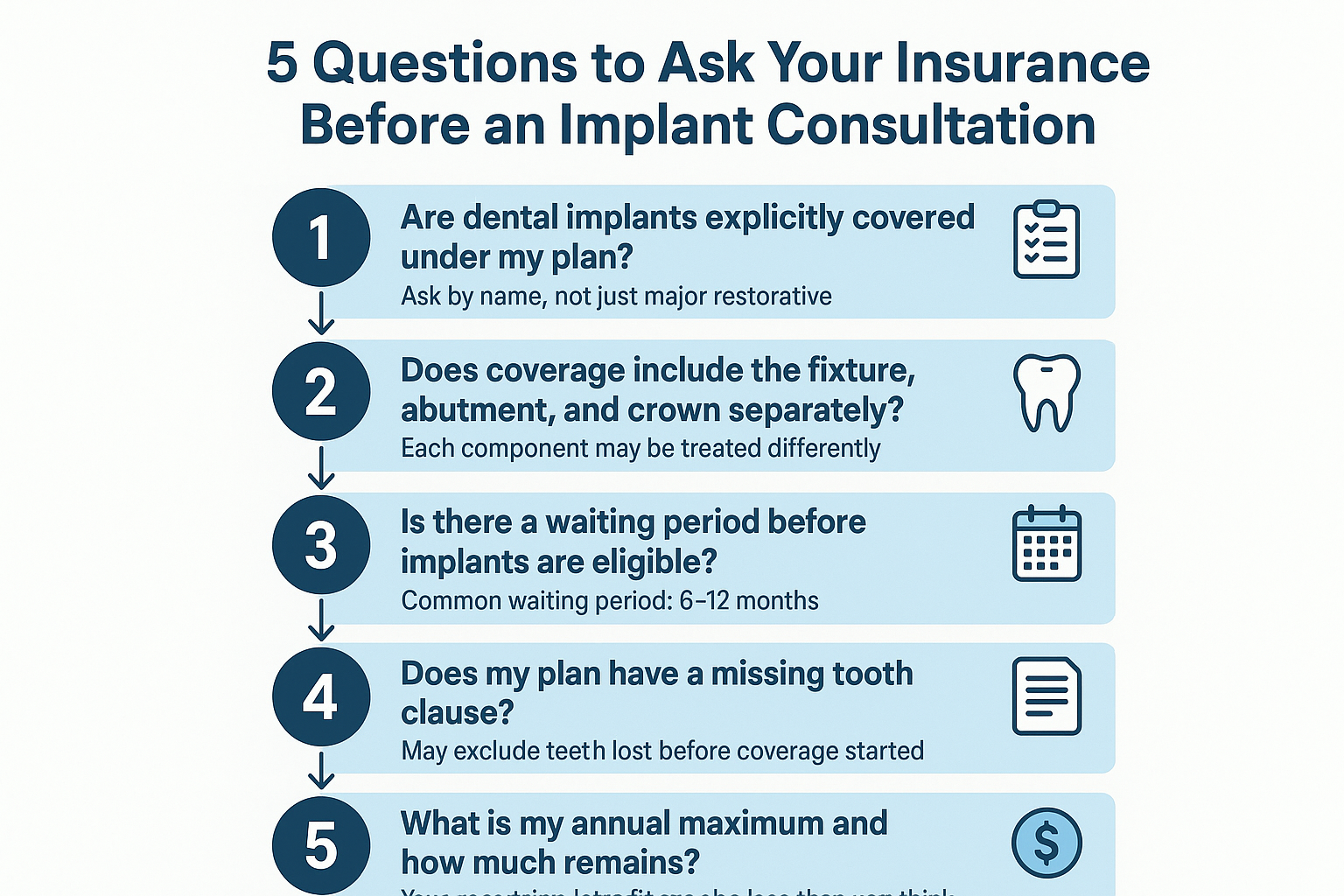
Some plans categorize the crown as a standard restorative item and cover it at their major procedure rate. The implant post, however, is often categorized separately, sometimes as a surgical procedure, sometimes excluded entirely under a specific implant exclusion clause. When you call your insurance company, ask specifically: Does my plan cover the implant fixture, the abutment, and the crown separately? Get a straight answer for each component.
This also matters for patients considering All-on-4 dental implants, where multiple implants support a full arch. The cost structure is different, and so is how insurance tends to categorize it.
What’s the difference between a PPO and a DHMO, and does it matter for implant care?
It matters quite a bit, actually. Here’s the basic difference:
– A PPO (Preferred Provider Organization) lets you see any licensed dentist. You pay less when you use an in-network provider, but you’re not locked in to a single office.
– A DHMO (Dental HMO) requires you to select a primary care dentist from within the plan’s network. It typically uses a copay schedule rather than percentage-based reimbursement.
For implant care specifically, PPO plans tend to offer more flexibility, you can choose a dentist based on skill and experience, not just network status. DHMO plans may restrict which procedures are covered and where you can receive them.
When patients ask us, ‘Do you take my insurance?’, the real question isn’t which insurance company issued the card. It’s whether we participate in that specific plan’s network. Two people can both have Delta Dental and have very different in-network situations. The best move is to call our office directly with your insurance ID and group number. We can verify your benefits before you ever sit in the chair.
Can I use an HSA or FSA to pay for dental implants?
Yes, in most cases. Health Savings Accounts (HSAs) and Flexible Spending Accounts (FSAs) are generally accepted for dental implant treatment because implants are considered a qualified medical expense by the IRS. This applies to the implant post, abutment, crown, and related procedures like extractions or bone grafts.
For patients with a high-deductible health plan, an HSA can be a meaningful way to cover out-of-pocket implant costs with pre-tax dollars, which effectively reduces what you spend. FSA funds typically need to be used within the plan year, so timing matters. If you have either of these accounts, ask about using them when you call to confirm your coverage.
What if I don’t have dental insurance at all?
You’re not alone, several callers each month come to us without current coverage, and they’re often people who know exactly what they need. They’re just looking for a path forward.
Some dental practices offer in-house membership or discount plans as an alternative to traditional insurance for patients paying out of pocket. These plans typically provide a set fee arrangement for routine care and reduced rates on restorative and cosmetic procedures, without the annual maximums or coverage exclusions that come with traditional insurance. If cost is the main thing holding you back, it’s worth asking about this option when you call. We can explain what’s available and how it compares to paying procedure by procedure.
What should I do before my appointment to understand my coverage?
Before you come in, I’d recommend doing three things:
– Call your insurance company and ask specifically whether implants are covered under your plan, not just ‘major restorative,’ but implants by name. Ask about the fixture, abutment, and crown separately.
– Ask about your annual maximum and what you’ve used so far this benefit year. If you’ve already had other dental work done, your available benefit may be lower than you expect.
– Call our office with your insurance information so we can verify your specific plan’s network status and benefits before your first visit.
Patients who do this homework before their consultation tend to feel a lot more confident going in. There are no surprises, and we can focus the visit on treatment planning rather than sorting out coverage questions on the spot.

The Part of Implant Coverage Most Patients Don’t Expect
Even when a plan does cover dental implants, there are usually waiting periods, frequency limitations, and missing tooth clauses that catch people off guard.
A missing tooth clause means your insurance won’t cover a tooth that was already missing before your coverage started. So if you lost a tooth years ago and just now want an implant, many plans will exclude that implant entirely, regardless of how long you’ve been paying premiums. This is one of the more frustrating realities of dental insurance, and it’s worth checking for specifically.
Waiting periods are another common barrier. Many plans require you to have been enrolled for 6 to 12 months before major procedures like implants are eligible for any coverage. If you recently switched jobs or changed plans, that clock may not have started yet.
For patients weighing the implant process and wanting to understand the full timeline, including what dental implant healing actually looks like, week by week, it helps to plan your insurance benefit timing alongside the clinical timeline. These two tracks don’t always line up naturally without some forethought.
How Insurance Typically Treats Each Part of the Implant Process
Coverage varies by plan, but this gives a general picture of how different components are often categorized. Always verify your specific plan directly.
| Component | How Insurance Often Classifies It | Typically Covered? |
|---|---|---|
| Tooth extraction (if needed) | Basic or major restorative | Often yes, at 50-80% |
| Bone graft (if needed) | Surgical/major restorative | Sometimes, varies widely |
| Implant fixture (titanium post) | Surgical or specifically excluded | Frequently excluded or limited |
| Abutment | Restorative component | Sometimes covered, sometimes excluded |
| Implant crown | Major restorative | More commonly covered at 50% |
| Annual maximum impact | Applies across all covered services | May cap total reimbursement below total cost |
5 Questions to Ask Your Insurance Company Before Your Implant Consultation
Print this out or screenshot it before you call, these are the specific questions that get you real answers instead of general ones.
When a Crown Is Part of a Bigger Picture
Sometimes the implant question arrives alongside a broader set of dental concerns. A patient might need an extraction, have an old failing crown, and be dealing with bone loss, all at once. In those situations, it helps to understand that different procedures may fall under different coverage categories on the same visit.
For example, if you need a crown on a different tooth while also pursuing an implant, those are separate line items in your insurance submission. Knowing that ahead of time helps with budgeting and with timing treatment across benefit years when that makes sense.
For patients considering more complex restorations, like multiple missing teeth or full-arch work, the All-on-4 process has its own cost and coverage considerations that are worth discussing in a dedicated consultation. The short version: traditional annual maximums rarely make a dent on full-arch cases, and financing or membership plans often end up being the more practical path for those patients.
Ready to Get a Straight Answer on Your Coverage?
If you’ve been sitting on an implant decision because you weren’t sure what your insurance would do, you now have the right questions to ask. And when you’re ready to verify your specific plan, our team at Trinity Dental Care is happy to do that with you before you ever commit to an appointment. Call us at 480-621-4040 or visit trinitydentalcares.com to request a consultation, we’ll help you figure out where your coverage stands and what your options look like from there.