
Direct Answer: Dentures loosen over time because your jawbone slowly shrinks after teeth are removed. The bone changes shape, so the denture that once fit well no longer matches the ridge it sits on.
You’ve had your dentures for a few years, and somewhere along the way they stopped behaving. Maybe you’re going through adhesive faster than you used to, or you notice a little clicking when you talk. Maybe you’ve quietly started avoiding certain foods at dinner because you just don’t trust your bite the way you once did.
This is one of the most common things I hear from patients who come in wearing dentures they got somewhere else. They assume the denture wore out, or that they did something wrong. But in almost every case, the denture itself is fine. What changed is the bone underneath it.
Below, I’ll walk through exactly why that happens, what your options are when it does, and how to know whether you’ve crossed the line from a simple adjustment into something more significant.
The Real Reason Dentures Stop Fitting: Bone Loss
When a tooth is removed, the jawbone around that root starts to shrink. The technical term is resorption, and it’s something the American Academy of Oral and Maxillofacial Surgeons has documented extensively. The bone that once supported your tooth roots no longer has a job to do, so your body gradually reabsorbs it.
This process doesn’t happen overnight. In the first year after extractions, bone loss tends to be most rapid. After that, it slows down but never fully stops. Over five to ten years, the ridge your denture rests on can change shape enough that a denture made to fit the original ridge no longer fits the current one.
This is not a flaw in how your denture was made. And it is not something you caused. It’s a predictable biological process that happens to virtually everyone who wears a traditional removable denture. The denture stays the same shape; your bone does not.
Patients are sometimes surprised to hear this because nobody explained it to them when they got their dentures. If that’s you, you’re not alone. I’ve had patients in their sixties and seventies who wore dentures for a decade and genuinely didn’t understand why a plate that once fit like a glove now felt like it belonged to someone else.
Signs It’s Time to Have Your Fit Evaluated
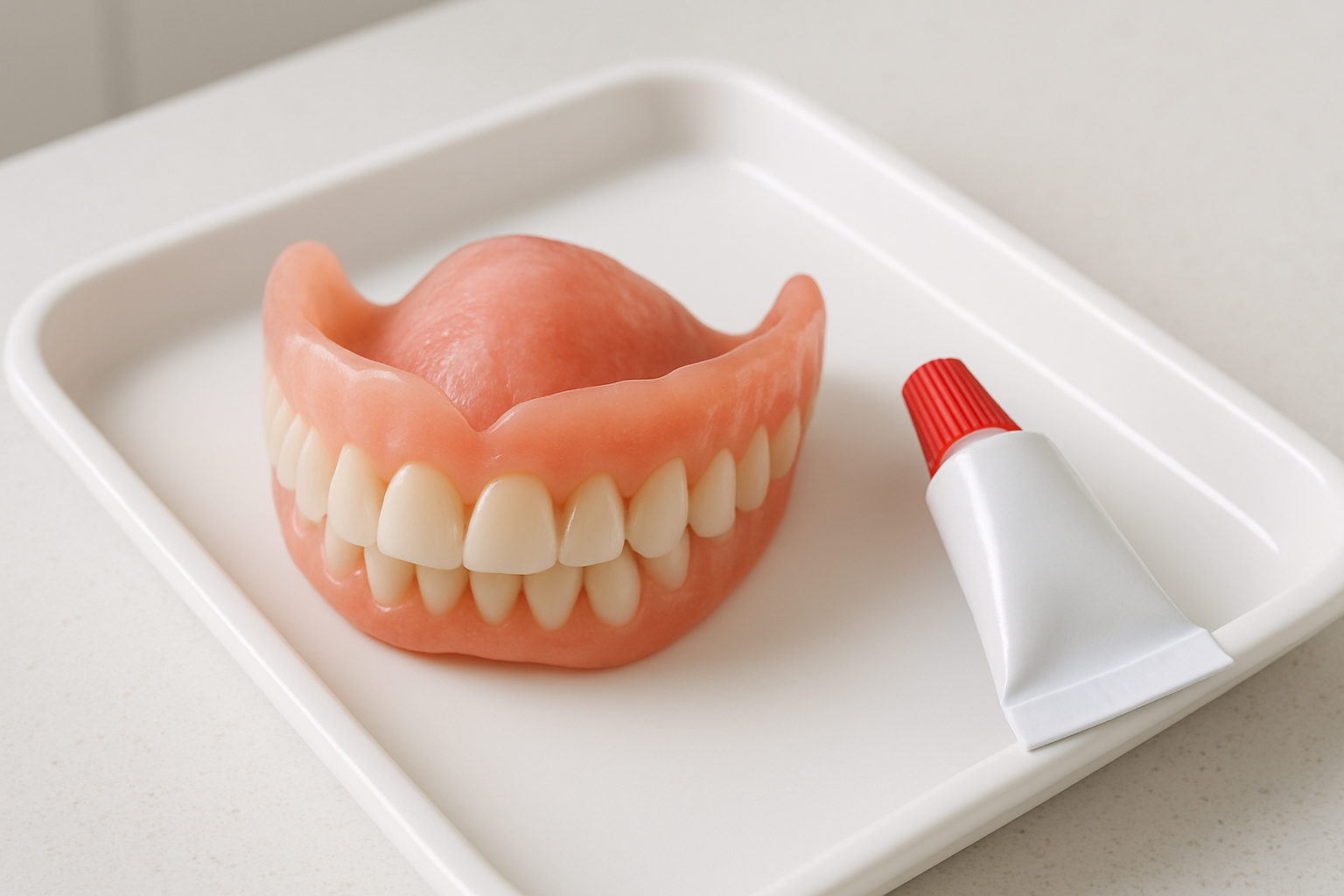
A lot of patients describe their fit problems in very practical terms. One common pattern I hear: using a small amount of adhesive becomes using a large amount, and then it still doesn’t feel secure. Others notice it during conversation, a slight click or shift when they speak that wasn’t there before.
Here are the signals worth paying attention to:
- Adhesive use is creeping up. If you’re going through product noticeably faster than you used to, that’s a fit problem, not a product problem.
- Sore spots that come and go. When a denture rocks on an uneven ridge, it creates pressure in inconsistent places. That shows up as irritation that never quite heals.
- Avoiding foods you used to eat. Corn on the cob, apples, chewy bread, if these have quietly disappeared from your plate, your bite is telling you something.
- Clicking or shifting when you speak. A well-fitting denture should stay put during normal conversation.
- The plate feels loose first thing in the morning. Some patients notice the fit is worst after sleeping, when the tissues aren’t compressed from a day of wear.
None of these are reasons to be embarrassed. Needing an adjustment after a few years of denture wear is normal maintenance, the same way a shoe that fits perfectly in the store can stretch over time. Getting it looked at early is always better than waiting until the fit becomes genuinely uncomfortable.
Reline vs. New Denture: How to Know Which One You Need
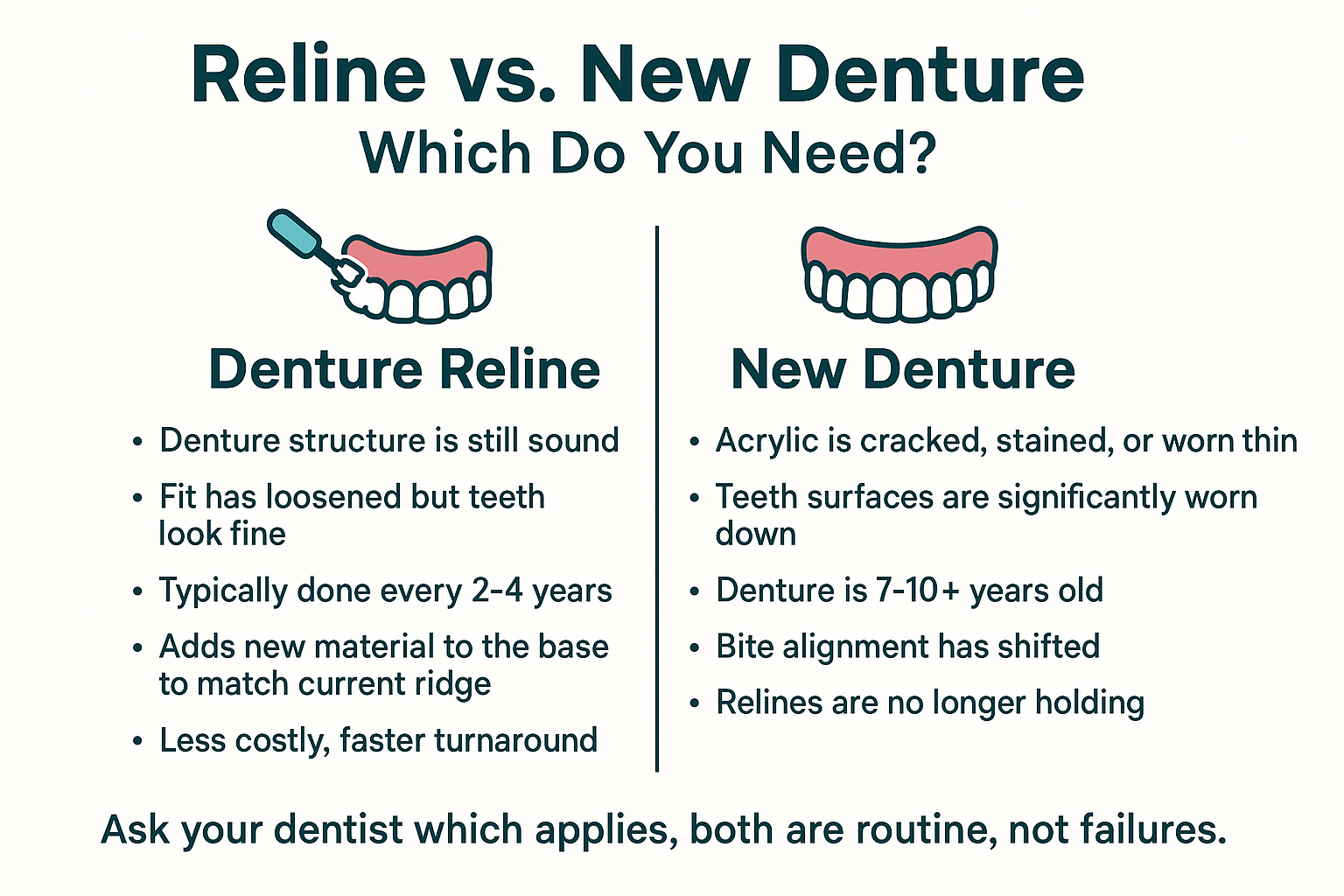
This quick reference shows how the two main fit solutions differ and when each one typically applies.
Relines and New Dentures: What’s the Difference and When Does Each Apply?
A reline is essentially a resurfacing of the denture base. The dentist adds new material to the underside of the plate so it conforms more closely to the current shape of your ridge. It’s a routine procedure, and many patients need one every two to four years depending on how quickly their bone changes.
A new denture becomes the better option when the denture itself has aged to the point where a reline won’t solve the underlying problems. If the acrylic is cracked, the teeth surfaces are worn flat, or the bite alignment has drifted, adding material to the base won’t fix those things. Most full dentures have a practical lifespan somewhere around seven to ten years, though that varies based on how they were made and how they’ve been cared for.
The distinction matters because a reline is typically less costly and quicker, while a new denture is a bigger investment but gives you a proper starting point again. Neither one is a sign that something went wrong. They’re just different points in a predictable maintenance timeline.
If you’re not sure which situation you’re in, an evaluation is the only way to know. We look at the fit, the condition of the base, how the teeth are wearing, and how the bite is sitting. That assessment tells us whether a reline buys you several more good years or whether you’d be better served starting fresh.
Denture Maintenance Timeline at a Glance
This gives a general sense of when each type of intervention tends to come up for most denture wearers. Individual timelines vary based on bone density, original fit, and daily habits.
| Timeframe | What Typically Happens | Recommended Action |
|---|---|---|
| 6-12 months after delivery | Initial settling, minor sore spots | Adjustment appointment |
| 2-4 years | Ridge has changed, fit loosening | Reline |
| 5-7 years | Fit degrading despite relines, bite shifting | Evaluate for new denture |
| 7-10+ years | Material worn, teeth flat, structural issues | New denture or implant-supported option |
| Any point | Clicking, adhesive use increasing, sore spots | Come in for a fit evaluation |
Why Implant-Supported Dentures Are Worth Understanding
Traditional dentures float on the gum ridge and rely on suction and adhesive to stay put. Implant-supported dentures attach to small titanium posts placed in the jawbone, so there’s no floating and no relying on adhesive to get through a meal.
But beyond the obvious stability improvement, there’s something more important to understand: dental implants slow the bone loss that causes the fit problem in the first place. The implant post functions like a tooth root. It gives the bone a reason to stay, which means the ridge resorbs more slowly over time.
For patients who have been managing denture fit problems for years and are tired of the cycle of relines and adjustments, implant-supported dentures change the equation in a meaningful way. You get a denture that doesn’t slip during conversation or shift when you’re eating something with texture, and you address the underlying bone loss issue rather than just chasing it.
If you’re curious about what the implant process actually involves, what dental implant healing actually looks like, week by week gives a good picture of the timeline and what to expect.
Not everyone is a candidate for implants, bone density, overall health, and other factors all play into it. But if you’ve been wearing dentures for several years and find yourself in an ongoing fit management cycle, it’s a conversation worth having.
What We Actually Look at During a Fit Evaluation
When a patient comes in saying their denture doesn’t feel right anymore, the visit isn’t just about the denture itself. We’re looking at the whole picture.
That includes:
- The ridge itself, how much the bone has changed since the denture was made and whether the current shape can support a reline or needs more significant work
- The denture base, whether the acrylic is structurally sound or showing wear and stress cracks
- The bite, how the upper and lower teeth meet, and whether years of wear have flattened the contact points
- Gum tissue health, pressure sores and chronic irritation from a loose denture can affect the tissue underneath, and that needs to be addressed before any adjustment
- Your overall oral health, even patients without natural teeth need periodic checks on soft tissues, and gum health matters even when you’re not aware of it
If you’ve been a long-time denture wearer and haven’t had a check-in for a while, why bleeding gums aren’t something to just wait out covers some of what we watch for in the surrounding tissue, even for patients without natural teeth.
A thorough evaluation gives us a clear answer: adjust, reline, replace, or explore a more permanent solution. You shouldn’t have to guess which one applies to you.
Frequently Asked Questions About Denture Fit
Is it normal to need more adhesive after a few years?
Yes, and it’s one of the most common early signs that a fit evaluation is overdue. Needing more adhesive usually means the ridge has changed enough that the denture base is no longer making consistent contact. It’s fixable, and addressing it sooner means less irritation and a simpler solution.
Can I just keep relining the same denture indefinitely?
Up to a point. A reline works well when the structure of the denture itself is still sound. But after seven to ten years, the acrylic fatigues, the teeth wear down, and the bite shifts in ways a reline can’t correct. At some point, starting fresh with a new denture gives better results than continuing to adjust an aging one.
Do implant-supported dentures really stop bone loss?
They slow it significantly. The implant posts stimulate the bone the way natural tooth roots do, which signals the body to maintain bone volume rather than resorb it. This doesn’t reverse existing bone loss, but it does slow the process that causes fit problems to begin with. For patients who are good candidates, that’s a meaningful long-term benefit.
How much does a denture reline or new denture cost?
Costs vary depending on whether it’s a chairside reline, a lab reline, or a full replacement, and whether insurance applies. What you pay out of pocket depends on your specific coverage and the condition of your current denture. The best approach is to come in for an evaluation, we can give you a clear cost picture before you commit to anything.
I’ve been avoiding the dentist for a while. Will I be judged?
Absolutely not. We hear this concern regularly, and it’s one of the reasons we make a point of keeping the conversation judgment-free. Whether it’s been two years or ten, the only thing that matters is where things stand now and what we can do about it.
Ready to Find Out What’s Actually Going On with Your Fit?
If your denture has been giving you trouble and you’re not sure whether you need a simple adjustment, a reline, or something more involved, the most useful thing you can do is get a proper evaluation. At Trinity Dental Care, we see denture wearers at every stage of this conversation, some just need a tweak, others are ready to talk about implant-supported options. Give us a call at 480-621-4040 or visit trinitydentalcares.com to request an appointment, and we’ll give you a straight answer about where things stand.