
Think of dental preventative services as the essential maintenance plan for your smile. Much like taking your car for regular oil changes to avoid a costly breakdown, this proactive approach to dentistry focuses on keeping your teeth and gums healthy.
The goal is to stop problems like cavities and gum disease long before they have a chance to start. This focus on prevention ensures your smile stays bright and healthy for years to come.
The Foundation of a Lifelong Healthy Smile

Preventive dentistry is a partnership between the professional care you receive at Trinity Dental Care and your daily habits at home. It’s less about drilling and filling and more about ensuring those issues never develop in the first place.
At its core, the goal is to maintain a healthy mouth, which we know is a major contributor to your overall well-being. This approach makes dental care more comfortable and affordable for our patients in Scottsdale, AZ.
Why Prevention Matters
This forward-thinking strategy is built on a simple truth: it is far easier, more comfortable, and less expensive to prevent dental diseases than to treat them. Just look at the numbers.
According to the CDC, over 90% of adults have had at least one cavity, and nearly half of all adults over 30 show signs of gum disease. These statistics show why a stronger focus on prevention is so critical.
To help our patients visualize what this care plan looks like, we've put together a simple table that breaks down the key components of dental preventative services.
| Component | What It Involves | Primary Goal |
|---|---|---|
| Professional Cleanings & Exams | Regular visits for tartar removal, polishing, and a thorough check-up. | Remove buildup that brushing misses and catch potential issues early. |
| Digital X-Rays | Low-radiation imaging to see beneath the gums and between teeth. | Detect cavities, bone loss, and impacted teeth not visible to the eye. |
| At-Home Hygiene | Consistent brushing twice a day and flossing daily. | Disrupt plaque formation and keep gums healthy between appointments. |
| Fluoride & Sealants | Professional application of fluoride and protective coatings on molars. | Strengthen enamel and create a barrier against decay-causing bacteria. |
| Patient Education | Personalized advice from Dr. Christine Ann Fink on brushing, flossing, and diet. | Empower you with the knowledge to take control of your oral health. |
This table shows how a combination of in-office treatments and your own diligence creates a powerful defense for your smile.
Core Components of Preventive Care
A solid preventive strategy combines our professional oversight with your personal diligence. Here at Trinity Dental Care, we focus on building a plan that’s practical for you.
This comprehensive approach includes several critical pieces:
- Professional Cleanings and Exams: These appointments are the cornerstone of preventive care. They allow our hygienists to remove stubborn tartar and give Dr. Fink the chance to spot potential problems when they are small and easy to manage.
- Patient Education: We empower you with the right information and techniques to maintain excellent oral hygiene between visits, helping you turn good habits into a lifelong routine.
- Early Intervention: Services like dental sealants and professional fluoride treatments give your teeth an extra layer of defense against decay. This is especially crucial for our younger patients in Scottsdale but benefits adults, too.
By focusing on prevention, you are investing in so much more than just your teeth. You're investing in your long-term health, your confidence, and your quality of life, avoiding pain and saving money.
Key Professional Preventive Care Services
While your daily habits are the foundation of good oral health, professional dental preventative services provide a level of care you can't achieve at home. Think of your routine as daily tidying up, while our care is the deep clean that tackles stubborn problems.
At Trinity Dental Care in Scottsdale, we use advanced tools and expertise to protect your smile from every angle.
These services work together to create a powerful defense against decay and gum disease. Each procedure plays a specific, crucial role in keeping your smile healthy.
Comprehensive Dental Exams and Cleanings
The cornerstone of any preventive plan is the professional dental cleaning and comprehensive exam. Even if you're a brushing champion, plaque can harden into tartar, which is impossible to remove with a toothbrush.
You can learn more about why teeth cleanings are so important in our detailed guide.
During your visit, our talented hygienists will:
- Remove Plaque and Tartar: We meticulously clean every surface, getting below the gumline where inflammation and decay often start.
- Polish Your Teeth: Polishing removes surface stains for a brighter look and smooths your teeth, making it harder for new plaque to attach.
After your cleaning, Dr. Fink conducts a thorough examination, checking for the earliest signs of cavities, gum disease, or other concerns before they become bigger problems.
Diagnostic Tools: Dental X-Rays
Some of the most serious dental issues start where we can't see—between teeth, under fillings, or in the jawbone. Dental X-rays are a critical diagnostic tool that gives us the complete picture.
At Trinity Dental Care, we use modern digital X-rays, which emit significantly less radiation than older film X-rays. This technology provides instant, clear images, allowing us to spot issues like hidden decay and bone loss with incredible precision and safety.
Protective Shields: Fluoride and Sealants
We also offer powerful treatments that actively strengthen your teeth against decay. While especially effective for kids, many adults in Scottsdale get significant benefits from them, too.
Dental Sealants are thin, protective coatings painted onto the chewing surfaces of your back teeth (molars). These teeth have grooves that are prime real estate for cavities. A sealant acts as a smooth shield, "sealing out" food and bacteria.
Fluoride Treatments are another key service. Fluoride is a natural mineral that strengthens tooth enamel, making it more resistant to acid attacks from plaque. A professional application gives your smile’s defenses a powerful boost.
These professional services work best when supported by a consistent at-home routine.
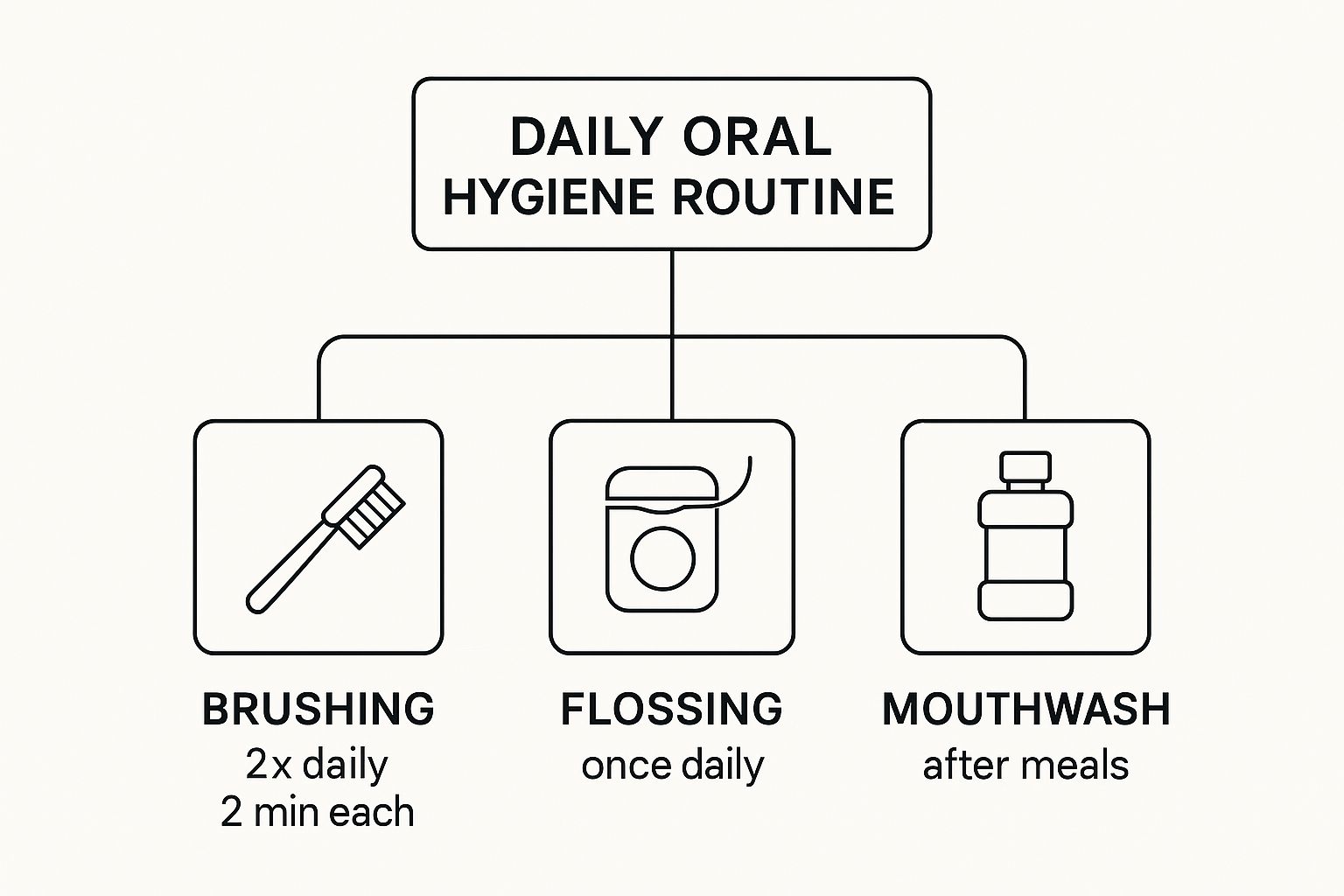
As you can see, these three simple habits—brushing, flossing, and using mouthwash—create a complete daily defense system against common dental problems.
Why Oral Cancer Screenings Are Essential
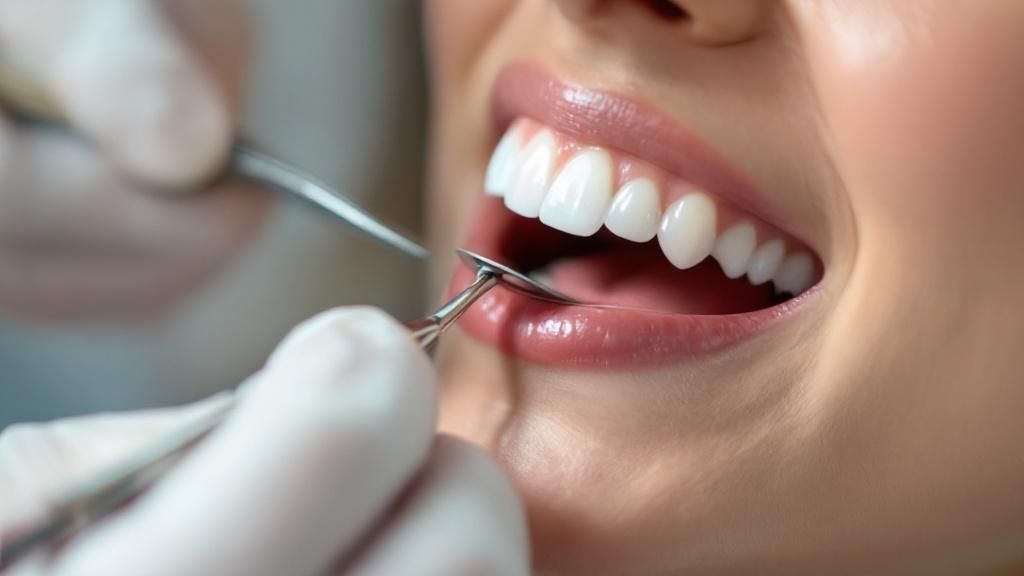
Beyond protecting your teeth, another crucial part of our dental preventative services is the oral cancer screening. This simple, painless check could literally save your life.
At Trinity Dental Care, this is a standard part of every comprehensive dental exam. It frames your dentist as a key partner in your total well-being, a role we take very seriously.
The screening itself is quick and non-invasive. Dr. Fink will carefully look at your entire mouth—gums, tongue, lips, and cheeks—to check for anything out of the ordinary.
Early Detection Is Key
The number one reason for this screening is early detection. When oral cancer is found in its earliest stages, the chances of successful treatment skyrocket.
Routine checks allow us to notice subtle changes you might miss until they become a much bigger problem. This is a powerful component of preventive care.
An oral cancer screening offers more than just a clinical check; it provides invaluable peace of mind. Knowing a trained professional is regularly monitoring your oral health allows you to feel secure in your preventive care plan.
This proactive step transforms a regular dental visit into a comprehensive health check-up. Scottsdale patients can rest easy knowing this vital screening is always included in our commitment to their care.
What We Look For
So, what is Dr. Fink looking for during the screening? It comes down to specific visual and tactile clues.
These include:
- Sores or Ulcers: Any sore spot that doesn't heal within two weeks.
- Red or White Patches: Unusual discolored patches on the soft tissues inside your mouth.
- Lumps or Thickening: Any new bumps or thickened areas on your lips, gums, or cheeks.
- Numbness or Tenderness: Unexplained pain, tenderness, or numbness anywhere in your mouth or on your lips.
When we pair this essential check with other protective measures, like those we discuss in our article covering the benefits of fluoride treatments, we build a robust defense for your health.
Your Role In At-Home Preventive Care
Think of your smile as a partnership. While our team at Trinity Dental Care handles the professional dental preventative services, the other half of the equation happens at home.
Your daily habits are the absolute frontline defense against cavities and gum disease. This teamwork is what truly keeps your mouth healthy.
Mastering Brushing and Flossing
We all know we should brush and floss, but it's the how that makes all the difference. The goal is to meticulously remove the film of bacterial plaque that builds up daily.
- Proper Brushing Technique: Use a soft-bristled toothbrush and a pea-sized dab of fluoride toothpaste. Angle the brush at 45-degrees toward your gums and use gentle, circular motions. Brush for a full two minutes, twice a day.
- Effective Flossing: This is non-negotiable for cleaning where your toothbrush can't reach. Once a day, curve the floss into a "C" shape against each tooth, sliding it gently below the gumline.
Getting these techniques right is fundamental to preventing bigger problems.
The Impact of Diet and Lifestyle Choices
What you eat and drink can either help or harm your teeth. A tooth-friendly diet is one of the most powerful preventive tools you have.
When you limit sugary foods, starches, and acidic drinks, you starve the bacteria that cause tooth decay.
A diet full of crunchy fruits, veggies, dairy, and lean proteins actively helps clean your mouth. Apples and carrots act like natural tooth scrubbers, while cheese can help neutralize harmful acids.
Conversely, habits like using tobacco can wreak havoc on your oral health, seriously increasing your risk for gum disease and oral cancer. Oral diseases affect nearly 3.5 billion people globally, which drives home the importance of both professional and at-home care.
It's clear there's a growing awareness of this, with the market for preventive dental supplies projected to hit $8.8 billion by 2034. You can read more about these trends and their implications for the dental market. By making smart choices, Scottsdale families can build a defense for a lifetime of healthy smiles.
How Often You Need Preventive Dental Visits

One of the first questions we hear is: “How often do I really need to come in?” The standard answer from the American Dental Association is twice a year, or every six months.
This six-month interval is the sweet spot for catching dental issues while they are small and simple to fix. It allows our team to get ahead of problems, removing tartar and spotting early decay.
The Standard Six-Month Checkup
Think of your six-month visit as a reset for your mouth. It’s our chance to perform a professional cleaning that tackles hardened tartar your toothbrush can't remove.
It also gives Dr. Fink an opportunity to conduct a comprehensive exam and oral cancer screening, ensuring everything is healthy.
Regular preventive visits are the most powerful tool for maintaining long-term oral health. They are designed to stop problems before they start, saving you from pain, complex procedures, and unnecessary costs.
Personalized Care Schedules at Trinity Dental Care
While twice a year is the gold standard, it’s not a one-size-fits-all rule. At Trinity Dental Care, we believe in personalized care.
Your oral health is unique, and your visit frequency should reflect that. We may recommend more frequent trips to our Scottsdale office for some patients.
We often suggest a tighter checkup schedule for individuals with:
- A history of gum disease (periodontitis).
- A higher risk for cavities due to genetics, diet, or dry mouth.
- Certain medical conditions like diabetes or heart disease.
- Weakened immune systems.
By tailoring your schedule, we provide the precise support needed to keep your smile healthy. Understanding the true cost of preventive dental care helps patients see these visits as a smart investment.
Conclusion: Your Partner in Lifelong Oral Health
Achieving a healthy smile is a team effort—a partnership that combines your daily habits with our professional dental preventative services. This proactive approach isn't just about avoiding cavities; it's about sidestepping future pain, saving money, and protecting your overall well-being.
Here at Trinity Dental Care, our passion is building lasting relationships with our patients in Scottsdale, AZ. Dr. Christine Ann Fink and our entire team are committed to making you feel comfortable, heard, and empowered. We firmly believe that preventive care is the foundation of a vibrant, lifelong smile.
Don’t wait for a problem to arise. Take control of your oral health by scheduling a comprehensive preventive care appointment with us today.
Are you ready to partner with a Scottsdale dental team that truly cares? Contact Trinity Dental Care or call us to book your visit. We can't wait to welcome you to our dental family!
Frequently Asked Questions About Preventive Care
It's normal to have questions about dental preventative services. At Trinity Dental Care, we find that the more our Scottsdale patients understand, the more confident they feel.
Below, we’ve answered five of the most common questions we hear about preventive care.
1. Are dental preventative services covered by insurance?
For the most part, yes. The vast majority of dental insurance plans offer excellent coverage for preventive care, often covering services like cleanings and exams at 80-100%.
Insurance providers know that stopping a problem before it starts is much cheaper than fixing it later. They encourage regular checkups to help you avoid more complex and expensive procedures.
2. Do I need a dental visit if nothing hurts?
Absolutely. Many serious dental issues, like cavities, gum disease, and oral cancer, are silent in their early stages and don't cause any pain.
Waiting for pain to signal a problem means the issue is often more advanced and requires a more involved fix. Regular visits let us catch these problems when they are small and simple to treat.
3. When should my child first see a dentist?
The American Dental Association (ADA) recommends a child's first dental visit be scheduled by their first birthday or within six months of their first tooth erupting.
These early visits are about creating a positive experience for your child in the dental chair. It also gives Dr. Fink a chance to ensure proper development and provide tips for at-home care.
4. Are dental X-rays safe?
Yes, they are incredibly safe. Our Scottsdale office uses modern digital X-ray technology, which requires an exceptionally low amount of radiation—often less than you get from a short airplane flight.
These images are invaluable, letting us see issues like hidden decay or bone loss. The diagnostic benefit far outweighs the tiny risk.
5. What is the difference between plaque and tartar?
Understanding this distinction is key to knowing why professional cleanings are non-negotiable.
- Plaque: A soft, sticky, colorless film of bacteria that is always forming on your teeth. You can remove this at home with good brushing and flossing.
- Tartar: When plaque hardens and calcifies, it becomes tartar (or calculus). This hard, crusty deposit can only be removed by a dental professional with special tools.
Your at-home routine manages plaque, while our professional cleanings remove the tartar that inevitably builds up. This is especially crucial as we age, as we discuss in our article on preventive dental care for seniors.