
When it comes to the question, "how often should I get my teeth cleaned?", the answer most people hear is a professional cleaning every six months. This isn't just a random number. It's the gold standard for proactively removing plaque and tartar before they can cause real trouble like cavities or gum disease.
Think of it as essential preventive care to keep your smile healthy and bright. At Trinity Dental Care, we believe patient education is key, so let's explore why this schedule is recommended and when it might need to be adjusted for you.
The Six-Month Rule for Teeth Cleanings Explained
Biannual dental cleanings are the cornerstone of good oral health maintenance. This schedule is a strategic plan based on a simple fact: it takes time for harmful bacteria to build up and harden into tartar, a substance only professional tools can remove.
It's a lot like getting a regular oil change for your car to keep the engine running smoothly. Your teeth need that same routine care to stop tiny issues from snowballing into much bigger, more complex problems. These visits are your best defense against decay and gingivitis, which is the earliest and most reversible stage of gum disease.
Why Six Months is the Benchmark
The six-month mark works so well because it effectively breaks the cycle of plaque buildup. Even if you're a brushing and flossing champion, some spots in your mouth are just plain hard to reach. Over a few months, the plaque in these areas calcifies into tartar, creating a rough surface that invites even more bacteria to stick around.
By scheduling a professional cleaning twice a year, we can get rid of that stubborn tartar, give your gums a healthy reset, and catch any potential problems before they demand more invasive treatments.
This regular schedule is absolutely vital for prevention. According to the World Health Organization (WHO), untreated tooth decay is the most common health condition globally. In addition, severe gum disease affects nearly 19% of adults worldwide, showing just how important consistent professional care really is.
Is Six Months Always Right for You?
While the six-month guideline is a fantastic starting point for many of our patients in Scottsdale, it's definitely not a one-size-fits-all rule. Your ideal cleaning frequency really depends on your unique oral health profile, lifestyle, and even your overall medical history.
Take a look at this quick breakdown of how cleaning schedules can be adjusted based on different risk factors.
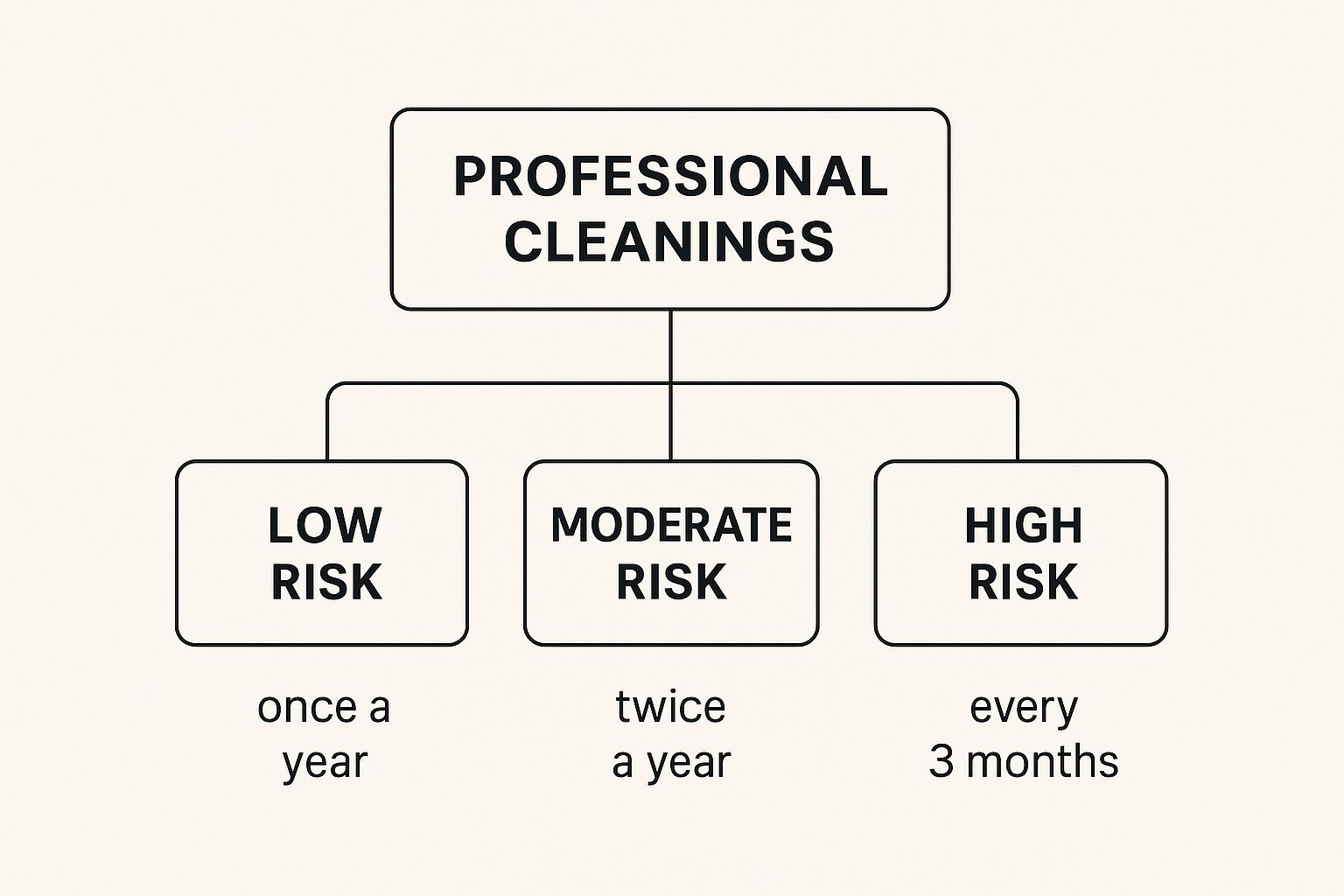
To make this even clearer, here's a simple table comparing the standard recommendation to a few personalized scenarios.
Standard vs. Personalized Teeth Cleaning Schedules
| Patient Profile | Recommended Cleaning Frequency | Primary Reason |
|---|---|---|
| Low Risk (Excellent home care, no gum disease) | Every 6-12 months | Maintain good health and prevent future issues. |
| Moderate Risk (History of cavities, smoker, some plaque) | Every 4-6 months | Manage plaque buildup and reduce the risk of decay or gum inflammation. |
| High Risk (Active gum disease, diabetes, dry mouth) | Every 3-4 months | Actively treat periodontal disease and prevent its progression. |
Ultimately, a personalized plan ensures you get the right level of care to keep your smile in top shape—whether that means a visit once a year or every three months to manage a specific condition. You can learn more about the teeth cleaning services we offer at Trinity Dental Care to see how we customize our approach for every patient.
Why Your Toothbrush Can't Do It All
Many of us believe that if we're diligent with our daily brushing and flossing, our smiles are perfectly protected. And while excellent home care is absolutely the foundation of good oral health, there are some things even the most meticulous person can't handle with a toothbrush alone. That’s where a professional cleaning becomes your essential partner in health.
Your daily routine is fantastic at tackling plaque, that soft, sticky film of bacteria always trying to set up camp on your teeth. The problem is, any plaque that gets missed—especially in those tricky, hard-to-reach spots—doesn't just sit there. It quickly hardens into a substance called tartar, or calculus.
Once plaque calcifies and turns into tartar, it’s impossible to remove with a toothbrush. It creates a rough, porous surface that attracts even more plaque, kicking off a frustrating cycle of buildup right along your gumline.
This is precisely why understanding how often you should get your teeth cleaned is so critical. These appointments are designed to do what your home care routine physically cannot.
The Plaque vs. Tartar Showdown
It helps to think of plaque like everyday dust—you can easily wipe it away. Tartar, on the other hand, is like cement that has hardened and needs specialized tools to chisel it off. No amount of scrubbing with your brush at home is going to scrape away those hardened deposits.
During your visit to Trinity Dental Care, our skilled hygienists use precision instruments to gently and completely remove every last bit of this stubborn buildup. This process, called scaling, is a game-changer for your oral health for a few key reasons:
- It stops gum inflammation: Tartar hugging your gumline is the number one cause of gingivitis, which shows up as red, swollen, or bleeding gums.
- It prevents periodontal disease: If left unchecked, tartar can creep below the gumline, leading to serious gum disease that damages the bone and tissue supporting your teeth.
- It keeps your smile bright: Tartar is like a sponge for stains from coffee, tea, and other foods, which can give your teeth a yellow or discolored look.
Without this professional intervention, the tartar just keeps accumulating, putting both your oral and your overall health at risk.
When You Might Need More Frequent Cleanings

While the six-month rule is a great guideline for most people, it’s not set in stone. Think of it more like a starting point for a healthy smile. For some, certain health conditions or lifestyle choices can kick tartar buildup into high gear or raise the risk of dental disease. When that happens, more frequent visits are essential for keeping your mouth healthy.
A personalized cleaning schedule isn’t about upselling you on more appointments. It's about giving you the exact level of care you need to protect your smile for the long haul. At our Scottsdale office, we might recommend you come in for a cleaning every three or four months if we spot specific risk factors.
Key Factors for More Frequent Cleanings
Several situations call for a more watchful cleaning schedule. These factors either make it tougher to keep your teeth clean at home or create an environment where dental problems can pop up more quickly.
- Gum Disease (Gingivitis or Periodontitis): This is the number one reason for a three-month cleaning schedule. Coming in more often is a critical part of actively treating the infection, disrupting the bacteria growing below your gumline, and preventing any further damage.
- A History of Frequent Cavities: If you seem to be prone to decay, more regular cleanings help us remove plaque before it has a chance to produce those enamel-eating acids.
- Smoking or Tobacco Use: Using tobacco weakens your immune response and makes plaque stickier, which significantly increases your risk for both gum disease and oral cancer.
- Certain Medical Conditions: Conditions like diabetes can impact your body’s ability to fight off infections, including those in your mouth. Dry mouth, which is often a side effect of medications, also dramatically boosts your cavity risk.
Understanding how often you should get your teeth cleaned is a partnership between you and your dentist. A plan tailored to your unique risk profile is the absolute best way to ensure lasting oral health.
Additionally, things like braces can make brushing and flossing a real challenge, creating little hiding spots for plaque. If tartar builds up fast or if you have a condition that affects the bone supporting your teeth—like from a missing tooth—proactive care becomes even more crucial. You can learn more about the importance of dealing with these issues in our guide on why you should replace missing teeth.
The Whole-Body Benefits of a Professional Cleaning
Think a dental cleaning is just about polishing your smile and keeping cavities away? Think again. Regular professional cleanings are a powerful investment in your total body wellness. Deciding how often you should get your teeth cleaned is a decision that impacts far more than just your mouth—it’s a proactive step toward a healthier life.
The link between what happens in your mouth and the rest of your body is incredibly profound. Your mouth often acts as a window, revealing the earliest signs of systemic problems like heart disease, diabetes, and even nutritional deficiencies. A professional cleaning is one of the best tools we have to monitor this critical connection.
More Than Just a Cleaning
Every time you come in for a cleaning at our Scottsdale office, we do much more than just scrape away tartar. We perform a thorough examination that serves several crucial functions for your overall health.
- Early Detection of Oral Cancer: Screenings for oral cancer are a standard part of our comprehensive exams. Catching it early is everything, and this is when treatment is most effective.
- Combating Chronic Bad Breath: Mints and mouthwash are just temporary fixes. A professional cleaning gets to the root of the problem by removing the deep-seated bacteria and tartar that cause persistent bad breath (halitosis).
- Reducing Systemic Inflammation: The bacteria responsible for gum disease can easily enter your bloodstream. This can trigger an inflammatory response throughout your body that is linked to some very serious health conditions.
The reality is, the mouth-body connection isn't something to ignore. Regular professional cleanings are a cornerstone of preventive health, helping to lower your body's overall inflammatory load and reducing your risk for other diseases.
The impact of putting off dental care is significant. The CDC notes that poor oral health is associated with serious conditions like diabetes and heart disease. Furthermore, poor dental health can cost the U.S. economy billions annually in lost productivity due to adults missing work. You can explore more on these dental hygiene statistics to see why preventive care is so essential.
By treating your dental cleaning as a non-negotiable part of your healthcare routine, you're taking a vital step to protect yourself from more complex and costly treatments down the line. To dive deeper into this topic, you can learn more about how oral health affects your overall wellness in our detailed guide.
What to Expect During Your Cleaning Appointment
It's completely normal to feel a little curious—or even anxious—about what goes on during a professional teeth cleaning. We get it. That's why at Trinity Dental Care, we make sure you feel comfortable and in the loop from the moment you settle into the chair.
Our team takes the time to explain not just what we're doing, but also why it's so important for your health. A standard cleaning is a pretty straightforward process, but it's one designed to give your mouth a level of clean you just can't achieve at home. Seeing the value in each step helps clarify why regular professional cleanings are so critical.
The Steps of a Professional Cleaning
First, our skilled hygienist will start with a careful visual check of your teeth and gums. This isn't just a quick glance; we're looking for any early signs of trouble like inflammation or decay. Catching things early is the cornerstone of great dental care.
Then comes the main event: scaling. This is where we use special instruments to gently remove all the plaque and hardened tartar from your teeth, especially around the gumline. No matter how well you brush, tartar is something only a professional can safely remove. If you're curious about the difference between this and a more intensive cleaning, our guide on cleanings vs. deep cleanings breaks it down.
After the scaling is done, we'll polish your teeth with a slightly gritty paste. This step is fantastic because it scrubs away surface stains, leaving your teeth feeling incredibly smooth and making it tougher for new plaque to find a foothold.
To finish up, we'll do a professional flossing to make sure we've cleared out any lingering debris from between your teeth—those tricky spots that are so easy to miss. Often, we'll wrap up the appointment with a fluoride treatment. It’s a quick and painless way to give your enamel a protective boost against future cavities.
Your Partner for Lifelong Oral Health in Scottsdale

Ultimately, the real answer to how often you should get your teeth cleaned isn't a number—it’s a conversation. While six months is a great rule of thumb, the best schedule is always the one you and your dental team create together, based on your unique oral health. This proactive approach is the best way to stop small issues from becoming complex, expensive problems.
At Trinity Dental Care, we see ourselves as your dedicated partner in this journey. We take the time to really understand what you need, creating a plan that keeps your smile healthy and bright for years to come. We are proud to be a trusted family dentist serving patients across Scottsdale, Arizona, and the surrounding communities.
Start Your Personalized Care Plan Today
Stop wondering if you're on the right schedule and start a conversation with our compassionate team. We’re proud to serve patients all across Scottsdale, Arizona, offering top-tier care in a truly welcoming environment.
Your long-term health is our absolute priority. Contact Trinity Dental Care today to schedule your consultation and let's create a preventive plan that is perfectly suited for you.
Your Top Questions About Teeth Cleanings Answered
We get a lot of great questions from our patients in Scottsdale about professional cleanings. Here are some of the most common ones we hear, along with straightforward answers from our team.
Is It Okay to Get My Teeth Cleaned Every 3 Months?
Absolutely. In fact, for some people, it’s not just okay—it’s the best way to protect their health. We often recommend a three-month cleaning schedule for patients who are actively managing gum disease (periodontitis) or those at a higher risk for cavities.
This more frequent schedule is also a smart move for individuals with certain health conditions, like diabetes, that can impact oral health. It's all about disrupting harmful bacteria more often, which is key to keeping your gums and teeth in great shape.
My Teeth Feel Fine. Can I Just Skip My Cleaning?
It's tempting, we know, but it's really best not to skip your regular cleanings. Many dental problems, like early-stage cavities or the beginning of gum disease, are completely silent. You won't feel any pain or see anything wrong until the issue has become much more serious.
Professional cleanings are the only way to remove hardened plaque, or tartar, which you simply can’t get rid of at home. Sticking to your schedule is the best defense against these silent problems.
How Often Should I Be Brushing and Flossing?
The gold standard for home care, recommended by the American Dental Association (ADA), is brushing at least twice a day for a full two minutes each time. Be sure to use a soft-bristled brush and fluoride toothpaste.
Just as important is flossing at least once a day. This is how you clean those tight, hard-to-reach spaces between your teeth where your toothbrush can't go.
If I Brush Every Day, Why Do I Still Need Professional Cleanings?
This is a fantastic question. Think of it this way: your daily brushing is like tidying up your kitchen every night, while a professional cleaning is the deep clean that gets all the grime you can't see. Even with perfect brushing, plaque will eventually harden into tartar in tricky spots.
Research from countries where people brush daily but rarely see a dentist highlights this perfectly. For example, one study in Nepal showed that about 95% of adults had never visited a dentist, leading to widespread—and preventable—dental disease. You can read the full research about oral hygiene habits to see why professional care is such a crucial partner to your home routine.
What if I Have More Questions?
Everyone's smile is unique, so it's natural to have questions about your specific situation. For more in-depth answers, you can always check out our comprehensive dental care FAQ page or just ask us at your next visit. We're always here to help.