
Many patients believe dental implants wear out quickly or need frequent replacement. This belief often stops them from considering implants—even when they’re the best option long-term.
The simple answer to the question "do dental implants really only last 10 years?" is no. That's one of the biggest myths in dentistry, and the evidence shows they are built to last much, much longer.
The Truth Behind The 10-Year Implant Myth
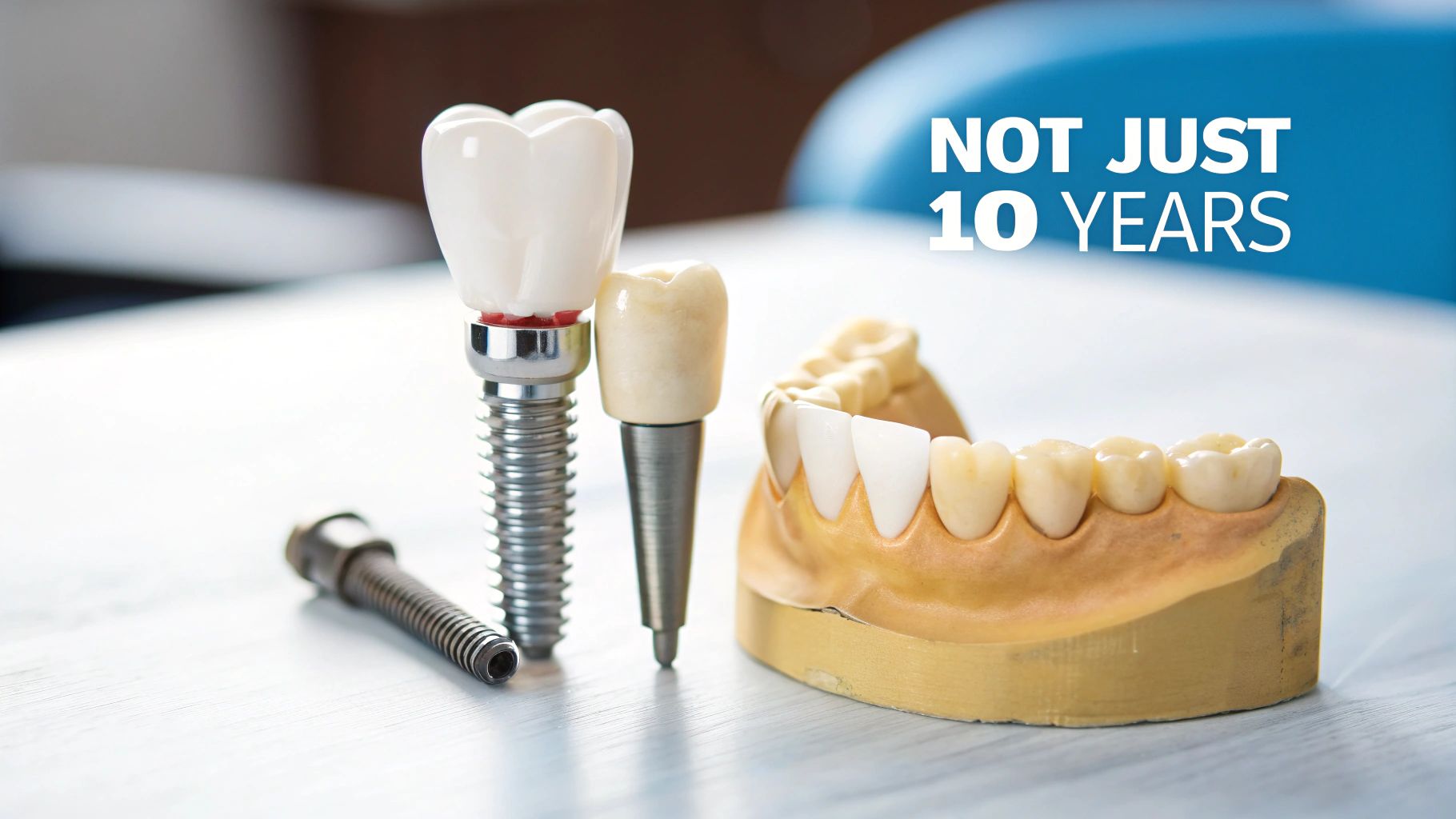
For many Scottsdale residents thinking about replacing a tooth, the fear of a short lifespan can be a major roadblock. It's a completely understandable concern, but it comes from a common misunderstanding of how dental implants work.
The "10-year" figure you often hear about is almost always referring to the dental crown, not the foundational implant itself. What this actually means for you is that implants are one of the most durable and cost-effective long-term solutions for missing teeth.
Think of it like a high-quality car. The engine is built to run for hundreds of thousands of miles with proper maintenance, but the tires are designed to handle daily friction and will naturally wear out much sooner.
A dental implant system works the same way, with two distinct parts that have very different lifespans.
Understanding The Two Main Parts
A complete dental implant isn't just one piece; it's a precisely engineered system built for both durability and aesthetics. Understanding the role each part plays makes it clear why implants are such a reliable, long-term solution.
-
The Implant Post (Fixture): This is the small titanium screw that acts as your new tooth root. Dr. Christine Ann Fink surgically places it into your jawbone, where it gradually fuses and becomes a permanent part of your anatomy. This is the component designed to last for 25 years or more.
-
The Crown (Restoration): This is the visible, tooth-shaped cap that attaches to the implant post. Made from materials like porcelain, it's the part that handles all the daily pressures of biting and chewing. Just like a natural tooth, it can experience wear over time and may need to be replaced after 10 to 15 years.
This misconception is just one of many common dental myths we often hear at Trinity Dental Care. The truth is, the 10-year idea completely overlooks the incredible, long-lasting strength of the implant post itself.
To give you a quick overview, here's a simple breakdown of the lifespan you can expect from each part of a dental implant system.
Dental Implant Components Lifespan At A Glance
| Component | Average Lifespan | Key Factor |
|---|---|---|
| Implant Post (Fixture) | 25+ Years to Lifetime | Osseointegration & bone health |
| Abutment (Connector) | 15+ Years to Lifetime | Material strength & fit |
| Crown (Restoration) | 10 to 15 Years | Daily chewing wear & tear |
As you can see, the foundational elements of the implant are built for the long haul. It's the crown—the part doing all the heavy lifting day in and day out—that you may need to refresh down the road.
At Trinity Dental Care, our team believes patients deserve clear, honest information. A well-placed dental implant is one of the most durable solutions for missing teeth, providing a stable foundation for a smile that can truly last a lifetime.
How Implants Are Built for Decades of Durability
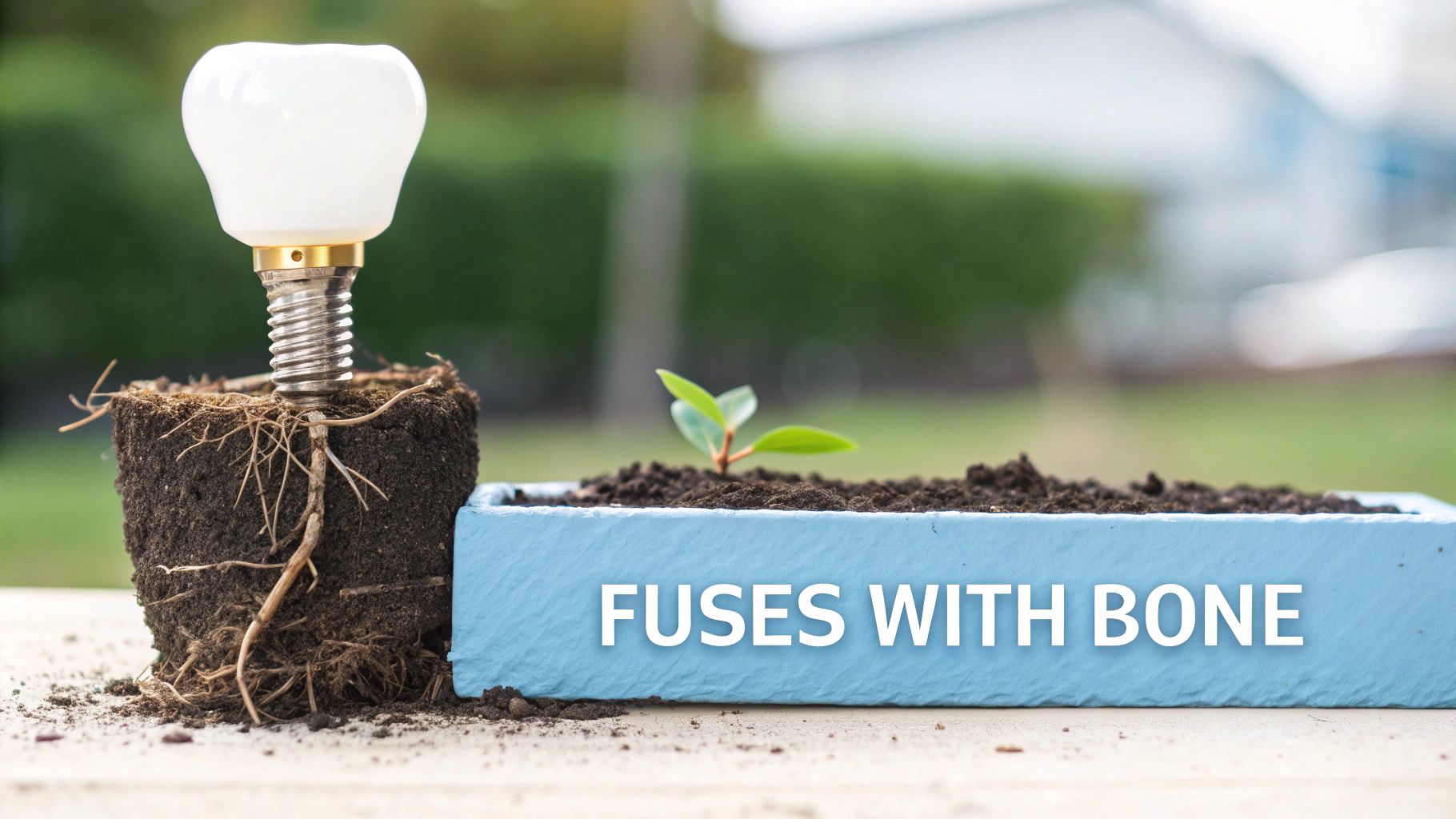
What gives a dental implant its incredible, decades-long strength? The secret isn’t just about using strong materials—it’s about a remarkable biological process called osseointegration.
It might sound technical, but the concept is beautifully simple. It is the reason implants offer a truly permanent fix for missing teeth.
Think of the small titanium implant post just like a natural tree root. A root anchors a tree by growing deep into the ground, and in the same way, the implant is designed to fuse directly with your jawbone. This fusion creates a bond so strong and stable that the implant effectively becomes a part of your body.
This is only possible because titanium is biocompatible, meaning our bodies accept it without issue. Over a few months, your own bone cells grow directly onto and into the implant's specialized surface, locking it in place for good.
The Foundation vs. The Restoration
To really understand how long an implant lasts, it’s crucial to separate its two main parts: the implant fixture and the dental crown. They have very different jobs and, because of that, very different lifespans.
- The Implant Fixture: This is the titanium post that fuses with your jawbone. Since it becomes one with your body, this component is engineered to last for decades—often for a lifetime—with proper care. It's the permanent foundation.
- The Dental Crown: This is the visible, tooth-colored porcelain cap attached to the fixture. It's the part that does all the work, handling the daily grind of chewing and biting. Just like your natural teeth, it can wear down or chip over time and usually needs to be replaced every 10 to 15 years.
The core implant is permanent; the crown is simply a replaceable, hardworking part. Swapping out an old crown for a new one is a simple, non-surgical appointment—nothing like the initial implant placement.
A Permanent Part of Your Smile
Once osseointegration is complete, that tiny implant post provides a foundation that is just as strong as—if not stronger than—a natural tooth root. This stability allows you to eat, speak, and laugh with confidence, knowing your tooth is securely anchored for the long haul.
It also stimulates the jawbone, preventing the bone loss that always happens with bridges or dentures. For a deeper dive into how this process works from start to finish, you can explore our ultimate guide to dental implants.
The success of this fusion is exactly why working with a skilled provider like Dr. Christine Ann Fink at Trinity Dental Care is so vital. Expert placement and the use of high-quality materials are non-negotiable for achieving the rock-solid, lasting bond that keeps your smile healthy for years to come.
What The Clinical Evidence Says About Implant Success
Recent insights show that dental implants are a highly reliable and long-lasting solution. This reality is backed by decades of solid scientific research and real-world results, shattering the myth that implants are a temporary fix.
Long-term studies following patients for 10, 15, and even 20 years paint a very clear picture of durability. Research consistently shows that dental implants have a success rate well over 95% at the 10-year mark.
That means more than 19 out of every 20 implants placed are still working perfectly a decade later. This is an exceptional track record for any medical procedure.
Looking Beyond The First Decade
While a 10-year success rate is impressive, modern dentistry is aiming for much more. Plenty of studies now track implants for far longer, showing their true potential.
This is the kind of long-term data that gives dentists like Dr. Christine Ann Fink the confidence to recommend implants as a permanent solution for her patients at Trinity Dental Care. The evidence is clear: when an implant is placed correctly and you take good care of it, it can serve you for many decades.
The 20-Year Outlook on Implant Survival
So, what happens after that initial decade? The data stays overwhelmingly positive. The American Academy of Implant Dentistry notes many implants last 20+ years.
More recent long-term studies have busted the 10-year myth by showing that dental implants maintain survival rates above 90% even after two decades.
A comprehensive 20-year review of multiple studies found that roughly four out of five implants (78-92% survival) are still going strong beyond the 20-year mark. You can explore the long-term implant survival findings on pmc.ncbi.nlm.nih.gov to see the data for yourself.
This slight decline over time really highlights how critical lifelong professional care and diligent at-home hygiene are. When you choose a dental implant in Scottsdale, you’re investing in a solution grounded in solid scientific proof.
What Affects How Long Your Dental Implants Last?
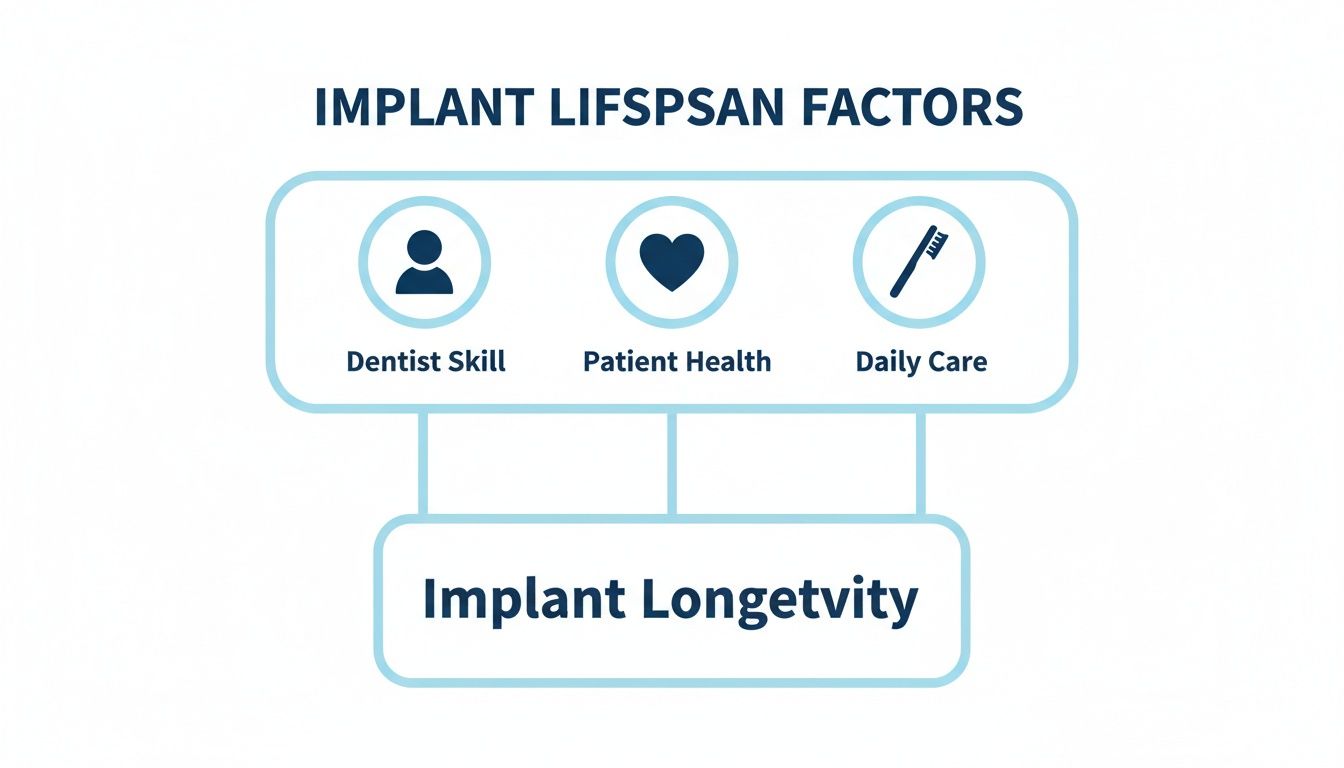
While clinical data shows dental implants are engineered for the long haul, their actual lifespan isn't left to chance. A handful of key factors—many of which are entirely within your control—will ultimately determine whether your implant lasts a lifetime.
Getting these factors right is what separates an implant that lasts 15 years from one that serves you faithfully for decades.
Your Daily Oral Hygiene Routine
This is, without a doubt, the single most important factor for your implant’s long-term survival. While the implant itself can't get a cavity, the gum and bone tissues holding it in place absolutely can.
The number one enemy of a dental implant is a condition called peri-implantitis. Peri-implantitis is an infection, much like gum disease, that attacks and destroys the bone structure around an implant.
The good news? Preventing this is incredibly straightforward. Your implant needs the same dedicated care as your natural teeth: consistent daily brushing, flossing, and regular professional cleanings.
Lifestyle Choices Like Smoking
Certain habits can seriously shorten an implant's lifespan, and smoking is at the very top of that list. Smoking restricts blood flow to the gums, which dramatically slows down the healing process right after the implant is placed.
This habit also cripples your body's ability to fight off infection, which means the risk of developing peri-implantitis skyrockets. Quitting or even just cutting back is one of the best things you can do to protect your new smile.
Your Overall Systemic Health
Your oral health doesn't exist in a vacuum; it's directly connected to your overall health. Certain medical conditions can impact your body’s ability to heal and maintain healthy bone.
Conditions that can influence implant success include:
- Uncontrolled Diabetes
- Osteoporosis
- Autoimmune Diseases
It's absolutely vital to have an open conversation with Dr. Christine Ann Fink about your complete medical history. Keeping these conditions well-managed is key to ensuring a successful outcome. For more on this, you can learn about how to stop bone loss in teeth in our related guide.
The Skill of Your Implant Dentist
Finally, the expertise of the dentist placing your implant is fundamental to its success. An experienced implant dentist like Dr. Fink uses advanced imaging to map out the exact position and angle for the implant.
Choosing an implant provider who uses high-quality materials and offers ongoing preventive care helps protect your investment. Regular checkups and good oral hygiene go a long way in preserving your implant.
How Implants Compare to Bridges and Dentures for Long-Term Value
When you’re looking at options to replace a missing tooth, it's natural to wonder if dental implants are worth the investment. After all, traditional bridges and dentures often seem more affordable at first glance.
But to get the full picture, you have to look beyond the initial price tag and consider the lifetime performance of each option. From that perspective, implants are often the most cost-effective choice for your smile in the long run.
The Downside of Traditional Options
Dental bridges have been a reliable workhorse in dentistry for years, but they come with a significant catch. To place a bridge, the healthy teeth on either side of the gap have to be ground down to act as anchors.
Most bridges need to be replaced every 5 to 15 years, which means more costs and more appointments over your lifetime.
Traditional dentures restore the appearance of a full smile by resting on the gums, but they don't address a critical underlying issue: bone loss. Without a tooth root to stimulate it, the jawbone begins to shrink, causing dentures to loosen over time.
The Implant Advantage: Built to Last
Unlike those alternatives, a dental implant is a self-contained solution. It doesn't rely on or damage any of your neighboring teeth.
Because the implant post fuses directly with your jawbone, it preserves bone density and provides rock-solid stability. It feels and functions just like a natural tooth.
This fusion prevents the sunken facial appearance that often comes with bone loss. For a more detailed breakdown, you can dive deeper into the comparison of dentures vs. dental implants in our comprehensive guide.
Long-Term Comparison of Tooth Replacement Options
| Feature | Dental Implants | Dental Bridges | Traditional Dentures |
|---|---|---|---|
| Average Lifespan | 25+ Years (Fixture) | 5–15 Years | 5–8 Years |
| Jawbone Health | Preserves bone density | Bone loss occurs under the gap | Accelerates bone loss |
| Impact on Other Teeth | None, completely independent | Requires grinding down healthy teeth | Can cause wear on adjacent teeth |
| Long-Term Value | High (one-time investment) | Moderate (multiple replacements) | Low (frequent replacements/relines) |
Choosing a dental implant is about investing once in a permanent solution rather than paying over and over for temporary fixes. At Trinity Dental Care, Dr. Christine Ann Fink helps our Scottsdale patients understand these crucial differences.
Protecting Your Investment with Lifelong Care
A dental implant is a serious investment in your long-term health and confidence. The best way to protect that investment is with consistent, lifelong care.
The great news is that maintaining an implant is remarkably similar to caring for your natural teeth. With just a few simple habits, you can keep your new smile healthy and stable for decades.
Your At-Home Care Routine
The foundation of a long-lasting implant is excellent oral hygiene. It's a straightforward commitment that pays off for a lifetime.
- Consistent Brushing: Brush twice a day using a soft-bristled toothbrush. Pay extra attention to the area where the implant crown meets your gum line.
- Daily Flossing: Flossing is non-negotiable. Using implant-specific floss or a water flosser helps clean the sides of the implant.
- Gentle Technique: Stay away from abrasive toothpastes or aggressive brushing. These can scratch the crown or irritate your gums over time.
For a more detailed guide, check out our post on how to clean dental implants properly.
The Role of Regular Professional Checkups
While your daily habits are essential, they're only one half of the equation. Regular professional checkups at Trinity Dental Care are vital for monitoring the parts of your implant you can't see.
During these visits, Dr. Christine Ann Fink can assess the health of your gums, check the implant's stability, and examine your jawbone levels with digital imaging. These appointments allow our team to catch potential issues early.
Warning Signs to Watch For
A healthy implant should feel completely natural and comfortable. If you ever notice any changes, it’s important to contact our Scottsdale office right away.
Be on the lookout for any of these warning signs:
- Bleeding or swelling around the implant
- Pain or discomfort
- Any feeling of looseness
- Difficulty chewing
By partnering with Dr. Fink and committing to simple daily care, you can enjoy the confidence and function of your dental implant for many decades to come.
Frequently Asked Questions About Dental Implant Longevity
When it comes to dental implants, our Scottsdale patients often have excellent questions. Here are clear, straightforward answers to the most common ones we hear at Trinity Dental Care.
Can a dental implant really last a lifetime?
Yes, the implant post itself absolutely can. The small titanium post is designed to fuse with your jawbone and become a permanent part of you. The visible crown on top, however, may need to be replaced every 10-15 years due to normal chewing wear.
What is the main reason a dental implant would fail?
By far, the two biggest culprits behind implant failure are poor oral hygiene and smoking. When plaque and bacteria build up, they can cause an infection called peri-implantitis, which destroys the bone holding the implant in place.
Is taking care of a dental implant difficult?
Not at all. If you can take care of a natural tooth, you can take care of a dental implant. It just comes down to consistent brushing, daily flossing, and keeping up with your regular dental cleanings and check-ups.
How do I know if I am a good candidate for dental implants in Scottsdale?
A great candidate for dental implants typically has healthy gums and enough strong jawbone to anchor the implant post securely. The best way to know for sure is to come in for a one-on-one consultation with a cosmetic dentist. Dr. Christine Ann Fink can perform a thorough evaluation at our Scottsdale office to see if implants are the right long-term solution for you.
Will my dental implant look natural?
Yes, a well-made implant crown is custom-designed to match the color, shape, and size of your surrounding teeth. Trinity Dental Care prioritizes both function and aesthetics, which you can learn more about in our post about Cosmetic Dentistry. Your implant will blend seamlessly with your smile.
Still unsure if implants are right for you? Contact Trinity Dental Care in Scottsdale for a consultation. We’ll walk you through the process, costs, and real-life results—no pressure, just honest answers. Learn more at https://trinitydentalcares.com.