
Even if nothing hurts, the American Dental Association generally suggests a professional cleaning and exam every six months. Think of this as the foundation of preventive care—it’s designed to stop problems long before they have a chance to start.
It's truly the simplest way to maintain a healthy smile for life.
Why Feeling Fine Can Be a Dangerous Dental Myth
Many people skip the dentist until pain forces them in, thinking it's more convenient or cheaper. It’s a common mindset—but it can lead to bigger problems and bills later on.
Assuming “no pain = no problem” is one of the biggest and most costly common dental myths. The truth is, major dental issues like cavities, gum disease, and even oral cancer often develop silently. By the time you feel a toothache, the problem has likely been brewing for a while, leading to more complex treatments.
The Power of Prevention
A proactive approach is always better than a reactive one. Those regular six-month check-ups are about prevention and catching things early. These appointments give Dr. Christine Ann Fink the chance to spot potential issues when they are small, simple, and inexpensive to fix.
This chart offers a straightforward guide: if your oral health is in good shape, a 6-12 month schedule is great. But if you have certain risk factors, more frequent visits are a must.
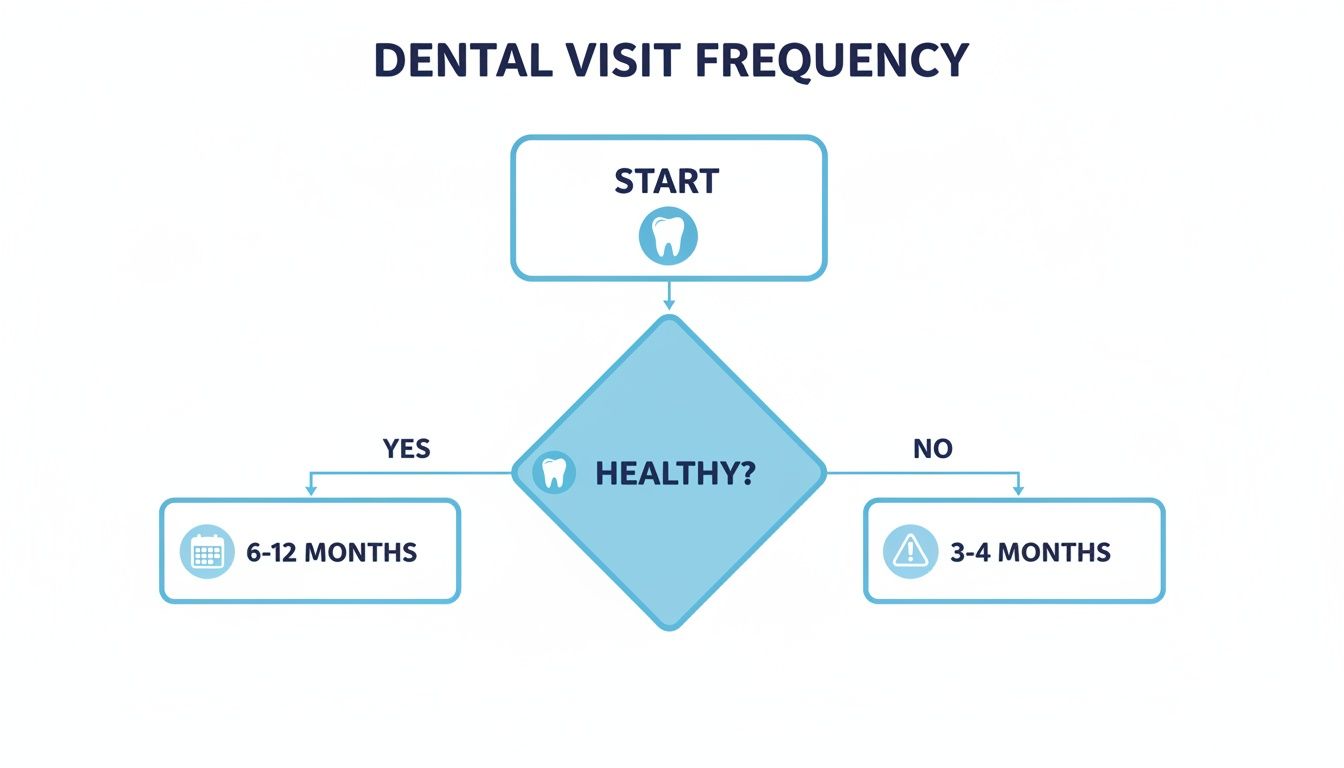
Your visit frequency should be tailored to your specific health needs—a plan you and your dentist create together. At Trinity Dental Care, we emphasize prevention first, with gentle cleanings, low-radiation digital X-rays, and patient education at every visit.
Studies show that preventive dental visits can reduce long-term treatment costs by 31%. Patients who delay care often need fillings, root canals, or extractions that could have been avoided with earlier detection. For residents in Scottsdale, AZ, a simple check-up today is the best way to ensure a healthier tomorrow.
Decoding the Six-Month Dental Check-Up Rule
The advice to see your dentist every six months is well-known health wisdom. It’s not an arbitrary number; this guideline is perfectly timed to the lifecycle of the most common dental problems.
It lines up with how long it takes for soft plaque to harden into tartar—a stubborn substance you can’t remove at home. It's also the ideal window for catching the first signs of a cavity when it can often be reversed.
The Science Behind the Schedule
Think of your oral health as a constant race against bacteria. While brushing and flossing are your daily defense, some bacteria always hide in hard-to-reach places.
This is why the six-month timeframe is the sweet spot for most people:
- Plaque to Tartar: It takes several months for missed plaque to calcify into tartar. A professional cleaning breaks this cycle before tartar can lead to gum inflammation (gingivitis).
- Early Cavity Detection: Catching decay in its earliest stage saves you from needing a filling and preserves your natural tooth structure.
- Gum Health Monitoring: Six months is the perfect interval for a hygienist to measure the tiny pockets between your teeth and gums to catch early signs of gum disease.
A Modern Shift to Personalized Care
While the six-month rule is an excellent baseline, modern dentistry knows a one-size-fits-all approach isn’t always best. Research is starting to highlight the importance of a personalized approach.
Here at Trinity Dental Care, Dr. Christine Ann Fink creates a custom preventive plan for every patient. Your ideal schedule is based on your unique oral health and risk factors. Understanding the different levels of preventive care is explained here, showing why your plan might look different from someone else’s.
For our patients in Scottsdale, AZ, this means you get care designed just for you. Dr. Fink considers everything—from your diet to your genetics—to recommend a schedule that will keep your smile healthy and strong.
When You Might Need More Frequent Dental Visits
While the six-month check-up is a fantastic rule of thumb, it’s important to remember that great dental care is never a one-size-fits-all solution. Your unique health profile and habits can change what your smile needs to stay healthy.
More frequent visits are a proactive strategy. They allow Dr. Christine Ann Fink to keep a closer eye on your oral health and step in before small issues become bigger ones.
Who Benefits from More Frequent Visits?
Certain health conditions and lifestyle factors can create an environment where dental problems develop more quickly. If you fall into one of these groups, Dr. Fink may recommend a check-up every three to four months.
-
Individuals with a History of Gum Disease: If you've been treated for gingivitis or periodontitis, more frequent cleanings are essential to manage the condition. Learning about periodontal maintenance can help you understand this vital part of your care.
-
Smokers and Tobacco Users: Tobacco use harms your immune system, making it harder for your gums to heal. It also creates a perfect storm for advanced gum disease and other serious oral health issues.
-
Patients with Diabetes: High blood sugar can increase the risk of dry mouth, gum disease, and fungal infections, making diligent professional care a must.
-
Pregnant Women: Hormonal changes during pregnancy can lead to "pregnancy gingivitis," causing swollen and tender gums. Keeping a close watch protects both you and your baby.
For our patients in Scottsdale, AZ, this means you get a care plan built specifically around you. Dr. Fink and her team provide compassionate, targeted strategies to keep your smile healthy through every stage of life.
What Really Happens During a Dental Check-Up
Knowing what a routine check-up involves can turn anxiety into empowerment. A visit to Trinity Dental Care isn’t just about hunting for problems; it's a proactive step to stay healthy.

The process is straightforward and focused on your comfort. According to the CDC, nearly 1 in 4 adults aged 20 to 64 has untreated cavities, a trend we see reflected in metro areas like Scottsdale. This points to a gap in preventive care, which allows small issues to become bigger problems.
The Professional Cleaning Process
Your visit usually begins with a professional cleaning from one of our skilled dental hygienists. This is more than what your daily brushing and flossing can accomplish at home.
The main goal is to remove plaque and tartar (hardened plaque). Even the most diligent brushers can't get rid of all the tartar, making this professional step critical for preventing cavities and gum disease. We explain the differences between cleanings vs. deep cleanings in our detailed guide.
The Comprehensive Oral Exam
After your cleaning, Dr. Christine Ann Fink will perform a thorough examination of your teeth, gums, and mouth. This vital part of your visit covers several key checks:
- Visual Tooth Inspection: Dr. Fink carefully checks each tooth for early signs of decay, wear, or cracks.
- Gum Health Evaluation: Your gums are examined for any signs of gingivitis or periodontitis.
- Oral Cancer Screening: This is a quick but important screening where we check your tongue, cheeks, and other soft tissues for abnormalities.
Finally, we may take low-radiation digital X-rays to see beneath the surface. These images let Dr. Fink spot issues like cavities between teeth or bone loss long before they cause pain.
Connecting Your Smile to Your Overall Health
It’s easy to think of oral health as separate from the rest of your body, but your mouth is a direct window into your overall well-being. A routine dental visit is an essential part of a truly healthy lifestyle.
Problems that start in your mouth, like the chronic inflammation from gum disease, rarely stay there. Bacteria can enter your bloodstream and contribute to serious systemic health conditions. Dr. Christine Ann Fink and our team see dental exams as a first line of defense in protecting your total body health.
The Mouth-Body Connection Explained
Researchers have established links between untreated gum disease and several major health problems. When you keep your mouth healthy, you actively reduce your risk for other complications.
This systemic link is why the question, "how often should I go to the dentist if nothing’s wrong?" is so important. Your regular check-ups are about safeguarding your entire body.
Here are a few critical connections:
- Heart Disease: Inflammation from gum disease has been linked to an increased risk of heart disease and stroke.
- Diabetes: The relationship between gum disease and diabetes is a two-way street. Severe gum disease can make it harder to control blood sugar levels.
- Respiratory Infections: Bacteria from infected gums can be inhaled into the lungs, potentially leading to infections like pneumonia.
At Trinity Dental Care, we don’t just treat teeth; we care for people. We see every dental check-up as an opportunity to support your overall wellness.
Take the Next Step for Your Health in Scottsdale
Waiting until something hurts is a gamble you don't want to take with your health or wallet. The smartest strategy is a proactive one.
Here at Trinity Dental Care, we focus on building a real partnership with our patients. Dr. Christine Ann Fink and her team are dedicated to gentle, patient-first care that makes every visit a positive step toward your long-term wellness.
Your Healthiest Smile Starts Now
The takeaway is simple: don’t wait for a toothache to tell you something is wrong. A routine check-up is an investment in your future self—one that saves you from discomfort, stress, and complex treatments.
If you're in Scottsdale, AZ, and haven’t seen a dentist in a while, Trinity Dental Care welcomes new patients. A simple check-up now could save you a lot down the road—schedule yours today by contacting our friendly team.
Ready to put your health first? Take that first step and schedule your dental cleaning in Scottsdale. Let Dr. Fink and the team at Trinity Dental Care help you achieve and maintain the beautiful, healthy smile you deserve.
Your Top Questions About Dental Visits, Answered
Even when you know a dental visit is a good idea, you’re bound to have questions. Here are answers to some of the most common queries we hear from our Scottsdale patients.
Do I really need dental X-rays every year?
For most patients, yes. Dental X-rays are a powerful diagnostic tool that gives Dr. Fink a clear view of what’s happening beneath the surface, like hidden cavities or bone loss. At Trinity Dental Care, we use modern, low-radiation digital X-rays to catch problems when they are small and simple to fix.
What if I have dental anxiety?
You are not alone, and we are here to help. Our team at Trinity Dental Care is trained to create a comfortable, judgment-free environment. Please let us know about your concerns so we can make your visit as calm and stress-free as possible.
Does my dental insurance cover two check-ups a year?
Most dental insurance plans are built around preventive care, meaning they are designed to fully or largely cover two visits each year. Our Scottsdale office staff can help verify your specific coverage before your appointment so there are no surprises.
I brush and floss perfectly. Can I wait a year between visits?
Excellent home care is crucial, but it can't fully replace a professional cleaning. Even the most diligent brushers can’t remove 100% of the plaque that hardens into tartar. Only a dental professional can safely remove tartar, which is why a six-month check-up is the best way to hit the reset button.
How long does a typical check-up and cleaning take?
A routine preventive visit at Trinity Dental Care usually takes about 60 minutes. This allows enough time for a meticulous cleaning, a comprehensive exam by Dr. Fink, any necessary X-rays, and a chance to answer all your questions without feeling rushed.
Your smile is too important to leave to chance. At Trinity Dental Care, we're committed to providing personalized, preventive care that keeps you healthy and smiling confidently for years to come. Schedule your consultation with Dr. Christine Ann Fink in Scottsdale, AZ, today by visiting us at https://trinitydentalcares.com.