
It's frustrating to hear you don't have enough bone for dental implants, but this is almost never the end of the road. For many patients in Scottsdale, AZ, that diagnosis feels like a final "no."
But in modern dentistry, it's really just the start of a new conversation. Thanks to incredible advances in technique and technology, bone loss is a common hurdle Trinity Dental Care is fully equipped to clear, not a permanent roadblock to a beautiful, functional smile.
Your Path to a New Smile Despite Bone Loss
At Trinity Dental Care, Dr. Christine Ann Fink specializes in creating pathways to success for patients who have been told they aren't good candidates for implants. The secret is knowing there isn’t just one way to restore a smile.
Instead, Dr. Fink has a whole toolkit of proven, effective solutions designed for different types and severities of bone loss. Many patients believe bone grafting is always necessary if you've lost bone, but that's a common myth.
Exploring Your Primary Options
This guide will walk you through the two main strategies that have helped thousands of people get their confidence back:
- Rebuilding the Foundation: This involves bone grafting procedures that add new volume and density right where it's needed, creating a solid base for traditional dental implants to anchor securely.
- Working Around the Problem: Innovative techniques like All-on-4® implants use strategically angled implants to tap into stronger parts of your jaw, often making bone grafts unnecessary. We break down different types of implant procedures in our post about dental implants here.
It's also helpful to understand what causes jawbone deterioration in the first place. You can dive deeper into that topic by reading our detailed guide on how to stop bone loss in teeth.
The most important thing to remember is that you have options. A thorough evaluation using 3D imaging is the first step toward creating a personalized treatment plan that aligns with your health and smile goals—without surprises or pressure.
Dr. Fink is committed to giving Scottsdale residents clear, honest assessments so you feel completely empowered and informed every step of the way.
Why Your Jawbone Is the Foundation for a Lasting Smile
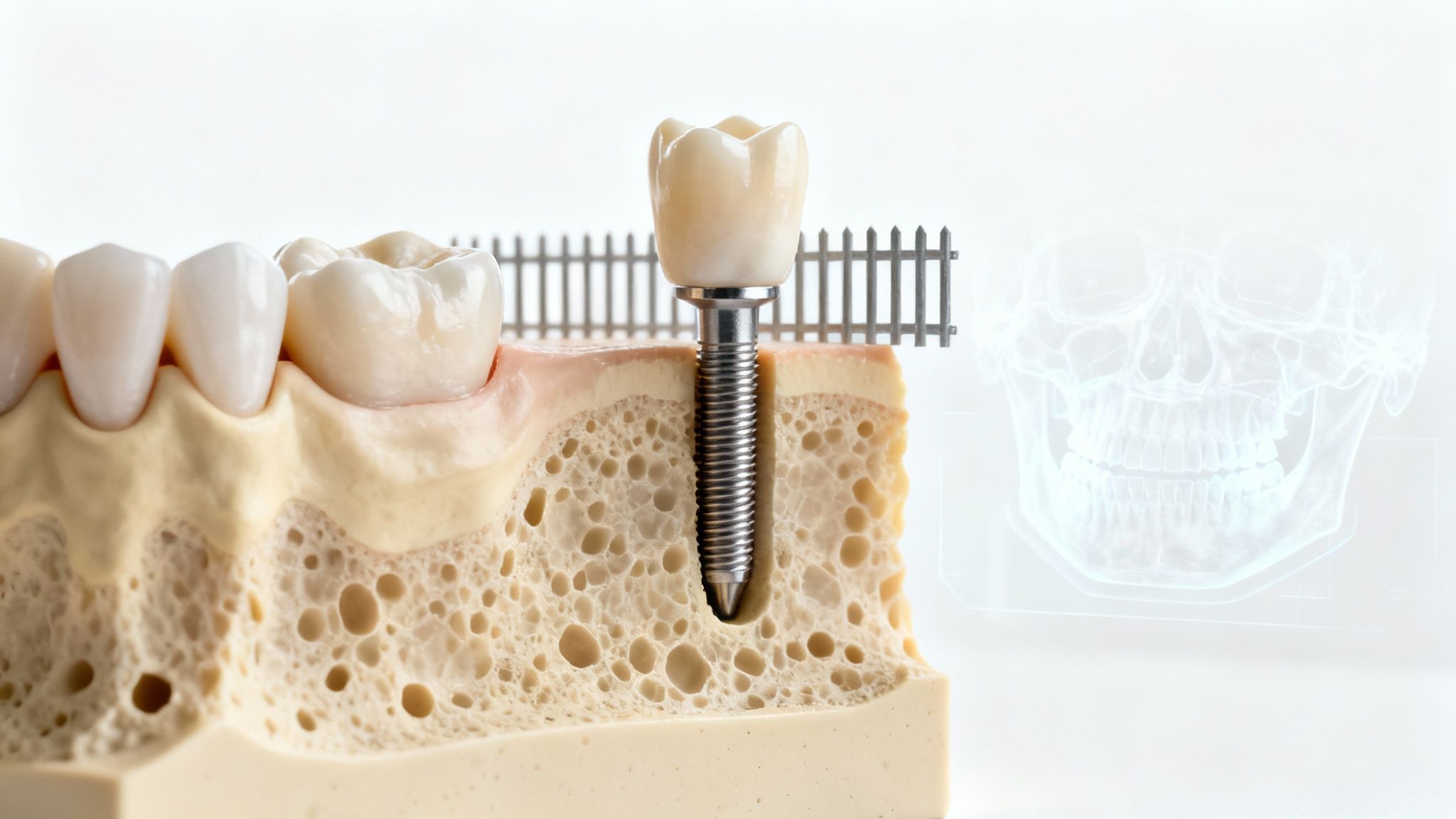
Before we jump into the solutions for bone loss, it’s helpful to understand why a healthy jawbone is non-negotiable for dental implants. Think of it this way: you wouldn't build a house on a weak, crumbling foundation.
An implant needs a solid, dense base to anchor into. That connection isn't just about physical support. It's a biological process called osseointegration, where the titanium implant actively fuses with the bone, becoming a permanent part of your jaw.
This incredible fusion is what gives an implant its rock-solid stability. It allows it to function just like a natural tooth root.
What Causes Jawbone Loss?
If the jawbone is so crucial, what causes it to weaken in the first place? The reasons are common, but bone loss is a manageable condition, not a permanent roadblock to getting implants.
Here are some of the usual suspects behind bone deterioration:
- Missing Teeth: When you lose a tooth, the jawbone in that spot stops getting the stimulation it needs from chewing. Without that daily "workout," the bone begins to shrink.
- Advanced Gum Disease: A chronic infection from gum disease can destroy the ligaments and bone that hold your teeth firmly in place. You can learn more about the vital periodontal ligament and its role here.
- Natural Aging: As we get older, it's natural for bone density to decrease throughout the body, and the jaw is no exception.
The effect of a missing tooth is more dramatic than you might think. Studies from the American Dental Association show that in the first year after a tooth is pulled, a patient can lose approximately 25% of bone width in that area.
Precision Planning with 3D Imaging
In the past, dentists had to rely on flat, 2D X-rays to assess bone levels, which left room for guesswork. Today, Trinity Dental Care uses advanced tools like 3D Cone Beam Computed Tomography (CBCT) scans to get the full picture.
A CBCT scan creates a detailed, three-dimensional map of your entire jaw structure. This allows Dr. Christine Ann Fink to measure your bone height, width, and density with incredible precision.
This technology removes the guesswork from implant planning. It allows Dr. Fink to pinpoint strong areas of bone and determine with certainty whether a step like bone grafting is needed. This meticulous approach ensures your treatment plan is safe, predictable, and built for success.
Rebuilding Your Foundation with Bone Grafting
If your jawbone isn't quite strong enough for an implant, the most common solution is a highly successful procedure called bone grafting. It’s like preparing the ground to ensure your future implant has the solid support it needs to last a lifetime.
The process is straightforward. A specialized grafting material is placed where the bone is thin. This material acts as a scaffold, signaling your body’s natural bone-building cells to grow new, dense bone tissue.
Understanding Your Grafting Options
Not all bone grafts are the same, and Dr. Christine Ann Fink will determine the best approach for your specific situation. The materials we use can come from your own body, a sterile donor source, or synthetic options.
No matter the source, each type serves the same core purpose: to create a stable environment for your body to regenerate its own strong bone. This is a standard preparatory step in modern implant dentistry.
The goal of bone grafting is straightforward: to restore the original height and width of your jawbone so it can securely anchor a dental implant. It turns a potential obstacle into a solid, reliable foundation for your new smile.
Specialized Grafts for Specific Needs
Sometimes, bone loss creates unique challenges. Dr. Fink may recommend a specialized grafting procedure to address the issue with precision. You can learn more about getting ready for dental procedures in our guide on what you need to know before treatment.
Two of the most common specialized grafts include:
- Sinus Lift (or Sinus Augmentation): This procedure is for the upper back jaw. A sinus lift gently raises the floor of the sinus and places grafting material underneath, creating the vertical space needed for a secure implant.
- Ridge Augmentation: When a tooth has been missing for a long time, the jawbone ridge can become narrow. A ridge augmentation rebuilds the width and contour of the jaw, providing enough bulk to support an implant.
These procedures allow our team at Trinity Dental Care to tackle even complex cases of bone loss. They make it possible for more Scottsdale residents than ever to be successful candidates for dental implants.
The All-on-4® Revolution: A Graft-Free Alternative
What if you could skip the months-long process of bone grafting and still get a full, permanent set of new teeth? This isn't just wishful thinking—it's the reality made possible by the All-on-4® treatment concept.
This approach was specifically developed to solve the challenge of an insufficient jawbone. Instead of rebuilding the jaw, the All-on-4® technique works brilliantly with the strong bone you already have.
How Angled Implants Make All the Difference
The genius behind the All-on-4® technique is its ability to support an entire arch of teeth on just four titanium implants. Two implants are placed vertically in the front of the jaw where bone is naturally thicker.
The two implants in the back are the real innovators. They are placed at a specific angle, often up to 45 degrees. This angulation allows them to anchor into the dense bone in the front of the jaw, bypassing weak areas in the back.
The All-on-4® concept is designed to use your anatomy to your advantage. By angling the posterior implants, we can secure a stable foundation for a full arch of teeth, even when traditional vertical implants aren't an option due to bone loss.
The Major Benefits of a Graft-Free Solution
For patients in Scottsdale facing multiple surgeries, the benefits of avoiding bone grafting are huge. This approach offers a much more direct path to a beautiful, functional smile.
The primary benefits include:
- A Dramatically Shorter Timeline: Because we skip the 3-6 month healing period a bone graft requires, the entire process from surgery to your new smile is significantly condensed.
- Immediate Functionality: You can often have a temporary—but fully functional—set of teeth attached to your implants on the very same day as your procedure.
- Reduced Overall Cost: By eliminating separate grafting surgeries and material costs, the All-on-4® treatment can be a more predictable and often more affordable solution.
This approach directly addresses the fear and uncertainty that come with a diagnosis of severe bone loss. To see exactly how this procedure works, explore our guide on what All-on-4® explained.
How We Determine the Right Path for You
Your journey back to a full smile is deeply personal, and the evaluation process at Trinity Dental Care reflects that. It’s about understanding your specific situation and mapping out a plan that aligns with your goals.
Dr. Christine Ann Fink looks at the whole picture. This includes reviewing your health, expectations, and analyzing your jawbone using advanced 3D imaging. This technology gives us a crystal-clear view of your bone structure.
Becoming a Partner in Your Care
An informed patient is an empowered one. During your consultation, we want you to ask direct questions to make a confident decision, completely free of surprises.
Consider asking questions like these:
- Am I a candidate for a graft-free solution like All-on-4®?
- What does my 3D scan show about my bone quality and density?
- How might my lifestyle habits, like smoking, influence the treatment's success?
This decision tree helps visualize the primary paths we consider based on the level of bone loss you may have.
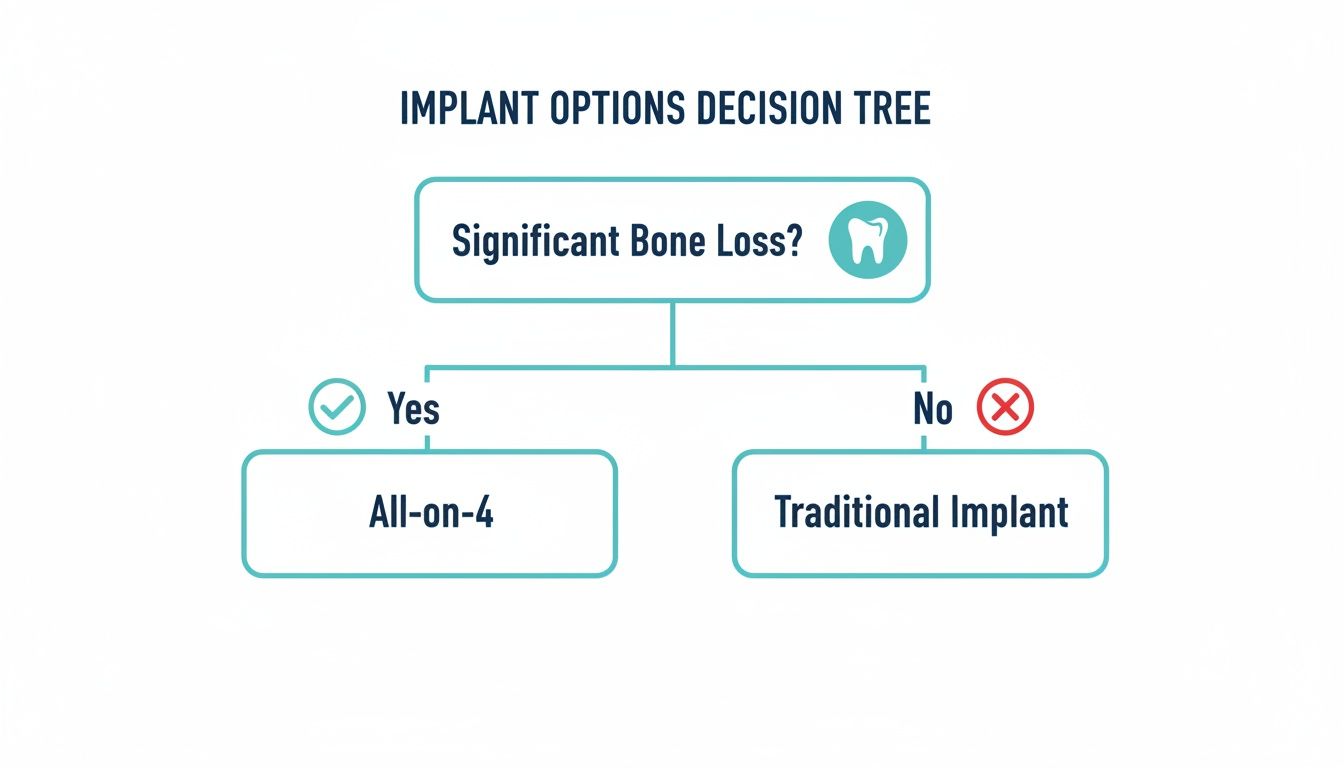
Significant bone loss doesn't close the door on implants; it simply points us toward different, highly effective solutions. The key is choosing a provider who evaluates you for all options—not just traditional graft-and-place techniques.
Your 3D Scan Tells the Story
The location of bone loss is just as important as the amount. For example, the upper jaw has naturally softer bone than the lower jaw. This anatomical difference is a huge factor in our planning.
Clinical research confirms that bone quality and location significantly impact implant success. This is why a precise 3D analysis is so critical for ensuring a predictable, stable result. You can read more about these clinical findings to see why this careful assessment is non-negotiable.
Your Journey to a New Smile Starts Here in Scottsdale
Low bone volume is a common roadblock, but it's not the end of the road. At Trinity Dental Care, we believe everyone deserves to understand all their options for getting back a complete, confident smile.
Dr. Christine Ann Fink provides clear, honest, and pressure-free consultations. It’s your chance to learn about every solution, from bone grafting to the game-changing All-on-4® concept. We blend advanced technology with a compassionate approach to create a plan that fits your life.
Think you’ve lost too much bone for implants? Trinity Dental Care in Scottsdale offers All-on-4 evaluations to help you understand your real options—no surprises, no pressure.
Our team will be your guide through the entire process, ensuring you feel comfortable and informed. You can get a better sense of what to expect by exploring our overview of the Scottsdale implant dentist experience.
Ready to restore your smile with dental implants in Scottsdale? Contact Trinity Dental Care today to schedule a personalized consultation with Dr. Christine Ann Fink.
Your Top Questions About Implants and Bone Loss, Answered
Considering dental implants but worried about bone loss? We’ve put together answers to the most common questions from our patients here in Scottsdale to give you clear, straightforward information.
Is Bone Grafting a Painful Procedure?
Your comfort is our first priority at Trinity Dental Care. Bone grafting is done with local anesthesia, so the area is completely numb and you won't feel any pain during the procedure.
Afterward, most people describe the feeling as mild discomfort, similar to a tooth extraction. We’ll provide detailed care instructions and medication to keep you comfortable while you heal.
How Long Do Dental Implants Last, Especially After a Bone Graft?
With good home care and regular check-ups, dental implants are designed to be a lifetime solution. A successful bone graft rebuilds your jaw, creating a foundation as strong as your natural bone.
The success rates for implants are incredibly high. According to the National Institutes of Health (NIH), research shows that 92.5% to 98% of implants remain stable for the long term. You can explore the full research findings here.
Does Dental Insurance Cover Bone Grafting or All-on-4 Implants?
This is a big one, and the honest answer is: it depends entirely on your plan. Some policies cover a portion of a bone graft if it's considered medically necessary.
Our team at Trinity Dental Care in Scottsdale is great at navigating insurance plans. We’ll help you understand your benefits and offer flexible financing options to make sure treatment fits your budget.
How Do I Know If I Need a Bone Graft or If I Qualify for All-on-4?
The only way to know for sure is to come in for a comprehensive consultation with Dr. Christine Ann Fink. Insist on 3D imaging to get a clear, upfront diagnosis and avoid surprise treatment costs.
A CBCT scan allows Dr. Fink to precisely measure your bone density. From there, she can determine if rebuilding with a graft or using a graft-free approach like All-on-4 is the best path for you.
What Is the Recovery Time for Implant Procedures Involving Bone Loss?
Recovery depends on the specific path we take. A bone graft needs about 3-6 months for your body to create new, solid bone before an implant can be placed.
With the All-on-4 procedure, the timeline is much faster. You can often leave our office with a functional set of temporary teeth on the same day as your surgery. Dr. Fink will lay out a personalized timeline for you.
Think you’ve lost too much bone for implants? Trinity Dental Care in Scottsdale offers All-on-4 evaluations to help you understand your real options—no surprises, no pressure. Contact us today to schedule your personalized consultation.