
A radiant smile often begins with what’s on your plate. While professional whitening treatments at Trinity Dental Care offer dramatic results, incorporating certain natural foods that whiten teeth into your daily diet can help maintain brightness and prevent new stains from forming. This approach supports your oral health from the inside out, complementing your regular dental care routine.
This guide provides a comprehensive list of enamel-friendly foods that work in various ways to gently polish, scrub, and protect your teeth. We will explore how specific fruits, vegetables, and dairy products contain natural compounds that break down surface stains. You will also learn which foods stimulate saliva production—your body’s own defense mechanism against discoloration and decay.
Think of this as your grocery list for a healthier, more luminous smile. For residents in Scottsdale, Arizona, seeking a holistic approach to cosmetic and preventive care, understanding these dietary connections is a powerful first step. Let's explore the foods that can help you achieve and maintain that confident sparkle.
1. Strawberries
A surprisingly effective option among foods that whiten teeth is the humble strawberry. This popular fruit contains a key ingredient: malic acid.
Malic acid is a natural enzyme that functions as an astringent. It works by gently breaking down surface stains from tooth enamel, which can be caused by coffee, tea, or red wine.
Strawberries are also rich in Vitamin C, a powerful antioxidant that helps combat plaque buildup, a primary contributor to yellowing teeth.
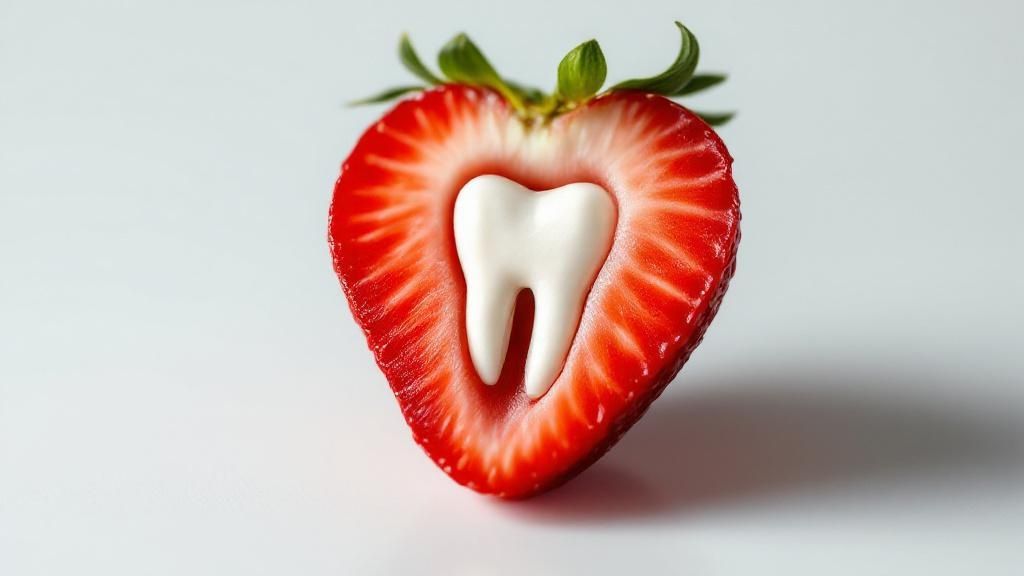
How to Use Strawberries for Teeth Whitening
While simply eating strawberries contributes to oral health, a more direct application is often recommended for whitening. A simple paste recipe is a popular DIY method.
DIY Whitening Paste: Mash one or two ripe strawberries into a pulp. You can add a pinch of baking soda to create a gentle, exfoliating paste.
Apply this mixture to your teeth using a soft toothbrush and brush gently for about two minutes. Because of the fruit's natural acidity, it's crucial to follow specific aftercare steps to protect your enamel.
Important Tips for Safe Application
To harness the benefits of strawberries without risking dental damage, follow these professional recommendations:
- Rinse Thoroughly: After brushing with the strawberry mixture, rinse your mouth completely with water.
- Wait Before Brushing: The acid in the fruit can temporarily soften your tooth enamel. Wait at least 30-60 minutes before brushing with your regular fluoride toothpaste.
- Limit Use: This natural treatment should be used sparingly, no more than once or twice a week, to prevent potential enamel erosion.
This method is a great, natural way to supplement your professional dental care, but it does not replace the professional whitening treatments offered at our Scottsdale dental office.
2. Pineapple
Another fantastic tropical fruit to add to your list of foods that whiten teeth is pineapple. The key to its effectiveness is a powerful enzyme compound known as bromelain.
Bromelain is renowned for its ability to break down proteins. A study published in the International Journal of Dental Hygiene noted that bromelain is an effective ingredient in stain-removing toothpaste. It works by dissolving the stubborn protein-based pellicle layer that forms on tooth enamel.
This layer attracts food particles and bacteria, leading to plaque buildup and surface stains. By helping to dissolve this film, bromelain effectively removes discoloration and reveals a whiter smile.
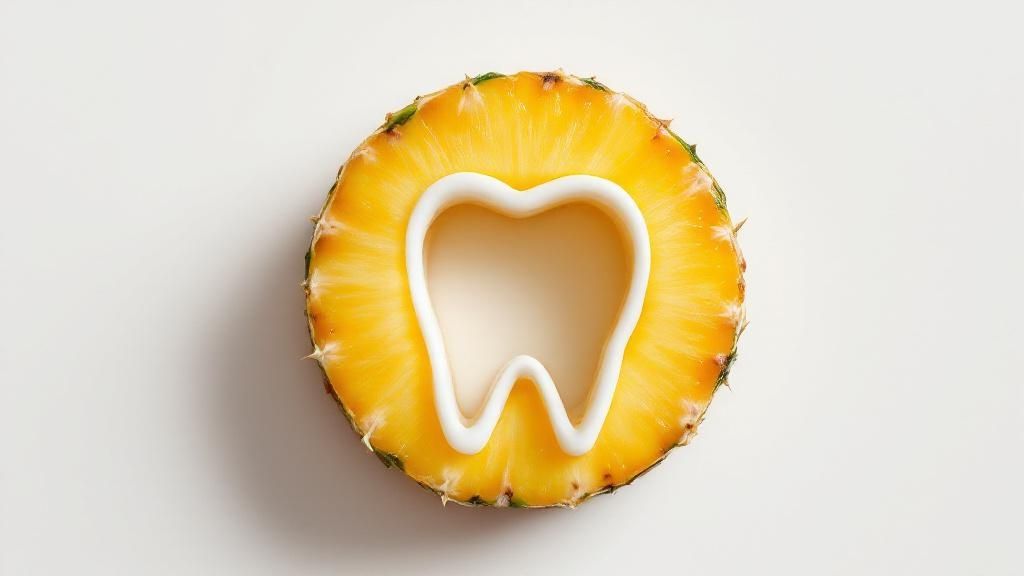
How to Use Pineapple for Teeth Whitening
Incorporating fresh pineapple into your diet is the most direct way to leverage its whitening benefits. The natural fibers in the fruit also act as a gentle scrub against your teeth as you chew.
Expert Insight: Many natural toothpaste brands now include bromelain extract as a primary ingredient, harnessing its stain-removing power without the acidity of the whole fruit.
Simply eating a few chunks of fresh pineapple can help cleanse your teeth and complements your daily oral hygiene routine.
Important Tips for Safe Consumption
While pineapple is beneficial, its natural acidity requires mindful consumption to protect your tooth enamel.
- Rinse After Eating: Swish your mouth with water immediately after eating pineapple to help neutralize the acids.
- Wait to Brush: Just like with other acidic foods, wait at least 30 minutes before brushing with regular toothpaste to allow your enamel to re-harden.
- Consume in Moderation: Limit your intake to prevent the risk of enamel erosion from excessive acid exposure.
Natural remedies like pineapple can support a brighter smile, but they are not a substitute for professional care from your Scottsdale family dentist.
3. Oranges and Citrus Fruits
Another group of popular foods that whiten teeth includes vibrant citrus fruits like oranges, lemons, and grapefruits. Their power comes from two main components: citric acid and Vitamin C.
Citric acid can help dissolve the surface-level stains clinging to your tooth enamel. At the same time, the high concentration of Vitamin C fights gum inflammation and the bacteria that contribute to plaque and discoloration.
How to Use Citrus Fruits for Teeth Whitening
Incorporating citrus is easy, but direct application methods require caution. Some traditional practices involve using the peel, which contains beneficial compounds without being as acidic as the fruit's juice.
Traditional Tip: Gently rub the white, pithy side of an orange peel on your teeth for a couple of minutes. This method is believed to gently polish the teeth and deliver whitening agents like d-limonene, a compound found in citrus rinds.
Important Tips for Safe Application
The high acidity of citrus fruits makes it essential to consume them carefully to avoid enamel damage.
- Rinse with Water: Immediately after eating a citrus fruit or drinking its juice, rinse your mouth thoroughly with plain water to neutralize the acid.
- Use a Straw: When drinking citrus juices or lemon water, use a straw to minimize direct contact between the acidic liquid and your teeth.
- Wait Before Brushing: Never brush your teeth right after consuming citrus. Wait at least 30-60 minutes before using your regular fluoride toothpaste to avoid enamel wear.
This method is not a substitute for professional dental care. For safe and effective whitening solutions, schedule a consultation at Trinity Dental Care.
4. Dairy Products (Milk, Cheese, Yogurt)
Including dairy products like milk, cheese, and yogurt in your diet is another fantastic strategy for those seeking foods that whiten teeth. Their benefits come from a powerful trio of components: lactic acid, calcium, and phosphorus.
Lactic acid may help protect against cavities. Meanwhile, calcium and phosphorus work together to remineralize and strengthen tooth enamel. This process fortifies teeth and helps restore their natural, bright appearance.
Dairy products also contain a protein called casein, which binds to tooth enamel, forming a protective barrier that helps prevent stain-causing particles from sticking.
How to Use Dairy for Teeth Whitening
Incorporating dairy into your diet is simple and effective. Making smart choices at mealtime can make a significant difference.
Professional Insight: Dentists often recommend eating a piece of aged cheese, such as cheddar, after a meal. The cheese helps neutralize acids from other foods and stimulates saliva production, which cleanses the mouth naturally.
Consuming dairy products, particularly after eating sugary or acidic foods, can help restore your mouth's natural pH balance and protect your enamel from erosion.
Important Tips for Safe Application
To get the most out of dairy's dental benefits, keep these practical tips in mind:
- Choose Unsweetened Varieties: Opt for plain, unsweetened yogurt and milk. Added sugars can contribute to tooth decay.
- Aged Cheese is Best: Hard, aged cheeses like Cheddar and Monterey Jack are particularly effective at stimulating saliva.
- Consume After Meals: Having milk, cheese, or yogurt at the end of a meal can help neutralize acids and wash away food particles.
These foods are excellent for daily maintenance, and you can learn more about why teeth cleanings are so important for a healthy, bright smile.
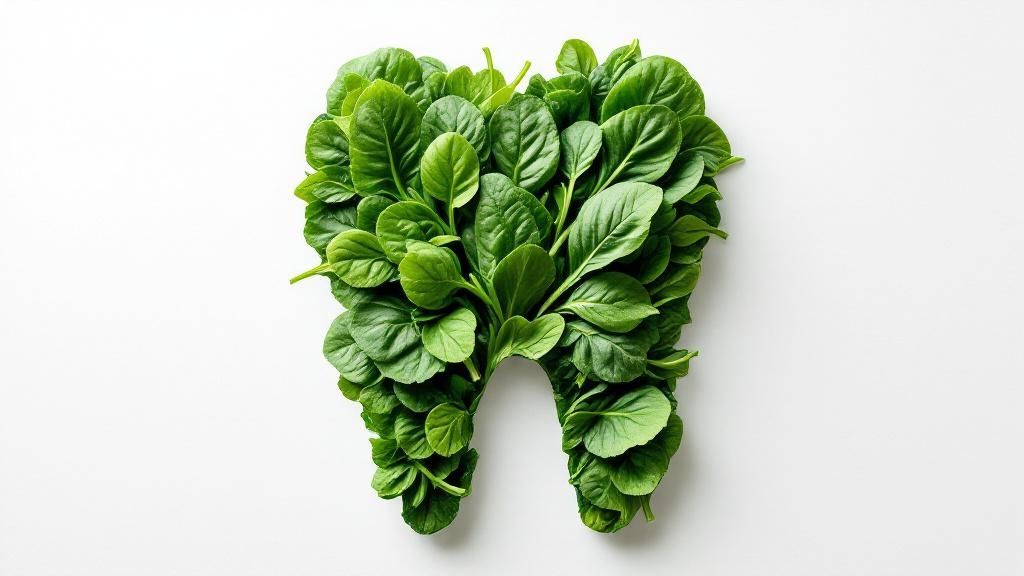
5. Leafy Greens (Spinach, Kale, Lettuce)
When considering foods that whiten teeth, don’t overlook the power of your daily salad. Leafy greens like spinach, kale, and lettuce offer significant benefits for your dental health.
These vegetables are rich in minerals like calcium and phosphorus, which are essential for fortifying and remineralizing tooth enamel. Their high fiber content acts like a natural toothbrush, scrubbing away plaque as you chew.
This chewing action also stimulates saliva production, your body’s best natural defense against acid and stains.
How to Use Leafy Greens for Teeth Whitening
Integrating more leafy greens into your diet is a simple and effective strategy. Making these vegetables a daily habit is key to reaping their oral health rewards.
Daily Protective Habit: Instead of a one-time treatment, the goal is consistent consumption. A daily salad or a green smoothie can provide a continuous defense against staining and enamel weakness.
Chewing raw greens like kale or spinach in a salad maximizes their fibrous, scrubbing benefits.
Important Tips for Maximum Benefit
To get the most out of your greens and protect your smile, follow these dentist-approved recommendations:
- Chew Thoroughly: Take your time eating salads. Thoroughly chewing the greens helps scrub tooth surfaces and stimulates saliva flow.
- Eat Them Raw: While cooked greens are still nutritious, raw greens provide the best fiber for mechanical cleaning.
- Combine Wisely: Create a powerful teeth-whitening salad by combining leafy greens with other beneficial foods from this list, such as apples, celery, and carrots.
Incorporating these foods is an excellent preventive measure. It complements, but does not substitute, the comprehensive care and professional whitening services available at Trinity Dental Care.
6. Baking Soda
While not technically one of the foods that whiten teeth, baking soda is a powerful, time-tested ingredient found in most kitchens. Its effectiveness is so well-regarded that it is a key component in many commercial whitening toothpastes.
Baking soda works as a gentle, low-abrasion polish. Its fine particles effectively scrub away extrinsic stains from the tooth's surface.
Furthermore, its alkaline nature helps to neutralize the harmful, stain-causing acids produced by bacteria in your mouth.
How to Use Baking Soda for Teeth Whitening
Using baking soda safely is straightforward and can be incorporated into your oral hygiene routine. The most common method involves creating a simple paste.
DIY Whitening Paste: Mix about half a teaspoon of baking soda with a few drops of water. Stir until it forms a smooth, brushable paste.
Apply this mixture to your toothbrush and brush your teeth gently in small, circular motions for no more than two minutes.
Important Tips for Safe Application
To leverage the whitening power of baking soda without causing harm to your teeth, it's essential to follow best practices for safe application:
- Always Use a Paste: Never apply dry baking soda directly to your teeth, as its abrasiveness can be too concentrated.
- Limit Frequency: To prevent potential enamel wear, limit this treatment to a maximum of two to three times per week.
- Follow with Fluoride: After rinsing, be sure to brush with a regular fluoride toothpaste to help re-mineralize and strengthen your enamel.
You can learn more about how to prevent teeth staining to maintain a bright smile. This method complements the professional cleanings and treatments available at Trinity Dental Care.
7. Sesame Seeds
Another powerful, yet often overlooked, item among foods that whiten teeth is the tiny but mighty sesame seed. These seeds offer a unique mechanical cleaning action, acting as a gentle, natural scrub for your tooth enamel.
Their slightly abrasive texture works to physically buff the teeth as you chew them. Sesame seeds are also an excellent source of calcium, a critical mineral for building and maintaining strong, healthy enamel.
How to Use Sesame Seeds for Teeth Whitening
Incorporating sesame seeds into your diet is simple, but for targeted whitening, a more direct approach is recommended.
Natural Scrubbing Method: Take a tablespoon of raw sesame seeds and chew them for a few minutes without swallowing. As you chew, the seeds will form a paste-like consistency that polishes your teeth.
After chewing, use a dry, soft-bristled toothbrush to brush this paste around your teeth for two minutes. This allows the seeds to effectively scrub away plaque and stains.
Important Tips for Safe Application
To get the most out of this natural method, follow these simple guidelines:
- Rinse and Brush: After scrubbing with the sesame paste, rinse your mouth thoroughly with water. Follow up by brushing with your regular fluoride toothpaste.
- Choose Raw Seeds: For the best results, use raw, unsalted, and unhulled sesame seeds.
- Incorporate into Diet: Regularly adding sesame seeds to salads or stir-fries supports long-term enamel health due to their high calcium content.
Trinity Dental Care offers many expert pearly white teeth tips to help you achieve your goals.
8. Hydrogen Peroxide-Rich Foods (Cauliflower, Broccoli)
Certain cruciferous vegetables like cauliflower and broccoli are powerful allies among foods that whiten teeth. Their whitening effect comes from their unique chemical composition and fibrous texture.
The magic lies in natural compounds that may release trace amounts of hydrogen peroxide as you chew. This provides a very mild, safe bleaching action on the tooth surface.
Additionally, the crisp, firm texture of these raw vegetables acts as a natural scrub, mechanically cleaning away plaque and food particles.
How to Use Cauliflower & Broccoli for Teeth Whitening
The benefits of these vegetables are reaped through consumption. Incorporating them into your regular diet can help maintain oral health.
Daily Diet Tip: Instead of thinking of it as a one-time treatment, add a serving of raw broccoli or cauliflower to your daily lunch or as a healthy snack. Chewing them thoroughly is key.
This consistent, gentle approach helps maintain a whiter smile over time by preventing the accumulation of new surface stains.
Important Tips for Maximum Benefit
To get the most out of these foods, follow these simple guidelines:
- Eat Them Raw: The compounds are most potent when the vegetables are raw or only lightly steamed.
- Chew Thoroughly: The mechanical action of chewing is crucial for scrubbing your teeth and stimulating saliva.
- Be Consistent: Aim for daily or near-daily intake to see the best preventative results.
These foods offer a gentler effect than professional procedures. For more significant results, it's best to explore options with your cosmetic dentist in Scottsdale.
Teeth Whitening Foods Comparison Table
| Item | Implementation Complexity 🔄 | Resource Requirements ⚡ | Expected Outcomes 📊 | Ideal Use Cases 💡 | Key Advantages ⭐ |
|---|---|---|---|---|---|
| Strawberries | Low – simple topical or dietary use | Low – easy to source and apply | Gradual whitening over weeks | Natural remedy, mild whitening needs | Natural acids & vitamin C, antioxidant-rich |
| Pineapple | Moderate – best fresh consumption | Moderate – fresh fruit or supplements | Effective on protein-based stains | Targeting protein stains, holistic oral health | Unique bromelain enzyme, anti-inflammatory |
| Oranges and Citrus Fruits | Low – dietary inclusion | Low – widely available | Mild bleaching, preventive | Immune support, mild stain removal | High vitamin C, antibacterial |
| Dairy Products | Low – daily dietary consumption | Low – common diet staple | Subtle whitening, enamel strengthening | Remineralization, enamel protection | Calcium & phosphorus, stain prevention |
| Leafy Greens | Low – daily consumption | Low – easily added to diet | Preventive, slow-developing whitening | Preventing stains, oral ecosystem support | Protective film, saliva stimulation |
| Baking Soda | Moderate – careful application | Low – household item | Immediate surface stain removal | Fast whitening, stain removal | Mild abrasive, pH neutralizer |
| Sesame Seeds | Low – chewing and dietary use | Low – common and affordable | Gradual whitening, subtle | Natural scrubbing, oral health support | Mechanical scrubbing, enamel strengthening |
| Hydrogen Peroxide-Rich Foods | Low – dietary inclusion | Low – common vegetables | Very mild bleaching, long-term | Safe daily use, nutritional support | Natural peroxide release, alkaline buffering |
Frequently Asked Questions (FAQs)
1. Can eating these foods replace professional teeth whitening?
No. While these foods can help remove surface stains and prevent new ones, they cannot change your teeth's intrinsic shade. Professional whitening treatments offered by a dentist provide more dramatic and lasting results. Think of these foods as a natural supplement to your professional care.
2. How long does it take to see results from these foods?
Results are gradual and subtle. Consistent consumption over several weeks or months is needed to notice any mild brightening effects. These foods are best used for maintenance and prevention rather than for a quick transformation.
3. Are there any risks with using acidic fruits like strawberries or lemons to whiten teeth?
Yes. The acid in these fruits can soften and erode tooth enamel if used too frequently or left on the teeth for too long. It is crucial to rinse your mouth with water immediately after and wait at least 30 minutes before brushing to protect your enamel.
4. Which food is the most effective for whitening teeth?
There isn't one "most effective" food, as they work in different ways. Foods with natural abrasives like sesame seeds or baking soda physically scrub stains, while those with enzymes like pineapple (bromelain) dissolve stain-causing proteins. A varied diet including several of these foods is the best approach.
5. Does drinking milk after coffee help prevent stains?
Yes, it can. Adding milk to coffee or drinking it afterward can help neutralize the coffee's acidity and provide calcium and phosphates to strengthen enamel. The protein casein in milk also creates a protective layer on the teeth, making it harder for stains to adhere.
Conclusion: Your Next Steps to a Brighter Smile
Harnessing the power of your diet is a proactive step toward a healthier, brighter smile. By incorporating foods that whiten teeth—from the malic acid in strawberries to the gentle scrubbing action of sesame seeds—you are supporting your oral wellness from the inside out.
These foods not only help combat surface stains but also deliver essential minerals that strengthen enamel, increase cleansing saliva production, and neutralize harmful acids. A varied diet rich in these items works in tandem with good oral hygiene to create a foundation for lasting dental health.
While these dietary strategies are beneficial, they are a complement, not a replacement, for professional dental care. For our patients in Scottsdale and the surrounding communities, combining a healthy diet with expert dental services is the key to a truly radiant smile. At Trinity Dental Care, Dr. Christine Ann Fink provides compassionate, patient-centric care to help you achieve your goals safely and effectively.
Ready to take the next step? Whether you need a routine check-up or are interested in cosmetic dentistry, we are here to help. Contact us today to schedule your appointment at our Scottsdale, AZ, office and let us partner with you on your journey to optimal oral health.