
Direct Answer: Yes — they’re completely different procedures. A regular cleaning maintains healthy gums. A deep cleaning treats active gum disease by removing bacteria below the gumline where your toothbrush can’t reach.
A lot of North Scottsdale patients hear “you need a deep cleaning” and immediately wonder if their dentist is upselling them. It’s a fair question — the two procedures sound similar, and the cost difference can be significant.
But a deep cleaning and a routine cleaning aren’t two versions of the same thing. They treat entirely different conditions, use different techniques, and serve different goals for your long-term oral health.
If you’ve been told you need one, or you’re just trying to understand what your hygienist is actually doing at your next visit, this article explains exactly what separates the two — and why it matters for keeping your teeth and gums healthy for the long run.
What a Routine Cleaning Actually Does
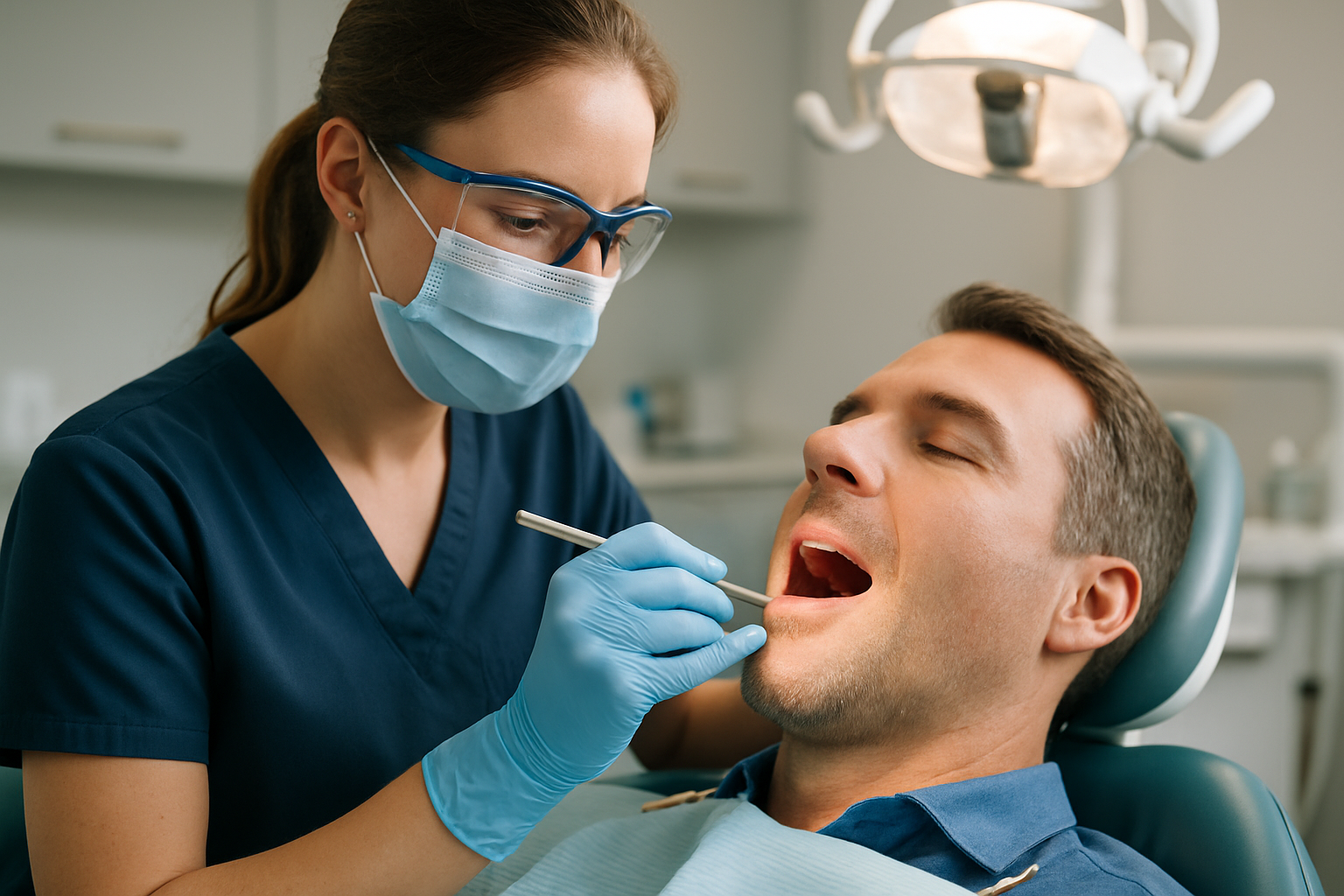
When you come in for a routine dental cleaning, the goal is maintenance. Your gums are healthy, the bone supporting your teeth is stable, and the hygienist is removing plaque and tartar that builds up above the gumline during normal daily life.
This is also when we measure your gum pocket depths — the small spaces between your teeth and gums. Healthy pockets measure 1 to 3 millimeters. When those numbers stay in range and your gums aren’t inflamed or pulling away from your teeth, a standard cleaning every six months is all you need.
A routine visit typically covers:
- Scaling above the gumline to remove tartar buildup
- Polishing the tooth surfaces
- Flossing between teeth
- Gum pocket measurements and charting
- Fluoride treatment if appropriate
- A full exam with X-rays on a regular schedule
Most healthy adults can stay on track with twice-yearly visits. But when those pocket numbers start climbing — or when we see signs of bone loss or active infection — a routine cleaning no longer addresses the underlying problem.
What Makes a Deep Cleaning Different — and Why It’s Necessary
A deep cleaning — clinically called scaling and root planing (SRP) — is a treatment for gum disease, not a more thorough version of your regular visit. Once bacteria and tartar push below the gumline and start affecting the root surface and surrounding bone, brushing and flossing at home can’t fix it, and neither can a standard cleaning.
Pocket depths of 4 millimeters or more — especially combined with bleeding, inflammation, or bone loss on X-rays — are the clearest sign that gum disease has taken hold. If bleeding gums have been something you’ve noticed and ignored, this is often where that path leads.
Here’s what actually happens during an SRP appointment:
- Scaling: Removing hardened tartar from below the gumline, sometimes several millimeters deep into the pocket
- Root planing: Smoothing the root surface so that bacteria have fewer places to re-attach and gum tissue can begin to reattach properly
- Local anesthesia: Usually required because the work goes below the gumline — you’ll be numb for the procedure
- Quadrant approach: Most practices treat one or two sections of the mouth per visit to manage sensitivity and recovery
Recovery is generally mild — some tenderness and sensitivity for a few days — but the difference in gum pocket depth at your follow-up visit, typically 4 to 6 weeks later, can be significant. Many patients drop from unhealthy pocket readings of 5–7mm down to a maintainable 3–4mm range after treatment.
In North Scottsdale, SRP typically runs $200 to $350 per quadrant, so a full-mouth deep cleaning usually lands somewhere between $800 and $1,400 depending on severity and your insurance coverage. That’s a real cost — but left untreated, advanced gum disease can lead to tooth loss, which is considerably more expensive to address.
Routine Cleaning vs. Deep Cleaning: What’s Actually Happening
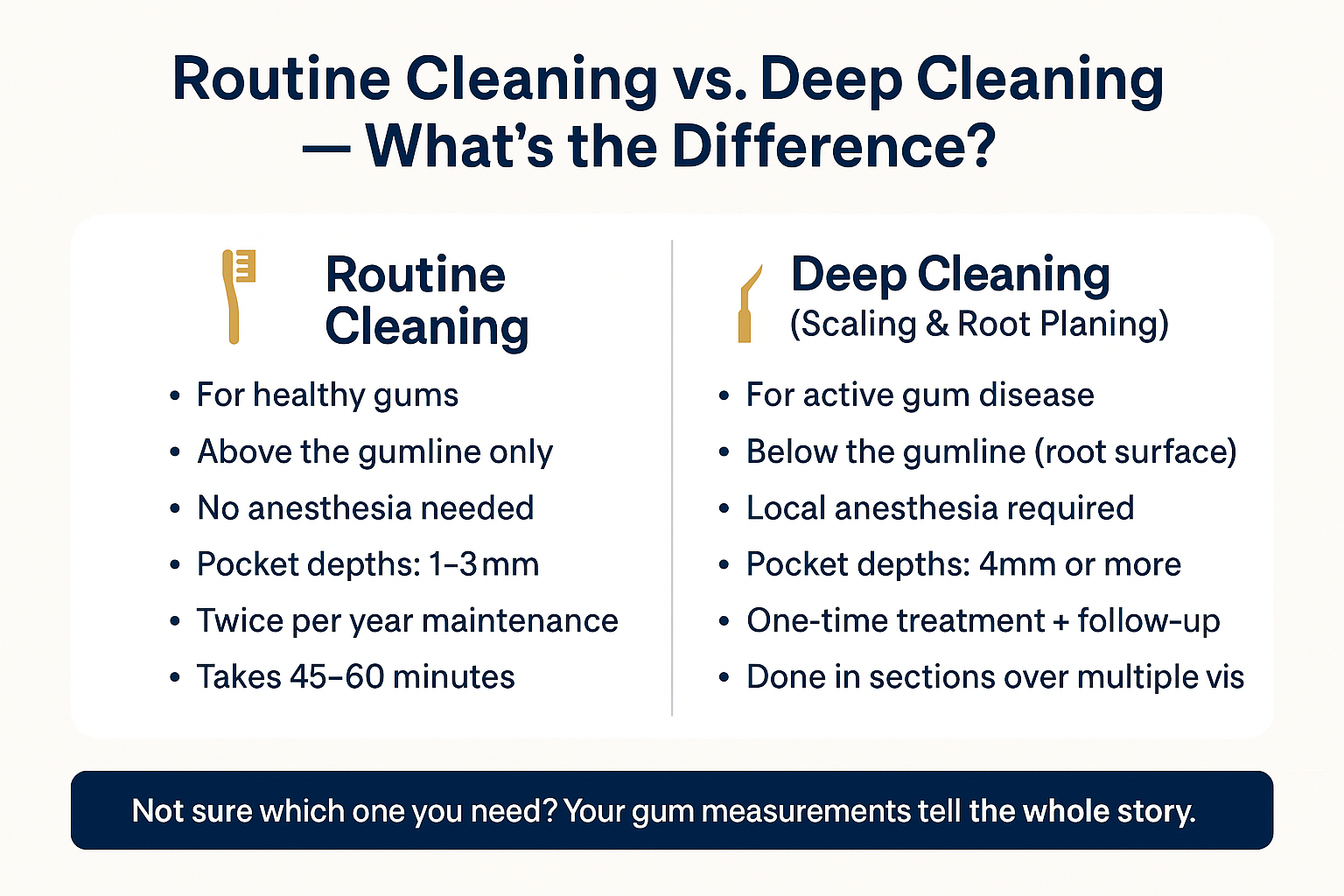
This comparison breaks down the key differences between the two procedures so you can see exactly where they diverge.
What Happens If You Skip the Deep Cleaning When You Need One
This is the part most patients don’t hear clearly enough. Gum disease doesn’t resolve on its own. If the bacteria colonizing below your gumline aren’t physically removed, the infection continues — slowly destroying the bone and connective tissue that hold your teeth in place.
Early-stage gum disease (gingivitis) is reversible with a professional cleaning and improved home care. But once it advances to periodontitis, you’re managing a chronic condition, not reversing one. The damage to bone doesn’t come back.
For patients in the Shea Corridor or McCormick Ranch area who’ve been putting off a dental visit for a year or two, this is worth taking seriously. The gap between “I’ll deal with it later” and “we need to talk about tooth replacement” can close faster than most people expect.
When gum disease progresses far enough, the conversation shifts from cleaning and maintenance toward more involved restorative work. Understanding when a single procedure stops being enough can help you make better decisions before you’re facing more complex treatment.
Routine Cleaning vs. Deep Cleaning at a Glance
Here’s a quick side-by-side for the questions we hear most often about these two procedures.
| Factor | Routine Cleaning | Deep Cleaning (SRP) |
|---|---|---|
| Who it’s for | Patients with healthy gums | Patients with gum disease or deep pockets |
| Where it cleans | Above the gumline | Below the gumline, along root surfaces |
| Anesthesia needed? | No | Yes — local anesthesia per quadrant |
| Typical frequency | Every 6 months | One-time treatment; then maintenance visits |
| Scottsdale cost range | $100–$200 per visit (with X-rays) | $200–$350 per quadrant |
| Insurance coverage | Usually covered at 100% | Typically covered at 50–80% with medical necessity |
| Follow-up required? | Standard 6-month recall | Reassessment visit 4–6 weeks after treatment |
How to Know Which One You Actually Need
The answer isn’t based on how your mouth feels — it’s based on measurements. That’s why gum charting at every exam matters.
Your hygienist records pocket depth at six points around each tooth. When multiple pockets read at 4mm or deeper, especially with bleeding on probing or visible bone changes on X-rays, that’s the clinical threshold for recommending SRP. It’s not a judgment call — it’s data.
A few other signs that often accompany the need for a deep cleaning:
- Gums that bleed regularly when brushing or flossing
- Persistent bad breath that doesn’t improve with brushing
- Gums that look like they’re pulling away from your teeth
- Teeth that feel loose or have shifted slightly
- Tartar buildup you can see or feel along the gumline
None of these symptoms alone confirms gum disease — but together with your measurements, they give us a clear picture. If you’ve been wondering whether bleeding gums are something to take seriously, the short answer is yes — and getting those measurements checked is the right first step.
After a Deep Cleaning: What Comes Next
A lot of patients think deep cleaning is a one-and-done fix. The procedure itself is, but gum health requires ongoing management.
After SRP, we typically schedule a re-evaluation appointment at 4 to 6 weeks to measure your pocket depths again and assess how your gums responded. Many patients see meaningful improvement — tissue tightening, reduced inflammation, and better pocket numbers.
From there, most people who’ve had gum disease move to a periodontal maintenance schedule — typically visits every 3 to 4 months rather than every 6. This isn’t a permanent punishment; it’s a recognition that your mouth needs more frequent monitoring to stay out of the danger zone.
The good news is that most people who follow through with SRP and keep up with maintenance genuinely stabilize. And once your gums are healthy again, it’s a lot easier to focus on the rest of your smile — whether that means professional whitening or other cosmetic work you may have been putting off while you dealt with the underlying issue first.
Frequently Asked Questions About Deep Cleanings
Is a deep cleaning painful?
Most patients find it very manageable. You’ll receive local anesthesia in the area being treated, so you shouldn’t feel sharp discomfort during the procedure. Afterward, it’s common to have some tenderness and sensitivity for 2 to 4 days — over-the-counter pain relievers and avoiding very hot or cold foods usually handles it.
Why does a deep cleaning cost so much more than a regular cleaning?
Because it’s a different level of care. SRP requires more time, anesthesia, specialized instruments, and a follow-up visit to assess results. Most dental insurance plans cover a portion of it when there’s documented medical necessity — meaning your hygienist’s measurements and X-rays support the recommendation. It’s worth calling your insurance before your appointment to understand your coverage.
Can I just do a regular cleaning and brush more carefully instead?
Once disease has progressed below the gumline, home care alone won’t eliminate the bacteria living in those deep pockets. Brushing and flossing maintain healthy tissue — they don’t treat an active infection. Skipping the deep cleaning when it’s genuinely needed means the disease continues progressing, which typically leads to more involved and more expensive treatment down the road.
How often will I need deep cleanings?
A full SRP is typically a one-time treatment. After that, you’ll shift to periodontal maintenance visits every 3 to 4 months to keep the condition stable. If gum disease is well-controlled over time, your dentist may eventually clear you to return to standard six-month visits — though that’s evaluated case by case.
My last dentist never mentioned my gum pockets. Should I be worried?
It’s worth asking. Gum charting should be part of every comprehensive exam. If it’s been a while since anyone measured your pocket depths — or if you’ve never had it done — getting a baseline is a reasonable first step, especially if you’ve noticed any of the warning signs like bleeding, sensitivity, or visible gum recession.
Not Sure Where Your Gum Health Stands?
If it’s been more than a year since your last cleaning — or if no one has charted your gum pockets in a while — a straightforward exam can give you a clear picture of where things stand. Trinity Dental Care serves patients throughout North Scottsdale, including McCormick Ranch, the Shea Corridor, and the Village at Frank Lloyd Wright. You can reach us at 480-621-4040 or visit trinitydentalcares.com to schedule an appointment with Dr. Fink and our team.