
When you're staring down the teeth whitening aisle, it’s easy to get overwhelmed. Strips, gels, and fancy LED kits all promise a brighter smile for a fraction of the cost of a professional treatment.
Many people wonder whether it’s worth paying more for professional whitening, especially with so many options available online. The core concern we hear from our Scottsdale patients is simple: does professional treatment actually work better?
The answer comes down to science, safety, and supervision. A professional treatment from a dentist like Dr. Christine Ann Fink is a controlled cosmetic procedure designed for powerful, even results. Over-the-counter products, on the other hand, are designed for mass use with much weaker ingredients, which naturally limits what they can achieve.
Key Differences At A Glance
The most significant distinction is the strength of the whitening agent. Professional treatments use high concentrations of bleaching agents like hydrogen peroxide, typically ranging from 25% to 40%.
In comparison, at-home kits legally max out between 3% and 20%. This massive difference is why an in-office treatment can deliver stunning results in a single visit, while store-bought kits require weeks of use for subtle changes.
Comparing Whitening Methods Side-by-Side
This table gives you a quick side-by-side summary. It's the perfect way to see the trade-offs between professional and over-the-counter teeth whitening.
| Factor | Professional In-Office Whitening | At-Home Whitening Kits |
|---|---|---|
| Whitening Strength | High-concentration gel (25-40% peroxide) | Low-concentration gel (3-20% peroxide) |
| Effectiveness | Can lighten teeth up to 8 shades | Typically lightens teeth 1-3 shades |
| Speed of Results | Immediate results in about one hour | Gradual results over several weeks |
| Safety & Supervision | Supervised by a dental professional | Unsupervised, higher risk of user error |
| Gum Protection | Gums are shielded to prevent irritation | Strips or trays can leak, causing sensitivity |
| Longevity of Results | Can last 1-3 years with proper care | Often fades within a few months |
| Ideal For | Significant, deep-set stains | Minor surface stains and touch-ups |
As you can see, the supervision and strength from a professional service lead to dramatically different outcomes in speed, effectiveness, and safety. Research shows that in-office whitening can whiten teeth by up to 8 shades in one visit, while most at-home kits offer more modest results.
A common misstep with DIY products is the poor fit of generic trays and strips. This leads to uneven whitening, gum irritation, and disappointment when results don't match the advertising, causing many users to quit early.
While at-home kits have their place for minor touch-ups, understanding their limitations is key. For those wondering if drugstore whitening products truly work, a professional consultation can provide clarity. A cosmetic dentist at Trinity Dental Care can assess your discoloration and recommend a path that ensures safe, uniform, and brilliant results for your smile.
Understanding The Science Behind Each Whitening Method
To really figure out if professional whitening is better than at-home kits, you have to look at the science. Both professional treatments and over-the-counter options use the same active ingredients—usually hydrogen peroxide or carbamide peroxide—to brighten your smile.
The real difference comes down to the concentration of that ingredient and how it's applied. At its core, teeth whitening is a straightforward chemical reaction where peroxide breaks down stains. However, the execution changes everything.
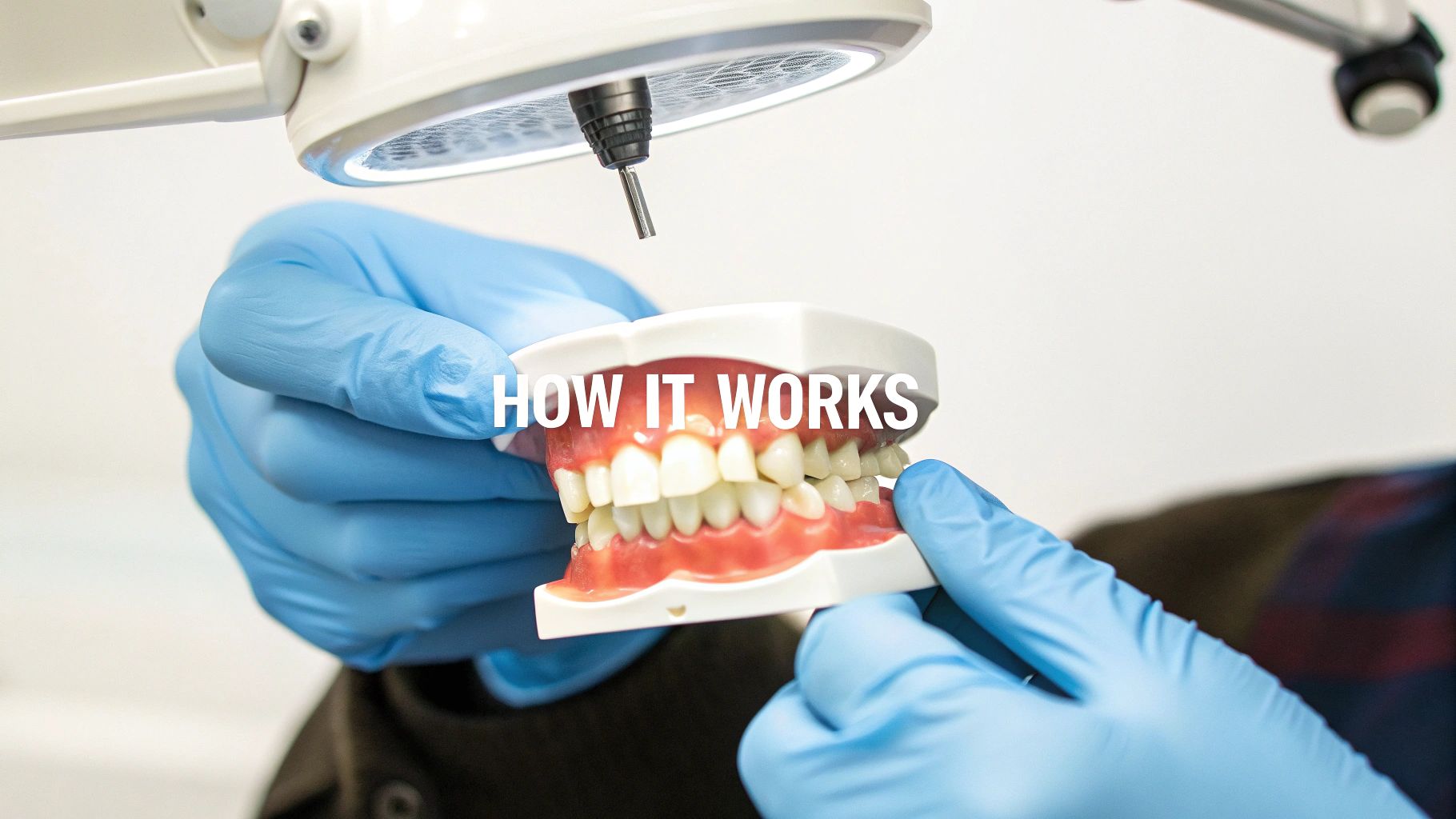
How Professional In-Office Treatments Work
When you come in for a professional treatment like Zoom® at Trinity Dental Care, you're getting a powerful, controlled cosmetic procedure. Dr. Christine Ann Fink uses a medical-grade gel with a much higher concentration of hydrogen peroxide, often between 25% and 40%.
Because the gel is so potent, your safety is our top priority. We carefully place a protective barrier over your gums and other soft tissues to prevent irritation—a critical safety measure missing from at-home kits.
Once the gel is on your teeth, we often use a specialized light to activate it. This light speeds up the chemical reaction, delivering a dramatic transformation in about an hour.
The Mechanism of At-Home Whitening Kits
At-home kits work on the same principle but with major limitations. To be sold safely for unsupervised use, these products contain a much lower concentration of peroxide, typically in the 3% to 20% range.
This weaker formula means they’re really only effective on surface-level stains from things like coffee, tea, and red wine. The one-size-fits-all strips and trays also almost never fit your smile perfectly.
This imperfect fit often results in uneven whitening. It can also cause the whitening agent to leak onto the gums, leading to sensitivity and irritation.
Because the concentration is so much lower, at-home kits require you to apply them repeatedly for days or weeks to see even modest results. They simply don't have the power to safely tackle the deeper discoloration that professional treatments eliminate. For a closer look, you can learn more about professional teeth whitening and its specific advantages.
How Effective Is It Really, And How Long Will It Last?
Two questions matter most: how white will my teeth get, and how long will they stay that way? Patients want to know if the investment in a professional treatment delivers a visible, long-lasting difference.
The answer is a resounding yes. A single in-office whitening session at Trinity Dental Care can accomplish what weeks of using drugstore strips simply can't.
Our professional-grade systems are designed to lighten teeth by up to eight shades in about an hour. This delivers the immediate improvement many Scottsdale residents are looking for before a big event. Over-the-counter kits, on the other hand, offer a much more subtle change, typically lightening teeth by only one to three shades after weeks of use.
The Durability Of A Whiter Smile
Beyond the initial "wow" factor, the longevity of your brighter smile is where professional whitening really pulls ahead. The powerful gels used by dentists penetrate deeper into the tooth enamel to break down stubborn, long-standing stains.
With proper oral hygiene, the results from a professional whitening treatment can last for one to three years. This makes it a lasting investment in your smile. At-home kits produce more superficial results that fade much faster, often within a few months.
According to the American Dental Association (ADA), professional whitening results are more durable because the higher concentration agents break down stains more effectively, making them resistant to daily habits.
Recent analysis confirms this, finding that in-office methods are significantly more stable over time. You can learn more about how professional whitening compares to at-home kits and see why the science supports a longer-lasting outcome.
A Comparison Of Expected Whitening Outcomes
Here’s a realistic look at what you can expect from each method over time:
-
Professional Whitening (In-Office)
- Initial Result: A dramatic lift of up to 8 shades in a single visit.
- Longevity: Can last 1-3 years with proper maintenance.
- Maintenance: Dr. Christine Ann Fink may recommend occasional touch-ups.
-
At-Home Whitening Kits (Over-the-Counter)
- Initial Result: A gradual lightening of 1-3 shades over several weeks.
- Longevity: Results often fade within just 3-6 months.
- Maintenance: Requires constant reapplication to prevent stains from returning.
While DIY options seem cheaper upfront, the superior effectiveness and lasting power of a professional treatment provide far greater long-term value.
Evaluating Safety Risks And Common Side Effects
When you’re thinking about any cosmetic treatment, safety has to be number one. A brighter smile is a fantastic goal, but you have to get there without harming your teeth or gums.
This is where the supervised, controlled environment of professional whitening pulls way ahead of DIY kits. The debate over which is better often boils down to this single, critical factor.
Before starting a whitening treatment at Trinity Dental Care, Dr. Christine Ann Fink performs a complete dental exam. This non-negotiable step lets us spot any pre-existing issues like cavities or gum disease.
The Professional Advantage In Protecting Your Smile
The biggest safety net with in-office whitening is the professional oversight you get from start to finish. We use specific protective measures to keep you comfortable and safe.
These include gingival dams, a protective resin painted along your gumline to shield it from the whitening gel. We also monitor you throughout the process to address any sensitivity immediately.
Common Pitfalls Of At-Home Whitening Kits
Over-the-counter kits put all the responsibility on you. This unsupervised approach can lead to common problems that affect both your safety and your results.
One of the most frequent complaints we hear from people who've tried at-home kits is gum irritation. The one-size-fits-all trays and strips almost never fit an individual's unique dental arch, which lets the whitening gel leak out and sit on sensitive gum tissue.
Additionally, these kits can't do anything about existing dental work. Whitening gels don't change the color of crowns, veneers, or fillings, which can lead to a mismatched smile. For a deeper dive, there are several important tips for safe teeth whitening that highlight why professional guidance is so valuable.
Managing Tooth Sensitivity
Tooth sensitivity is a well-known side effect of teeth whitening, but how it's handled differs greatly. While some temporary sensitivity can happen with any treatment, a dentist has the tools to keep it to a minimum.
At Trinity Dental Care, we can adjust the gel concentration and provide desensitizing products. With at-home kits, you're on your own. Professional care makes whitening a predictably safe and effective procedure.
A Practical Cost Analysis: Is Professional Whitening Worth It?
When weighing professional teeth whitening against at-home kits, the conversation often lands on price. While over-the-counter products have a lower initial cost, "cheaper" doesn't mean more economical.
The upfront cost of a professional treatment like Zoom® at Trinity Dental Care is higher than a box of whitening strips. But that single investment delivers dramatic, lasting results that can keep your smile bright for one to three years.
Breaking Down The Long-Term Value
An at-home whitening kit might run you $50, but if you need a new one every four months, you're spending $150 a year. Over three years, that adds up to $450 for underwhelming results.
The initial investment in professional whitening, on the other hand, covers years of a brilliant, confident smile without recurring costs. If you're looking for ways to make professional treatments more accessible, there are some great tips to find affordable dental care.
The higher initial cost of professional whitening buys you more than a brighter smile. It purchases predictability, safety, longevity, and professional supervision—factors that save money and frustration in the long run.
Comparing Upfront Costs To Overall Value
Let's break down what each dollar gets you. While exact numbers vary, the value proposition is clear.
-
At-Home Whitening Kits (e.g., Strips, Gels)
- Typical Cost: $40 – $100 per kit.
- Cost Over Time: Results often fade within 3-6 months, so the cumulative cost can easily overtake a professional treatment.
- Value: Low upfront cost but minimal impact and a higher risk of splotchy whitening or gum sensitivity.
-
Professional In-Office Whitening
- Typical Cost: A one-time investment for significant, long-lasting results.
- Cost Over Time: Results can last for years, so you’re not constantly spending money on less effective top-ups.
- Value: You're paying for immediate, dramatic, and durable results under the safe supervision of Dr. Christine Ann Fink.
When you analyze the cost over the lifespan of the results, the answer becomes obvious. It’s an investment in a brilliant, lasting smile that provides far greater value than temporary at-home solutions.
How To Choose The Right Whitening Option For You
So, what’s the final verdict? Deciding on a teeth whitening method comes down to your personal goals and how quickly you need results.
For Scottsdale locals with a big event on the horizon—a wedding, job interview, or holiday—professional in-office whitening is a no-brainer. A single appointment at Trinity Dental Care can deliver a dramatic, immediate transformation that store-bought products can't match.
Matching The Method To Your Smile Goals
If you're not in a rush and prefer a more gradual process, a custom take-home tray from your dentist is an excellent middle ground. These kits, supervised by Dr. Christine Ann Fink, deliver professional-grade results with the flexibility of whitening at home.
So, is there ever a time for an over-the-counter kit? These products are best for minimal touch-ups on teeth that have already been professionally whitened. They shouldn't be your go-to for significant color correction.
This decision tree breaks down the choice from a cost perspective, comparing the upfront price of a DIY kit to the long-term value of professional treatment.
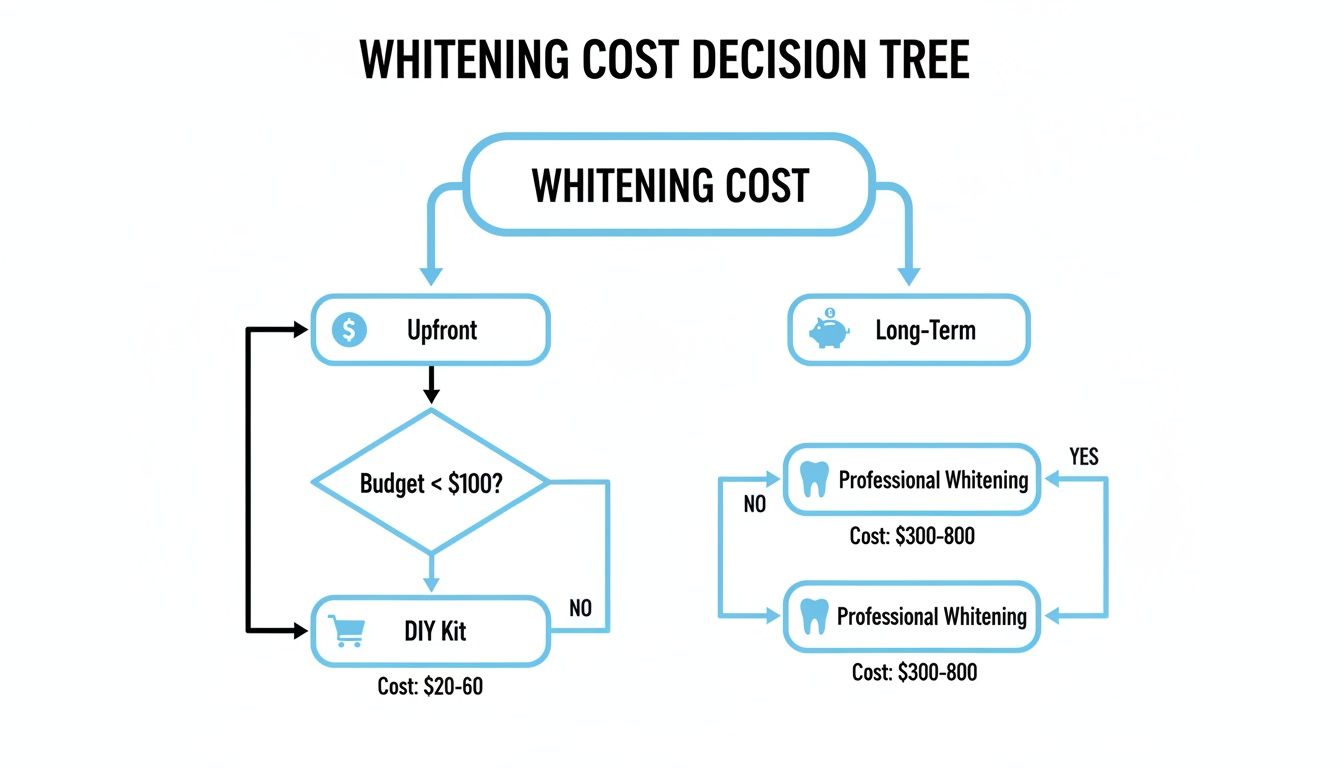
As the visual shows, while DIY kits seem cheaper at first glance, a professional treatment is a more significant long-term investment in your smile’s health.
Making A Confident And Informed Decision
Ultimately, your choice should be guided by what each option can deliver. If you're looking for the safest, most effective, and longest-lasting results, consider professional care. Trinity Dental Care offers both in-office Zoom® whitening for instant results and custom take-home trays for flexibility.
A professional consultation is the most crucial first step. It ensures your oral health is suitable for whitening and helps you select a treatment that aligns perfectly with your aesthetic goals and budget.
Arming yourself with the right information is everything. Our guide on choosing the best dentist offers insights into finding a provider you can trust. By thinking through these scenarios, you can move forward with a choice that feels right for you.
Frequently Asked Questions About Teeth Whitening
Making the decision to whiten your teeth always brings up questions. Here are some of the most common questions our Scottsdale patients ask Dr. Christine Ann Fink at Trinity Dental Care.
1. Does teeth whitening damage your tooth enamel?
When performed correctly under professional supervision, teeth whitening is safe and will not damage your enamel. Dentists use ADA-approved agents and techniques designed to protect your dental health. The real risk comes from overusing or improperly applying at-home kits.
2. How long do results from professional teeth whitening last?
The results from a professional teeth whitening session can last anywhere from one to three years. Longevity depends on your lifestyle and oral hygiene habits. Limiting staining foods and drinks like coffee, tea, and red wine will help maintain your bright smile.
3. Can I whiten my teeth if I have crowns or veneers?
This is a very important question. Standard teeth whitening treatments do not lighten dental restorations like crowns, veneers, or fillings. If you whiten your natural teeth, your existing restorations might appear mismatched. Dr. Christine Ann Fink can discuss a complete treatment plan to ensure a uniform smile.
4. What is the difference between in-office and dentist take-home trays?
Both are professional-grade options but offer different experiences. In-office whitening, like Zoom®, provides dramatic results in a single visit. Dentist-provided take-home trays offer more flexibility, using custom-fitted trays and professional-strength gel you apply at home over a couple of weeks for more gradual but still excellent results.
5. Is tooth sensitivity after whitening permanent?
No, tooth sensitivity is a common but completely temporary side effect of teeth whitening. Any discomfort you feel typically fades within a few days after your treatment is finished. At Trinity Dental Care, we take proactive steps to minimize sensitivity during your professional treatment.
Scottsdale locals looking to brighten their smile before a special event or holiday can book a professional whitening session with Dr. Christine Fink at Trinity Dental Care. Get noticeably whiter teeth in just one visit—schedule yours today by visiting https://trinitydentalcares.com.