
Losing a tooth, or even multiple teeth, can be a disorienting experience that affects everything from your confidence to your ability to enjoy your favorite foods. The gap in your smile is more than just an aesthetic issue; it can lead to shifting of adjacent teeth, bone loss in the jaw, and changes in your facial structure over time. Fortunately, modern dentistry offers a remarkable array of solutions to restore not just the look of your smile, but its full function and health.
Navigating the world of tooth replacement options can feel overwhelming, with choices ranging from traditional dentures to advanced dental implants. This guide is designed to simplify that journey by providing a comprehensive, straightforward breakdown of the most effective and popular tooth replacement solutions available today. For our neighbors in Scottsdale and the surrounding communities, making an informed decision is the first step toward a lasting, healthy outcome.
1. Dental Implants
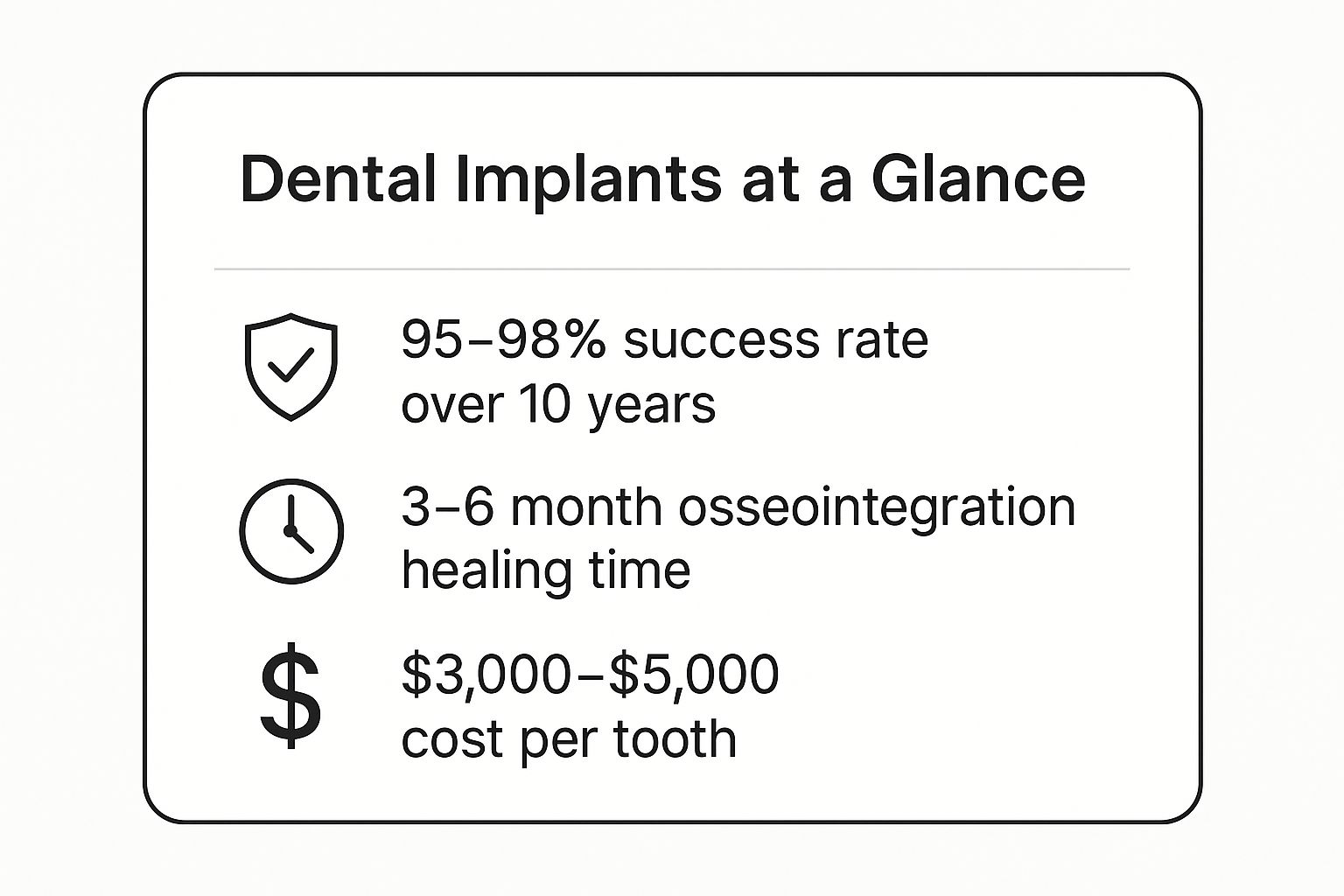
Often considered the gold standard in tooth replacement options, dental implants offer a permanent and highly durable solution that replicates the function and appearance of a natural tooth. This advanced treatment involves surgically placing a small, biocompatible titanium post directly into the jawbone.
Through a natural process called osseointegration, the post fuses with the bone over several months. This fusion creates an incredibly strong foundation, acting just like a natural tooth root. Once healed, a custom-made crown is attached to the post, completing the restoration.
When Are Implants the Right Choice?
Dental implants are exceptionally versatile and serve as a premier solution in various scenarios:
- Single Tooth Replacement: An ideal choice for someone who has lost a single tooth due to an accident, decay, or injury.
- Multiple Missing Teeth: Implants can support a dental bridge, eliminating the need to alter healthy adjacent teeth.
- Full Mouth Reconstruction: For patients with significant tooth loss, implants can securely anchor a full arch of new teeth.
Key Considerations for Success
To ensure the longevity of your implant, choosing an experienced oral surgeon or periodontist is critical. Proper healing is also paramount; patients should avoid smoking, as it can impede osseointegration. Maintaining excellent oral hygiene to prevent peri-implantitis (an infection around the implant) is non-negotiable for long-term success. Learn more about why replacing missing teeth matters at trinitydentalcares.com.
2. Fixed Dental Bridge
A fixed dental bridge is a trusted and permanent restoration that replaces one or more missing teeth by anchoring artificial teeth to adjacent natural teeth or implants. This method literally "bridges" the gap left by missing teeth, restoring both the function and aesthetics of your smile.
The process typically involves preparing the adjacent teeth, called abutment teeth, by reshaping them to accommodate crowns. An impression is then taken to create the custom bridge. Once fabricated by a dental lab, the bridge is permanently cemented into place, providing a durable and seamless result.
When Is a Bridge the Right Choice?
A fixed dental bridge is an excellent tooth replacement option in several situations:
- Replacing a Single Tooth: It is a classic solution for replacing a single molar or premolar, especially when the neighboring teeth could also benefit from a crown.
- Restoring Multiple Adjacent Teeth: A bridge can effectively replace two or more missing teeth in a row, provided there are strong anchor teeth available.
- Avoiding Bone Grafting: For patients who may not be suitable candidates for dental implants due to insufficient jawbone density, a bridge offers a less invasive alternative.
Key Considerations for Success
To ensure your bridge lasts, proper oral hygiene is crucial. You must clean underneath the pontic daily using a floss threader or water flosser to prevent plaque buildup. Regular dental check-ups are essential to monitor the health of the abutment teeth supporting the bridge. Learn more about the choice between dental implants and bridges at trinitydentalcares.com.
3. Removable Partial Dentures
As one of the most traditional and non-invasive tooth replacement options, removable partial dentures offer a practical and cost-effective solution. This custom-made appliance consists of replacement teeth set into a pink, gum-colored acrylic base, often connected by a metal or flexible framework.
Unlike fixed options, partial dentures are designed to be taken out for daily cleaning. They are held securely in place by small clasps or attachments that grip onto adjacent healthy teeth, effectively filling the gaps.
When Are Partial Dentures the Right Choice?
Partial dentures are an excellent choice, particularly for patients who are not candidates for implants or bridges. They are ideal in several situations:
- Multiple Non-Adjacent Gaps: When a patient is missing several teeth in different areas of the same arch, a partial denture can replace them all with one appliance.
- Transitional Solution: They can serve as a temporary placeholder while a patient waits for a more permanent solution, such as a dental implant.
- Budget-Conscious Patients: For individuals seeking an affordable way to improve function and aesthetics, partial dentures represent a significant value.
Key Considerations for Success
Proper care is essential for the comfort and longevity of a removable partial denture. Daily removal and cleaning will prevent plaque buildup and keep the appliance fresh. Most importantly, regular visits to your dentist in Scottsdale are necessary for adjustments, ensuring a proper fit and preventing sore spots.
4. Complete Dentures
For individuals who have lost all of their teeth in either the upper or lower jaw, complete dentures offer a time-tested and non-invasive tooth replacement option. This removable appliance consists of a full arch of life-like artificial teeth set into a custom-fitted, gum-colored acrylic base that rests over the gums.
Today's prosthetics are crafted with precision and artistry, using advanced materials that mimic the appearance of natural teeth and gum tissue. They provide a functional and aesthetically pleasing smile.
When Are Complete Dentures the Right Choice?
Complete dentures are an effective and often more affordable solution for comprehensive tooth loss. They are particularly suitable in these situations:
- Full Arch Replacement: The primary use is for patients who are edentulous (missing all teeth) in an entire arch.
- Immediate Restoration: Known as immediate dentures, they can be placed on the same day teeth are extracted, ensuring the patient never has to go without teeth.
- Non-Surgical Preference: For those who are not candidates for surgery or prefer to avoid it, dentures provide a complete smile restoration without invasive procedures.
Key Considerations for Success
Achieving a comfortable fit with dentures requires an adjustment period and proper care. It is crucial to remove your dentures nightly to allow your gum tissues to rest and to prevent fungal infections. Regular follow-up appointments are essential for adjustments and relines to accommodate natural changes in your jawbone. Learn more about the differences between dentures and implants at trinitydentalcares.com.
5. All-on-4® Implant System
The All-on-4® implant system is a revolutionary full-arch tooth replacement option, offering a streamlined way to restore an entire jaw of missing teeth. This innovative technique utilizes just four strategically positioned dental implants to securely anchor a complete, fixed prosthesis.
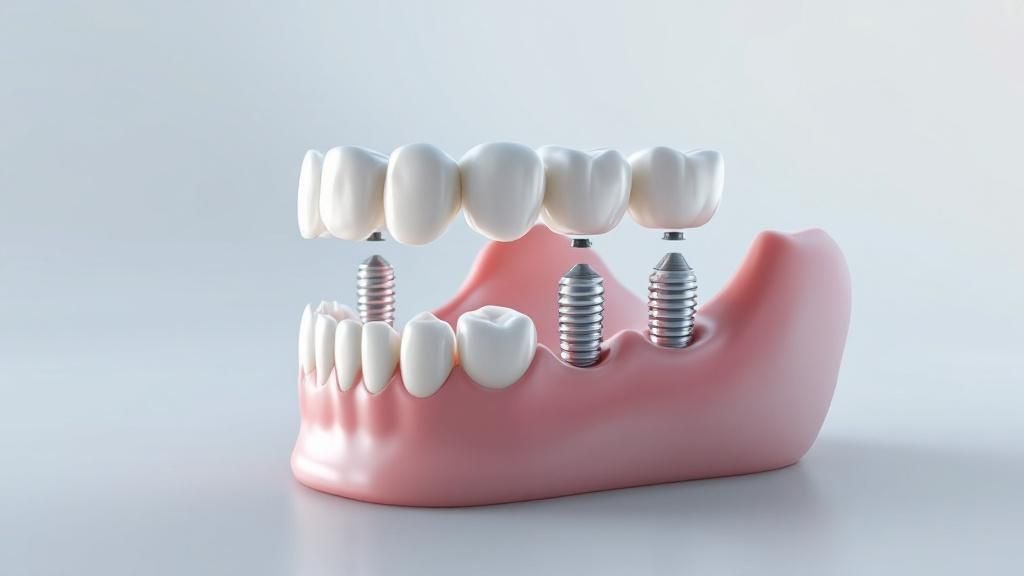
What makes this approach unique is the placement of the posterior implants. They are inserted at a precise angle to maximize contact with the existing jawbone, often bypassing the need for extensive bone grafting procedures. This design provides immediate stability, allowing for a temporary set of teeth to be attached on the same day as the surgery.
When Is the All-on-4® System the Right Choice?
The All-on-4® system is an excellent choice, particularly for patients facing widespread tooth loss. It is especially suitable in these cases:
- Total Tooth Loss (Edentulism): For patients who have lost all of their upper or lower teeth and want a stable, non-removable alternative to traditional dentures.
- Failing Denture Wearers: Individuals frustrated with the instability and dietary restrictions of removable dentures often find this a life-changing upgrade.
- Significant Tooth Decay or Damage: When saving the remaining natural teeth is not feasible, All-on-4® provides a comprehensive solution for a full mouth reconstruction.
Key Considerations for Success
Success with the All-on-4® system hinges on meticulous planning and skilled execution. A detailed CT scan is essential for the surgeon to accurately map out implant placement. Long-term success also depends on rigorous oral hygiene to prevent infection and ensure durability. For a deeper dive, learn more about the All-on-4 Implant System explained at trinitydentalcares.com.
6. Snap-in Dentures (Implant-Supported Dentures)
Offering a brilliant hybrid solution, snap-in dentures merge the stability of dental implants with the convenience of a removable denture. This innovative approach provides a significant upgrade from traditional dentures, which rely on suction and adhesives. Instead, two to four dental implants are strategically placed in the jawbone, acting as secure anchors.
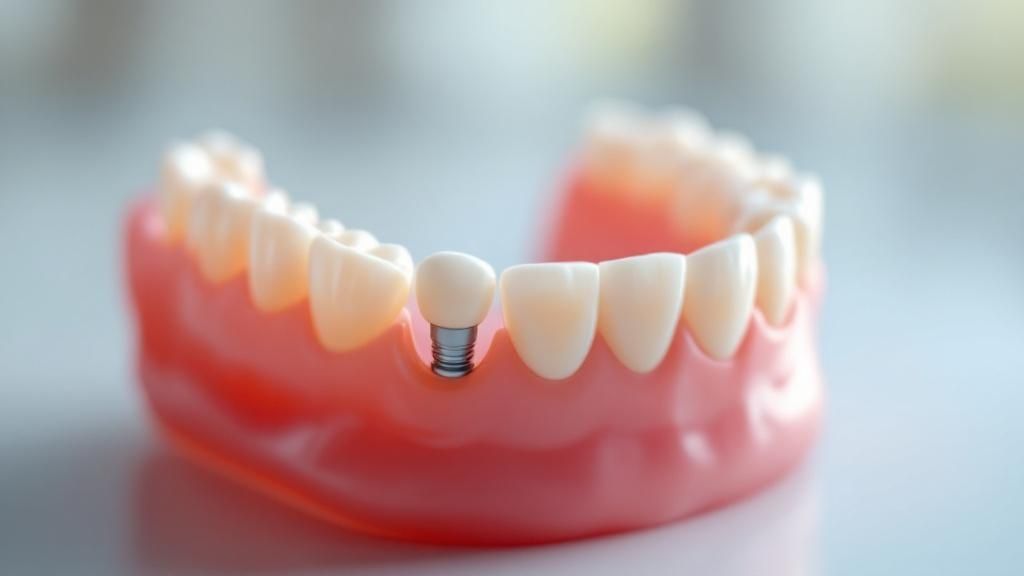
The custom-crafted denture is fitted with special attachments that securely snap onto the implants. This connection dramatically improves stability, preventing slippage, clicking, and discomfort. The result is restored confidence in speaking, chewing, and smiling.
When Are Snap-in Dentures the Right Choice?
Snap-in dentures are an excellent fit for patients seeking enhanced function without committing to a fixed prosthesis. They are particularly beneficial in these cases:
- Lower Denture Stabilization: Many patients struggle with a loose lower denture. Just two implants can anchor the denture, revolutionizing its stability.
- Improved Upper Denture Retention: An upper snap-in denture can often be designed with a palate-less, horseshoe shape, improving taste and overall comfort.
- Converting Ill-Fitting Dentures: For some patients, an existing denture can be retrofitted with attachments, providing a cost-effective upgrade.
Key Considerations for Success
To maximize the benefits of snap-in dentures, proper care is essential. The attachments that connect the denture to the implants contain nylon inserts that wear down and require periodic replacement to maintain a tight fit. It is crucial to remove the denture nightly to clean both the denture and the implant sites.
7. Flipper (Temporary Partial Denture)
A flipper is a lightweight, removable partial denture often used as a temporary tooth replacement. Made of acrylic resin, its primary purpose is to provide an immediate aesthetic solution and maintain space while a patient awaits a more permanent restoration.
The device consists of an artificial tooth attached to a pink, gum-colored base. Because it is not designed for heavy chewing, it serves as a placeholder rather than a long-term functional replacement.
When Is a Flipper the Right Choice?
Flippers are highly situational and are typically recommended as a short-term fix. They are an excellent option in several specific scenarios:
- Post-Extraction Healing: After a tooth is removed, a flipper can immediately fill the gap while the gums and jawbone heal.
- Emergency Cosmetic Solution: For individuals who lose a visible tooth unexpectedly, a flipper offers a quick, non-invasive way to restore their smile.
- Affordable Transitional Option: It serves as a cost-effective placeholder for patients who need time to plan for more permanent tooth replacement options.
Key Considerations for Success
While a flipper is a convenient temporary fix, it is not intended for permanent use. Patients should handle the appliance carefully to avoid breakage and remove it when eating hard or sticky foods. Relying on a flipper for too long can lead to gum irritation, underscoring its role as a temporary bridge to a more stable solution.
8. Mini Dental Implants
Mini Dental Implants (MDIs) are a less invasive and often more affordable alternative to their conventional counterparts. These implants are smaller-diameter versions of traditional ones, typically less than 3mm wide. This reduced size allows for a placement procedure that is often quicker and requires less bone volume.
The procedure involves placing these narrow, screw-like posts into the jawbone with minimal surgical intervention. Their primary function is often to stabilize removable prosthetics or replace very small teeth, providing immediate improvement in function.
When Are Mini Implants the Right Choice?
Mini dental implants excel in particular circumstances where traditional implants may not be feasible.
- Lower Denture Stabilization: They are frequently used to anchor a lower denture, preventing frustrating shifting and clicking.
- Small Tooth Replacement: MDIs are perfectly sized to replace small teeth, such as lower incisors, where the space is too narrow for a conventional implant.
- Temporary Anchorage: In orthodontics, they can serve as temporary anchorage devices (TADs) to provide a fixed point for moving teeth.
Key Considerations for Success
The success of mini dental implants hinges on proper case selection and diligent patient care. They are best suited for areas that endure lighter chewing forces. It is critical to maintain excellent oral hygiene, cleaning carefully around the implant heads to prevent inflammation.
9. Resin-Bonded Bridge (Maryland Bridge)
A resin-bonded bridge, commonly known as a Maryland Bridge, is a conservative and minimally invasive fixed solution among tooth replacement options. This approach is valued for its ability to replace a missing tooth while preserving the structure of the adjacent healthy teeth.
The bridge consists of an artificial tooth, or pontic, supported by thin metal or ceramic "wings." These wings are bonded to the back surfaces of the neighboring teeth using a powerful dental resin, avoiding the need for significant grinding or crowning of the support teeth.
When Is a Resin-Bonded Bridge the Right Choice?
Maryland bridges are particularly effective in specific, low-stress situations where preserving natural tooth enamel is a top priority:
- Single Front Tooth Replacement: They are an excellent choice for replacing a missing front tooth, especially an incisor, where biting forces are lower.
- Young Patients with Missing Teeth: For adolescents or young adults, this bridge can be a durable placeholder until their jaw has fully developed for an implant.
- Temporary or Transitional Solution: A resin-bonded bridge can serve as a reliable interim option while a patient waits for a dental implant site to heal.
Key Considerations for Success
The longevity of a Maryland bridge hinges on the strength of the bond and the patient's habits. Patients should avoid biting into hard foods with the bridge to prevent the wings from debonding. Maintaining exceptional oral hygiene is essential to prevent decay on the supporting teeth.
Tooth Replacement Options Comparison Table
| Item | Implementation Complexity 🔄 | Resource Requirements ⚡ | Expected Outcomes 📊 | Ideal Use Cases 💡 | Key Advantages ⭐ |
|---|---|---|---|---|---|
| Dental Implants | High (surgical, months healing) | High (surgical team, materials) | Very natural look/feel, long-lasting (25+ years) | Single tooth replacement, full mouth reconstruction | Preserves bone, no impact on adjacent teeth |
| Fixed Dental Bridge | Moderate (tooth prep, lab work) | Moderate (crowns, bridge materials) | Restores function and appearance for 10-15 years | Replacing 1-4 consecutive missing teeth | Fixed, quicker treatment, more affordable initially |
| Removable Partial Dentures | Low (non-surgical, removable) | Low (acrylic/metal framework) | Functional, affordable, but less stable | Patients needing non-invasive, affordable partial replacement | Easily adjustable, preserves remaining teeth |
| Complete Dentures | Low (non-surgical, multiple visits) | Low to moderate (full arch prosthetics) | Restores full arch function but less efficient | Full tooth loss, economical full-mouth solution | Economical, immediate replacement possible |
| All-on-4® Implant System | High (surgical, guided placement) | High (implant hardware, expertise) | Full arch fixed teeth same-day, long-lasting | Full arch replacements avoiding bone grafting | Immediate loading, fewer implants needed |
| Snap-in Dentures | Moderate (implants + removable) | Moderate to high (implants + denture) | Improved denture stability and retention | Patients wanting removable yet stable dentures | Better retention than conventional dentures |
| Flipper (Temporary Partial) | Very low (quick, non-invasive) | Low (acrylic, wire clasps) | Temporary aesthetics, poor function | Temporary use after extractions or while awaiting implants | Quick, affordable temporary solution |
| Mini Dental Implants | Moderate (less invasive surgery) | Moderate (small implants) | Faster healing, moderate longevity (~5 years) | Stabilizing dentures, small teeth replacement | Less invasive, lower cost, avoids bone grafting |
| Resin-Bonded Bridge | Low to moderate (minimal prep) | Low to moderate (metal/ceramic wings) | Conservative replacement, 5-15 years lifespan | Anterior teeth, minimal tooth structure loss needed | Preserves teeth, reversible, good aesthetics |
Frequently Asked Questions (FAQs)
1. What is the most permanent tooth replacement option?
Dental implants are considered the most permanent solution. The titanium post integrates with the jawbone, creating a durable foundation that can last a lifetime with proper care. The attached crown may need replacement after 10-15 years due to wear.
2. How much do tooth replacement options cost in Scottsdale, AZ?
Costs vary widely based on the option. A removable partial denture or flipper is most affordable, while a full-mouth reconstruction with the All-on-4® system is a significant investment. A consultation at Trinity Dental Care can provide a precise quote based on your specific needs.
3. Will my dental insurance cover tooth replacement?
Most dental insurance plans provide partial coverage for tooth replacement options, especially for medically necessary procedures like bridges or dentures. Cosmetic procedures may have less coverage. Our team at Trinity Dental Care can help you understand and maximize your benefits.
4. How long does it take to get a dental implant?
The entire process, from initial consultation to final crown placement, typically takes several months. This allows time for osseointegration, where the implant fuses with the jawbone. In some cases, a temporary crown can be placed sooner.
5. What is the best option for replacing all my teeth?
For full arch replacement, options include traditional complete dentures, snap-in (implant-supported) dentures, or a fixed solution like the All-on-4® implant system. The best choice depends on your jawbone health, budget, and lifestyle preferences. An implant-supported option offers the most stability and function.
Conclusion: Your Next Step to a Confident Smile in Scottsdale
Navigating the landscape of modern dentistry reveals a powerful truth: a missing tooth is no longer a permanent gap in your smile. The journey through various tooth replacement options highlights the incredible advancements available, from the permanence of dental implants to the convenience of removable dentures. Understanding these differences is the crucial first step toward reclaiming your oral health.
The most effective solution is the one that is custom-designed for you, considering your oral health, lifestyle, and aesthetic goals. This is why a professional consultation is not just a recommendation; it is an essential part of the process for our patients here in Scottsdale. Restoring your smile goes far beyond cosmetics—it restores your ability to eat, speak, and interact with confidence.
Ready to explore which tooth replacement options are right for your unique smile? The expert team at Trinity Dental Care is dedicated to providing compassionate, personalized dental solutions for families and individuals throughout Scottsdale, AZ. Schedule your consultation today to receive a comprehensive evaluation and a clear, customized treatment plan to restore your confidence and oral health.