
When a severe toothache hits, the only thing on your mind is how to stop a toothache fast. The quickest way to get some relief usually involves a one-two punch: a cold compress on your cheek and an over-the-counter anti-inflammatory to dull the pain and reduce swelling while you get ahold of your dentist.
At Trinity Dental Care, we understand that dental pain can be debilitating. While professional care is the only permanent solution, these tips can help you manage the discomfort until you can see us.
Your First Aid for Intense Tooth Pain
A sudden, throbbing toothache can bring your entire life to a screeching halt. It makes it nearly impossible to eat, sleep, or even think straight. This intense pain is your body's alarm system, screaming that something is wrong and needs attention.
While a trip to your Scottsdale dentist is the only real solution, a few first-aid steps can provide much-needed relief in the meantime.
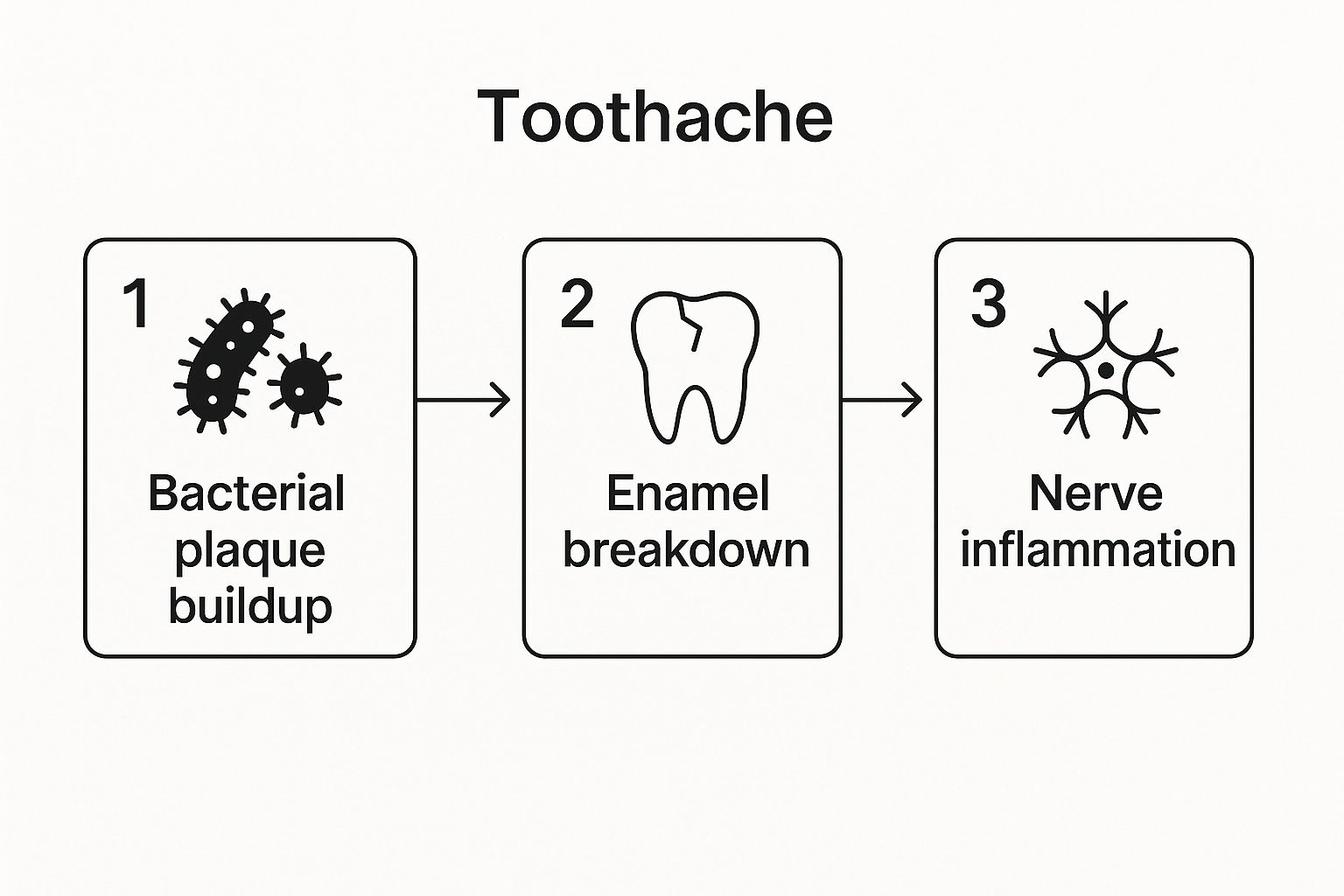
The pain is often the last thing to show up. It’s a sign that decay has broken through your tooth’s outer defenses and is now irritating the sensitive nerve inside.
The Best Immediate Actions for Pain Relief
One of the most effective and time-tested methods for getting a handle on tooth pain involves two simple actions: applying cold and taking the right kind of medication.
A cold pack or some ice wrapped in a towel and held against the outside of your cheek is a game-changer. It works by constricting blood vessels, which helps bring down swelling and numbs the nerve endings. For the best results, apply it in 15-minute intervals.
At the same time, a nonsteroidal anti-inflammatory drug (NSAID) like ibuprofen can work wonders from the inside out. Studies have shown that a 400 mg dose of ibuprofen is highly effective for acute dental pain (clinical data on analgesic effectiveness for dental pain). NSAIDs specifically target the inflammation that causes that awful throbbing sensation.
Key Takeaway: For a powerful, two-pronged attack on severe tooth pain, combine a cold compress on your cheek with an NSAID like ibuprofen. One tackles the external swelling and provides numbing, while the other fights the internal inflammation causing the pain.
When you're in the middle of a bad toothache, it's easy to make mistakes that could make things worse. Here's a quick guide to help you do the right things and avoid common pitfalls.
Quick Toothache Relief Do's and Don'ts
| What to Do Immediately | What to Avoid |
|---|---|
| Apply a cold compress to your cheek in 15-minute intervals. | Applying heat directly to the area, which can increase inflammation and pain. |
| Take an NSAID like ibuprofen to reduce inflammation and pain. | Placing aspirin directly on the tooth or gums, as it can cause a chemical burn. |
| Gently rinse your mouth with warm salt water to clean and soothe the area. | Using alcohol or whiskey as a numbing agent; it's ineffective and can irritate the gums. |
| Keep your head elevated when lying down to reduce pressure in your head. | Eating hard, sticky, or sugary foods that can worsen the pain or cause more damage. |
| Floss gently around the sore tooth to remove any trapped food particles. | Poking or prodding the painful area with your tongue, fingers, or any objects. |
| Call your dentist immediately to schedule an appointment. | Ignoring the pain, thinking it will go away on its own. It's a sign of an underlying problem. |
Following these simple do's and don'ts can make a huge difference in your comfort level while you wait for your appointment. Remember, these are just temporary fixes. A toothache is a clear signal that you need to see a professional like Dr. Fink at Trinity Dental Care in Scottsdale, Arizona.
Decoding the Signals of Your Toothache
Think of a toothache as your body's alarm system—it's a clear signal that something isn't right inside your mouth. Learning to interpret what the pain is trying to tell you can help you find temporary relief and describe your symptoms accurately to your dentist.
The discomfort you're feeling isn't random. Different types of pain often point to different underlying issues. For instance, a sudden, sharp pain when you bite down might be a cracked tooth or a new cavity. A persistent, dull, throbbing ache could signal something more serious, like a dental abscess that needs immediate attention.
Common Causes of Tooth Pain
Several problems, ranging from minor annoyances to severe conditions, can trigger a toothache. Figuring out the potential source is your first step toward getting the right help.
- Dental Cavities: This is the most common culprit. When decay eats through the tooth's hard outer enamel, it leaves the sensitive inner layers exposed. You can learn more by reading about the common signs of a cavity.
- Gum Disease: Inflamed or infected gums can pull back from the teeth, exposing the tooth's root. This leads to sensitivity and a constant, nagging ache.
- Dental Abscess: An abscess is a pocket of pus caused by a bacterial infection. It causes intense, throbbing, and persistent pain that requires a trip to the dentist.
- Cracked or Broken Tooth: Even a tiny, invisible fracture can expose the nerve inside your tooth, causing sharp, unmistakable pain when you chew.
A toothache is almost never just a toothache. It's a symptom of a deeper issue that won't get better on its own. Ignoring it will only allow the problem to get worse.
While home remedies can offer comfort, they don’t fix the root of the problem. Consider these pain signals an urgent message to call a professional. Here at Trinity Dental Care in Scottsdale, Dr. Fink can pinpoint the exact cause of your pain and provide the definitive treatment you need.
Finding Safe Tooth Pain Relief at Home
When a toothache hits, your first thought is getting relief—fast. While you're waiting for your dental appointment with us here in Scottsdale, a few trusted home remedies can provide surprisingly effective, temporary comfort. These aren't permanent fixes, but they can help you manage the pain until you can get professional care.

The key is to use these methods correctly to soothe the area without causing more irritation to your already sensitive teeth and gums.
Gentle Rinses to Cleanse and Soothe
A simple saltwater rinse is often one of the safest and most effective first steps. Mix about half a teaspoon of salt into a glass of warm water, swish it gently for 30 seconds, then spit it out. This acts as a natural disinfectant, helping to clean the area and reduce inflammation.
If you're looking for more ideas, we've put together a helpful guide on 5 natural remedies to relieve toothache pain. Just remember, these are for short-term relief only.
Targeted Numbing with Natural Anesthetics
Clove oil is a classic remedy that contains eugenol, a natural anesthetic. It has been used for centuries to numb tooth pain effectively.
How to Use Clove Oil Safely:
Never apply pure clove oil directly to your gums, as it can cause burns. Instead, put just a few drops on a clean cotton ball. Gently dab it onto the painful tooth, avoiding the surrounding gum tissue.
Another great soothing option is a peppermint tea bag. After steeping the tea bag, let it cool down until it's just warm. For an extra numbing effect, you can pop it in the freezer for a few minutes. Placing the cool, damp tea bag against the aching tooth can provide a mild numbing sensation and calm irritated gums.
Common Mistakes That Make Toothaches Worse
When a toothache strikes, desperation for relief can lead you to try anything. But some common "quick fixes" can backfire, turning a painful problem into a dental disaster. Knowing what not to do is just as crucial as knowing which home remedies can help.
One of the most dangerous myths is placing an aspirin directly on the aching tooth. Aspirin is an acid and can cause a chemical burn on the soft tissues in your mouth. Pain medication should always be swallowed as directed.
Another frequent mistake is using a heating pad. While heat feels great on a sore muscle, applying it to a dental infection increases blood flow and can make the throbbing pain even more intense. Always opt for a cold compress to numb the area and reduce swelling.
Avoiding Triggers and Delays
It’s also critical to be mindful of what you eat and drink. Anything extremely hot or cold can send a jolt of pain through an angry tooth. Sugary or acidic foods are also off-limits, as they can worsen the situation. If temperature sensitivity is an issue, you might find insights in our guide on the common causes and treatments for sensitive teeth.
Critical Mistake: Perhaps the biggest mistake is waiting for the pain to disappear on its own. A toothache signals an underlying problem like a cavity or infection that will not heal by itself.
Delaying a visit to the dentist allows the problem to worsen. A small cavity can escalate into a severe infection or abscess, requiring more complex treatments. We always tell our Scottsdale patients to call us at the first sign of persistent tooth pain to get lasting relief and protect their long-term oral health.
Knowing When to Call an Emergency Dentist
Home remedies can take the edge off, but they are just a temporary patch. It’s one thing to manage a dull ache, but it’s critical to recognize when your pain signals a true dental emergency. Ignoring these red flags isn't an option if you want to protect your tooth and your overall health.
Red Flags for a Dental Emergency
A severe, throbbing pain that doesn't respond to over-the-counter medication is a major warning sign. This intense, relentless discomfort often points to a deep infection in the tooth or jawbone.
Be on high alert for any of these accompanying symptoms:
- Swelling: Any puffiness in your face, jaw, or gums.
- Fever: A fever indicates the infection may be spreading.
- Difficulty Swallowing or Breathing: This is a critical emergency. Seek help immediately.
- A Pimple-Like Bump on the Gum: This bump, or fistula, is a classic sign of a dental abscess.
Crucial Insight: An untreated dental abscess can escalate into sepsis, a life-threatening condition where the infection invades your bloodstream. This is precisely why you can't afford to "wait and see" with these symptoms.
When you see these signs, the infection has likely moved beyond the tooth itself. If an infection becomes too advanced, the only way to stop it may be removing the tooth. You can learn more about the reasons for tooth extraction and understand why acting fast is so important.
If you experience any of these red flags, call Trinity Dental Care immediately. We provide the urgent care you need to eliminate pain, resolve the infection, and keep you safe.

FAQs: Your Questions on Toothache Relief Answered
When a toothache strikes, you're bound to have questions. Here, Dr. Fink provides clear, dentist-approved answers to the questions we hear most often from our patients in Scottsdale about getting fast toothache relief.
1. How long is it safe to manage a toothache at home?
Home remedies are a bridge to professional care, not a replacement. You should only rely on them for about 24 to 48 hours. A toothache signals an issue that won’t fix itself, and delaying a dental visit allows a small problem to become a serious infection requiring more invasive treatment.
2. What is the best over-the-counter painkiller for a toothache?
Nonsteroidal anti-inflammatory drugs (NSAIDs) like ibuprofen are typically best. They don’t just mask pain; they actively fight inflammation, the source of throbbing dental pain. According to the CDC, untreated dental decay is the most common health condition, which is why having an effective pain reliever on hand is so important. Always follow package directions and consult your doctor before taking new medication.
3. Can I use hydrogen peroxide for a toothache?
A rinse made from 3% hydrogen peroxide diluted with an equal amount of water can help kill bacteria. However, you must be extremely careful. Never swallow this mixture. A simple warm saltwater rinse is a much safer and equally effective option for gently cleaning the area.
4. Why does my tooth hurt more at night?
This is a real phenomenon. When you lie down flat, more blood rushes to your head, increasing the pressure inside the tooth. This puts extra pressure on the inflamed nerve, ramping up the pain signals. Try propping your head up with an extra pillow to reduce this pressure and get some rest until you can see us for emergency dental care.
5. What should I do if a filling falls out and my tooth hurts?
If a filling falls out, the exposed inner tooth structure can be very sensitive. You can temporarily cover it with a piece of sugar-free gum or an over-the-counter dental cement. Avoid chewing on that side of your mouth and call your dentist immediately to have it replaced.
6. Is a toothache ever a sign of a non-dental problem?
Yes, though it's less common. Sometimes, pain from a sinus infection can feel like a toothache in the upper back teeth. However, you should always consult a dentist first to rule out dental causes, as they are the most likely reason for tooth pain.
Get Lasting Toothache Relief at Trinity Dental Care
Home remedies can provide temporary relief, but they can't solve the underlying problem. A toothache is your body’s way of telling you that it’s time to see a professional. Ignoring it can lead to more pain, more complex treatments, and higher costs down the road.
At Trinity Dental Care, Dr. Christine Ann Fink and our compassionate team are dedicated to providing fast, effective, and patient-focused care to the Scottsdale community. Don't let a toothache take over your life.
Call us today to schedule your appointment and get the lasting relief you deserve.