
When you think about a visit to the dentist, you probably picture bright lights and comfy chairs. Behind the scenes, a complex, meticulously planned system is at work: infection control in dentistry.
At its heart, infection control is a web of safety protocols designed to stop the spread of infectious diseases. This involves much more than a quick wipe-down; it's a rigorous process of instrument sterilization, using personal protective equipment (PPE), and thoroughly disinfecting every surface. It’s how we create an environment where every procedure is performed with the highest possible standard of safety.
Why Infection Control Is The Foundation Of Safe Dentistry in Scottsdale
Imagine a dental practice where safety isn't just a rule, but a reflex built into every action. That’s the real promise of modern infection control. It's a comprehensive system that actively prevents any potential for disease transmission, creating a secure environment for every Scottsdale patient who walks through our doors.
At Trinity Dental Care, we see these standards as our most fundamental commitment to your health. The growing global focus on these measures is undeniable; the dental infection control market is projected to reach USD 3.05 billion by 2034. You can learn more about these global dental safety trends to see how seriously this is being taken worldwide.
Core Pillars Of Our Safety Approach
To ensure a consistently safe environment, our infection control program is built on several fundamental components. The table below breaks down these core pillars, explaining what each one aims to achieve and how we put it into practice every day at Trinity Dental Care.
| Pillar | Objective | Examples |
|---|---|---|
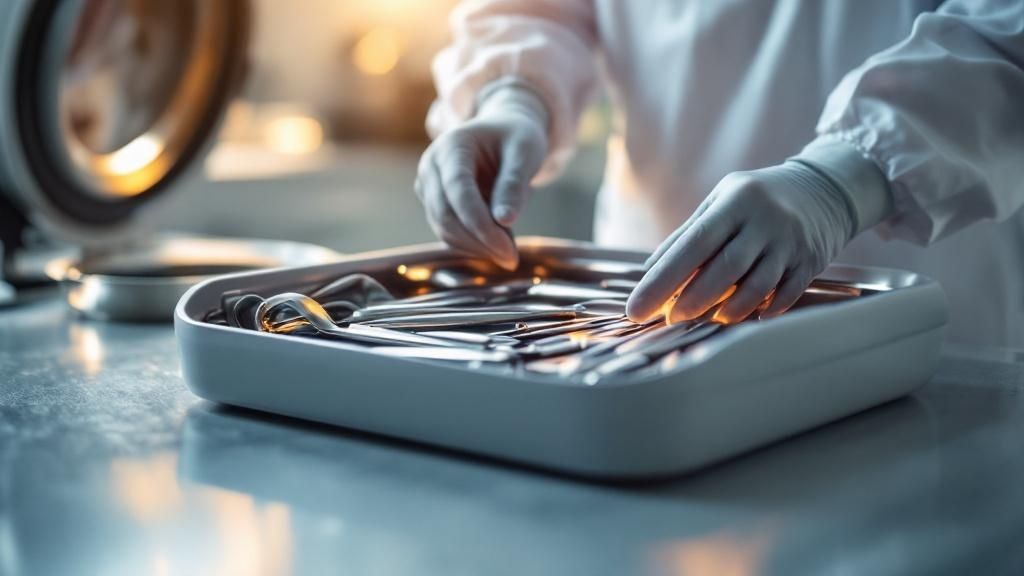
| Instrument Sterilization | To eliminate 100% of microbial life from all reusable dental tools. | Multi-step cleaning, ultrasonic baths, and autoclave (steam sterilization) cycles for every instrument. |
| Personal Protective Equipment (PPE) | To create a physical barrier that stops the transmission of pathogens. | Use of gloves, masks, protective eyewear, and gowns by our entire clinical team. |
| Environmental Disinfection | To ensure all clinical surfaces are completely free of contaminants between patients. | Wiping down the dental chair, countertops, and light handles with hospital-grade disinfectant. |
| Procedural Protocols | To standardize safe practices for every dental procedure. | Safe handling of sharps, proper waste disposal, and using single-use items where appropriate. |
These elements form a multi-layered defense system, ensuring that from the air you breathe to the instruments we use, your safety is protected at every turn. This dedication became even more critical during recent global health challenges, reinforcing the strict protocols we detailed in our guide on when it is safe to visit your dentist.
Ultimately, our goal is to provide exceptional dental care in an environment where you feel completely secure. This commitment to infection control in dentistry allows our Scottsdale patients to know their well-being isn't just a priority—it's our top priority. We are dedicated to not only meeting but exceeding the safety recommendations set forth by the CDC and the American Dental Association (ADA).
How Dental Safety Standards Have Evolved
The world of infection control in dentistry wasn't built in a day. It’s the result of decades of scientific breakthroughs and a deep commitment to patient safety. What we now consider routine was once a revolutionary idea.
Believe it or not, early dentistry had a limited understanding of how infections spread. It wasn't until the late 19th century, thanks to pioneers like Louis Pasteur, that the role of microorganisms became clear, introducing the first concepts of antiseptic practices.
The Rise Of Universal Precautions
The real game-changer landed in the 1980s with the HIV/AIDS epidemic. This crisis forced a massive rethink of infection control, leading to the concept of Universal Precautions.
This new approach required that all patients be treated as if they could be infectious. It removed guesswork and created a single, high standard of safety for everyone. Key developments from this era became the new normal:
- Mandatory PPE: Gloves, masks, and protective eyewear became standard for the entire dental team.
- Sharps Safety: Strict rules for handling and disposing of needles and other sharp tools were introduced.
- Surface Disinfection: The need to thoroughly disinfect clinical surfaces between patients became a core part of the process.
These measures, pushed forward by guidelines from the Centers for Disease Control and Prevention (CDC) and OSHA, built the foundation of the safety protocols we live by today.
Recent Advancements And The Future Of Safety
More recently, the COVID-19 pandemic brought another wave of intense focus to infection control, shining a spotlight on airborne pathogens. This prompted dental offices everywhere, including our practice here in Scottsdale, to elevate our protocols even further.
The evolution of dental safety is a story of adaptation and progress. Each challenge has made dentistry safer, pushing practices to adopt higher standards. At Trinity Dental Care, we're dedicated to staying on the leading edge of these developments. We weave the latest CDC and ADA guidelines into everything we do, ensuring that your general dentistry in Scottsdale, AZ is performed in the safest environment possible.
The Journey of a Dental Instrument: From Use to Absolute Sterility
Have you ever wondered what happens to a dental tool after your appointment ends? At Trinity Dental Care, every instrument embarks on a meticulous, multi-stage journey to guarantee absolute sterility before it’s ever used again.
Think of our sterilization process as a high-security checkpoint that no microbe can sneak through. This robust system is a cornerstone of our commitment to your health.
Step 1: Decontamination
The moment an instrument is used, its journey begins with decontamination. Our team handles all used instruments with extreme care, wearing full PPE to prevent cross-contamination. This initial phase is critical, as sterilization methods are far more effective on instruments that are already physically clean.
Step 2: The Deep Scrub in an Ultrasonic Cleaner
Next, instruments are placed into an ultrasonic cleaner. This high-tech bath uses sound waves to create microscopic bubbles that implode against the instruments, a process called cavitation. This powerful action scrubs away even the most stubborn, unseen particles from every tiny groove and hinge.
This hands-free method is vastly more effective than manual scrubbing and safer for our team. It ensures every surface is free from bioburden—the collection of microorganisms on a surface—before the final stage.
Step 3: Packaging and Autoclave Sterilization
Once clean, the instruments are dried and sealed in special sterilization pouches. These pouches have an indicator that changes color, giving us a clear visual confirmation of a successful sterilization cycle.
Next comes the main event: the autoclave. An autoclave uses high-pressure, superheated steam to destroy all forms of microbial life, including bacteria, viruses, fungi, and even the toughest bacterial spores. According to the Centers for Disease Control and Prevention (CDC), heat sterilization is the most effective method for ensuring patient safety.
We also perform routine "spore tests" to ensure our autoclaves are always working perfectly. This involves testing a vial of highly resistant bacterial spores to confirm they were completely destroyed, guaranteeing 100% sterility.
Disinfecting The Entire Treatment Room
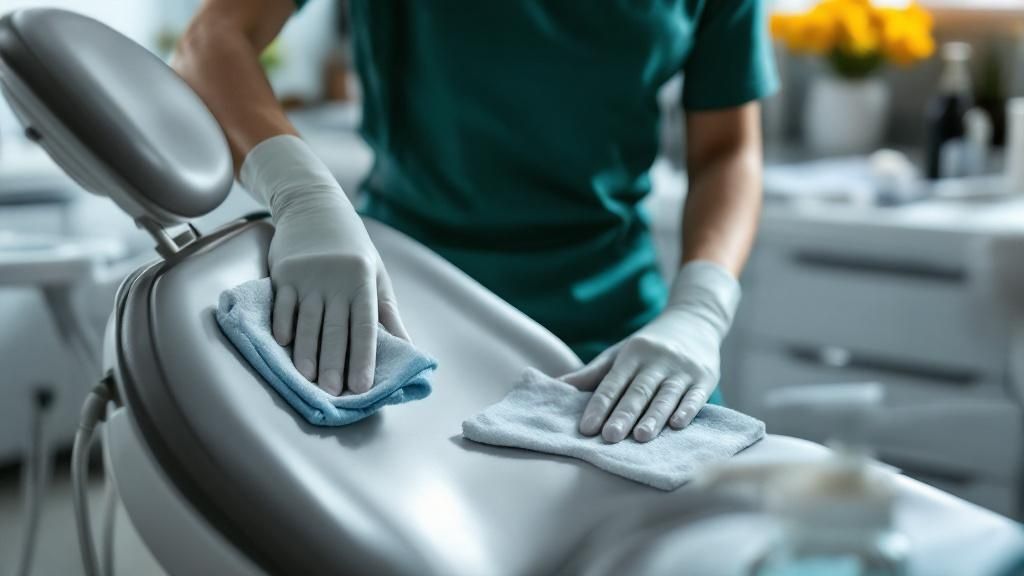
While instruments are on their journey, the treatment room undergoes a complete transformation. Our team wears proper PPE to prevent cross-contamination while meticulously disinfecting every surface.
Using hospital-grade, EPA-registered disinfectants, we wipe down everything, including:
- The dental chair and all its controls
- Countertops and instrument trays
- Light handles and switches
- X-ray equipment
We also place single-use plastic barriers on high-touch surfaces, which are replaced for every patient. By the time you walk in, you are entering a completely sanitized space prepared just for you.
Understanding Personal Protective Equipment and Barriers
The most visible sign of our dedication to infection control in dentistry is the personal protective equipment (PPE) you see our team wearing. This isn't just a uniform; it's our first and most crucial line of defense.
This system of protection is a cornerstone of modern healthcare. In dentistry, our equipment is made to block the transmission of microbes, ensuring the only thing we share is our commitment to your oral health.
The Essential Components of Dental PPE
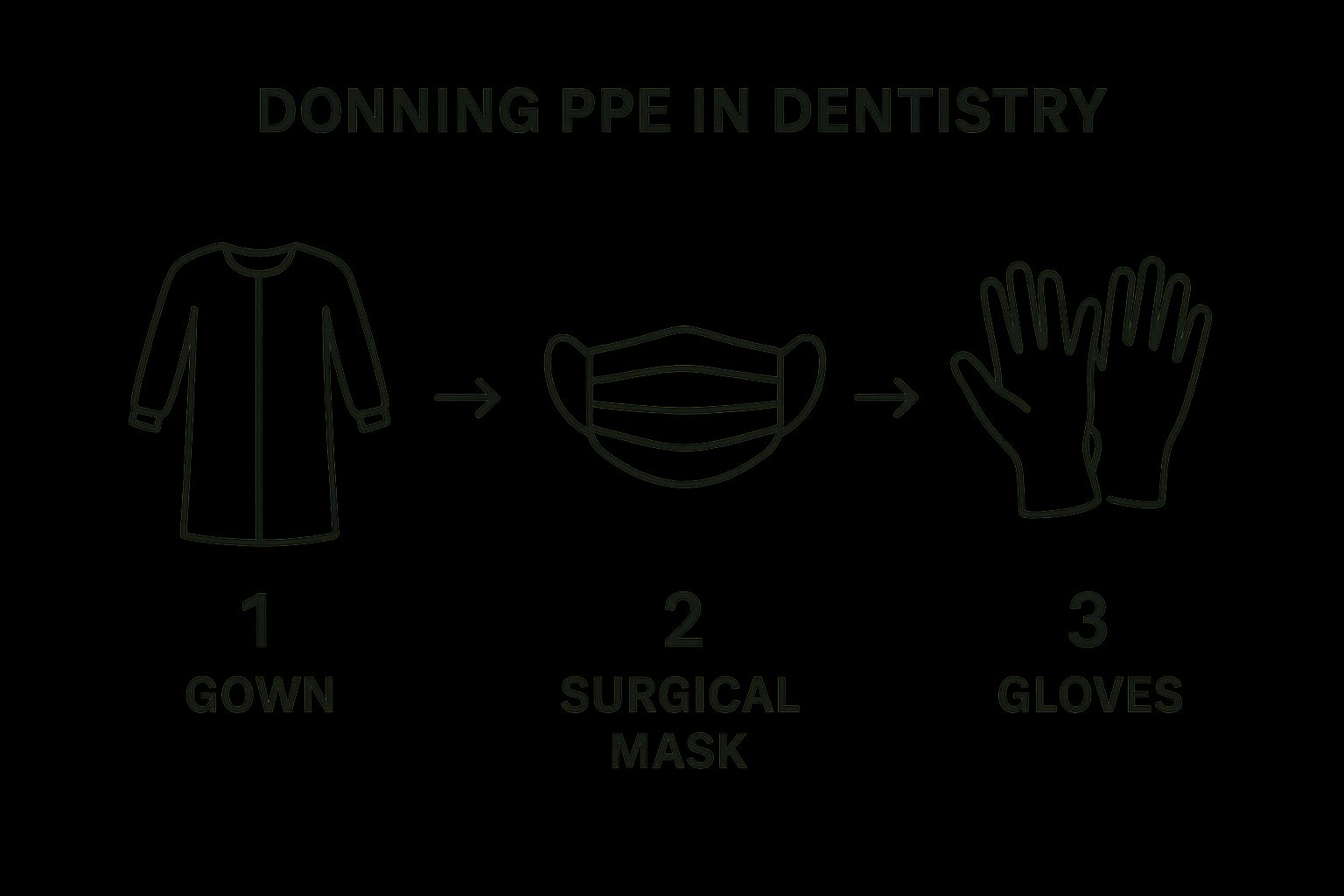
Every time you visit our Scottsdale office, you'll see Dr. Fink and our team wearing a consistent set of PPE. This is a strict protocol we follow for every patient interaction.
- Gloves: We use single-use gloves for every procedure, changed between every patient.
- Masks: A high-quality surgical mask is vital for protecting everyone from respiratory droplets.
- Protective Eyewear: Goggles or face shields protect our eyes from splashes and spatter.
- Gowns or Jackets: Protective gowns create a barrier for our clothing and skin.
Beyond Wearables: The Role of Surface Barriers
Our safety strategy goes beyond what we wear. You'll notice many high-touch surfaces in our treatment rooms are wrapped in clear, single-use plastic barriers. We apply these disposable sheets to areas that are frequently touched but can be tricky to clean, such as:
- Light handles
- Chair controls
- X-ray equipment heads
- Computer keyboards and mice
After your appointment, we discard the used barriers and thoroughly disinfect the surface underneath before applying a new set. This double-duty approach leaves zero chance for cross-contamination. This level of detail is fundamental to your overall wellness, and you can learn more about how to maintain healthy gums and why it’s important in our related guide.
Ensuring Pure Waterlines and Clean Air
Some of the most critical elements of infection control in dentistry are completely invisible. At Trinity Dental Care, we take these factors seriously, using advanced technology and strict protocols to protect your health.
The thin tubes that carry water to our instruments, known as dental unit waterlines, can be breeding grounds for biofilm. To stop this, our water must meet purity standards far stricter than regular drinking water.
Why Dental Water Safety Is Crucial
Municipal tap water, while safe to drink, contains low levels of microorganisms that can multiply in dental unit waterlines. To combat this, we use a multi-layered approach:
- Advanced Filtration: Our systems are equipped with specialized filters to catch contaminants.
- Regular Treatment: We regularly treat our waterlines with powerful disinfecting agents, a practice recommended by the CDC.
- Consistent Testing: We routinely test our water to ensure it meets or exceeds the strict purity standards set by the American Dental Association (ADA).
This rigorous process ensures every drop of water used during your procedure is pure. It's similar to how we apply protective barriers to teeth, which you can read about in our guide to preventive dental care and sealants.
Managing Air Quality and Aerosols
Air quality has become a major focus, and our Scottsdale dental office is no exception. Dental procedures can create aerosols—tiny, invisible droplets that can linger in the air.
Our first line of defense is the high-volume evacuator (HVE), a powerful suction tool that captures aerosols right at the source. We have also invested in medical-grade air purification systems that run constantly throughout our office. These units use HEPA filters to trap microscopic particles, creating a healthier environment for everyone.
Conclusion: Our Unwavering Commitment to Your Safety
At Trinity Dental Care, everything we do is built around one core idea: your absolute safety and peace of mind. Here in our Scottsdale practice, we don't just meet industry standards for infection control in dentistry; we go above and beyond them.
This commitment is a promise we make to you and your family. It’s visible in our meticulously sterilized instruments, our rigorous use of PPE, and the careful way we disinfect every surface. We want you to feel completely comfortable and secure with us, which is why Dr. Christine Ann Fink and our entire team welcome your questions about our safety protocols.
Your trust is the foundation of everything we do. At Trinity Dental Care, we work hard every day to earn that trust by creating a dental home where you can relax, knowing your health is our top priority.
Frequently Asked Questions (FAQs)
1. How can I be sure dental instruments are completely sterile?
You can be certain because we use a strict, multi-step sterilization process. After a deep clean in an ultrasonic cleaner, we seal instruments in special pouches and place them in an autoclave. This machine uses high-pressure steam to kill 100% of all microbial life, and we conduct regular "spore tests"—a CDC best practice—to verify its effectiveness.
2. What is the difference between disinfecting and sterilizing?
Disinfecting uses hospital-grade chemical wipes to kill the vast majority of germs on surfaces like countertops and chairs. Sterilization is a validated process, like using our autoclave, that destroys all forms of microbial life, including tough bacterial spores. We disinfect all surfaces but sterilize every instrument that touches your mouth.
3. Are the X-ray sensors cleaned between patients?
Absolutely. We use a strict two-layer protocol. First, the sensor is covered with a brand new, single-use plastic barrier. After your X-rays, we discard the barrier and thoroughly wipe down the sensor itself with a hospital-grade disinfectant to ensure no risk of cross-contamination.
4. What has your Scottsdale office done to improve air quality?
Beyond cleaning surfaces, we've invested in technology to manage the air you breathe. We use medical-grade HEPA air filtration systems that run constantly to purify the air. During procedures, we also use a high-volume evacuation (HVE) system to capture spray and aerosols right at the source.
5. Can I ask you about your safety procedures during my visit?
Please do! We are proud of our safety systems and want you to feel confident in our care. Dr. Fink and our team are always happy to explain our processes. Your peace of mind is just as important as your dental health. For more answers, please visit our comprehensive dental care FAQ page.
Your smile and your safety are our top priorities. At Trinity Dental Care, we are committed to providing exceptional dental care in an environment you can trust. Schedule your appointment today to experience a higher standard of care in Scottsdale, AZ.