
Proper wisdom teeth removal aftercare isn't just a good idea—it's essential for a smooth, comfortable recovery. The first 24 hours are the most critical. How you handle this initial period sets the stage for the entire healing process by managing bleeding, controlling pain, and keeping swelling to a minimum.
At Trinity Dental Care, we believe that empowering our Scottsdale patients with knowledge is the first step toward a stress-free experience. Following these guidelines, developed by Dr. Christine Ann Fink, will help you heal quickly and avoid common complications.
Your First 24 Hours: A Post-Surgery Game Plan
The moment you leave our Scottsdale office, your recovery journey begins. That first day is crucial, and having a clear plan is your best tool for success. Your main goals are simple: get plenty of rest, manage discomfort, and protect the surgical site.
This initial phase is all about creating the perfect environment for your body to heal. We've seen it time and again: patients who follow their aftercare instructions closely experience far less pain and swelling.
Control Bleeding With Gauze
You’ll leave our office with gauze packs placed over the extraction sites. It’s important to bite down with firm, steady pressure. This simple action helps stop the bleeding and encourages a blood clot to form, which is the foundation of your healing.
- Change the Gauze: You'll need to swap out the gauze pads every 30-45 minutes or whenever they become soaked.
- Keep Biting Down: Continue this for the first few hours until the bleeding slows to a light ooze.
- A Helpful Tip: If bleeding seems stubborn, you can switch to a moistened black tea bag. The tannic acid in the tea is a natural astringent that helps promote clotting.
Prioritize Rest And Relaxation
When we say rest, we mean it. It’s not just a suggestion; it’s a non-negotiable part of your recovery. Any strenuous activity can spike your blood pressure and cause the surgical sites to start bleeding again.
For the first 24 hours, your only job is to relax on the couch or in bed. Keep your head propped up with a couple of pillows, even when you sleep. This elevation makes a huge difference in reducing swelling.
Avoid bending, lifting heavy objects, or any vigorous movements. Let friends or family in the Scottsdale area take care of chores and errands so you can focus completely on healing. Our detailed guide on recovery after wisdom teeth removal offers more practical tips.
Stay Ahead Of Pain And Swelling
The best way to handle discomfort is to get ahead of it. Don't wait for the pain to become severe before taking your prescribed medication. As soon as you get home, start your pain management schedule as directed by Dr. Fink.
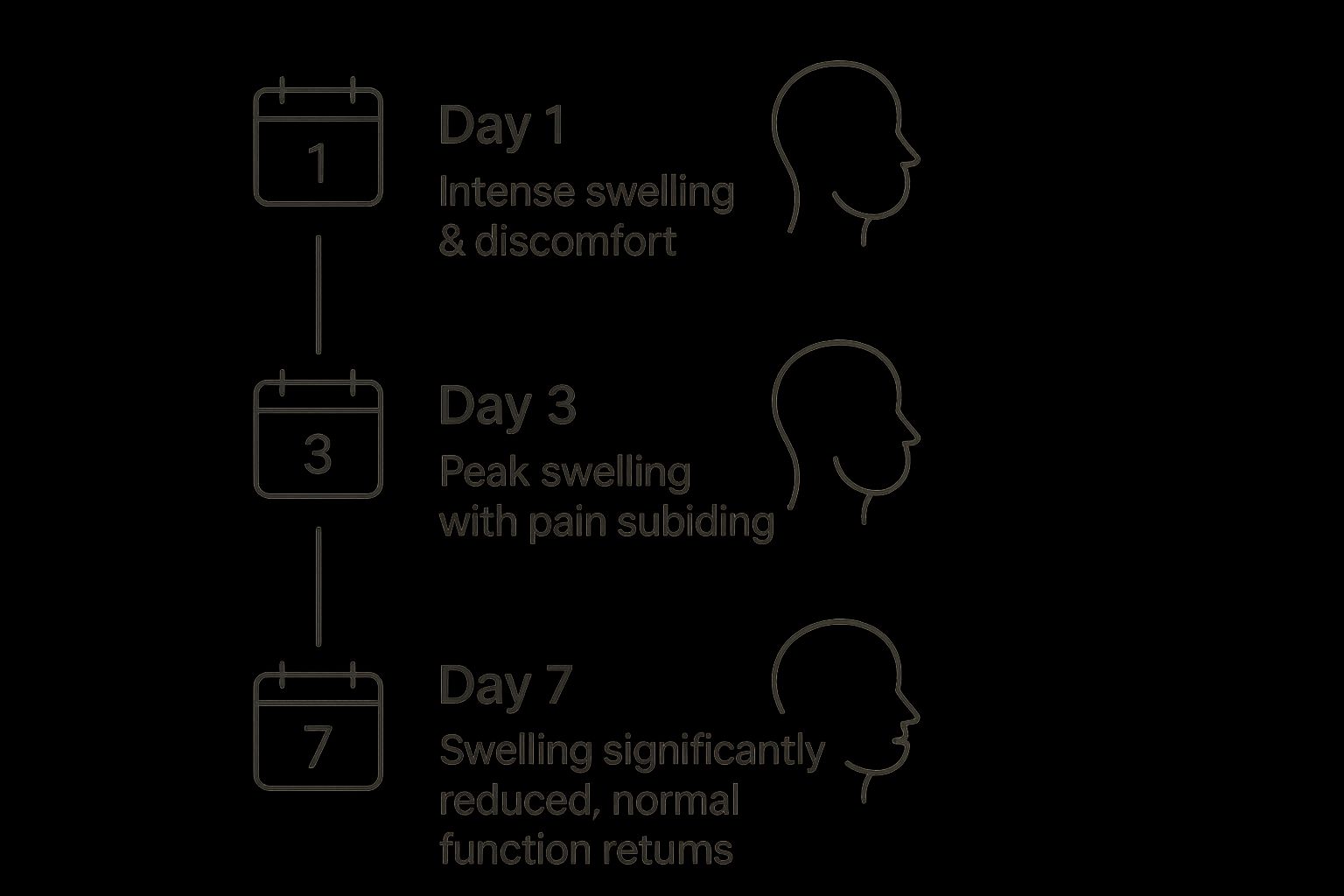
Swelling usually gets worse before it gets better, typically peaking around the third day. Your best weapon against this is an ice pack. Apply it to your cheeks in a cycle of 20 minutes on, 20 minutes off throughout the first day. This simple step is incredibly effective at minimizing both swelling and bruising.
Wisdom Teeth Aftercare Timeline: The First 3 Days
To help you stay on track, here's a quick reference table for the first 72 hours. This period is when you'll see the most significant changes and when your aftercare diligence matters most.
| Day | Key Focus | Diet | Activity Level |
|---|---|---|---|
| Day 1 | Bleeding control, pain management, forming blood clots. | Clear liquids, yogurt, applesauce, pudding. No straws. | Complete rest. Keep head elevated. |
| Day 2 | Swelling management, protecting the clot, gentle hygiene. | Soft foods like mashed potatoes, smoothies, creamy soups. | Very light activity only. No bending or lifting. |
| Day 3 | Swelling will peak. Continue soft diet and start gentle warm salt water rinses. | Continue soft foods. Start introducing slightly more texture if comfortable. | Continue to take it easy. Short, slow walks are okay. |
Following this timeline will put you on the fast track to a comfortable recovery. Remember, the goal is to give your body the best possible chance to heal without complications.
How To Manage Pain And Swelling Like A Pro

Some discomfort after wisdom teeth removal is completely normal. The good news is you have a lot of control over how you feel. A smart strategy for managing pain and swelling can make a world of difference.
At Trinity Dental Care, we'll send you home with a specific pain management plan, often including prescription medication. Many patients find success by alternating their prescribed medication with an over-the-counter anti-inflammatory drug like ibuprofen.
This method helps maintain a steady level of relief, preventing the dreaded feeling of pain spiking between doses.
A Smart Medication Strategy
The key is to follow a schedule rather than waiting for pain to appear. Think of it as staying ahead of the discomfort instead of constantly trying to catch up.
- Follow Directions: Always take your medication exactly as Dr. Fink prescribed.
- Set Alarms: It's easy to lose track of time. Use your phone to set reminders for your next dose so you don't fall behind.
- Stay Hydrated: Be sure to take pills with a full glass of water and never on an empty stomach to help prevent nausea.
This consistent approach builds a foundation of comfort, which lets your body focus on healing. For a more detailed look, check out our guide on post-treatment pain relief.
The Cold and Warm Compress Method
Medication is just one piece of the puzzle. Using temperature therapy correctly plays a massive role in controlling both swelling and jaw stiffness.
For the first 48 hours, cold therapy is your best friend. Applying ice packs to your cheeks helps reduce inflammation and has a numbing effect. Just remember the 20-minutes-on, 20-minutes-off cycle to protect your skin.
After those first two days, switch from cold to warm. A moist, warm compress applied to your jaw can feel amazing. This gentle heat boosts blood flow, which helps bring down lingering swelling and eases muscle stiffness.
Understanding the Swelling Timeline
One of the most common questions we get from our Scottsdale patients is, "When will this swelling finally go down?" Swelling is your body's natural response to surgery—a clear sign that the healing process is underway.
You'll likely see swelling increase for the first 48 to 72 hours, usually peaking around the third day. This is perfectly normal. After this peak, you should see a gradual improvement every day.
Your Post-Surgery Menu: What to Eat and Avoid

Navigating your meals after oral surgery can feel daunting, but fueling your body with the right nutrition is a huge part of successful wisdom teeth removal aftercare. The right foods can soothe the surgical site, while the wrong ones can cause pain and set back your recovery.
For the first few days, your diet needs to be all about being gentle. You'll want to stick exclusively to soft foods and liquids—basically, anything that requires zero chewing.
Go-To Soft Foods for the First Few Days
To make that first post-op grocery run easier, here are some fantastic food choices that patients swear by. Just remember to keep everything lukewarm or cold, since hot foods can irritate the healing tissue.
- Yogurt and Kefir: Cool, soothing, and packed with protein and probiotics.
- Smoothies: A perfect way to get your nutrients in one go. But remember the critical rule: do not use a straw.
- Lukewarm Soups: Creamy, blended soups like tomato or butternut squash are comforting and nutritious.
- Mashed Potatoes: A classic comfort food for a reason! They’re soft, filling, and require no effort to eat.
- Applesauce and Puddings: Great for a sweet tooth when you can't handle any chewing.
Thinking ahead about your diet is as crucial as the procedure itself. You can read our guide on how to prepare for your tooth extraction for a full picture.
Foods and Habits You Must Avoid
What you don't eat is just as important as what you do. Certain foods and habits can easily dislodge the protective blood clot, leading to a painful condition called dry socket.
The single most important rule to follow is NO STRAWS. The suction created when you use a straw is the leading cause of dry socket. This same warning applies to smoking and spitting forcefully—avoid them completely.
Additionally, some food textures are completely off-limits for at least a week to protect the sensitive healing areas. Here is a simple chart to help you distinguish between what’s safe and what you should avoid.
| Food Category | Safe Options (Eat This) | Foods to Avoid (Not That) |
|---|---|---|
| Texture | Smooth, creamy, or liquid | Hard, crunchy, or chewy (chips, nuts, steak) |
| Temperature | Cold or lukewarm | Very hot (can increase bleeding and irritation) |
| Spiciness | Mild and bland | Spicy or acidic (salsa, citrus, tomatoes) |
| Grains | Well-cooked oatmeal, cream of wheat | Small seeds, popcorn kernels (can get stuck in sockets) |
After a few days, you can slowly reintroduce semi-soft foods like scrambled eggs or flaky fish. The key is to listen to your body and chew gently, using the side of your mouth opposite the extraction sites.
Keeping Your Mouth Clean Without Causing Harm

Keeping your mouth clean after surgery is your number one defense against infection, but this is a situation where you need a delicate touch. The main goal is to keep the area clean without disturbing the vital blood clot.
For the first 24 hours, you need to be hands-off. That means no brushing, no rinsing, and no exceptions. This gives the blood clot the crucial time it needs to form and stabilize.
A Gentle Brushing Routine
Once the initial 24-hour mark has passed, you can slowly bring your toothbrush back into the picture with extreme care. You should still avoid the actual surgical sites for a few more days.
- Be Gentle: Use a soft-bristled toothbrush and very light pressure to clean your other teeth and tongue.
- Avoid the Back: Stay completely clear of the extraction areas. An accidental bump can cause pain and disrupt healing.
- Skip the Toothpaste (Initially): For the first couple of days, just brushing with warm water is perfectly fine and minimizes irritation.
This cautious approach helps you feel fresh without putting your recovery at risk. A consistent oral hygiene routine is foundational to long-term wellness, as we explore in our guide on how to prevent gum disease.
The Saltwater Rinse: Your Best Friend
The saltwater rinse is the cornerstone of post-op hygiene. It's simple, natural, and effective at cleansing your mouth, reducing bacteria, and promoting healing.
Begin saltwater rinses 24 hours after your surgery. Just mix a half-teaspoon of table salt into an eight-ounce glass of warm (not hot!) water until it’s fully dissolved.
Use this rinse after every meal and before bed. The method is key: don't swish aggressively or spit forcefully. Instead, take a small sip and gently tilt your head from side to side, letting the warm salt water flow over the surgical sites. When finished, just open your mouth and let the water fall into the sink.
How To Recognize And Prevent Dry Socket
While most wisdom teeth removals go smoothly, a huge part of your aftercare is knowing what to look for if things don't feel right. The complication we hear about most at our Scottsdale office is dry socket, but it's largely preventable.
A dry socket happens when the blood clot that forms in the empty tooth socket is dislodged or dissolves too soon. When that protective layer is gone, the underlying bone and nerves are exposed, which can lead to significant pain.
What Causes Dry Socket?
The best way to prevent dry socket is to understand what causes it. The main culprit is anything that creates suction or intense pressure inside your mouth.
The biggest risk factors are:
- Smoking or Vaping: Inhaling creates powerful suction, and nicotine constricts blood vessels, slowing healing.
- Using Straws: Sipping through a straw creates negative pressure that can easily dislodge the fragile blood clot.
- Vigorous Spitting or Rinsing: Forceful movements can disrupt the healing site.
- Poor Oral Hygiene: Bacteria can build up and interfere with the clot's ability to stay put.
Wisdom teeth removal is an incredibly common procedure. In fact, about 5 million people in the United States have their wisdom teeth taken out every year, which is why understanding aftercare is so critical (extraction statistics on ariadentalcare.com).
Telltale Signs to Watch For
The pain from a dry socket feels different from normal soreness. While typical discomfort gradually gets better, dry socket pain often hits suddenly, around 3 to 5 days after your procedure.
The classic symptom is a severe, throbbing pain that doesn't just stay at the extraction site but often radiates up to your ear, eye, or temple.
Other clear warning signs include:
- An empty or "dry-looking" appearance in the socket.
- A persistent bad taste in your mouth or foul breath.
- Pain that your prescribed medications can't touch.
When To Call Our Scottsdale Office
While dry socket is the most talked-about complication, it’s not the only reason to call us. Your health and comfort are our absolute priorities. Please call Trinity Dental Care immediately if you experience any of these red flags:
- Bleeding that is still heavy and won’t stop.
- Pain that gets noticeably worse instead of better after the third day.
- A fever or signs of infection, like pus or a yellow discharge.
- Any difficulty swallowing or breathing.
Trust your gut—if something feels off, it’s always best to call. While every procedure is different, some aftercare steps are similar, as you can see in our guide on what to expect after a root canal.
Frequently Asked Questions About Wisdom Teeth Recovery
After wisdom teeth removal, it's normal to have a lot of questions. Here at our Scottsdale practice, we believe giving you clear, straightforward answers is a huge part of a smooth aftercare journey. Below, we’ve answered some of the most common questions from our patients.
1. How long does the recovery actually take?
Most patients start feeling much better within 3 to 4 days, as the initial swelling and discomfort begin to fade. However, the deep healing in your jawbone and gums takes longer, often several weeks or even a few months. Plan to take it easy for about a week before slowly returning to your usual routine.
2. When can I start exercising again?
We strongly recommend putting serious workouts on hold for at least one full week. This includes gym sessions, running, or heavy lifting. Jumping back into strenuous activity too soon can spike your blood pressure and cause bleeding at the extraction sites. When you feel up to it, start slow with a gentle walk.
3. What should I do if my stitches come out?
This is a common concern and usually not a problem. Dr. Fink typically uses dissolving stitches designed to fall out on their own after about a week. If a stitch comes out early but you have no bleeding or significant pain, it's generally fine. Of course, if you're concerned, please give our Scottsdale office a call for peace of mind.
4. My jaw is really stiff—is this normal?
Yes, absolutely. Jaw stiffness, or trismus, is a perfectly normal side effect. It results from swelling in the jaw muscles and having your mouth open during surgery. For the first 48 hours, use cold packs to reduce swelling. After that, switch to a moist, warm compress on your cheeks to relax tight muscles.
5. How soon can I go back to eating normal food?
You can slowly add more solid foods back into your diet as you feel comfortable, which for most people is around day 3 or 4. Start with semi-soft foods like scrambled eggs or soft pasta. For at least a week, steer clear of anything hard, crunchy, sticky, or chewy that could irritate the healing sites.
6. How common is wisdom tooth extraction?
Having a wisdom tooth removed is an incredibly common rite of passage. A large-scale analysis found that by age 25, about 50% of people have had at least one wisdom tooth extracted (prevalence of tooth extractions from this study). This highlights just how widespread the need for clear aftercare guidance is.
Your Partner in Dental Health
Navigating your wisdom teeth removal aftercare is a team effort, and we are here to support you every step of the way. Following these instructions will help ensure your recovery is as quick and comfortable as possible. Remember, a successful outcome depends on the care you provide at home.
Ready to ensure your smile gets the best care in Scottsdale? The team at Trinity Dental Care is here to support you before, during, and after any procedure. Call us today to learn more or to book a consultation with Dr. Fink.