
It might sound surprising, but a growing body of clinical evidence shows a clear connection between the health of your mouth and the health of your heart. This isn't just a vague theory; it's a field of active medical research revealing just how intertwined these two parts of the body are. At Trinity Dental Care, we often tell our patients to think of their mouth as the gateway to the rest of their body—and if that gateway is neglected, it can create serious risks for the cardiovascular system.
This guide will explain the science behind the mouth-heart connection, the warning signs you shouldn't ignore, and how partnering with your Scottsdale dentist can protect your overall wellness.
The Undeniable Link Between Your Mouth and Heart
When patients at our Scottsdale office ask, "Can my bad teeth really affect my heart?" the answer is more direct and scientifically grounded than many expect. This relationship isn't a random coincidence. It’s rooted in the way our bodies respond to chronic infection and inflammation.
When oral hygiene slips, especially to the point of advanced gum disease (periodontitis), it creates the perfect environment for harmful bacteria to flourish. These bacteria don't just stay put in your mouth; they can slip into your bloodstream through gums that are inflamed or bleeding. Once in circulation, they trigger a system-wide inflammatory response, a well-known driver of major cardiovascular problems.
Inflammation: The Common Enemy
Think of your gums as a secure barrier protecting your body. Healthy gums form a tight seal, but gum disease creates holes in that barrier, allowing intruders—in this case, bacteria—to get through. Once in your bloodstream, these oral bacteria can travel directly to the arteries of your heart.
This bacterial invasion can contribute to or worsen several life-threatening conditions:
- Atherosclerosis: This is the hardening and narrowing of your arteries. Oral bacteria can attach to the fatty plaques in the heart's arteries, causing more inflammation and encouraging these dangerous plaques to grow.
- Endocarditis: This is a rare but serious infection of the endocardium, the inner lining of your heart's chambers and valves. The American Dental Association (ADA) notes that bacteria entering the bloodstream from the mouth can cause this condition in vulnerable individuals.
- Stroke: Blood clots can form due to arterial damage and inflammation, a destructive process that can be kicked off by bacteria from your mouth.
Research has linked untreated dental problems like severe cavities and periodontal disease to an increased risk of ischemic stroke and heart attack (myocardial infarction). In fact, tooth loss, a common outcome of severe gum disease, is strongly associated with a higher risk of developing cardiovascular disease.
Oral Health Issues and Their Heart Health Risks
| Oral Health Issue | Potential Heart Impact | Primary Mechanism |
|---|---|---|
| Gingivitis | Increased systemic inflammation | Bacteria irritate gums, creating a low-grade inflammatory response that can spread. |
| Periodontitis | Atherosclerosis, Endocarditis | Bacteria enter the bloodstream through deep gum pockets, fueling arterial plaque. |
| Tooth Decay/Abscess | Increased infection and inflammation | Acute infection releases a flood of bacteria and inflammatory signals into the body. |
| Tooth Loss | Higher risk of heart disease | Often a final indicator of long-term, severe oral inflammation and infection. |
Seeing these connections laid out makes it clear why we can't separate oral health from overall health. This powerful link highlights why dental care must be seen as a core part of your total wellness strategy. Understanding how oral health affects your overall wellness is the first and most important step toward protecting yourself.
At Trinity Dental Care, we truly believe that preventive dentistry isn't just about keeping your smile bright—it's about safeguarding your long-term health. A healthy mouth is a foundational piece of a healthy heart and a healthy body.
When you partner with Dr. Christine Ann Fink and our Scottsdale team, you're taking a vital step in managing this risk. Regular checkups and cleanings do so much more than polish your teeth; they are your front-line defense against the systemic inflammation that starts in your mouth.
How Oral Bacteria Travel From Your Gums to Your Bloodstream
To understand how bad teeth can affect your heart, you need to picture the journey bacteria take from your mouth to your arteries. This step-by-step process, which often starts with a silent dental issue, makes it clear why a problem like irritated gums should never be ignored.
The starting point is usually gingivitis, the earliest and most reversible stage of gum disease. You might notice it as redness, swelling, or gums that bleed when you brush. While it may not seem like a big deal, gingivitis is a warning sign that your oral health is at a crossroads.
If left unaddressed, gingivitis can progress to periodontitis, a much more severe form of gum disease. Periodontitis destroys the protective seal around your teeth, creating deep pockets between the gums and teeth where dangerous bacteria can hide and multiply. This breakdown of gum tissue is the critical moment that opens a direct door to your bloodstream.
Creating a Pathway for Infection
Imagine your gums are like a tightly woven fabric. Periodontitis is like poking holes in that fabric, creating openings for oral bacteria to slip into your circulation.
This infographic gives a close-up look at inflamed gum tissue, showing just how easily bacteria can move into the bloodstream and begin their journey toward the heart.
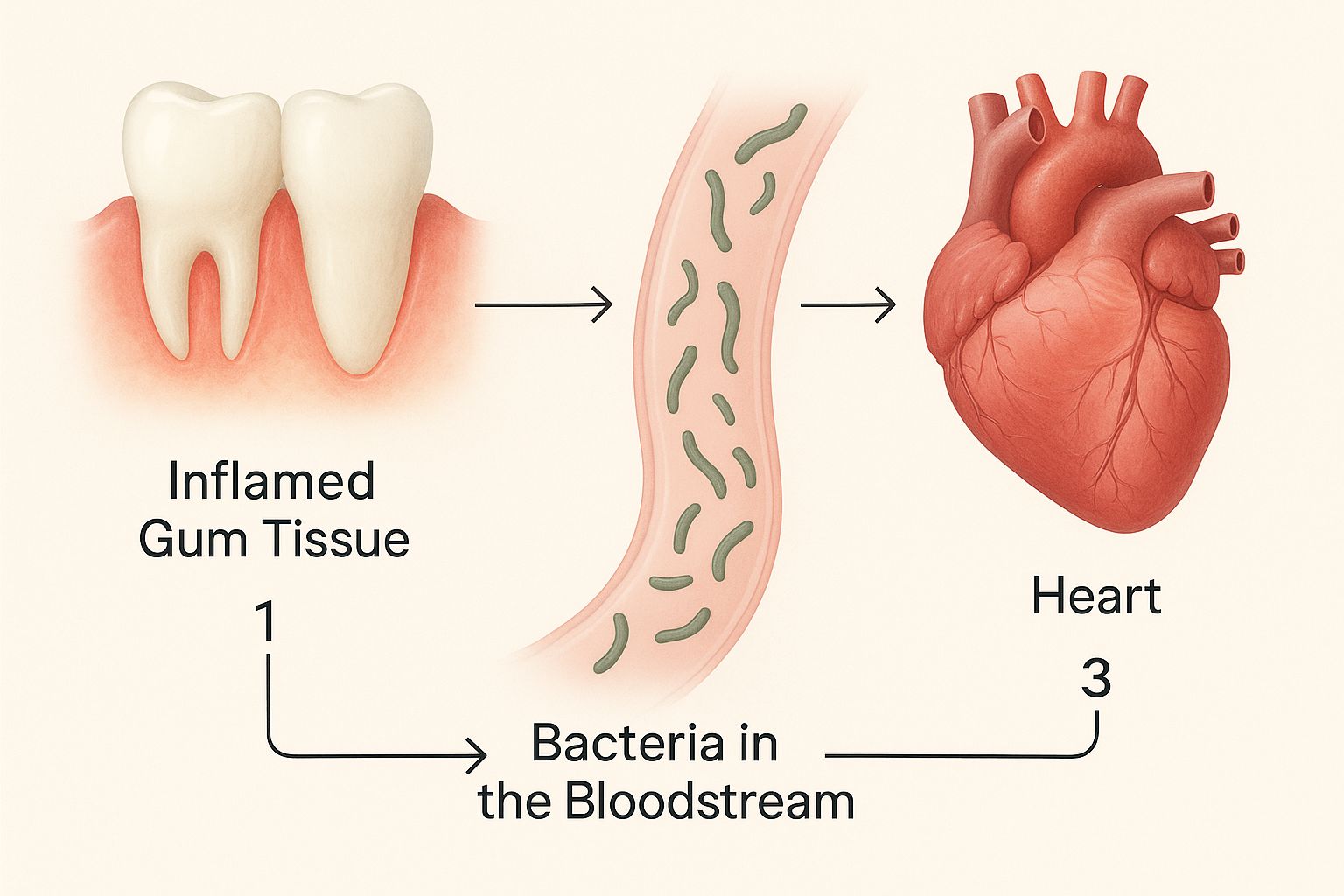
The image clearly shows how a problem that seems localized in the gums doesn't actually stay local. It creates a pathway for bacteria to threaten your cardiovascular health. Once these bacteria are in the bloodstream, they can travel to almost any part of your body, including the vital arteries supplying your heart with oxygen-rich blood.
Key Bacterial Culprits
Not all oral bacteria are created equal when it comes to the mouth-heart connection. One of the most studied troublemakers is Porphyromonas gingivalis. This specific pathogen is a major player in periodontitis and is exceptionally good at surviving in the bloodstream and kicking off inflammation wherever it goes.
When these bacteria get into your circulation, they are active participants in creating disease.
The presence of oral bacteria in the bloodstream is not a passive event. These microorganisms can trigger an immune response, leading to systemic inflammation that directly contributes to the development and progression of arterial plaque, a hallmark of heart disease.
This inflammatory response is your body’s natural defense trying to fight off the invaders. The problem is, when the infection in your gums is chronic, the inflammation becomes constant and low-grade throughout your body. This body-wide inflammatory state is a well-known risk factor for cardiovascular conditions.
From Localized Infection to Systemic Threat
The journey from a gum infection to a potential heart problem follows a few key steps. Understanding this sequence really shows why preventive dental care is so crucial for your overall wellbeing.
- Plaque and Tartar Buildup: It all starts with dental plaque—that sticky film of bacteria—which hardens into tartar if not removed.
- Gum Inflammation (Gingivitis): Tartar along and under the gumline irritates the gums, causing the first signs of inflammation.
- Tissue Breakdown (Periodontitis): Persistent inflammation starts to destroy gum tissue and the bone holding your teeth, creating those deep pockets.
- Bacterial Entry: These infected pockets provide an easy escape route for harmful bacteria like P. gingivalis to get into the bloodstream.
- Systemic Travel: The bacteria circulate throughout your body, eventually reaching your coronary arteries and other blood vessels.
- Arterial Inflammation: Once there, they can contribute to the inflammatory process inside your artery walls, potentially making atherosclerosis (hardening of the arteries) worse.
This entire cascade begins with something that is completely manageable: plaque on your teeth. By seeing your dentist for regular cleanings and checkups, you interrupt this process at the very first step. You’re not just protecting your smile—you're protecting your heart from a preventable chain of events.
The Science of Inflammation and Arterial Plaque
So, how exactly can a problem in your mouth lead to a problem in your heart? It really comes down to two key culprits: inflammation and atherosclerosis. Imagine oral bacteria slipping past your gums and into your bloodstream. They’re like uninvited troublemakers crashing a delicate party inside your arteries, and their presence throws everything into chaos.

This isn't just a hunch; it's a well-documented scientific reality. Researchers have actually found direct evidence of oral bacteria, like Porphyromonas gingivalis, living inside the arterial plaques of heart disease patients. Once there, they act like fuel on a fire, making the plaque grow faster and become far more unstable.
How Oral Bacteria Worsen Arterial Plaque
Atherosclerosis is the medical term for the hardening of your arteries. It happens when fatty deposits, known as plaque, build up and start to narrow the passage. When bacteria from your mouth arrive, they can set up camp right inside the plaque, triggering a powerful inflammatory response.
This new inflammation makes the plaque much more dangerous in a few ways:
- Accelerated Growth: The inflammation encourages the plaque to get bigger, faster, which narrows your arteries even more.
- Increased Instability: An inflamed plaque is softer and much more likely to rupture or break apart.
- Blood Clot Formation: If a piece of plaque ruptures, your body tries to heal the area by forming a blood clot. A clot in a major artery is what can block blood flow entirely, leading to a heart attack.
This whole process is a major reason why keeping your mouth clean is so vital. When you stop the initial gum infection, you cut off the supply of bacteria that could kickstart these dangerous events in your arteries.
The Role of C-Reactive Protein
To measure inflammation levels, doctors often check the blood for specific markers. One of the most important is C-reactive protein (CRP). Your liver produces CRP whenever there's inflammation anywhere in your body, so it’s a reliable gauge of your overall inflammatory state.
Numerous studies show that people with periodontitis consistently have much higher levels of CRP. This is a critical piece of the puzzle because high CRP is also a well-established risk factor for cardiovascular disease.
The undeniable link between gum disease, high CRP levels, and heart problems gives us strong evidence for the mouth-heart connection. It shows that a chronic, low-grade infection in your gums can create a body-wide state of inflammation that puts your entire cardiovascular system at risk.
Better yet, treating gum disease has been proven to lower CRP levels. This means that by taking care of your oral health, you can actively reduce a key inflammatory marker tied directly to your heart disease risk. It reinforces the idea that great dental care is truly proactive healthcare.
Protecting Yourself Starts with Proactive Care
Hearing all this science can feel a bit overwhelming, but the real takeaway is an empowering one. You have a huge amount of control over this particular risk factor. The connection between your mouth and your heart just highlights how important a solid oral hygiene routine really is.
Simple, consistent habits are your absolute best defense. This goes beyond brushing and flossing; it includes getting regular professional cleanings to handle the tough tartar buildup that you just can't manage at home. If you're worried about your gum health, we've put together a helpful guide on how to prevent gum disease with seven simple tips for better oral health.
Here at Trinity Dental Care in Scottsdale, Dr. Fink is passionate about preventive strategies that protect your teeth, your gums, and your heart. We believe that patient education is the foundation of good health. Our goal is to partner with you to achieve not just a beautiful smile, but lasting, full-body wellness.
Key Warning Signs of Gum Disease to Watch For
Recognizing the early signs of trouble in your mouth is one of the most powerful things you can do to protect your heart. Since gum disease is the primary gateway for oral bacteria to sneak into your bloodstream, catching it early is absolutely critical.
Many people in Scottsdale and beyond brush off minor symptoms as normal, but they are often your body’s first alert system. Paying close attention to these signals means you can get professional help from your dentist right away, stopping inflammation before it escalates.
Symptoms You Should Never Ignore
The following symptoms are common red flags for gingivitis or its more advanced cousin, periodontitis. If you experience any of them, it’s a clear sign that you should schedule a dental exam.
- Bleeding Gums: Healthy gums shouldn't bleed when you brush or floss. Bleeding is a classic sign of inflammation caused by plaque buildup.
- Red, Swollen, or Tender Gums: Healthy gums are typically firm and pink. If they look puffy or red, they are actively fighting a bacterial infection.
- Persistent Bad Breath (Halitosis): Bad breath that lingers even after brushing is often caused by bacteria accumulating in deep gum pockets.
- Receding Gums: If your teeth seem to be getting longer, it’s likely because your gums are pulling away. This process, known as recession, exposes sensitive tooth roots.
- Loose or Shifting Teeth: This is a more advanced symptom of periodontitis. As the disease destroys the underlying bone that supports your teeth, they can become unstable.
- Pus Between Teeth and Gums: The presence of pus is a definitive sign of an active infection requiring immediate dental care.
Each of these symptoms points directly to an active inflammatory process in your mouth. This is the very same inflammation that, if left unchecked, can contribute to systemic issues like heart disease by allowing bacteria to enter your circulation.
It's easy to overlook a little blood in the sink or slightly swollen gums. But these are direct messages from your body that something is wrong.
Oral Health Warning Signs and What They Mean
| Symptom | Potential Cause | Why It's a Concern |
|---|---|---|
| Bleeding gums | Gingivitis (early gum disease) | Indicates active inflammation and a breach in your oral defenses. |
| Puffy, red gums | Bacterial infection | Your gums are inflamed and fighting off harmful bacteria. |
| Chronic bad breath | Periodontitis, trapped food | Suggests deep bacterial pockets that brushing can't reach. |
| Receding gums | Advanced gum disease (periodontitis) | Exposes sensitive tooth roots and signals loss of gum tissue. |
| Loose teeth | Bone loss from severe periodontitis | Your teeth's support structure is being destroyed, risking tooth loss. |
| Pus from gums | Abscess or severe infection | A clear sign of a serious infection that requires immediate attention. |
Seeing these signs laid out makes it clear: what happens in your mouth doesn't stay in your mouth. For a deeper dive, you can learn more about the facts of gum disease in our detailed guide. At Trinity Dental Care, we believe an informed patient is an empowered one. By learning to recognize these warning signs, you become a key partner in protecting both your smile and your heart.
Protecting Your Teeth and Heart with Preventive Care
It can feel intimidating to hear about the serious connection between your mouth and your heart. But the most important thing to know is empowering: you have a remarkable amount of control. Your daily dental care is a powerful form of healthcare for your entire body.

The most crucial step is turning awareness into action. When you commit to a consistent oral hygiene routine, you’re actively disrupting the process that allows harmful bacteria to build up. These proactive measures are cornerstone strategies for your long-term wellness.
Your Daily Defense: A Four-Step Strategy
Building a strong defense against the inflammation that links gum disease to heart conditions starts right at home. These four simple habits are the foundation of both a healthy mouth and a healthy heart.
-
Brush Properly Twice a Day: Brush for a full two minutes each time, using a soft-bristled brush and fluoride toothpaste. Angle the brush at a 45-degree angle toward the gumline to clear away plaque where your teeth and gums meet.
-
Make Flossing a Daily Non-Negotiable: Brushing alone misses about 40% of your tooth surfaces. Flossing is the only way to get plaque out from between your teeth and under the gumline—prime real estate for harmful bacteria.
-
Incorporate an Antiseptic Mouthwash: Using an ADA-accepted antiseptic or antibacterial mouthwash helps reduce the bacterial load in your mouth even further. It reaches nooks and crannies that brushing and flossing might miss.
-
Adopt a Heart-Healthy Diet: A diet low in sugar and processed carbs helps starve the bad bacteria that cause cavities and gum disease. Filling your plate with fruits, vegetables, and lean proteins gives your gums and cardiovascular system the nutrients they need to stay strong.
These daily practices are your personal defense system, but they're only one part of the equation.
The Indispensable Role of Professional Cleanings
Even the most dedicated home care has its limits. Once plaque hardens into tartar (also called calculus), you simply can't remove it with a toothbrush or floss. This is why getting regular professional cleanings at our Scottsdale dental practice is absolutely essential.
Professional dental cleanings are the only way to remove hardened tartar buildup from below the gumline, effectively stopping periodontitis in its tracks before it can create systemic inflammation that affects your heart.
During these visits, our skilled hygienists use specialized tools to meticulously clean away stubborn tartar. This isn’t just about aesthetics; it's a critical health intervention. By clearing out these bacterial reservoirs, we directly lower your risk of chronic inflammation.
These appointments also give Dr. Fink a chance to spot the earliest warning signs of gum disease, which allows for quick, effective intervention. To learn more about our approach, explore our guide on what preventive care explained means for your long-term wellness.
Partnering with Your Scottsdale Dentist for Total Health
The scientific evidence is clear: the answer to "can bad teeth affect your heart?" is a firm yes. This knowledge shouldn't be a source of fear. Instead, it should empower you to think of your dentist not just as someone who fixes teeth, but as a key partner on your total health journey.
At Trinity Dental Care, we encourage you to share your complete health history with us, especially any cardiovascular concerns or a family history of heart conditions. This open dialogue allows Dr. Christine Ann Fink to tailor your preventive care, ensuring it supports both your smile and your overall systemic wellness.
From Concern to Action
The mouth-heart connection is real, but the good news is that it's highly preventable. A comprehensive dental exam and a professional cleaning are your most effective tools for stopping the inflammatory cycle that starts in your gums.
According to the World Health Organization, oral diseases affect nearly 3.5 billion people globally. These diseases often share common risk factors with heart disease, like high-sugar diets and tobacco use. Integrating oral health into overall disease prevention strategies is crucial for reducing this global burden. You can learn more about these global oral health findings.
Your oral health is a modifiable risk factor for cardiovascular disease. By actively managing your dental hygiene and partnering with your dentist, you are making a direct, positive impact on your heart health.
The path to a healthier heart and a healthier smile begins with a single, proactive decision. Don't let uncertainty about your oral health linger. For our neighbors here in Scottsdale and the surrounding communities, the path to peace of mind is clear.
Frequently Asked Questions About the Mouth-Heart Connection
Learning about the link between oral health and heart health often brings up questions. We hear them all the time at our Scottsdale family dentist practice. Here are answers to some of the most common ones to help you feel confident in protecting your total health.
1. Can a tooth infection cause heart problems?
Yes, a severe tooth infection or abscess can increase your risk of heart problems. The infection releases a large number of bacteria into your bloodstream, which can travel to the heart and contribute to inflammation in the arteries (atherosclerosis) or, in rare cases, lead to an infection of the heart lining (endocarditis).
2. Does having heart disease mean I need special dental care?
Yes, absolutely. If you have a history of a heart condition, it is critical that you share your full health history with us, including any medications like blood thinners. We may coordinate with your cardiologist and sometimes recommend taking antibiotics before certain dental procedures to prevent infection, a practice known as antibiotic prophylaxis.
3. Can treating my gum disease reverse my heart disease risk?
Treating gum disease can significantly lower a major risk factor for heart disease: chronic inflammation. While it won't "cure" existing heart disease, which is complex, it is an essential part of a comprehensive strategy to manage your overall cardiovascular health, alongside care from your cardiologist and a healthy lifestyle.
4. How often should I see a dentist if I have a heart condition?
If you have a heart condition, staying consistent with dental visits is crucial. While most people do well with two visits a year, Dr. Fink may recommend a more frequent schedule—perhaps every three or four months—especially if you're managing active periodontitis, to keep inflammation under control.
5. Are there dental procedures to avoid with a heart problem?
For the most part, routine dental care is not only safe but highly recommended for patients with heart conditions. However, we may need to postpone non-emergency procedures if you've recently had a major cardiac event, like a heart attack, until your physician gives the all-clear. Open communication with your medical team is key.
For more answers to common dental questions, feel free to explore our extensive dental care FAQ page for more insights.
Conclusion: Take the First Step Toward a Healthier Heart and Smile
The evidence is undeniable: your oral health is directly linked to your cardiovascular health. Neglecting your teeth and gums can lead to systemic inflammation that increases your risk for serious conditions like atherosclerosis, heart attack, and stroke. However, this connection is also a source of empowerment. By committing to excellent oral hygiene and partnering with a knowledgeable dental team, you can take a proactive stance in protecting your entire body.
At Trinity Dental Care, Dr. Christine Ann Fink and our dedicated team are committed to being your partners in achieving not just a healthy smile, but lasting, full-body wellness. We serve the Scottsdale, AZ community with compassionate, patient-centric care that prioritizes your long-term health.
Ready to protect your teeth and your heart? Contact our Scottsdale office today to schedule a comprehensive examination with Dr. Christine Ann Fink.