
If the thought of a dental visit makes your palms sweat, you’re not alone. According to a study published in the Journal of Dental Anesthesia and Pain Medicine, up to 36% of the population experiences some level of dental anxiety, with 12% suffering from extreme fear (1). But that anxiety doesn't have to control your health. Modern dentistry offers several ways to make your experience comfortable and stress-free, from simple inhaled sedation (laughing gas) to deeper forms like oral sedation (pills) and IV sedation.
Your Guide to Comfortable Dentistry in Scottsdale
Dental anxiety is a real and significant hurdle that keeps far too many people from getting the care they need. This hesitation often leads to putting off appointments, which allows small, simple problems to grow into bigger, more complex, and more expensive ones down the road.
At Trinity Dental Care, we see sedation dentistry as a partnership in your health. It’s a safe and proven tool we use to transform apprehension into a calm, positive experience, ensuring you can receive essential care without the dread. This guide is our way of pulling back the curtain on the different types of dental sedation we offer to our Scottsdale patients.
We've built our practice on creating a supportive environment where your comfort is always our top priority. We believe that understanding your options is the first step toward taking back control of your dental health. You can learn more about our patient-first philosophy and our approach to gentle dental care.
This guide will walk you through the most common sedation options, explaining how each one works in a real-world setting. We'll cover:
- Inhaled Sedation: A light and gentle option that’s perfect for taking the edge off mild anxiety.
- Oral Sedation: A pill-based method that provides deeper relaxation for more involved procedures.
- IV Sedation: A highly controlled approach for profound comfort and relaxation, often used for significant dental work.
By the end, you'll have a much clearer picture of how sedation can make your next visit to our Scottsdale office your most comfortable one yet.
Quick Guide to Dental Sedation Options
To help you quickly compare the different levels of sedation, we've put together this simple table. It breaks down each type, the level of consciousness you can expect, and what kinds of procedures they are typically used for.
| Sedation Type | Consciousness Level | Commonly Used For |
|---|---|---|
| Nitrous Oxide | Awake & Responsive | Mild anxiety, routine cleanings, simple fillings |
| Oral Sedation | Drowsy but Awake | Moderate anxiety, longer procedures, cosmetic work |
| IV Sedation | "Twilight Sleep" | High anxiety, complex or surgical procedures |
| General Anesthesia | Completely Unconscious | Most severe anxiety, extensive oral surgery |
This table is a great starting point, but the best option for you will always depend on your personal health history, anxiety level, and the specific dental work you need. Dr. Fink will discuss all of this with you during your consultation to find the perfect fit.
How Laughing Gas Eases Dental Anxiety
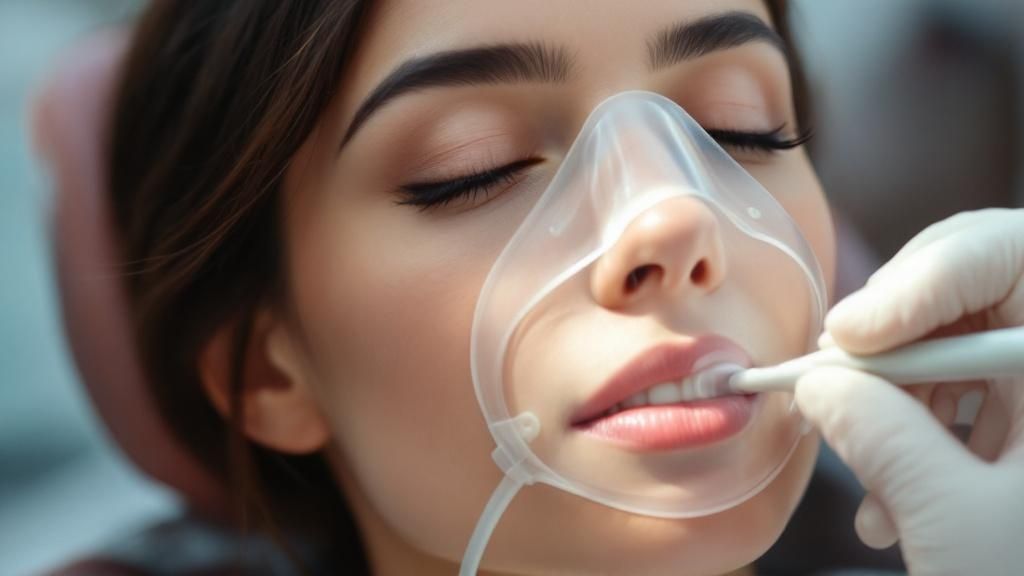
Imagine feeling a gentle, warm wave of relaxation wash over you just by breathing normally. That’s what it’s like to experience nitrous oxide—what most people know as “laughing gas.” It's one of the most trusted and common ways we help patients relax in the dental chair.
We administer it through a small, comfortable mask that rests over your nose. You’ll breathe in a carefully controlled mixture of nitrous oxide and oxygen, and almost instantly, that feeling of being on edge just melts away.
You're still completely awake and can chat with us the whole time. The real difference is that the usual worries and sharp sensory details of a dental procedure fade into the background. This lets you feel calm and at ease. It's a form of inhaled minimal sedation that’s known for being incredibly effective and exceptionally safe for patients of all ages, from kids to adults.
What to Expect During the Process
The whole process is refreshingly simple and totally non-invasive. Once you’re settled and comfortable in the dental chair, we'll place the mask over your nose and just ask you to breathe like you normally would. Within a few minutes, you’ll start to feel a light, almost floaty sensation and a deep sense of calm taking over.
We monitor you the entire time and can adjust the level of sedation on the fly to make sure you stay perfectly comfortable from start to finish.
One of the best things about laughing gas is how quickly it works—and just as importantly, how quickly it wears off. As soon as we finish your treatment and take off the mask, the effects disappear within minutes. This means you can safely drive yourself home or head right back to your daily routine, which makes it a super convenient choice for our busy Scottsdale patients.
The image below gives you a better sense of where laughing gas fits in with other sedation options we offer.
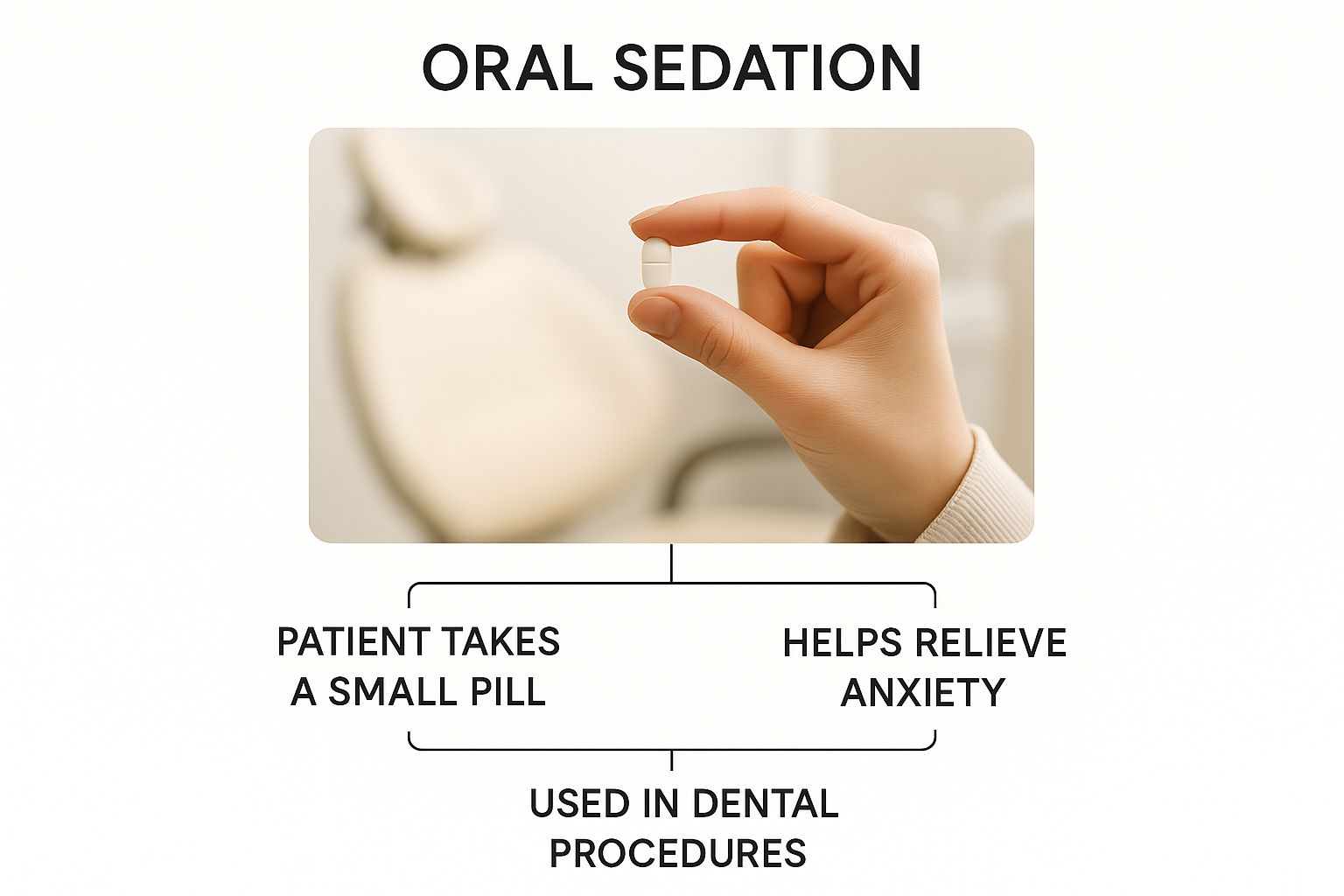
As you can see, laughing gas is perfect for milder anxiety, while options like oral sedatives or IV sedation are available to help with more significant dental fears.
Is Laughing Gas Right for You?
Nitrous oxide is an excellent choice for a whole range of patients and different situations. It’s a particularly great fit for:
- Mild to Moderate Anxiety: If you get a little nervous or jittery at the thought of the dentist but aren't completely terrified, laughing gas provides that perfect touch of relaxation to see you through.
- A Sensitive Gag Reflex: That calming effect it has can also help suppress an overactive gag reflex, making procedures like impressions or cleanings much more tolerable.
- Shorter Appointments: It's an ideal solution for routine treatments like cleanings, getting a filling, or even just taking dental impressions.
Because it’s so gentle and the effects are so short-lived, nitrous oxide is one of the safest and most effective ways to help patients overcome anxiety at the dentist. When it comes to the main categories—inhaled minimal sedation, oral sedation, and IV moderate sedation—laughing gas is unique because its effects wear off so fast, allowing you to get right back to your day without any grogginess or downtime.
Understanding Oral Conscious Sedation
For those who need a bit more than just nitrous oxide to feel at ease, oral conscious sedation offers a much deeper sense of calm. Think of it as hitting the 'mute' button on your dental fears, allowing you to get through your treatment in a state of genuine comfort. This method is a definite step up from laughing gas and is a fantastic option for patients with more significant anxiety.
The process itself is incredibly simple. We prescribe a common sedative medication, such as Halcion, which you'll take about an hour before your scheduled appointment. This gives the medication plenty of time to work. By the time you're settled into the dental chair, you'll already feel deeply relaxed and wonderfully drowsy.
How It Feels and Who It Helps
While you'll be in a state of profound relaxation, you will still be conscious. This is a key point—it means you can still hear and respond to Dr. Fink’s questions and instructions. You’ll just feel completely untroubled by the procedure itself. Many of our patients describe the experience as dream-like and surprisingly comfortable.
One of the most remarkable benefits, and one that patients truly appreciate, is the amnesic effect. It's very common to have little to no memory of the dental work afterward. For anyone working to overcome a serious dental phobia, this is a total game-changer. It helps break that cycle of fear that often builds from one negative experience to the next.
Oral sedation is an excellent solution for several situations:
- Moderate to Severe Anxiety: It provides a level of relaxation that laughing gas might not be able to touch for those with intense fears.
- Longer Procedures: If you need a lot of work done, like several fillings or cosmetic treatments, it helps the time pass quickly and comfortably.
- Difficulty Getting Numb: Some anxious patients find it harder to get fully numb. The deep relaxation from oral sedation often helps local anesthetics work more effectively.
- Complex Dental Work: This option is frequently used for a wide range of procedures you can find in our comprehensive list of dental services.
Because oral sedatives create a much deeper state of relaxation, their effects last longer than laughing gas. You will definitely feel groggy for several hours after your appointment is over. This brings us to a crucial safety point: you must arrange for a responsible adult to drive you to and from our Scottsdale office. The lingering effects of the sedative make it completely unsafe for you to operate a vehicle until it has fully worn off.
The Deep Calm of IV Sedation
For patients with truly significant dental anxiety or those facing extensive, complex procedures, Intravenous (IV) sedation offers a profound level of comfort. Many patients describe it as a "twilight sleep" because it gently guides you into a state of deep, dream-like relaxation. You aren't fully unconscious, but you'll be completely unaware of the dental work being done.
We deliver the sedative medication directly into your bloodstream using a small, comfortable IV line. This technique gives Dr. Fink precise, second-by-second control over your sedation level. We can fine-tune the dosage throughout your appointment to keep you perfectly comfortable from start to finish—a key advantage over oral sedation, which can't be adjusted once it's taken.
Who Is an Ideal Candidate for IV Sedation?
IV sedation is a powerful tool we reserve for specific situations where a lighter touch just isn't enough. It's a game-changing option that allows patients who might otherwise avoid the dentist altogether to receive critical care in a single, stress-free visit.
This approach is highly recommended for:
- Severe Dental Phobia: For individuals with overwhelming fear, IV sedation can completely bypass the anxiety that makes even thinking about treatment seem impossible.
- Complex or Lengthy Procedures: It’s the perfect solution for extensive work like multiple wisdom tooth extractions, full mouth reconstructions, or placing several dental implants at once.
- Strong Gag Reflex: The deep relaxation it produces can completely suppress an overactive gag reflex, allowing for a much smoother procedure.
- Difficulty Getting Numb: Some people find it hard to get fully numb from local anesthetic injections alone. IV sedation works wonderfully with local anesthetics, enhancing their effect to ensure you feel no pain.
At Trinity Dental Care, your safety is our absolute priority. During IV sedation, we use advanced equipment to continuously monitor your heart rate, blood pressure, and oxygen levels throughout the entire procedure.
What to Expect With IV Sedation
The entire process is managed with the utmost care and attention. After we've gone over your medical history in detail, we'll start the IV, which just feels like a tiny pinch. The medication takes effect almost immediately, and you’ll gently drift into a peaceful, relaxed state.
Because the effects are significant, you must have a responsible adult accompany you. This person will need to drive you home and stay with you until the medication has fully worn off. By planning ahead, you can ensure your recovery is just as smooth and comfortable as your treatment was.
When Is General Anesthesia the Right Choice?
General anesthesia is the deepest form of sedation used in dentistry. While other types of dental sedation leave you relaxed but technically awake, general anesthesia puts you into a state of complete unconsciousness. You will have no awareness, memory, or feeling during your procedure.
Because it's so different, we reserve it for very specific situations. This isn't something we’d consider for a routine cleaning or a simple filling. It is the go-to solution for patients undergoing exceptionally complex or invasive dental work, allowing treatment to occur in a controlled, safe environment.
Who Benefits Most from General Anesthesia?
This is a significant medical procedure, so the decision to use general anesthesia is never made lightly. It’s administered in a hospital setting or a specialized surgical center by a trained professional—either a medical anesthesiologist or a certified nurse anesthetist. Their entire job is to monitor your breathing, heart rate, and blood pressure from one moment to the next.
This level of deep sedation is often the best path forward for:
- Extensive Oral Surgery: Think of procedures like removing complex wisdom teeth, performing corrective jaw surgery, or placing several dental implants at once. These situations demand that the patient remains perfectly still.
- Patients with Special Healthcare Needs: For some individuals with certain physical, cognitive, or medical conditions, staying still and cooperative in a dental chair just isn't possible. General anesthesia is the safest and most compassionate way to provide them with necessary care.
- Profound Dental Phobias: A small number of patients struggle with a phobia so overwhelming that even IV sedation isn't enough to manage their fear.
General anesthesia is a vital tool that ensures every patient, regardless of their health challenges or anxiety level, has a pathway to necessary dental treatment. While it’s incredibly effective, it does involve more prep time and a longer recovery period than other sedation methods. Avoiding the need for extensive treatments by learning how to prevent gum disease at home is always an excellent first step.
Why More Patients Are Choosing Sedation Dentistry
Have you ever put off a dental visit because of anxiety? You're not alone. For a long time, many people felt they just had to "tough it out." But that mindset is changing. We're seeing a huge shift in what patients expect from their dental care, and comfort is now front and center.
The core idea driving this change is simple: fear should never stand in the way of your health. More people are now actively looking for dentists who offer sedation, allowing them to finally address dental issues they've avoided for years. This isn't just about feeling good; it's about getting necessary treatments done, which boosts the overall health of our Scottsdale community.
The Rise of Patient-Centered Care
This trend is part of a larger movement toward patient-centered care. Modern dentistry isn't just about fixing teeth anymore. At practices like Trinity Dental Care, we focus on your entire experience—your physical and emotional well-being.
The numbers back this up. The global dental anesthesia market, which covers all the types of dental sedation we provide, was valued at USD 1.88 billion in 2022. It's expected to climb to USD 2.81 billion by 2030, according to industry analysis (2). That’s a clear sign of how many people are choosing comfort.
This isn't just a fleeting trend. It’s driven by two key things: patients are more aware of their options, and the sedation methods themselves have become incredibly safe and effective. People know they don't have to be afraid anymore, and they're making that choice. At Trinity Dental Care, we're proud to be at the forefront of this shift, offering our community modern, compassionate dental solutions.
Conclusion: Take Control of Your Dental Health with Confidence
Navigating the different types of dental sedation doesn't have to be complicated. Whether you feel mild apprehension or significant fear, there is a safe and effective option to ensure your dental care is comfortable. From the gentle relaxation of laughing gas to the profound calm of oral and IV sedation, Dr. Fink and our compassionate team at Trinity Dental Care are here to help you find the perfect solution for your needs.
Don't let dental anxiety prevent you from achieving a healthy, beautiful smile. Your comfort and well-being are our highest priorities. We are committed to providing a positive, stress-free experience for every patient in the Scottsdale community.
Ready to experience comfortable, anxiety-free dentistry? The team at Trinity Dental Care is here to help you get the care you need in a calm and supportive environment. Contact our Scottsdale office today to discuss which of the types of dental sedation is right for you. Schedule your appointment online or give us a call!
Frequently Asked Questions (FAQs)
1. Is dental sedation safe?
Yes, when administered by a trained and experienced professional like Dr. Fink, dental sedation is very safe. We always perform a detailed review of your medical history to select the ideal method for your specific health needs. During your procedure, we continuously monitor your vital signs to ensure your complete safety.
2. Will I feel any pain with sedation?
Sedation is designed to manage anxiety, not pain itself. Its main job is to put you in a state of deep relaxation. To ensure you feel absolutely nothing at the treatment site, you will also receive a local anesthetic to completely numb the area. This powerful combination guarantees you are relaxed and pain-free.
3. How do I choose the right type of sedation?
The best choice depends on your anxiety level, the specific dental work you need, and your overall health. During your consultation at our Scottsdale office, Dr. Fink will talk through your unique situation, listen to your concerns, and recommend the safest, most effective option to ensure your comfort. You can find more answers to general questions in our extensive dental care FAQ section.
4. What are the common side effects of dental sedation?
Side effects are typically minor and fade quickly. For nitrous oxide, the effects vanish within minutes. With oral or IV sedation, you might feel drowsy or have a dry mouth for a few hours afterward, which is why you’ll need someone to drive you home safely.
5. Does insurance cover sedation dentistry?
Coverage depends on your specific insurance plan and the reason for the sedation. Many dental insurance plans cover a portion of the cost, especially when it’s considered medically necessary. Our Scottsdale administrative team is always happy to help you review your benefits and provide a clear cost estimate before any treatment begins.
Sources
- Gadbury-Amyot, C. C., et al. (2015). "Evidence-based practice recommendations for diagnosing and managing dental fear and anxiety." Journal of Dental Anesthesia and Pain Medicine, 15(4), 187–198.
- Grand View Research. (2023). Dental Anesthesia Market Size, Share & Trends Analysis Report. Retrieved from https://www.grandviewresearch.com/industry-analysis/dental-anesthesia-market-report.