
When a tooth is damaged, cracked, or needs significant reinforcement after a root canal, a dental crown is often the ideal solution. Think of it as a custom-fitted cap that restores the tooth's shape, size, strength, and appearance.
For patients in Scottsdale seeking restorative care, understanding the different types of dental crowns available is the first step. This knowledge helps you make an informed decision that aligns with your specific needs, budget, and aesthetic goals.
This guide provides a clear, detailed overview of the most common crown materials used in modern dentistry. We will explore everything from the time-tested strength of gold to the natural, tooth-like appearance of all-ceramic and zirconia options.
Making the right choice impacts not only the longevity of your restoration but also your overall confidence and oral function. By the end of this article, you will have the practical knowledge needed to discuss your options confidently with Dr. Fink and choose a crown that rebuilds your smile's integrity and beauty.
1. Porcelain-Fused-to-Metal (PFM) Crowns
Porcelain-Fused-to-Metal, or PFM, crowns represent a time-tested and reliable option among the different types of dental crowns. For decades, they have served as a gold standard, successfully balancing strength with aesthetics.
This hybrid design features a sturdy metal alloy substructure that fits securely over the prepared tooth, providing exceptional durability. This metal base is then covered with a layer of tooth-colored porcelain, which is baked on top to create a natural-looking finish.
This combination allows PFM crowns to withstand significant chewing forces, making them an excellent choice for molars and premolars. The porcelain overlay can be meticulously matched to the shade of your surrounding teeth, ensuring it blends seamlessly into your smile.
When to Choose a PFM Crown
PFM crowns are often recommended in specific clinical situations where their unique blend of properties is most beneficial. They are a popular choice for:
- Molars and Back Teeth: Their underlying metal strength makes them ideal for teeth that handle the majority of chewing and grinding forces.
- Full Mouth Reconstructions: When multiple teeth require restoration, the predictability and durability of PFM crowns make them a dependable option.
- Long-Span Bridges: The rigidity of the metal framework provides the necessary support to replace multiple missing teeth in a row.
This infographic provides a quick summary of the essential details about PFM crowns.
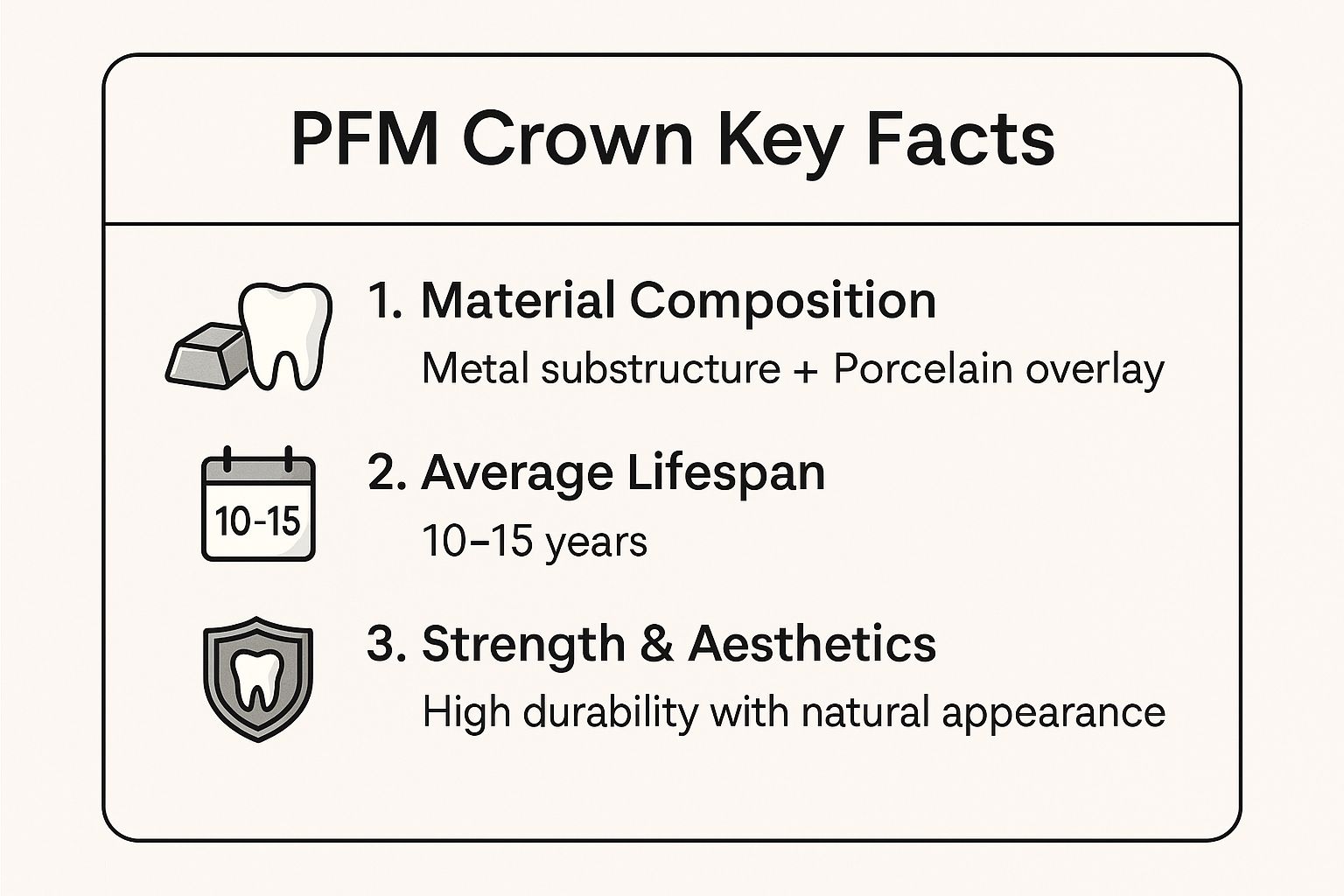
As the summary highlights, PFM crowns offer a powerful combination of a durable metal core and a natural-looking porcelain exterior. Their average lifespan makes them a long-term investment in your oral health.
Actionable Tips for PFM Crown Care
While robust, PFM crowns require mindful care to maximize their lifespan and appearance. If you are considering or already have a PFM crown, keep these tips in mind:
- Discuss Allergies: Be sure to inform your dentist about any known metal allergies, as the substructure is typically made from a noble or base-metal alloy.
- Prevent Gum Line Darkening: A common concern is a dark line appearing at the gum line where the metal edge can become visible. Meticulous brushing and flossing can help maintain gum health and minimize this effect.
- Avoid Excessive Force: The porcelain layer can be more prone to chipping than all-metal or zirconia crowns. Avoid chewing on ice, hard candies, or other extremely hard objects.
To better understand how different materials compare, you can learn more about dental crowns on trinitydentalcares.com. Their durability and cosmetic appeal make PFM crowns a versatile and effective solution for many patients in Scottsdale, AZ.
2. All-Ceramic/All-Porcelain Crowns
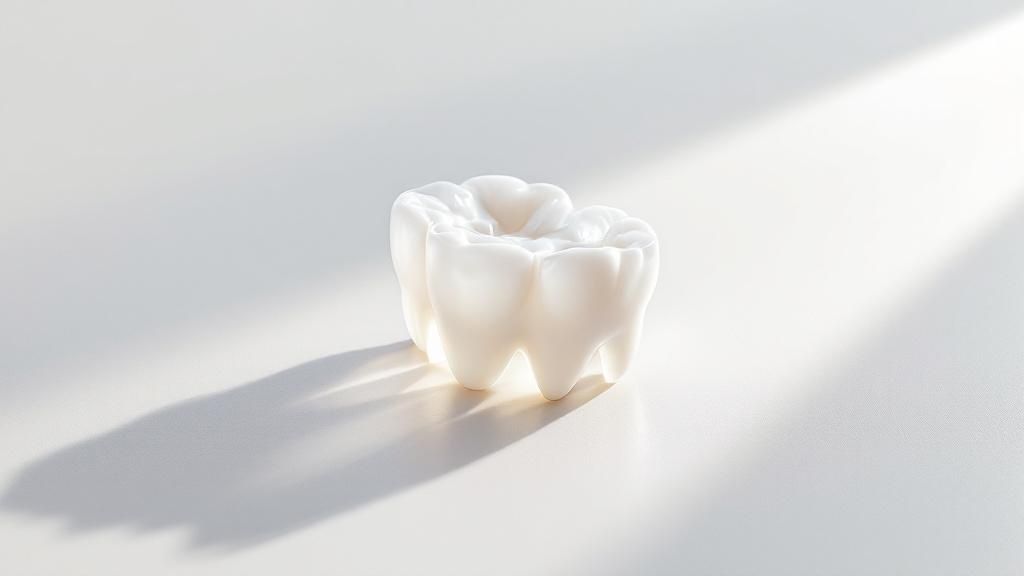
All-ceramic or all-porcelain crowns are celebrated for their exceptional aesthetic qualities, making them a leading choice in modern cosmetic dentistry. Unlike their PFM counterparts, these crowns are crafted entirely from a single block of advanced ceramic material, eliminating the metal substructure.
This design allows them to mimic the translucency and color variations of natural tooth enamel with remarkable accuracy. Modern dental ceramics, such as lithium disilicate, offer a powerful blend of beauty and strength.
This material choice ensures there is no risk of a dark metal line appearing at the gum line, a common issue with PFM crowns. The result is a restoration that is virtually indistinguishable from a natural tooth.
When to Choose an All-Ceramic Crown
Due to their superior cosmetic results, all-ceramic crowns are highly recommended for specific situations where appearance is a top priority. They are an ideal solution for:
- Anterior (Front) Teeth: Their lifelike appearance makes them the gold standard for restoring visible teeth in your smile zone.
- Smile Makeovers: All-ceramic crowns are a cornerstone of cosmetic dentistry, used to transform smiles by correcting color, shape, and alignment issues.
- Patients with Metal Sensitivities: The biocompatible, metal-free composition makes them a safe and comfortable option for individuals with metal allergies.
Actionable Tips for All-Ceramic Crown Care
To ensure your all-ceramic crown remains beautiful and functional for years to come, proper care is essential. Consider these practical tips:
- Discuss Material Options: Talk to your dentist about which ceramic material is best for your specific needs, as each offers different levels of strength and translucency.
- Protect Against Grinding: If you have a history of bruxism (teeth grinding), a nightguard may be recommended to protect the porcelain from excessive forces while you sleep.
- Maintain Excellent Oral Hygiene: While the crown itself cannot decay, the tooth underneath can. Meticulous brushing and flossing around the crown margin will prevent plaque buildup and keep your gums healthy.
These crowns are a testament to how far dental technology has come, offering patients in Scottsdale a way to restore damaged teeth without compromising aesthetics. Discover the purpose of dental crowns at trinitydentalcares.com to learn more about the conditions that necessitate such a restoration.
3. Gold Crowns
Gold crowns, crafted from a blend of gold, copper, and other precious metals, stand as a testament to durability in restorative dentistry. They are one of the most time-tested and biocompatible materials used for dental crowns, prized for their exceptional strength and longevity.
The gold alloy used is remarkably similar to natural tooth enamel in terms of wear, meaning it is gentle on the opposing teeth. Unlike harder materials that can wear down adjacent natural teeth over time, gold crowns wear at a rate that preserves the natural bite.
This unique property, combined with their resistance to fracture and corrosion, makes them a superior choice from a purely functional perspective. Their metallic appearance, however, makes them less popular for front teeth.
When to Choose a Gold Crown
Gold crowns are a premier option for patients who prioritize long-term function and durability over aesthetics. They are frequently recommended for:
- Back Molars: Their incredible strength easily withstands the immense grinding and chewing forces exerted on posterior teeth.
- Patients with Bruxism: Individuals who clench or grind their teeth benefit from gold's durability, as it is highly resistant to chipping and cracking.
- Minimal Tooth Preparation: Gold's strength allows for a thinner crown, meaning less of the natural tooth structure needs to be removed during preparation.
Actionable Tips for Gold Crown Care
Choosing a gold crown is a long-term investment in your oral health. To ensure it performs optimally for decades, consider the following advice:
- Prioritize Placement: Gold crowns are best suited for back molars where they are not visible when you smile, preserving the natural look of your smile.
- Discuss Alloy Composition: Ask your dentist about the specific gold alloy being used. High-noble alloys contain a higher percentage of precious metals, offering superior biocompatibility and longevity.
- Factor in Long-Term Value: While the initial cost may be higher than other materials, their exceptional lifespan often makes them more cost-effective over time.
- Work with an Experienced Professional: The placement of gold crowns requires specific techniques. Ensuring your prosthodontist can help with your dental needs is crucial for a precise fit.
Their long-standing reputation for reliability makes gold crowns an excellent, if understated, choice for restoring function in Scottsdale smiles.
4. Zirconia Crowns
Zirconia crowns represent a significant advancement in dental materials, combining elite strength with remarkable aesthetics. Made from zirconium dioxide, a robust type of ceramic, these crowns are celebrated for their biocompatibility and durability.
This modern material allows for crowns that are not only incredibly tough but also look exceptionally natural. In fact, a 2017 study published in the Journal of Dentistry found that monolithic zirconia crowns showed a 100% survival rate after five years of clinical service (Source: PubMed Central/NIH).
The versatility of zirconia is a key benefit. It can be fabricated as a solid, monolithic block for maximum strength, or as a zirconia base with a layer of aesthetic porcelain on top.
When to Choose a Zirconia Crown
Zirconia's unique properties make it an ideal choice for a wide array of dental restorations. Dentists often recommend it for:
- Front and Back Teeth: Its combination of strength and beauty makes it suitable for restoring highly visible anterior teeth and hardworking posterior molars.
- Implant-Supported Crowns: The material's immense strength provides the necessary support and durability for crowns that attach to dental implants.
- Patients with Metal Allergies: As a metal-free ceramic, zirconia is an excellent biocompatible option for individuals with sensitivities to metal alloys.
- Aesthetic Demands: Newer, more translucent forms of zirconia mimic the natural appearance of tooth enamel exceptionally well, meeting high cosmetic standards.
Actionable Tips for Zirconia Crown Care
If you are getting a zirconia crown, discussing the details with your dentist is crucial for an optimal outcome. Consider the following tips:
- Discuss Material Options: Talk to your dentist about whether solid (monolithic) or layered zirconia is better for your specific tooth. Solid zirconia offers more strength, while layered zirconia can provide superior aesthetics for front teeth.
- Prioritize a Precise Fit: The extreme hardness of zirconia means a proper bite adjustment is essential. An improperly fitted crown can cause premature wear on the opposing natural teeth.
- Choose an Experienced Dentist: Working with zirconia requires specific expertise. Ensure your dentist is experienced with the material's unique properties to achieve the best results.
- Maintain Excellent Oral Hygiene: While zirconia is stain-resistant, maintaining healthy gums around the crown is vital for its long-term success.
Zirconia crowns are a premier choice for patients seeking a strong, long-lasting, and beautiful restoration. To explore if they are the right solution for your smile, learn more about zirconia crowns and other services in Scottsdale.
5. Resin Crowns
Resin crowns are crafted from a composite resin material, which is a blend of plastic and fine glass-like particles. This is the same versatile, tooth-colored material that dentists commonly use for direct fillings and bonding.
As one of the more affordable types of dental crowns, they offer a cosmetically acceptable solution for patients on a budget or those in need of a temporary restoration. Their primary appeal lies in their cost-effectiveness.
Unlike materials that require lab fabrication, a resin crown can sometimes be made directly in the dental office. While they don't possess the same strength as porcelain or zirconia, they play a crucial role as an interim solution.
When to Choose a Resin Crown
Resin crowns are best suited for specific, often temporary, situations rather than as a permanent fix for high-stress areas like molars. They are an excellent choice for:
- Temporary Restorations: They are frequently used to protect a prepared tooth while a permanent crown is being fabricated in a dental lab. This prevents sensitivity and maintains the tooth's position.
- Budget-Conscious Patients: For front teeth where biting forces are lower, a resin crown can serve as a cost-effective permanent option when other materials are not financially viable.
- Pediatric Dentistry: They are sometimes used to restore primary (baby) teeth that have been damaged by decay, as these teeth will eventually fall out.
Actionable Tips for Resin Crown Care
Because resin is a softer, more porous material than porcelain or metal, special care is needed. If you have or are considering a resin crown, follow these tips:
- Avoid Staining Foods and Drinks: Resin is more susceptible to staining than other materials. Limit your consumption of coffee, tea, red wine, and tobacco to prevent discoloration.
- Be Mindful of Biting Forces: Resin crowns are more prone to fractures and wear. Avoid chewing on hard items like ice, hard candy, or nut shells to protect the crown from damage.
- Maintain Regular Dental Visits: Your dentist may need to polish the resin crown periodically to restore its luster and remove surface stains. Discussing a long-term replacement plan is also essential.
To explore all your restorative options, you can learn more about how a restorative dentist in Scottsdale can help. Their affordability and aesthetic qualities make them a practical choice for many patients.
6. Lithium Disilicate Crowns (e.max)
Lithium disilicate crowns are a prime example of modern dental material science, offering an outstanding combination of aesthetics and reliable strength. Marketed most famously under the brand name e.max, this type of all-ceramic crown is crafted from a single block of high-strength glass-ceramic.
Its composition allows for remarkable light transmission, closely mimicking the translucency of a natural tooth. These crowns are prized for their lifelike appearance, making them a gold standard for restoring front teeth where cosmetic results are paramount.
This advanced fabrication process ensures an exceptional fit and a beautiful, metal-free restoration that blends flawlessly with your smile.
When to Choose a Lithium Disilicate Crown
Due to their superior aesthetics and good durability, lithium disilicate crowns are highly recommended for specific situations. They are an excellent choice for:
- Anterior (Front) Teeth: Their natural translucency and color-matching capabilities make them the preferred material for incisors and canines.
- Smile Makeovers: When designing a new smile with veneers or multiple crowns, e.max provides consistent and stunning cosmetic results.
- Single Tooth Implant Crowns: They are ideal for restoring a single implant, especially in the visible "smile zone."
- Veneers, Inlays, and Onlays: The versatility of the material also makes it suitable for less extensive restorations that require both strength and beauty.
Actionable Tips for Lithium Disilicate Crown Care
To ensure the longevity and beauty of your e.max crown, proper care is essential. Discuss these points with your dentist:
- Discuss Bite Forces: Be open about any history of teeth grinding or clenching (bruxism). While strong, these crowns may not be the first choice for patients with extremely heavy biting forces on back molars.
- Consider a Night Guard: If you are prone to grinding your teeth at night, a custom-fitted night guard is a crucial investment to protect your crown and natural teeth.
- Ensure Laboratory Expertise: The final quality of an e.max crown heavily depends on the skill of the dental lab technician. Ask your dentist about the laboratory they partner with.
- Ask About Opacity Options: Lithium disilicate comes in various levels of translucency and opacity. Your dentist can select the perfect option to either let the natural tooth color show through or mask a darker, discolored tooth.
This advanced material represents a significant step forward among the different types of dental crowns, offering patients in Scottsdale a beautiful, strong, and biocompatible solution.
Types of Dental Crowns Comparison Matrix
| Crown Type | 🔄 Implementation Complexity | ⚡ Resource Requirements | 📊 Expected Outcomes | 💡 Ideal Use Cases | ⭐ Key Advantages |
|---|---|---|---|---|---|
| Porcelain-Fused-to-Metal (PFM) Crowns | Moderate: Requires metal framework and porcelain layering | Moderate: Metal alloys plus porcelain materials | Durable with good aesthetics; lifespan 10-15 years | Patients needing durability with reasonable aesthetics, molars and full mouth | Strong, affordable, proven longevity |
| All-Ceramic/All-Porcelain Crowns | High: Precise fitting and technique-sensitive | High: Various ceramic materials, equipment | Superior natural aesthetics; biocompatible; moderate strength | Front teeth restorations, patients with metal allergies | Excellent aesthetics, no metal allergies |
| Gold Crowns | Low-Moderate: Simple shaping, less tooth removal | High: Gold alloys expensive | Exceptional durability (20+ years); excellent fit and biocompatibility | Back teeth needing maximum durability, patients prioritizing longevity | Long-lasting, biocompatible, minimal tooth prep |
| Zirconia Crowns | Moderate-High: CAD/CAM technology, layering options | High: Advanced ceramic materials and equipment | High strength and good aesthetics; resistant to chipping | Patients wanting strength and aesthetics, implant crowns | Very strong, natural appearance, minimal prep |
| Resin Crowns | Low: Simple fabrication, can be done chairside | Low: Composite resin materials | Short lifespan (2-5 years); moderate aesthetics; prone to staining | Temporary crowns, budget-conscious patients | Most affordable, quick fabrication |
| Lithium Disilicate Crowns (e.max) | High: Requires skilled CAD/CAM fabrication and tech | High: Premium glass-ceramic material and CAD/CAM | Outstanding aesthetics, good strength, clinically proven 15+ years | Premium aesthetic cases, anterior and posterior teeth | Excellent aesthetics and fit, durable |
Frequently Asked Questions (FAQs) About Dental Crowns
1. How long do dental crowns last?
The lifespan of a dental crown depends on the material used and your oral hygiene habits. Gold crowns are the most durable, often lasting 20 years or more. Zirconia and PFM crowns typically last 10-15 years, while all-ceramic and resin crowns may have a shorter lifespan, especially on molars.
2. Is getting a dental crown painful?
No, the procedure itself is not painful. Your dentist at Trinity Dental Care will use a local anesthetic to completely numb the tooth and surrounding area before preparing it for the crown. You might feel some mild sensitivity for a few days afterward, but this is temporary and manageable.
3. Can a dental crown get a cavity?
The crown material itself (like porcelain or zirconia) cannot decay. However, the natural tooth structure underneath the crown is still vulnerable. Plaque can build up at the gum line where the crown meets the tooth, potentially causing a cavity. This is why excellent brushing and flossing are crucial for long-term success.
4. How much do the different types of dental crowns cost in Scottsdale?
Cost varies significantly based on the material. Generally, resin crowns are the most affordable, followed by PFM crowns. All-ceramic, zirconia, and gold crowns are premium options and typically have a higher initial cost. Dental insurance often covers a portion of the cost, and our Scottsdale office can help you understand your benefits.
5. How do I choose the best type of dental crown for me?
The best choice depends on the tooth's location, your aesthetic goals, your budget, and any habits like teeth grinding. For front teeth, all-ceramic or zirconia crowns are often best for a natural look. For back molars, gold or solid zirconia provide superior strength. Dr. Fink will provide a personalized recommendation after a thorough examination.
Your Next Step to a Restored Smile in Scottsdale, AZ
Navigating the different types of dental crowns empowers you to take an active role in your oral health. The right crown is not a one-size-fits-all solution; it's a personalized decision that balances aesthetics, durability, location, and your lifestyle needs.
Modern dentistry provides a remarkable spectrum of choices. You no longer have to compromise between a crown that looks natural and one that can withstand daily chewing forces. Your choice will ultimately depend on a collaborative discussion with your dentist to ensure the final restoration integrates seamlessly into your smile.
The most valuable step is a thorough consultation at our Scottsdale office. This is where your unique dental needs and personal preferences are evaluated. Dr. Fink can provide tailored recommendations, ensuring the selected crown material aligns perfectly with your clinical needs and aesthetic desires.
Ready to find the perfect dental crown solution for your smile? At Trinity Dental Care, Dr. Christine Ann Fink and our dedicated team combine advanced technology with a patient-centered approach to deliver exceptional restorative results. We will guide you through all the types of dental crowns available and help you select the ideal option for your health, budget, and aesthetic goals.
Schedule your consultation with Trinity Dental Care today and take the first step toward restoring the health and beauty of your smile.