
The simple truth is this: a dental implant needs a solid foundation to last a lifetime, and your jawbone is that foundation. For many people, a bone graft isn't an unexpected complication—it’s the essential first step to rebuilding that foundation, ensuring the implant is secure for years.
However, many patients don’t realize that advanced options now exist that can often bypass this step entirely. This guide will uncover the truth about when bone grafts are needed and when modern alternatives, like All-on-4®, provide a faster path to a new smile.
Your Jawbone: The Foundation For A Lasting Smile
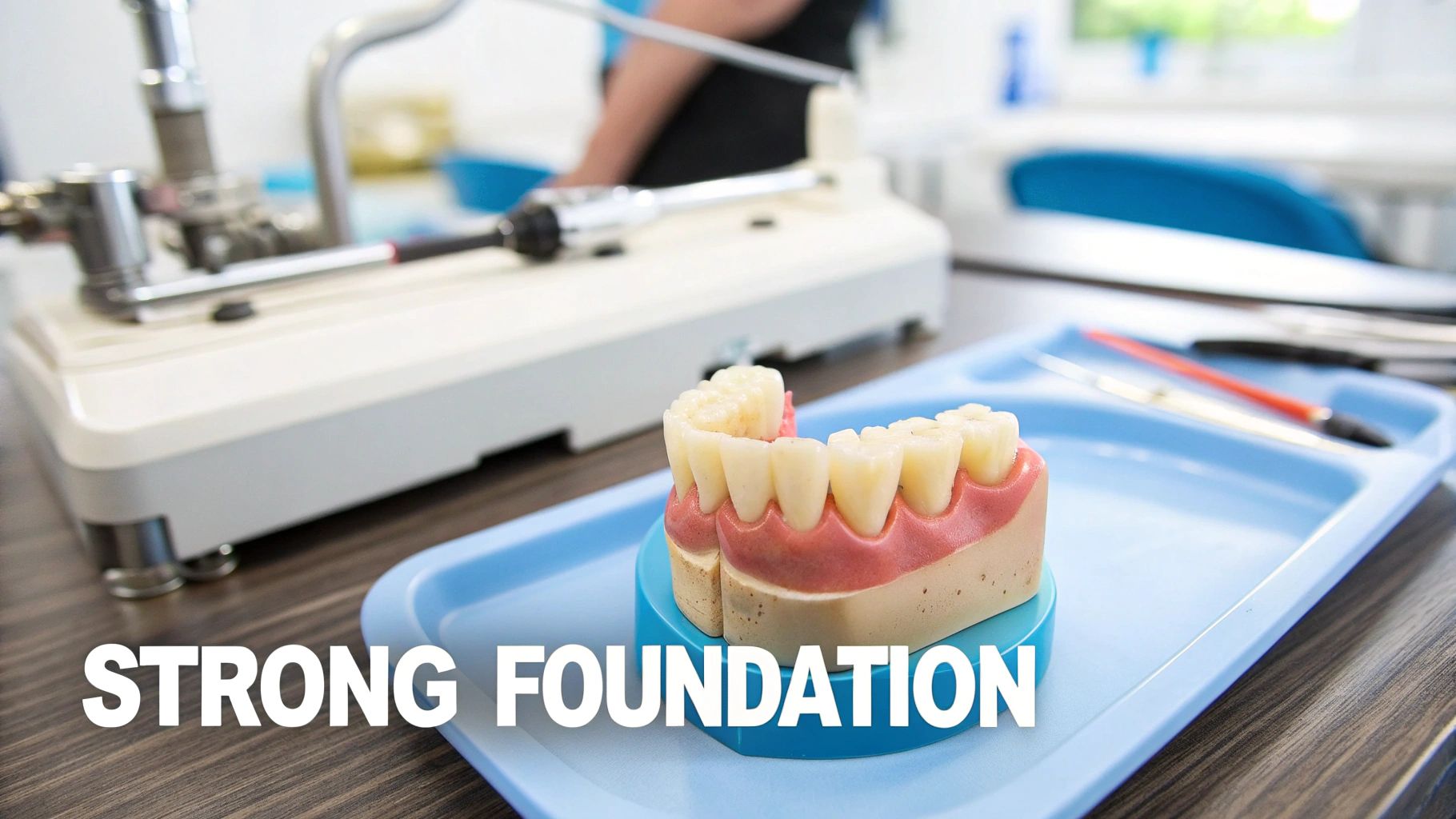
Before discussing implants, we need to talk about the crucial role your jawbone plays. Think of it like building a house here in Scottsdale; you'd never start construction on weak, unstable land. The exact same principle applies to your smile.
A dental implant is a small, biocompatible post designed to mimic a natural tooth root. It is surgically placed into the jawbone, where a process called osseointegration occurs—the bone fuses with the implant, creating a super-strong anchor. This fusion is what allows an implant to look, feel, and function just like a natural tooth.
Why Bone Density Is Non-Negotiable
For osseointegration to work, there has to be enough healthy bone to surround and lock in the implant. Without sufficient bone height and width, the implant can't get the stability it needs to handle the daily forces of chewing and speaking.
Unfortunately, when a tooth is lost, the jawbone in that area stops getting stimulation from the tooth root. This kicks off a natural process of bone resorption, where the bone begins to shrink. The longer a tooth is missing, the more significant this bone loss becomes.
This is exactly where bone grafting comes in. It’s a common and highly successful procedure used to rebuild and strengthen the jawbone, creating the perfect environment for a dental implant. For many of our Scottsdale patients, understanding this relationship is the first step toward a confident, permanent smile.
"A bone graft is often the key that unlocks the possibility of dental implants for patients who were previously told they weren't candidates. It's about creating the best possible conditions for long-term success."
According to the American Dental Association (ADA), millions of Americans are missing at least one tooth, highlighting the widespread need for effective replacement options. Dental implants are a leading solution for restoring smiles and oral health.
At Trinity Dental Care, Dr. Christine Ann Fink prioritizes this foundational approach. She ensures every patient starts their implant journey with the strongest possible base, paving the way for predictable, lasting results.
Why Bone Grafts Become Necessary For Dental Implants
To understand why a bone graft might be part of your dental implant journey, think of your jawbone as something that needs a regular "workout." When a natural tooth is in place, its root constantly stimulates the surrounding bone through chewing and biting, signaling your body to keep the bone healthy.
As soon as a tooth is lost, that stimulation disappears. Without a tooth root to keep it engaged, the jawbone begins a natural process called resorption, where it slowly shrinks away. This isn’t a complication; it’s the body’s normal response to disuse.
Common Reasons For Jawbone Loss
Several common scenarios can accelerate this bone loss, making a bone graft a necessary first step. Needing a graft isn’t a setback; it’s about restoring the strong foundation that was naturally lost over time. At Trinity Dental Care, Dr. Christine Fink’s detailed evaluation will determine if a graft is needed.
Key factors include:
- Long-Term Tooth Absence: The longer a tooth has been missing, the more time the jawbone has had to shrink. Studies show a significant amount of bone width can disappear within the first year after an extraction, which is why replacing missing teeth sooner is so important.
- Advanced Gum Disease: Periodontitis, a severe form of gum disease, is a bacterial infection that attacks everything supporting your teeth, including the jawbone. If left untreated, it can destroy large amounts of bone.
- Facial Trauma or Injury: An accident that damages a tooth or your jaw can cause immediate bone loss. Sometimes the bone is damaged in the initial injury, and other times the loss happens as a direct result of a tooth being knocked out.
A bone graft isn't a sign that something went wrong. It is a proactive, strategic step to rebuild your jaw, creating the perfect conditions for a dental implant that can last a lifetime.
A bone graft isn't an obstacle to getting dental implants; it's the bridge that makes them possible for many patients. It rebuilds the strong foundation that nature intended.
Diving Into the Different Types Of Bone Grafts
The idea of a bone graft can feel unsettling, and that's completely normal. The truth is, modern dentistry offers several safe, proven, and biocompatible options to rebuild your jawbone. These materials act as a scaffold, encouraging your own body to generate new, healthy bone where it's needed most.
Here at Trinity Dental Care in Scottsdale, Dr. Christine Ann Fink customizes your treatment plan, selecting the specific material that promises the most predictable and successful results for you.
This diagram shows the common culprits behind jawbone loss.
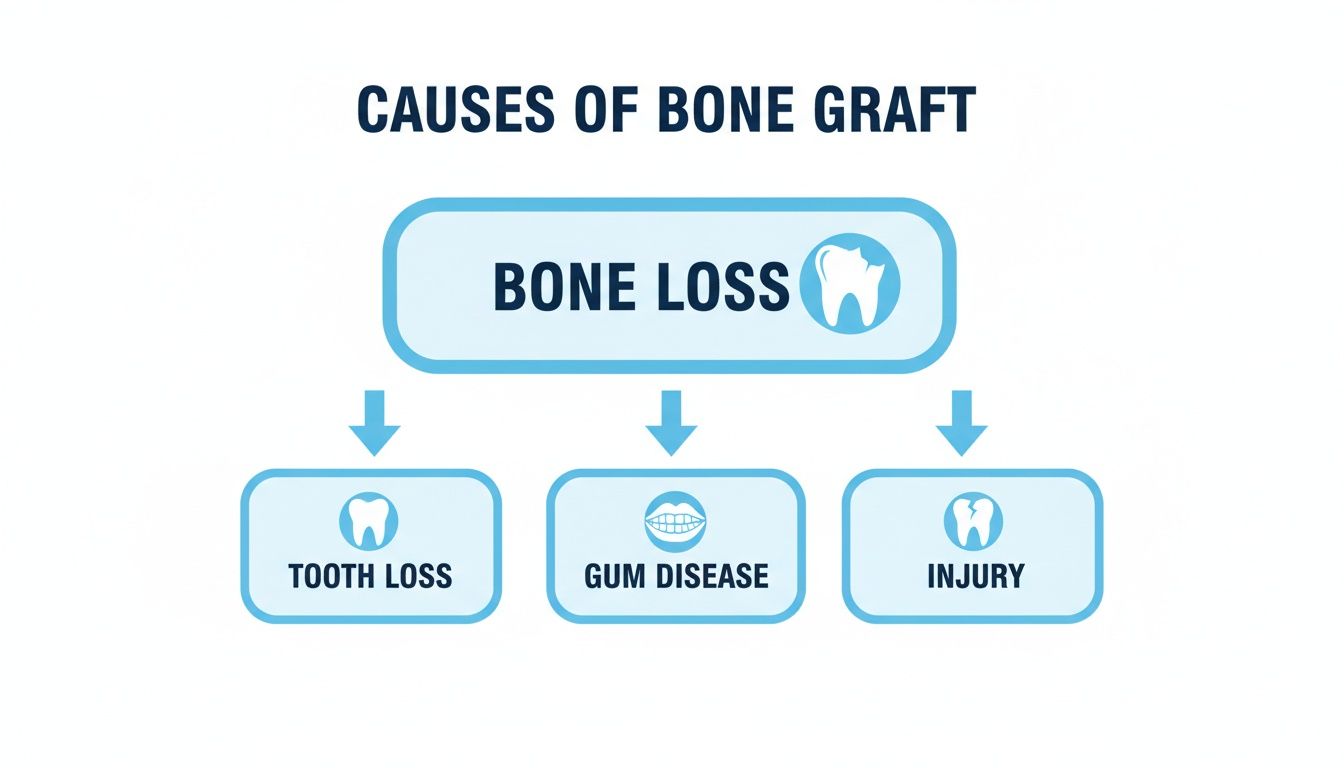
Losing a tooth, ongoing gum disease, or a physical injury can all lead to a loss of bone volume, often making a graft necessary.
Autografts: Your Body's Own Building Blocks
An autograft is often called the "gold standard" because it uses your own bone. The material is typically taken from a secondary spot, like your chin or the back of your jaw. Because it contains your own living cells, it jumpstarts healing and promotes new bone growth.
Allografts: Safe, Donated Human Bone
An allograft uses bone sourced from a human donor that undergoes rigorous screening and sterilization at a certified tissue bank, ensuring it's completely safe. An allograft eliminates the need for a second surgical site, making the procedure more straightforward for many patients.
Allograft material has been used safely and successfully in millions of medical and dental procedures. It provides a reliable way to rebuild bone without requiring a second surgery for the patient.
Xenografts: A Biocompatible Animal Source
A xenograft uses bone from an animal source, almost always bovine (cow). This material goes through a strict purification process, leaving only the mineral structure, which is remarkably similar to human bone. It acts as a fantastic scaffold for your body to build upon.
Alloplasts: Advanced Synthetic Options
An alloplast is a synthetic, man-made grafting material, usually made from calcium phosphate. These grafts are sterile, have zero risk of disease transmission, and provide a predictable scaffold for new bone growth. Dr. Fink will evaluate which material is best suited to your biological needs and personal preferences.
The All-on-4® Solution: A Modern Graftless Alternative
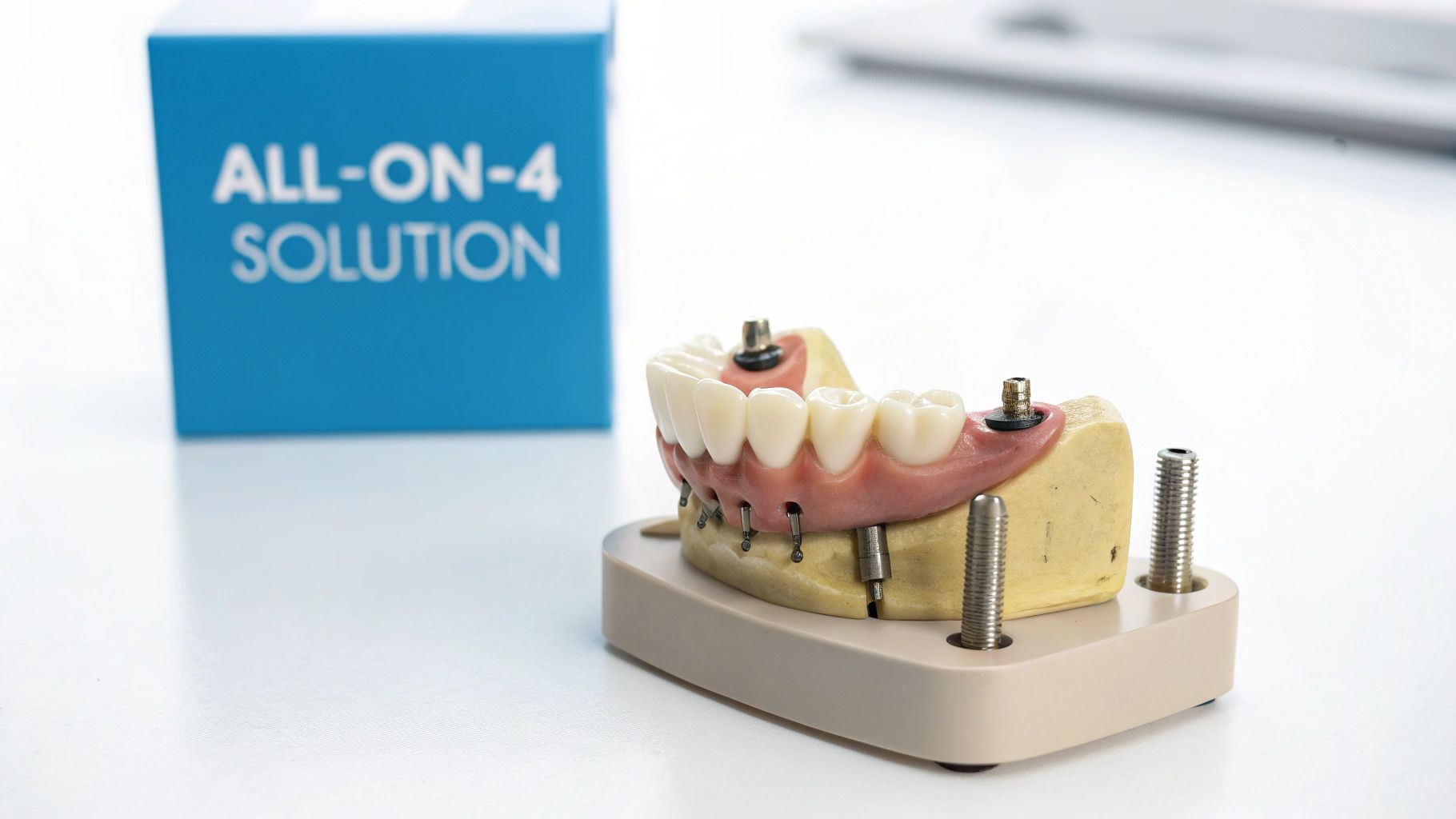
For years, the path to dental implants for anyone with bone loss involved a bone graft. While effective, this means a longer treatment timeline and multiple surgeries. The game-changing truth for many patients is that a modern solution, like All-on-4®, often makes extensive bone grafting unnecessary.
Many Scottsdale residents who were told they couldn’t get dental implants due to low bone volume may still have options. Trinity Dental Care specializes in All-on-4® dental implants, a solution that uses just four implants for a full-arch restoration—often placed without bone grafts. This approach reduces recovery time and increases accessibility for many patients.
How All-on-4® Works Without Grafts
The brilliance of the All-on-4® technique lies in the precise placement of the dental implants. Dr. Christine Ann Fink uses advanced 3D imaging to map the jawbone, identifying areas where the bone is naturally densest—usually toward the front of the jaw.
Two implants are placed vertically in the front, while the two in the back are tilted at a 45-degree angle. This clever angulation avoids anatomical structures like the sinus cavities and maximizes bone-to-implant contact by using longer posts. This creates an incredibly stable foundation for new teeth.
This strategic placement provides all the support needed for a full bridge of prosthetic teeth without having to surgically add more bone volume first. It’s a solution that works with your existing anatomy.
"Many patients don’t realize All-on-4 exists until we explain it. This approach gives patients who were once told they didn’t qualify for implants a second chance—with faster results, fewer surgeries, and a more confident smile."
The Transformative Benefits For Patients
The advantages of this approach extend far beyond simply avoiding a bone graft. For patients at Trinity Dental Care, the All-on-4® solution delivers a number of life-changing benefits.
- Faster Treatment Timeline: By skipping the bone graft, you also skip its 4-6 month healing period. In many cases, patients receive their implants and a beautiful, functional set of temporary teeth on the same day.
- Fewer Surgical Procedures: A traditional approach could involve three separate procedures. All-on-4® often combines these steps into a single appointment, reducing overall discomfort and recovery time.
- Immediate Functionality: You leave our Scottsdale office with a fixed, non-removable bridge that allows you to eat, speak, and smile with confidence from day one.
- Potentially Lower Overall Costs: Combining procedures and eliminating the need for bone grafting can often make All-on-4® treatment more cost-effective for a full-arch restoration.
This innovative procedure opens the door for many who previously thought a permanent smile was out of reach. You can find a complete guide by exploring our page explaining All-on-4® in detail.
Navigating Your Recovery With Confidence

Feeling prepared for the recovery process is half the battle. Here at Trinity Dental Care, we ensure every Scottsdale patient heads home with crystal-clear instructions and our full support. Knowing what to expect makes all the difference.
Your recovery journey will depend on your procedure—a standalone bone graft, a traditional implant, or the streamlined All-on-4® treatment. The core principles of gentle care, proper hygiene, and rest always remain the same.
What To Expect In The First 48 Hours
The first two days are most important for healing. It’s normal to experience some swelling, bruising, and tenderness.
To keep things comfortable, we usually recommend:
- Rest: Take it easy and avoid strenuous activity.
- Cold Compresses: An ice pack on your cheek for 15–20 minutes at a time helps reduce swelling.
- Medication: Over-the-counter pain relievers are usually sufficient. For more tips, check out your guide to post-treatment pain relief.
Sticking to a soft-food diet is a must. Think yogurt, smoothies, and soups—anything that requires minimal chewing.
Your First Week And Beyond
After the initial 48-hour period, you should notice improvement each day. The swelling and discomfort will fade, and you can slowly reintroduce more solid foods.
Gentle oral hygiene is vital to prevent infection. We’ll show you exactly how to clean around the surgical site, often with a special antimicrobial rinse. Following these instructions is the best thing you can do for a smooth recovery.
"A smooth recovery is a partnership. We provide the expert care and clear guidance, and our patients provide the gentle self-care at home. Together, we achieve outstanding results."
Making Sure Your New Smile Lasts a Lifetime
Dental implants are designed to go the distance. With the right care, that new smile can serve you beautifully for decades. The incredible durability of dental implants comes down to a consistent maintenance routine that looks almost exactly like caring for natural teeth.
Protecting your investment is about a straightforward daily commitment. This means brushing twice a day and flossing at least once to keep the implant crown and surrounding gums clean and free of plaque. For detailed tips, check out our guide on how to clean dental implants.
The Role Of Professional Check-Ups
Regular visits to Trinity Dental Care for professional cleanings and check-ups are non-negotiable. These appointments allow Dr. Christine Ann Fink to monitor the health of your implant, gums, and jawbone with an expert eye.
Our hygiene team uses specialized tools to thoroughly clean areas you can't reach at home. This is crucial for preventing peri-implantitis, an inflammatory condition similar to gum disease that can damage the bone holding your implant in place.
"Think of your dental implant like a high-performance car. Your daily brushing and flossing are like keeping it washed, but regular check-ups with your dentist are the essential tune-ups that keep it running perfectly for years."
Dental implants have an incredible success rate of over 95%, with many lasting well beyond 25 years with proper care. This remarkable reliability is why millions trust implants for a permanent smile. You can read more about the impressive statistics behind implant success to see why they're considered the gold standard.
Your Long-Term Partner In Oral Health
At Trinity Dental Care, our relationship with you doesn’t end the day your implant is placed. We are your long-term partners in oral health, dedicated to helping you protect your beautiful new smile for a lifetime. Dr. Fink and our team are always here to provide ongoing support and expert care.
For our Scottsdale patients, this means you always have a trusted team to turn to. By working together, we can ensure your dental implant remains a healthy, functional, and confident part of your smile for many years to come.
Your Top Questions About Implants And Bone Grafts, Answered
To help you feel completely comfortable, we’ve put together answers to the questions we hear most from our Scottsdale patients. Dr. Christine Ann Fink and our team at Trinity Dental Care believe an informed patient is an empowered one.
Does The Bone Graft Procedure Hurt?
Patient comfort is our top priority. The procedure is done under local anesthesia, so the area will be completely numb and you won't feel any pain. Afterward, any discomfort is typically mild and easily managed with over-the-counter pain medication.
How Long After A Bone Graft Can I Get My Implant?
The healing time varies but is typically four to six months. This crucial period allows the new bone material to integrate with your jaw, creating the dense, stable base that is essential for the long-term success of your dental implant.
Am I A Good Candidate For All-On-4® Implants?
The All-on-4® treatment concept is an incredible solution for many patients, especially those with significant jawbone loss. It's a fantastic way to restore a full arch of teeth, often without needing extensive bone grafting. The only way to know for sure is to schedule a consultation with Dr. Christine Ann Fink here in our Scottsdale office for a thorough evaluation.
What Is The Cost Of Dental Implants In Scottsdale?
The cost of dental implants is unique to each person's situation. The final investment depends on your specific needs, like the type of implant used and whether a foundational procedure like a bone graft is required. At Trinity Dental Care, we provide a detailed, transparent breakdown of all costs and walk you through available financing options.
Are Dental Implants A Better Choice Than Dentures?
While dentures are a viable option, dental implants are widely considered the gold standard. They function like natural teeth by integrating with your jawbone. This fusion helps preserve jawbone health, prevents adjacent teeth from shifting, and provides a permanent, stable, and natural-feeling solution without the worries of slipping often associated with removable dentures.
Ready to restore your smile with dental implants in Scottsdale? Contact Trinity Dental Care today to schedule a personalized consultation with Dr. Christine Ann Fink. Book your appointment online or give us a call to learn more about your options.