
A dental bridge is a fantastic investment in your smile, but keeping it healthy for the long haul takes a little more than just your standard brushing routine. Standard brushing simply isn't enough to protect it.
The real secret to success lies in cleaning the small, hidden space under the artificial tooth, where pesky plaque and food particles love to get trapped.
Why Bridge Cleaning Is More Than Just Brushing
Think of a dental bridge like a tiny, specialized piece of architecture in your mouth. While you can easily brush the tops and sides just like your natural teeth, the most critical area is underneath the artificial tooth, which we call the pontic.
This part rests gently against your gums, creating a perfect little hideout for bacteria. When food and plaque build up in this spot, it can kickstart some serious problems that your toothbrush can't reach.
These issues don't just put the bridge at risk; they directly threaten the health of the natural teeth that anchor it, known as the abutment teeth.
The Risks of Improper Care
Failing to clean under your bridge properly can trigger a domino effect of oral health issues. We often see patients in our Scottsdale office who are surprised by how quickly these problems can develop.
The most common ones we encounter are:
- Bad Breath (Halitosis): Trapped food particles start to break down, releasing odors that no amount of mouthwash can hide.
- Gum Inflammation (Gingivitis): Plaque buildup directly under the pontic irritates the gum tissue, leading to redness, swelling, and bleeding when you clean.
- Decay in Abutment Teeth: This is the big one. The teeth holding your bridge in place are still susceptible to cavities, especially right at the gumline where the bridge connects to the tooth.
The health of these abutment teeth is the single most critical factor for a bridge's longevity. If they fail, the entire bridge fails with them.
In fact, research shows that secondary caries—new decay forming around an existing restoration—is a leading cause of bridge failure. Studies indicate this accounts for a significant number of failures after the 10-year mark (Source: NIH/PubMed). This is why understanding that professional teeth cleanings are important is just as vital as your daily routine.
Mastering Your Daily Bridge Cleaning Routine
Keeping a dental bridge in top shape isn't a complicated chore. It's really about building a simple, solid daily habit.
Here at Trinity Dental Care, we walk our Scottsdale patients through a practical routine that protects their investment and keeps their smile healthy for the long haul. It all comes down to using the right tools and, more importantly, the right technique.
First things first, let's talk about brushing. You’ll want to be gentle but thorough. Grab a soft-bristled toothbrush and a non-abrasive fluoride toothpaste. The goal is to clean every surface of the bridge, especially where it meets your gums and the natural teeth supporting it.
Use small, circular motions for at least two minutes to lift away plaque without damaging the porcelain.
This is a great visual guide that breaks down the key steps for keeping your dental bridge clean and your mouth healthy.
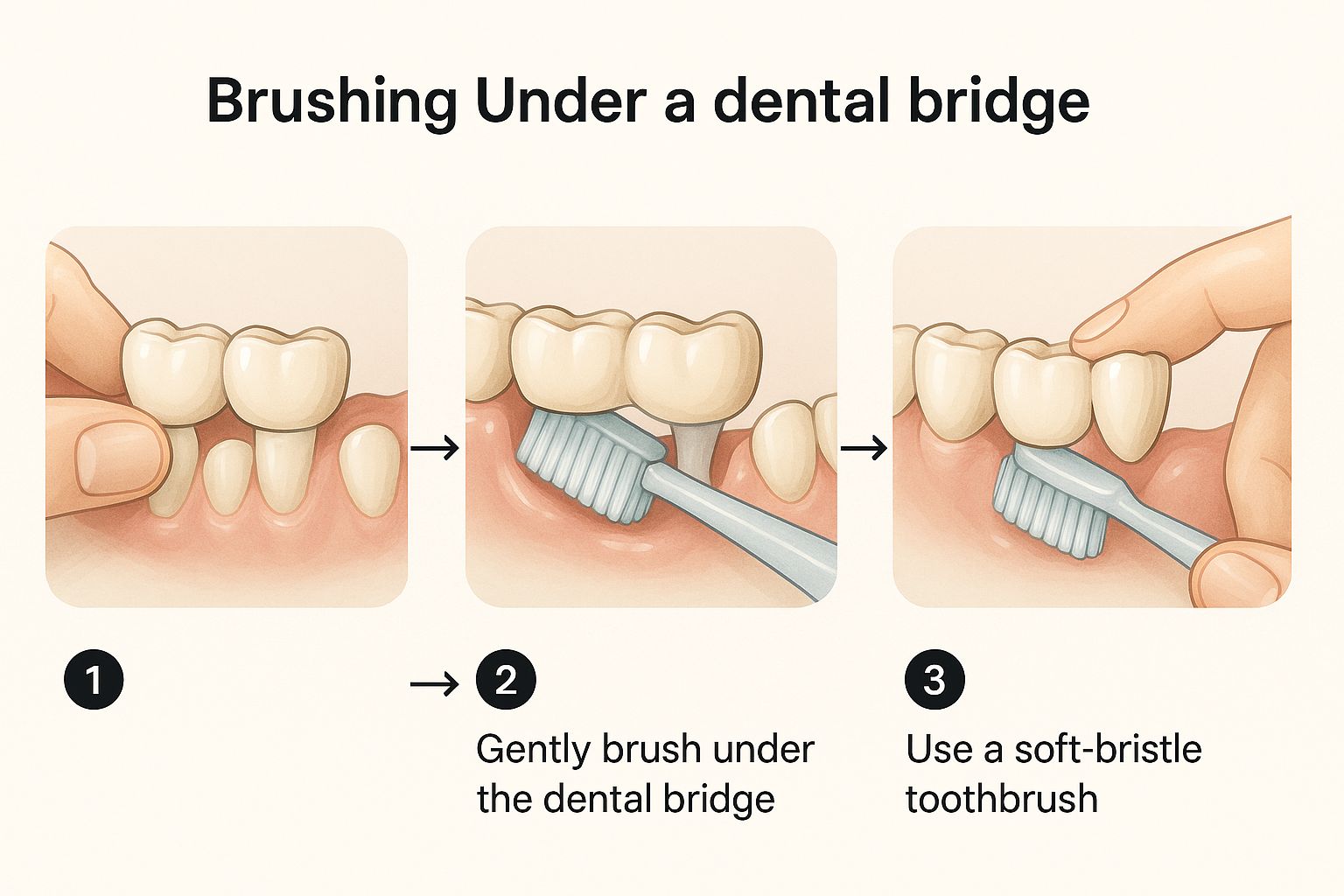
As you can see, the angle and motion are crucial for gently cleaning not just the bridge itself, but the important areas around your natural teeth as well.
Cleaning Under the Pontic
Now for the most important part of your routine: cleaning the space under the pontic (that’s the artificial tooth). This little gap is a magnet for plaque and tiny food particles.
If you ignore it, you’re risking gum inflammation and even decay in the teeth that hold your bridge in place. Since you can't just snap floss between the connected crowns like you normally would, you need a special tool.
A floss threader is a game-changer. It's a simple device—basically a loop of thin, semi-stiff plastic that works like the eye of a needle. Just thread about 18 inches of your favorite floss through the loop, then guide the stiff end under your bridge.
Once it's through, you can gently slide the floss back and forth along the underside of the pontic and against the sides of the supporting teeth. This is the only way to physically break up the sticky plaque biofilm that brushing and rinsing just can't reach.
Expert Tip: Avoid snapping the floss against your gums. A better approach is to curve the floss into a "C" shape around each supporting tooth. Gently move it just below the gumline to clean thoroughly without causing any irritation.
Specialized Tools for a Deeper Clean
To really level up your cleaning game, you might want to bring in a few tools designed specifically for bridges and other dental work. They make the job much easier and more effective.
- Super Floss: This is an all-in-one product that our patients absolutely love. It has a stiff end that makes threading it under the bridge a breeze, a spongy section perfect for wiping the underside of the pontic, and a regular floss section for the rest of your teeth.
- Interdental Brushes: Think of these as tiny pipe cleaners for your teeth. They are fantastic for cleaning the slightly wider spaces around your bridge and between the abutment teeth. They come in different sizes, so you can find the perfect one that fits snugly but comfortably.
Making these steps a non-negotiable part of your daily oral hygiene, especially before bed, is the secret to making your dental bridge a healthy, functional part of your smile for years to come.
Taking Your Clean to the Next Level with a Water Flosser
While manual tools like floss threaders are your non-negotiable first line of defense, adding a water flosser can really elevate your cleaning game. Think of it as a gentle power-washer for your dental bridge, designed to flush out what meticulous flossing might leave behind.
It's a powerful supplement, but remember—it doesn't replace your daily hands-on cleaning routine. A water flosser works by shooting a targeted, pulsating stream of water into those tricky, hard-to-reach areas.
For anyone with a bridge, this is a game-changer for cleaning the space under the pontic and along the gumline of the supporting teeth. The stream is incredibly effective at dislodging stubborn food particles and washing away bacteria before they have a chance to settle in and cause irritation or decay.
Tips for Using a Water Flosser the Right Way
To get the most out of your water flosser without causing any discomfort, a little technique goes a long way. These simple guidelines will help you achieve that ultimate clean feeling while keeping your gums happy and healthy.
- Start Low and Go Slow: If you're new to water flossing, always begin on the lowest pressure setting. You can gradually increase the intensity as your gums get used to the sensation.
- Use Lukewarm Water: Cold water can be a real shock to the system and may trigger sensitivity, especially around the abutment teeth. Using lukewarm water makes the whole experience much more comfortable.
- Get the Angle Right: Aim the tip of the water flosser at a 90-degree angle to your gumline. From there, trace along the margin where the bridge meets the gums, pausing between each tooth.
Don't forget, the abutment teeth supporting your bridge are essentially natural teeth wearing crowns. Their health is absolutely critical. For more specific advice on caring for these crowned anchor teeth, you can explore our detailed guide on dental crown maintenance.
Common Cleaning Mistakes and How to Avoid Them
Even with the best of intentions, it’s easy to make small mistakes in your cleaning routine that can shorten the life of your dental bridge. Here at Trinity Dental Care, we often see the same well-meaning but ultimately damaging habits.
Understanding these common pitfalls is the first step toward protecting your investment and making sure your hard work pays off. One of the most frequent errors we see involves toothpaste choice.
It's tempting to grab a whitening or stain-removing toothpaste, but those often contain abrasive particles. These particles are too harsh for the materials used in your bridge and can create microscopic scratches, making it easier for plaque and stains to build up.
Always stick with a non-abrasive fluoride toothpaste to keep your bridge's surface smooth, clean, and resistant to new stains.
Flossing Too Aggressively
Another area where people go wrong is with their flossing technique. It’s easy to get into the habit of snapping the floss down hard under the bridge.
Unfortunately, that aggressive motion can injure the delicate gum tissue around your bridge. When gums get damaged, they can recede, exposing the edges of the bridge and leaving the supporting teeth vulnerable to decay.
The key is to guide the floss, not force it. Gently work the floss threader under your bridge and use a soft, back-and-forth wiping motion. Think of it more like polishing than aggressive scrubbing.
This gentle approach is so important for protecting the foundation of your bridge. Healthy gums are non-negotiable, especially when you consider that oral diseases like gum disease and tooth decay affect nearly half of the world's population (Source: WHO). We cover this in more detail in our guide on how to prevent gum disease.
Relying Only on a Water Flosser
Water flossers are fantastic tools for flushing out food particles. But they are a supplement, not a replacement, for manual cleaning.
A water flosser’s pulsating stream is great for rinsing away loose debris, but it simply can’t break up the sticky, stubborn film of plaque that latches onto surfaces under and around your bridge.
You must still use a floss threader or Super Floss every single day to physically disrupt that plaque. This combination of manual and supplemental cleaning is the gold standard for keeping a dental bridge healthy.
Partnering With Your Dentist For Long-Term Success
Your daily cleaning routine is the bedrock of a healthy dental bridge, but it’s really only half the battle. To ensure your bridge lasts for its full potential lifespan, professional oversight from your dentist is the other critical piece of the puzzle.
Regular check-ups aren’t just a suggestion; they are an essential part of protecting your investment and your overall oral health.

During your visits to Trinity Dental Care, our amazing hygienists use specialized instruments to gently clear away hardened plaque, or calculus, that your tools at home simply can't touch. This professional cleaning is absolutely vital for keeping your gums and the supporting teeth in top shape.
The Expert Eye Makes The Difference
Even more importantly, these appointments give Dr. Fink a chance to perform a meticulous inspection of your bridgework. She’ll take a close look at a few key things:
- The bridge's integrity: Searching for any tiny signs of wear, hairline cracks, or other damage.
- The health of supporting teeth: Checking the abutment teeth for any hint of decay, especially at the margin where the crown meets your natural tooth.
- The surrounding gums: Looking for the earliest indicators of inflammation or recession that could put the bridge at risk.
For our patients here in Scottsdale, AZ, these routine visits are what turn a 5-year bridge into a 15-year success story. Think of it as a proactive partnership for your oral health.
The demand for high-quality dental work is climbing. The dental crowns and bridges market is projected to grow significantly in the coming years (Source: Precedence Research). This boom just underscores how important it is to combine professional maintenance with your daily care.
Ultimately, these check-ups are your best line of defense. You can learn more about the 5 key reasons to visit the dentist and see exactly how they apply to keeping your dental bridge healthy for years to come.
Answers to Your Top Bridge Care Questions
We get it. After getting a new dental bridge, you're bound to have some practical questions. Over the years, we've heard just about everything from our patients here in Scottsdale. We've put together answers to the most common queries to help you feel confident about looking after your new smile.
How Often Should I Clean Under My Dental Bridge?
You absolutely have to clean under your dental bridge at least once every day. This is a non-negotiable part of your routine to remove plaque and food particles that sneak under the pontic (the artificial tooth).
The best time is before bed to stop bacteria from thriving overnight. This is your best defense against decay, gum irritation, and bad breath.
Can I Use Regular Floss For My Dental Bridge?
On its own, regular floss just won't cut it, as you can't pass it through the connected crowns. To clean that space properly, you'll need a specialized tool to get the floss where it needs to go.
- Floss Threader: This is a simple but brilliant tool—a small, flexible piece of plastic with a loop. You just thread your floss through the loop and guide it under the bridge.
- Super Floss: This is a fantastic all-in-one option. It comes with a stiffened end that you can easily poke under the pontic, making the whole process quicker.
What Happens If I Don't Clean My Dental Bridge Properly?
Skipping this crucial step can set you up for serious dental headaches. When plaque hangs around, it hardens into tartar. This buildup irritates your gums and can lead to decay in the natural teeth that anchor your bridge.
In our experience, decay in these supporting "abutment" teeth is the single biggest reason dental bridges fail. Your daily cleaning habits are truly the #1 factor in determining how long your bridge will last.
Are There Foods I Should Avoid With A Dental Bridge?
Today's dental bridges are impressively strong, but it’s still smart to be a little careful. We usually tell patients to steer clear of extremely hard things like chewing on ice or hard candies.
Super sticky foods, like taffy or caramels, can also be trouble, as they have the potential to pull on and dislodge your bridge. For firmer foods like crisp apples or raw carrots, slice them into smaller, bite-sized pieces first.
Can My Dental Bridge Get Cavities?
The bridge itself is made of artificial materials like porcelain or zirconia, so it cannot get cavities.
However—and this is a big "however"—the natural teeth that hold your bridge in place (the abutments) are still very much at risk of decay. The most vulnerable spot is the margin, which is the tiny line where the edge of your bridge meets your natural tooth. This is why cleaning thoroughly is so critical.
For more answers to common dental questions, explore our complete dental care FAQ page.
Conclusion: Protect Your Smile with Expert Care
Properly cleaning your dental bridge every day is the most important thing you can do to ensure it lasts for many years. By using the right tools—like a floss threader or Super Floss—and maintaining gentle but thorough technique, you protect the gums and supporting teeth that are the foundation of your bridgework.
Your smile is an investment in your health and confidence. If you have any other questions about caring for your dental bridge or you’re due for a professional cleaning, the team at Trinity Dental Care is here to help. Dr. Christine Ann Fink provides compassionate, expert care to patients across Scottsdale, AZ.
Contact our Scottsdale office today to book your appointment.
Schedule Your Appointment Online or call us at (480) 621-6300.