
Direct Answer: Yes. Most smile concerns — staining, chips, gaps, missing teeth, worn enamel — have reliable dental solutions available today. The right treatment depends on what’s bothering you and where your teeth stand health-wise.
A lot of people in North Scottsdale have been carrying the same quiet habit for years — covering their mouth when they laugh, keeping their lips closed in photos, or just hoping nobody notices. If that sounds familiar, you’re not alone, and you’re not out of options.
Smile concerns are one of the most common reasons adults finally walk into a dental office after a long gap. Whether it’s years of staining, a tooth that chipped and never got fixed, or gaps that have been there since your 20s — these are real, treatable problems. Most of them have more than one solution.
This article walks through what actually causes smile dissatisfaction, which treatments address which problems, and what the process looks like from first appointment to final result. No pressure, just honest information so you can figure out what makes sense for you.
Why So Many People Wait — and Why It Gets Harder Over Time
It’s not laziness or not caring. Most people who’ve put off fixing their smile did so for real reasons — dental anxiety, cost concerns, not knowing where to start, or simply not finding a dentist they trusted enough.
But here’s what we see in practice: the longer cosmetic or structural problems go unaddressed, the more involved the solution tends to become. A small chip that could’ve been fixed with bonding five years ago might now need a crown. A staining issue that professional whitening would have handled might now require veneers.
The good news is that even long-standing problems are fixable. Dentistry has come a long way — what used to require multiple visits and weeks of waiting can often be done faster and more comfortably than patients expect. The first step is just getting an honest picture of where things stand.
The Most Common Smile Problems Adults Want to Fix
Most patients who come in after years of embarrassment fall into one or more of these categories. Recognizing yours helps narrow down which treatments are actually relevant.
- Stained or yellowed teeth — from coffee, tea, wine, or just years of use
- Chipped or cracked teeth — often from old injuries or worn enamel
- Gaps between teeth — spacing issues that have been there for decades
- Missing teeth — one or several, sometimes replaced with a bridge that’s aging out
- Worn-down teeth — often from grinding, which is common in the Scottsdale area among professional adults under stress
- Old silver fillings that are visible when you smile or laugh
- Uneven gum lines that make teeth look short or asymmetrical
- Multiple problems at once — which is where a smile makeover approach becomes relevant
Each of these has a primary treatment path and sometimes a backup option depending on the condition of the underlying tooth. If you’ve been wondering whether a crown or a filling is the right call, that’s a great example of a decision that depends on how much healthy tooth structure remains.

What Treatments Are Actually Available for Long-Standing Smile Issues
Let’s get specific. Here’s how the most common smile concerns are actually addressed:
Staining and discoloration: Professional whitening — either in-office or with a custom take-home tray system — is still the most efficient starting point. Over-the-counter strips don’t compare to prescription-strength whitening. If the staining is deep or the enamel is compromised, whitening alone won’t cut it — and veneers may be a better fit.
Chipped, cracked, or broken teeth: Depending on severity, options range from dental bonding (for minor chips) to a full crown for more significant damage. If you’ve had a filling that’s broken down, understanding your options after a broken filling is worth reading before your appointment.
Missing teeth: Single dental implants are the most durable long-term option for one missing tooth. For multiple missing teeth, implant-supported options have improved significantly and are worth understanding before defaulting to a bridge.
Multiple cosmetic concerns: A smile makeover isn’t a single procedure — it’s a coordinated plan combining two or more treatments. Veneers, whitening, crowns, and gum contouring can all be part of one phased approach. Choosing the right veneers provider matters more than most patients realize.
Common Smile Concerns and Their Primary Treatment Options
This gives a quick reference for matching what’s bothering you to what a dentist is likely to recommend at a consultation.
| Smile Concern | Common Treatment | Typical Timeframe |
|---|---|---|
| Yellowing or staining | Professional whitening | 1 office visit or 2–3 weeks take-home |
| Minor chips or worn edges | Dental bonding | 1–2 visits |
| Moderate damage or old fillings | Tooth-colored filling or crown | 1–2 visits |
| Severely damaged tooth | Dental crown | 2 visits over 2–3 weeks |
| One missing tooth | Single dental implant | 3–6 months total |
| Multiple missing teeth | Implant-supported bridge or All-on-4® | 3–6 months |
| Discolored, uneven, or chipped front teeth | Porcelain veneers | 2–3 visits over 2–4 weeks |
| Multiple cosmetic issues | Smile makeover (combined plan) | Varies by scope |
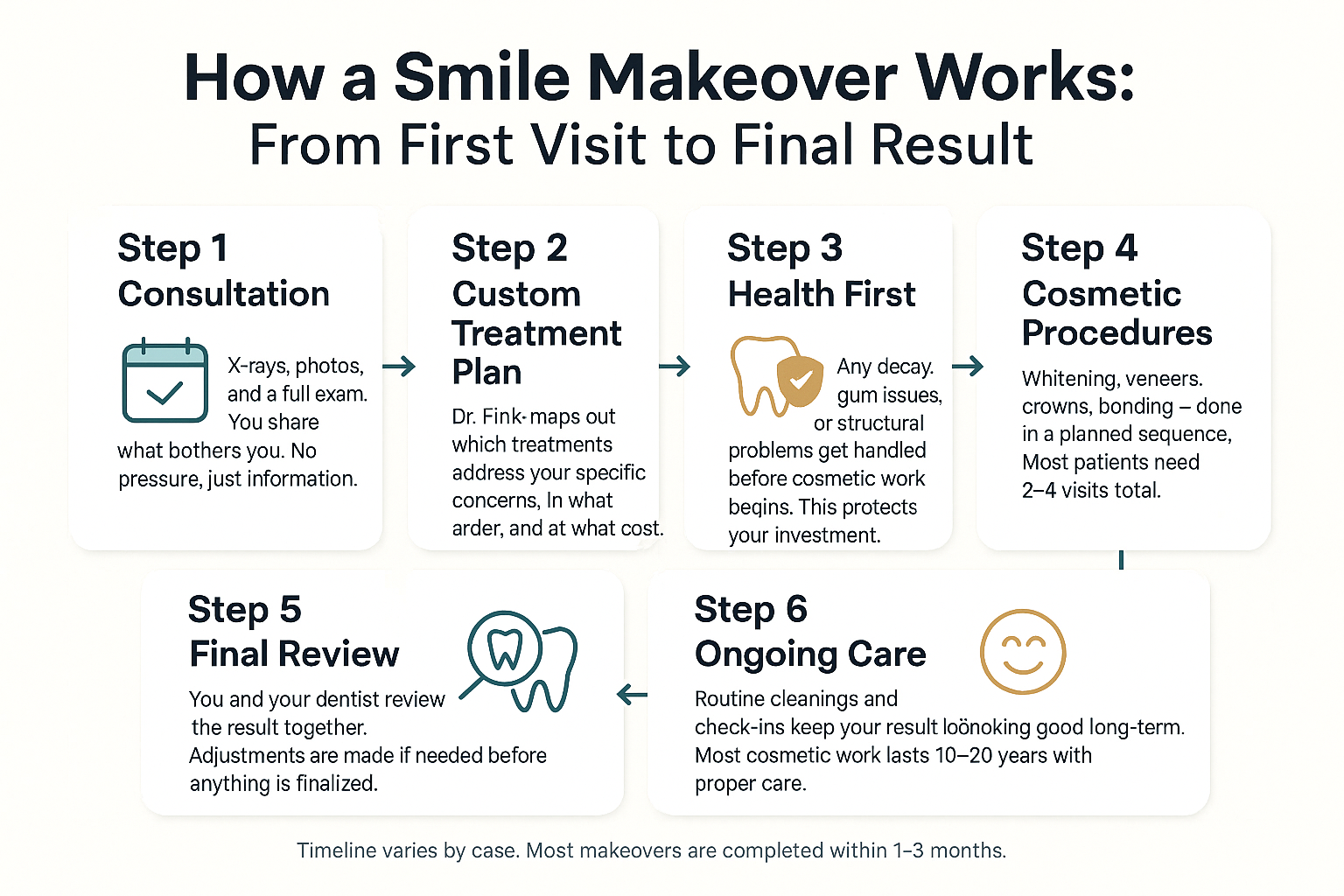
How a Smile Makeover Actually Works: The Process Step by Step
Patients often assume fixing a smile is overwhelming. This breaks it down into what actually happens from start to finish.
What to Expect at Your First Appointment After Years Away
Walking back into a dental office after a long gap can feel intimidating. A good dentist expects this — and the appointment shouldn’t feel like a lecture.
At a first visit, expect a full set of X-rays and photos, an exam of every tooth and your gum tissue, and an honest conversation about what you’re seeing in your own smile. You don’t need to have the right terminology. Just describe what bothers you.
One thing worth knowing: cosmetic work almost always starts with a health check. If there’s gum disease, active decay, or a cracked tooth that’s been ignored, those have to come first. Not because anyone is judging you — but because putting a veneer over an unhealthy tooth is a waste of your money. The health foundation matters.
If you’ve been putting off care because you’re not sure what to expect from a new provider, this guide on what to look for when choosing a dentist covers exactly what to ask and what to watch for.
What Does It Actually Cost to Fix a Smile in North Scottsdale?
Costs vary widely depending on what’s needed — and in the North Scottsdale market, prices reflect the quality of materials and the experience of the provider.
Here are honest ballpark figures for common treatments:
- Professional whitening: $300–$600 for in-office; take-home trays are typically $200–$400
- Dental bonding (per tooth): $150–$400
- Tooth-colored filling: $150–$300 per tooth
- Dental crown: $1,000–$1,800 per tooth depending on material
- Porcelain veneer: $900–$2,000 per tooth
- Single dental implant (full placement): $3,500–$5,500 all-in
- Smile makeover (combined treatments): $3,000–$20,000+ depending on scope
Many patients are surprised to learn that dental insurance covers some of this — particularly the health-related components like crowns and fillings. Cosmetic procedures like veneers and whitening are typically out-of-pocket. Most practices offer financing options for larger treatment plans.
For patients considering implants and wondering whether cost alone should drive the decision, this breakdown of why implants are priced the way they are is worth reading before making any assumptions.
How Long Do Results Actually Last?
This is the question that matters most for anyone investing in their smile after years of putting it off.
The honest answer: it depends on the treatment, the quality of the work, and how well you maintain it afterward.
- Whitening results: 6 months to 2 years depending on diet and habits; touch-up trays extend longevity
- Dental bonding: 3–7 years with normal use; chips and staining can occur over time
- Tooth-colored fillings: 7–10 years on average before replacement is needed
- Dental crowns: 10–20 years with proper care
- Porcelain veneers: 10–20 years for quality porcelain; no different diet restrictions after placement
- Dental implants: 20+ years, often lifetime with routine maintenance — the titanium post fuses to your jawbone permanently
Routine dental cleanings are the single best thing you can do to protect any investment you make in your teeth. Twice-yearly cleanings catch small problems before they undo cosmetic work you’ve paid for.
Frequently Asked Questions About Fixing Your Smile
I’ve been embarrassed about my teeth for over 10 years. Is it too late to fix them?
No — it’s almost never too late. The treatment plan may be more involved than if you’d come in sooner, but long-standing smile problems are addressed every day. The first step is an honest exam to understand what’s actually there.
Do I have to get everything fixed at once, or can I start small?
You can absolutely phase treatment. Many patients start with whitening or a single crown and build from there. A good dentist will prioritize by urgency — health issues first, cosmetic improvements second — and work with your timeline and budget.
Will any of this look fake or obvious?
Modern dental materials are designed to match the natural color, translucency, and texture of real teeth. Tooth-colored crowns, porcelain veneers, and composite bonding all aim for natural-looking results that blend with the surrounding teeth. The goal is that nobody notices — they just think you have a nice smile.
I have dental anxiety. Can I still get cosmetic work done?
Yes. Dental anxiety is extremely common, and a practice that takes it seriously will pace treatment to your comfort level. Being upfront about anxiety at your first visit gives your dentist the chance to adjust their approach before anything starts.
How do I know which treatment is actually right for me?
You won’t know until you get a full exam. What looks like a whitening problem from the outside might actually be a structural issue underneath. A consultation — with X-rays and photos — is the only honest way to map a plan that fits your specific situation.
Ready to Get an Honest Answer About Your Smile?
If you’ve been living with a smile you’re not comfortable with — whether that’s been two years or twenty — Trinity Dental Care welcomes patients who are ready to finally get some real answers. Dr. Christine Fink and our team at 10697 N. Frank Lloyd Wright Blvd. take the time to listen, explain your options clearly, and build a plan that fits your actual life. Call us at 480-621-4040 or visit trinitydentalcares.com to schedule a consultation at your own pace.