
Most people want whiter teeth, but many hesitate, fearing the painful sensitivity that can follow. The key to avoiding this is a customized, dentist-supervised approach.
This method moves beyond aggressive, one-size-fits-all treatments. It involves screening for sensitivity from the start and adjusting the whitening intensity to fit your unique dental needs, ensuring a comfortable experience.
Why Teeth Whitening Can Hurt and How to Avoid It
Many Scottsdale residents dream of a brighter, more confident smile but are held back by horror stories of post-whitening pain. These experiences, often described as sharp “zingers” or a dull ache, are common and prevent people from achieving their aesthetic goals.
The good news is that discomfort isn’t a mandatory part of the process. Pain is usually the result of aggressive, standardized treatments that fail to consider individual dental anatomy. At Trinity Dental Care, Dr. Christine Ann Fink believes a comfortable whitening journey is not only possible but essential.
The Science Behind the Sting
So, what causes that sensitivity? The main active ingredients in professional whitening gels are hydrogen peroxide or carbamide peroxide. These agents penetrate the tooth’s tough outer layer, the enamel, to break down deep-set stains.
Think of your tooth enamel like a screen door with microscopic pores. These pores allow the whitening gel to pass through and reach the discolored molecules underneath. During whitening, these pores temporarily open wider, which is necessary for the treatment to be effective.
However, this also creates a direct pathway to the more sensitive layer beneath the enamel, called dentin. When the nerve inside the tooth is exposed to temperature changes or the whitening agent, it can become irritated, causing pain.
Trinity Dental Care approaches whitening differently by prioritizing a pre-treatment sensitivity screening. Dr. Fink then customizes the intensity, offering gentler options like take-home kits when in-office whitening isn’t the best fit for your long-term comfort.
Why a One-Size-Fits-All Approach Fails
Online forums and Reddit threads are filled with stories from patients describing extreme pain from in-office whitening, which understandably creates distrust in professional care. This almost always happens when a single, high-concentration gel is applied to every patient, regardless of their sensitivity history, enamel thickness, or gum health.
The reality is that no two sets of teeth are the same. Several factors can put you at a higher risk for sensitivity:
- Thin Enamel: Some people are born with thinner enamel, which offers less protection for the nerve.
- Gum Recession: When gums pull back, they expose tooth roots that lack protective enamel and are extremely sensitive.
- Existing Cracks or Cavities: Any breach in the tooth’s surface provides a direct path for irritants to reach the nerve.
This is why unsupervised treatments can be so risky. By choosing a dentist in Scottsdale like Dr. Christine Ann Fink who personalizes your treatment, you ensure these risk factors are identified and managed beforehand. This proactive approach is the cornerstone of a pain-free whitening experience. For more on this, you can learn more about the important reasons to get teeth whitening from a dentist.
Understanding the Science of Tooth Sensitivity
That sharp “zinger” many people feel after whitening isn’t random; it’s a direct response from your tooth’s inner biology. A truly advanced guide to comfortable teeth whitening begins with understanding your unique dental anatomy.
At the heart of tooth sensitivity are microscopic channels called dentinal tubules. Picture them as tiny straws running from the outer enamel to the nerve center of the tooth, known as the pulp. Normally, your enamel and gums shield these tubules and protect the nerve.
But a powerful whitening gel temporarily makes the enamel more porous to break down stains. It can also slightly dehydrate the tooth, pulling fluid from these tubules. This process can open a direct highway for temperature changes and chemical agents to jolt the nerve, resulting in pain.
Identifying Pre-Existing Risk Factors
Not everyone feels the same level of sensitivity because some conditions leave dentinal tubules more exposed from the start. A one-size-fits-all whitening approach ignores these critical risk factors, which is why many patients have a painful experience they swear they will "never do again."
At Trinity Dental Care, Dr. Christine Ann Fink prioritizes a pre-whitening screening to spot these vulnerabilities, which are common among Scottsdale patients.
- Gum Recession: When gums recede, they expose the root surface. This area isn't covered by enamel and is packed with tubules, making it intensely sensitive.
- Thin Enamel: Genetics, age, or acid erosion can lead to thinner enamel, reducing the protective barrier over the sensitive dentin layer.
- Invisible Cracks or Fissures: Microscopic cracks, often invisible to the naked eye, act like open doors for whitening agents to seep in and aggravate the nerve.
For patients in Scottsdale, choosing a whitening dentist shouldn’t feel like a gamble. Look for a provider who prioritizes comfort, transparency, and results that fit your teeth—not a one-size-fits-all solution.
A Proactive Approach to Painless Whitening
Understanding these biological triggers is why the initial consultation at Trinity Dental Care is so thorough. Instead of jumping into treatment, Dr. Fink conducts a detailed evaluation to assess your individual risk for sensitivity. This allows for a completely customized plan that prevents pain rather than just reacting to it.
This patient-first philosophy means recognizing when a powerful in-office treatment might be too aggressive. In those cases, a gentler, professionally supervised take-home kit is often the perfect alternative to achieve stunning results without discomfort. Patients who feel heard and understand their options are far more likely to get a smile they love without regret.
By identifying potential issues before applying whitening gel, Trinity Dental Care builds a strategy designed for your comfort from the start. To dive deeper into the causes of dental discomfort, you can learn more by understanding tooth sensitivity in our detailed guide.
Customized Whitening Protocols for a Painless Smile
The secret to a bright smile without pain is a customized protocol that respects your unique dental anatomy. At Trinity Dental Care, the focus is on intelligent, gentle methods that deliver stunning results without the wincing.
The foundation of a painless experience is getting ahead of the problem. Dr. Christine Ann Fink believes a truly beautiful smile is one you can enjoy comfortably and safely.
This flowchart breaks down how tooth sensitivity happens, from the outer enamel to the nerve.
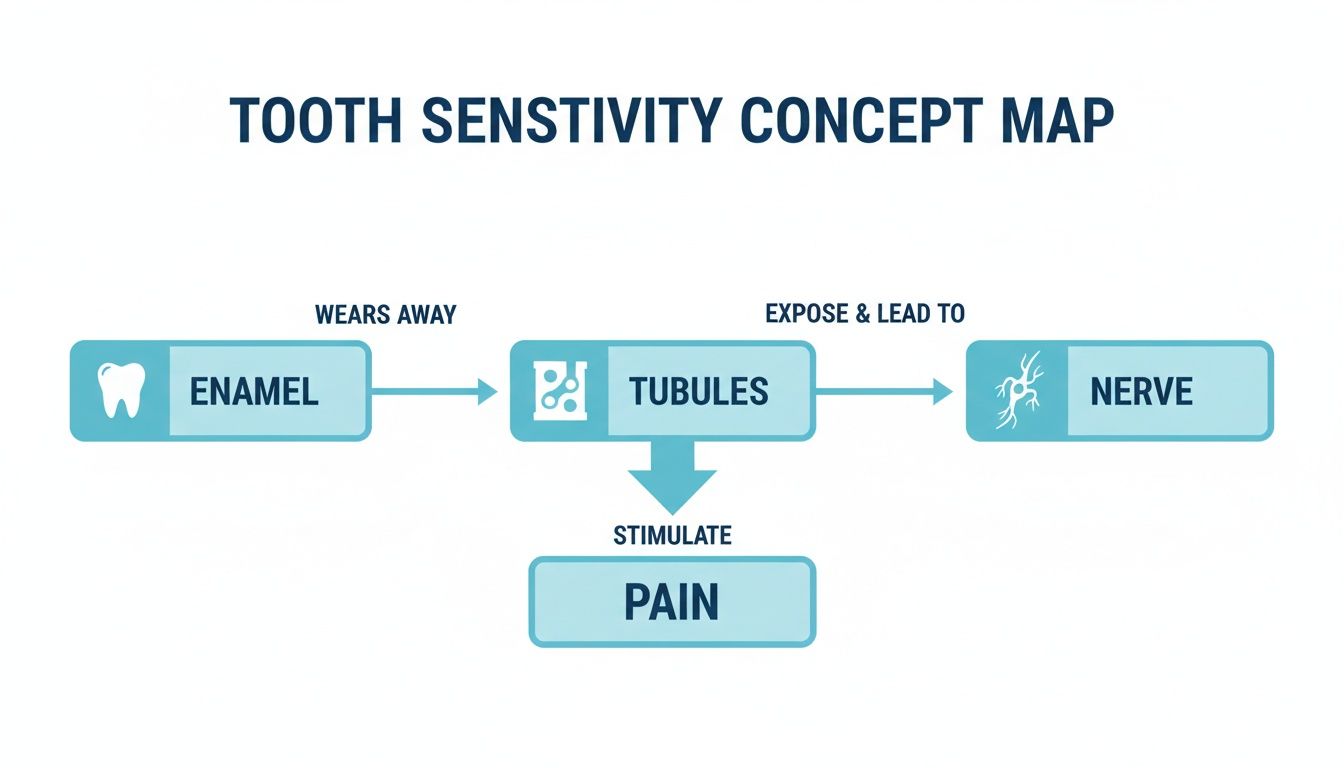
You can see how easily external triggers travel through those tiny tubules to irritate the nerve, which is why a protective, customized game plan is so critical.
The Power of Desensitizing Agents
One of the most effective strategies for preventing whitening pain is using desensitizing agents like potassium nitrate. Think of it as a shield for your dental nerves. When applied before and during treatment, it calms the nerve endings inside the dentinal tubules, making them less reactive.
At Trinity Dental Care, patients often use a prescription-strength potassium nitrate toothpaste for two weeks leading up to their appointment. This simple step "pre-conditions" the teeth, dramatically reducing the odds of sensitivity.
Adjusting Gel Strength and Application Time
Another key part of a custom protocol is dialing in the whitening formula. Whitening gels come in various concentrations of hydrogen peroxide or carbamide peroxide. A higher concentration may deliver faster results but also carries a higher risk of sensitivity.
For Scottsdale patients, Dr. Fink carefully chooses the right gel concentration based on a pre-whitening screening.
- For highly sensitive teeth: A lower-concentration gel may be used over a longer period or in multiple, shorter sessions. This approach achieves the same bright result without overwhelming the nerves.
- For less sensitive teeth: A moderate concentration could be perfect, with application time carefully monitored to prevent irritation.
This is a calculated, clinical decision made to perfectly balance aesthetic goals with comfort.
Why Professional Take-Home Kits Are Often Superior
While in-office "power whitening" gets a lot of hype, it isn't always the best choice for those prone to sensitivity. This is where professionally supervised take-home kits offer a massive advantage.
These are not the same as over-the-counter strips. A professional kit from Trinity Dental Care includes custom-fitted trays made from a precise mold of your teeth. These trays ensure the lower-concentration whitening gel is applied evenly and only to your teeth, preventing leakage onto sensitive gum tissue.
Comparing Whitening Options for Sensitive Teeth
This table breaks down how different whitening methods stack up, highlighting why a professionally supervised approach offers the best balance of results and comfort.
| Whitening Method | Typical Peroxide Level | Sensitivity Risk | Best For |
|---|---|---|---|
| Over-the-Counter Strips | 3-10% | Moderate | Minor, surface-level staining; not ideal for sensitive teeth. |
| In-Office "Power" Whitening | 25-40% | High | Patients needing rapid, dramatic results with no history of sensitivity. |
| Professional Take-Home Kits | 10-22% | Low to Moderate | Gradual, controlled whitening for sensitive teeth; long-lasting results. |
| Customized Low-Dose Protocol | 5-15% | Very Low | Highly sensitive patients who need a gentle, step-by-step whitening plan. |
The gradual whitening over several days allows you to reach your desired shade at your own pace. This slow-and-steady method is exceptionally kind to your nerves and often produces more stable, longer-lasting results.
In-Office Versus Professional Take-Home Kits
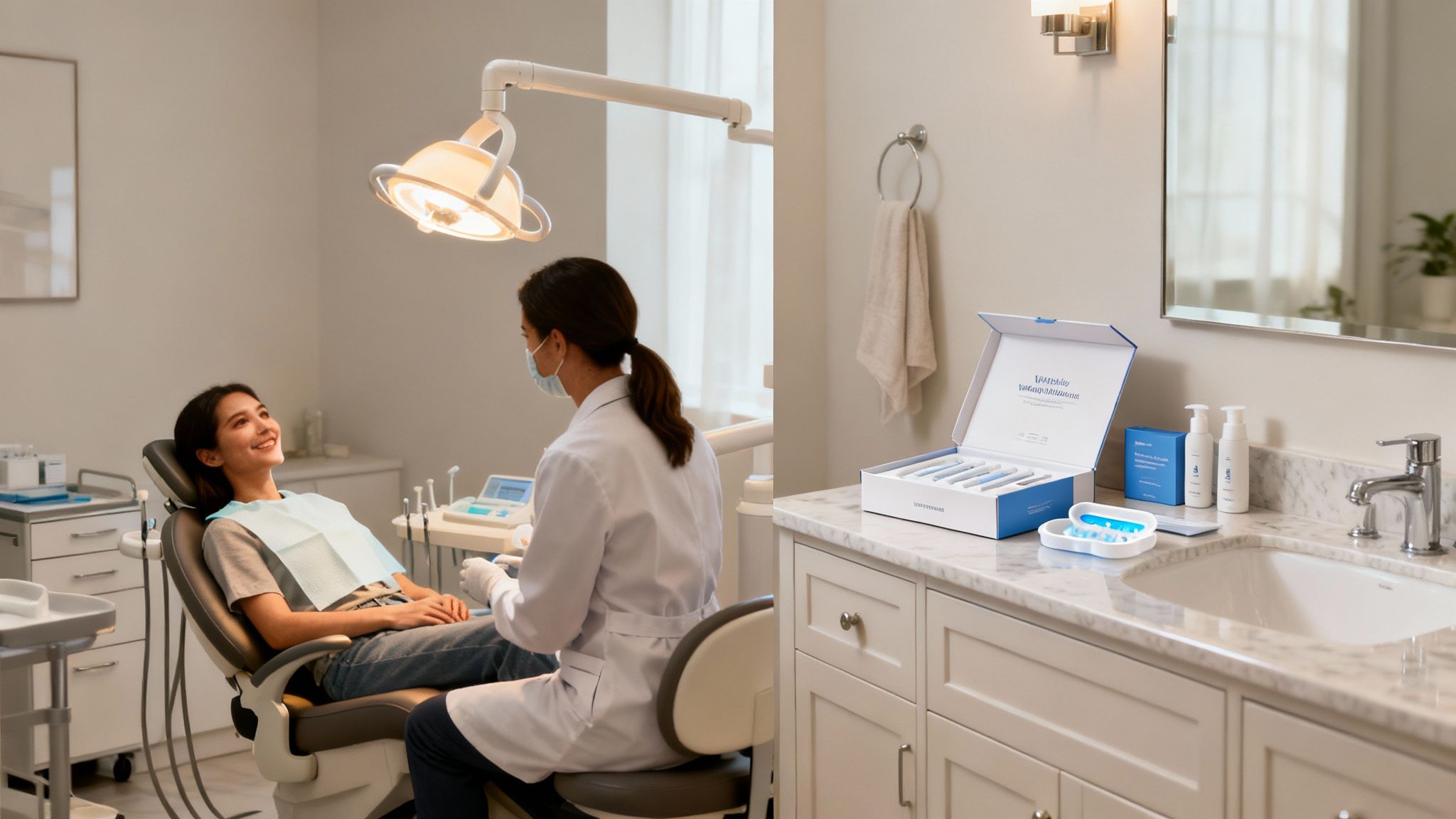
Choosing the right whitening method is the first step toward achieving a bright smile without pain. Beyond the drugstore aisle, the two main professional paths are a powerful in-office session or custom-fitted, take-home trays from your dentist.
It’s a common misconception that one-hour in-office treatment is automatically superior because it's the fastest. A truly advanced guide to teeth whitening that won’t leave you in pain must prioritize comfortable, lasting results over pure speed. At Trinity Dental Care, Dr. Christine Ann Fink helps patients understand that the "best" option is always the one tailored specifically to them.
The Appeal and Risks of In-Office Whitening
In-office whitening, or “power whitening,” is known for delivering significant results in about an hour. It uses a high-concentration peroxide gel activated by a special light to speed up stain lifting. For someone with healthy, non-sensitive teeth needing a quick transformation, it can be a fantastic option.
However, that speed comes with a higher risk of sensitivity. The combination of a potent gel and an activating light can be aggressive, especially for those with thinner enamel. Most online stories about sharp “zingers” and lingering tooth pain come from these powerful, one-size-fits-all sessions.
For patients in Scottsdale, choosing a cosmetic dentist shouldn’t feel like a gamble. Look for a provider like Dr. Fink who prioritizes your comfort and transparency, recommending the treatment that fits your teeth—not a single, universal solution.
The Gentle Power of Professional Take-Home Kits
Professional take-home kits from our Scottsdale practice offer a different path to a brilliant smile—one that puts you in control. These are a world away from the flimsy, ill-fitting strips you find at the pharmacy. Trinity Dental Care starts by taking a precise impression of your teeth to create custom-molded whitening trays.
These trays hold a professional-strength, lower-concentration whitening gel perfectly against your teeth. This provides even coverage while keeping the gel off your sensitive gums—a targeted approach that over-the-counter products can't match.
This gradual method offers several key advantages:
- Dramatically Reduced Sensitivity: Using a gentler gel over several days minimizes the risk of shocking the tooth's nerve.
- You Control the Process: You whiten at your own pace, taking a day off if you feel any sensitivity.
- More Stable, Long-Lasting Results: Slow-and-steady whitening often leads to more durable results.
For many patients, especially those prone to sensitivity, this controlled method is the superior choice. If you're weighing your options, our article exploring whether drugstore teeth whitening products work offers more insight.
How to Prepare for Whitening and Care for Your Smile Afterward
A brilliant, comfortable whitening result is a partnership between you and your dental team. The steps you take before and after your treatment are just as crucial as the session itself. This game plan is designed to prep your teeth, minimize sensitivity, and protect your new smile long after you leave our Scottsdale office.
At Trinity Dental Care, Dr. Christine Ann Fink emphasizes that a comfortable experience starts before you even sit in the dental chair. A little preparation goes a long way.
Pre-Whitening Steps for Optimal Comfort
Taking a few simple actions before your whitening appointment can dramatically reduce the odds of sensitivity.
- Schedule a Professional Cleaning: It’s best to have your teeth professionally cleaned a week or two before whitening. This removes plaque and surface stains, allowing the gel to work more effectively.
- Use a Desensitizing Toothpaste: For about two weeks before your appointment, switch to a toothpaste containing potassium nitrate. This ingredient helps calm the nerves inside your teeth, building resistance to sensitivity.
- Avoid Acidic Foods and Drinks: In the days before your treatment, cut back on acidic items like citrus fruits and sodas, which can temporarily soften your enamel.
Post-Whitening Care: The First 48 Hours
Immediately after whitening, your enamel is more porous and susceptible to new stains. This is why the first 48 hours are critical for locking in your brilliant white shade. This period requires what is often called the "white diet."
The rule is simple: if it can stain a white t-shirt, it can stain your newly whitened teeth. Stick with light-colored foods and drinks to give your enamel time to remineralize.
Avoid dark or intensely colored foods and beverages for 48 hours. This includes coffee, tea, red wine, dark sodas, berries, tomato sauce, and soy sauce.
Instead, choose smile-safe options like skinless chicken, white fish, pasta with white sauce, potatoes, and plain yogurt. You can find more advice in our guide on how to prevent teeth staining.
Your Top Questions About Pain-Free Teeth Whitening
Here are answers to some of the most common questions our Scottsdale patients ask about achieving a bright, comfortable smile. Trinity Dental Care wants you to feel completely confident about your treatment.
Is teeth whitening supposed to be painful?
No, a professional teeth whitening treatment should not be a painful ordeal. While temporary sensitivity is normal for some, sharp "zingers" or intense pain indicates the method is too aggressive for your teeth. At Trinity Dental Care, Dr. Christine Ann Fink prioritizes a comfortable and effective treatment by performing a pre-whitening screening to customize your plan.
What makes professional whitening different from store-bought kits?
The biggest differences are safety, customization, and effectiveness. Over-the-counter kits use a one-size-fits-all approach with generic trays and weaker gels, which can lead to uneven results and gum irritation. Professional whitening at our Scottsdale practice involves a thorough evaluation by Dr. Fink and custom-fitted trays that ensure the professional-strength gel is applied safely and effectively for superior results.
How long do professional whitening results last?
With proper care, the effects of a professional treatment can last one to three years or even longer. To maintain your smile, brush and floss daily, limit staining foods and drinks like coffee and red wine, and keep up with regular cleanings at Trinity Dental Care. Dr. Fink may also recommend a professional touch-up kit for at-home maintenance.
Can I still whiten my teeth if I have crowns or veneers?
This is a very common question. It’s important to know that whitening gels only work on natural tooth enamel; they will not change the color of dental work like crowns, veneers, or fillings. Dr. Fink can create a plan to ensure your final smile looks uniform, which may involve whitening your natural teeth first and then replacing older restorations to match the new shade.
Is teeth whitening safe for my enamel?
Yes, when performed under the supervision of a qualified dental professional, teeth whitening is completely safe for your enamel. The American Dental Association (ADA) has confirmed that the active ingredients used in professional whitening do not damage the tooth's structure. At Trinity Dental Care, Dr. Fink uses proven methods that protect your enamel while delivering beautiful results.
Your Next Steps to a Brighter Smile in Scottsdale
This guide has shown that a bright smile doesn’t have to come with a painful trade-off. A personalized, expert-led approach that puts your health and comfort first is key. At Trinity Dental Care, Dr. Christine Ann Fink is dedicated to providing that level of customized care.
The secret to a brilliant smile you love is a partnership with a dental team that listens. A customized plan prevents pain, protects your enamel, and delivers results that last.
If you’ve been hesitant about whitening due to sensitivity concerns, we invite you to take the next step. Learn more about our philosophy on expert teeth whitening in Scottsdale and see how we prioritize your comfort.
Ready to achieve the brilliant, pain-free smile you’ve always wanted? Contact Trinity Dental Care today to schedule a personalized consultation with Dr. Christine Ann Fink in Scottsdale, AZ. Let us design a whitening plan that’s perfect for you. https://trinitydentalcares.com