
Many patients want to improve their smile but feel stuck between options, especially when one is a quick visual fix and the other feels like a long-term project. The real question is: what’s the smartest long-term solution for your smile?
So, let's answer the big question simply: yes, it is generally a bad idea to get veneers just to avoid braces. This approach masks structural issues that need correction for your long-term oral health. It's a bit like putting fancy siding on a house with a cracked foundation—it looks great, but the underlying problem remains.
Veneers as a Braces Shortcut: What You Need to Know
When you scroll through social media and see incredible smile makeovers, it's easy to think veneers are a magic wand for any dental flaw. They are designed to be a fantastic cosmetic solution for issues like discoloration or small chips.
But veneers don't actually move your teeth. Choosing veneers to cover up alignment issues can lead to bite problems, jaw pain, or worn enamel later on. Orthodontics, on the other hand, corrects the underlying structural issue for a healthy, stable smile.
Veneers are brilliant at fixing things like:
- Deep stains that professional whitening can't lift
- Minor chips or small cracks
- Slight, cosmetic gaps between teeth
- Teeth that are misshapen or uneven in size
Placing a veneer over a significantly crooked tooth just creates an illusion of straightness. The real issue—the misaligned tooth root and an improper bite—is still there, hiding underneath. It's a shortcut that can lead to some serious headaches down the road.
To help clarify the different roles these two treatments play, here's a quick side-by-side comparison.
Veneers vs. Braces: A Quick Comparison
This table breaks down the fundamental differences between veneers and orthodontic treatments like braces or clear aligners. It highlights what each one is designed to do, how it works, and the kind of results you can expect.
| Feature | Dental Veneers | Braces & Orthodontics |
|---|---|---|
| Primary Goal | Cosmetic Enhancement: Changes shape, color, surface. | Structural Correction: Moves teeth and roots. |
| What It Fixes | Chips, stains, minor gaps, misshapen teeth. | Crooked teeth, bite problems, crowding, spacing. |
| Treatment Time | Fast: Usually 2-3 visits over a few weeks. | Long-Term: Typically 12-24 months or more. |
| Process | Enamel is prepped; custom shells are bonded on. | Brackets or aligners apply pressure to move teeth. |
| Lifespan | 10-15 years before needing replacement. | Permanent results with proper retainer use. |
| Underlying Health | Masks issues; doesn't correct the root cause. | Fixes the root cause for better long-term oral health. |
As you can see, they are two completely different tools for two completely different jobs. One is for artistry, the other is for architecture.
Why a Healthy Foundation Matters Most
Think of your smile like a house. Braces or clear aligners are the foundation and framework, making sure every part is straight, strong, and properly aligned. Veneers are the beautiful finishes you add after the structure is sound.
Trying to put those finishes on a crooked frame is a recipe for disaster. At Trinity Dental Care, Dr. Christine Ann Fink operates on a "health-first" philosophy. A truly stunning smile has to be a healthy one, too, which means addressing foundational alignment issues before considering cosmetic enhancements.
Bypassing this critical step can lead to a host of problems:
- Bite Problems: An uneven bite can lead to jaw pain, chronic headaches, and excessive wear on your teeth.
- Damaged Veneers: The unnatural forces from a bad bite can easily chip, crack, or pop off your brand-new veneers.
- Oral Hygiene Challenges: Placing veneers over crooked teeth can create more nooks for plaque to hide, increasing your risk for cavities and gum disease.
Ultimately, the goal is to provide a result that is both beautiful and built to last. Before you make any decisions, it’s vital to figure out if veneers are really the right path for your unique smile. Learn more about whether veneers are right for you in our detailed guide.
The Hidden Risks of Covering Misaligned Teeth with Veneers
It's tempting to think of veneers as a quick fix for crooked teeth—an instant smile makeover without the wait. But this common misstep can cause long-term damage.
When you use veneers instead of orthodontics and alignment is the real issue, you're masking a problem that can quietly wreak havoc on your oral health.
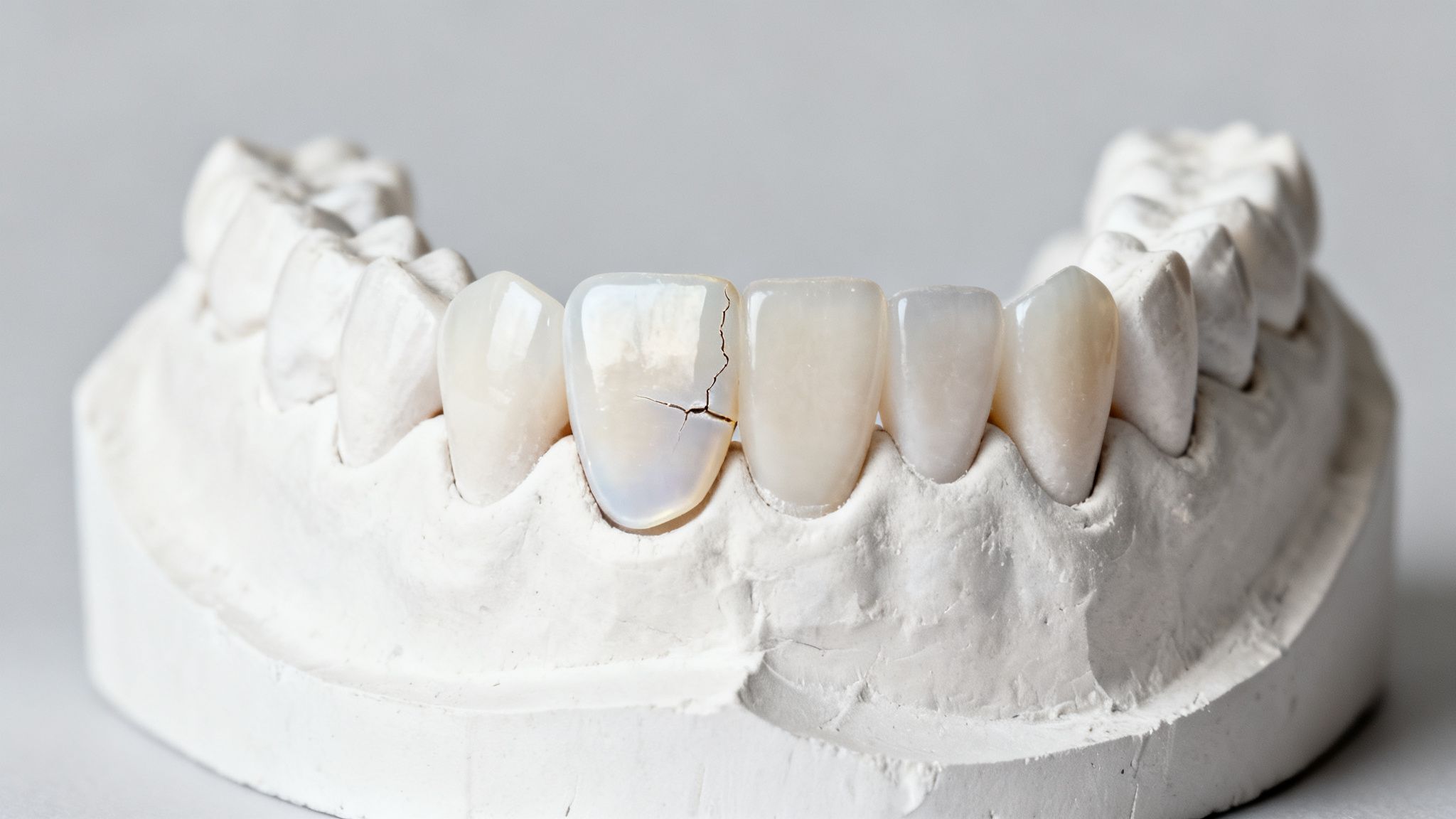
When your bite is off, certain teeth take on more force than they were designed to handle. Placing a veneer on these overloaded teeth doesn't solve the problem; it can actually make things worse.
Bite Problems and Long-Term Pain
An unbalanced bite isn’t just a dental issue; it’s a health concern that can lead to uncomfortable and often chronic conditions. By simply covering up the alignment problem, you open the door to:
- Jaw Pain and TMJ Disorders: The constant, uneven stress on your jaw joint can lead to temporomandibular joint (TMJ) disorders, causing clicking, popping, and a persistent ache.
- Chronic Headaches: Strain in your jaw often radiates outward, triggering frequent tension headaches or even migraines.
- Premature Wear and Tear: Excessive force won't just wear down your natural teeth; it puts your new veneers at high risk of chipping, cracking, or breaking.
The Irreversible Nature of Veneer Preparation
Here’s the most critical thing to understand: getting veneers is a permanent commitment. To ensure the porcelain shell fits perfectly, your dentist must remove a thin layer of your natural tooth enamel.
Once that enamel is shaved down, it's gone for good. This means the change is irreversible. You can explore the specifics of the porcelain veneers process to see exactly what this entails.
Making this permanent change without first fixing the root cause of misalignment is a huge gamble. At Trinity Dental Care, Dr. Christine Ann Fink always takes a "health-first" approach for every patient here in Scottsdale. We focus on building a stable, healthy foundation before we even consider cosmetic enhancements.
Smarter Smile Solutions: The Best of Both Worlds
You don't have to choose between a healthy bite and a radiant smile. The best approach is often a conservative plan that combines the strengths of both orthodontics and cosmetic dentistry.
This "health first, aesthetics second" approach is the cornerstone of responsible cosmetic dentistry at Trinity Dental Care. It’s about building a stable foundation with orthodontics before adding the finishing touches.
Building Your Smile the Right Way
A phased treatment plan ensures any cosmetic work you invest in is built to last. Often, this starts with clear aligners to gently guide your teeth into their ideal positions. Once your alignment is correct, we can move on to cosmetic refinements.
This might include:
- Professional Teeth Whitening: To brighten your newly straightened smile.
- Conservative Dental Bonding: A great way to repair minor chips or reshape a tooth.
- Minimal-Prep Veneers: Used selectively to perfect the final look after the heavy lifting of alignment is already done.
This approach ensures your final result is a lasting investment in your health and confidence. To dive deeper into your options, you can learn more from our guide to adult orthodontic treatments.
As this guide illustrates, veneers are an excellent solution for surface-level issues like discoloration or minor chips once the foundational alignment is correct.
Making Comprehensive Care Accessible
We understand that financial concerns, especially if insurance doesn't help, are often what lead people to consider risky shortcuts. The fear of a high price tag can make a quick fix seem appealing.
That’s why at Trinity Dental Care, we are committed to making comprehensive, health-first care accessible for our Scottsdale patients. Dr. Christine Ann Fink believes everyone deserves a smile that is both healthy and beautiful.
We offer flexible payment plans for Invisalign and phased treatments to fit your goals and budget. Our team will work with you to create a plan that fits your personal goals, ensuring you never have to choose between your health and the smile you’ve always wanted.
Get an Honest Evaluation for Your Smile
Making the decision to transform your smile is a big deal, and the first step should always be getting a full evaluation from a cosmetic dentist who understands both aesthetics and function.
Here at Trinity Dental Care, your consultation with Dr. Christine Fink is an open, educational experience. We want you to feel empowered and confident about the path you choose for your long-term health.
A Partnership in Planning Your Smile
We believe the best treatment plans are the ones we create with you. Dr. Christine Ann Fink will personally walk you through every viable option, transparently explaining the pros, cons, timelines, and costs.
This is your time to ask questions and get a clear, honest roadmap. Our commitment is to provide honest smile makeover consultations that walk you through all your options—not just the most expensive.
We’ll cover everything from Invisalign and phased treatments to porcelain veneers. The goal is to build a personalized plan that you feel excited about—one that lines up with your cosmetic goals, lifestyle, and budget.
FAQs: Veneers vs. Braces
Here are answers to some of the most common questions our patients in Scottsdale ask about veneers and orthodontics.
1. Can I get veneers if my teeth are only a little crooked?
For very minor misalignments, veneers can sometimes be an option, but a full bite evaluation is essential. Dr. Christine Ann Fink will assess your bite to ensure placing veneers won't cause future issues like jaw pain or damage. Often, a short round of clear aligners first is a safer, more stable long-term solution.
2. Which is more expensive, veneers or braces?
The costs can be comparable, but they address different needs. Orthodontics is a structural health treatment, while veneers are a cosmetic enhancement. At Trinity Dental Care, we offer flexible payment plans for both to help fit your treatment into your budget.
3. How long do porcelain veneers last?
With proper care and a well-aligned bite, high-quality porcelain veneers can last 10 to 15 years, sometimes even longer. However, if placed on misaligned teeth, uneven forces can cause them to fail much sooner, leading to a cycle of costly replacements.
4. Is the veneer process painful?
Your comfort is a top priority. A local anesthetic is used to completely numb the area while a thin layer of enamel is prepared, so you shouldn't feel pain during the procedure. Some mild, temporary sensitivity afterward is normal.
5. Do I need metal braces to straighten my teeth first?
Not at all! Modern orthodontics offers discreet solutions like clear aligners. Invisalign is a popular option that is virtually invisible and can effectively straighten your teeth without the look of traditional braces, giving you the best of both worlds.
Scottsdale patients don’t have to choose between beauty and health. Ready to get a personalized plan that’s safe, smart, and stunning? Contact Trinity Dental Care today to schedule an honest smile makeover consultation with Dr. Christine Ann Fink. Learn more about our services.