
That sharp, sudden edge or unexpected jolt of pain in your tooth is more than just an inconvenience—it's a sign that something is wrong. A broken filling in tooth means the primary line of defense protecting your tooth from decay has been breached.
At Trinity Dental Care, we understand that this can be a startling experience. Our team in Scottsdale, led by Dr. Christine Ann Fink, is here to provide the compassionate and expert care you need.
What It Means to Have a Broken Filling
When a filling breaks, it’s no longer sealing the vulnerable, inner parts of your tooth from bacteria, food particles, and pressure. Think of it as a protective shield that has suddenly developed a crack, leaving the sensitive structures underneath exposed.
This can happen for a few common reasons. Maybe you bit down too hard on an ice cube or a nut. Sometimes, it’s the result of long-term pressure from grinding your teeth (a condition known as bruxism), which can cause tiny fractures that eventually lead to failure. Other times, new decay can creep in around the edges of an older filling, weakening its foundation until it loosens or breaks away completely.
To help you figure out if your filling is compromised, here’s a quick guide to the most common symptoms.
Quick Guide to Broken Filling Symptoms
Use this guide to identify the common signs that your dental filling may be compromised, cracked, or completely lost.
| Symptom | What You Might Experience | What It Could Mean |
|---|---|---|
| Sharp Edge or Roughness | Your tongue keeps finding a new, sharp spot on a tooth that wasn't there before. | A piece of the filling or the tooth itself has fractured and broken off. |
| Sudden Sensitivity | An intense, sharp pain when eating or drinking something hot, cold, or sweet. | The protective seal is gone, exposing the sensitive dentin layer underneath. |
| Pain When Chewing | A dull ache or sharp pain that occurs only when you bite down on that specific tooth. | The broken filling is no longer distributing pressure evenly, causing stress on the tooth. |
| Visible Hole or Gap | You can see a dark spot or a noticeable hole where the filling used to be. | The entire filling or a significant portion of it has fallen out completely. |
Recognizing these signs early is crucial. The longer you wait, the greater the risk of more serious issues.
Why You Shouldn't Ignore a Broken Filling
Ignoring these symptoms is a gamble. The exposed part of your tooth is significantly weaker and far more prone to cracking further. For a closer look at what to do for a damaged tooth, you can learn more about how to deal with a chipped or a broken tooth in our related guide.
A broken filling creates a direct pathway for bacteria to invade the inner tooth. This can quickly lead to a new, more aggressive cavity or even a painful infection in the tooth’s nerve.
Given how widespread dental decay is, a broken filling is an incredibly common problem we see. According to the CDC, over 90% of adults aged 20 and over have had at least one cavity (CDC, 2018). All those millions of fillings are under daily stress from chewing and grinding, which increases the odds of them failing over time.
It is absolutely critical to contact a professional like Trinity Dental Care in Scottsdale to get a proper diagnosis. We can help you prevent a simple fix from turning into a complex and costly dental emergency.
What to Do Immediately After a Filling Breaks
That jarring crunch followed by the strange sensation of a piece of something in your mouth—we’ve all been there. The moment you realize a filling has broken, your next few actions are key to protecting the tooth until you can get to a dentist.
First thing’s first: carefully get any loose pieces of the filling out of your mouth. A gentle swish with some plain water can help dislodge any tiny fragments without making things worse.
Once you've cleared out the debris, a warm salt water rinse is a fantastic follow-up. Just mix about half a teaspoon of salt into a glass of warm water and rinse for 30 seconds. This simple step does wonders to cleanse the area, keep bacteria at bay, and soothe any irritated gum tissue.
Managing Discomfort and Protecting the Tooth
A broken filling can definitely come with some pain. To manage any initial aches, you can use over-the-counter pain relievers like ibuprofen or acetaminophen, as long as you can safely take them. Just be sure to follow the directions on the package. A cold compress held against your cheek for 15-minute intervals can also be a big help in reducing any swelling and numbing the area.
It's surprising how everyday activities can lead to a broken filling. This is a common scenario we see all the time with our Scottsdale patients.
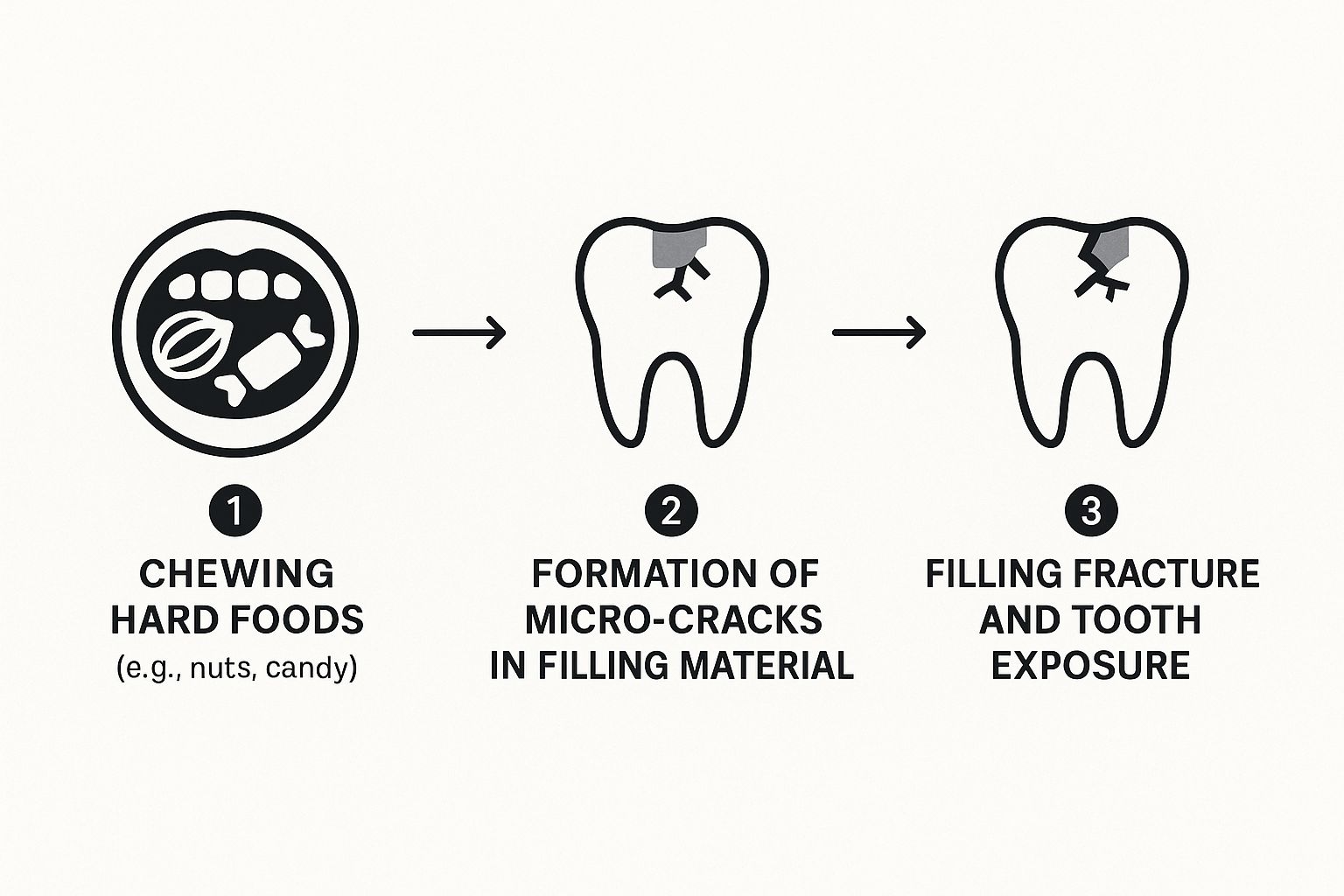
As you can see, something as simple as chewing on hard foods can create micro-cracks that eventually cause a filling to give way, leaving the inner tooth exposed. It’s a stark reminder to be careful with what you eat while the tooth is vulnerable.
To keep from causing more damage or pain, you'll want to be very mindful of your diet. Stick with soft foods for now and steer clear of these troublemakers:
- Hard Foods: Things like nuts, hard candies, and ice are a definite no-go. They can cause the already weakened tooth to crack even more.
- Sticky Foods: Taffy, caramel, and gummy candies can easily pull on what's left of the filling or the tooth structure itself.
- Sugary Foods: Sugar is fuel for the bacteria that cause tooth decay, and they will waste no time attacking the newly exposed parts of your tooth.
- Extreme Temperatures: Try to avoid very hot or cold foods and drinks, as they can trigger some seriously sharp sensitivity in the exposed tooth.
These home-care steps are your immediate game plan, but they aren’t a permanent fix. A broken filling is a dental problem that needs professional attention sooner rather than later. If you’re in the Scottsdale area, Trinity Dental Care provides expert emergency dental care to handle issues just like this, quickly and effectively.
Why Do Dental Fillings Actually Fail?
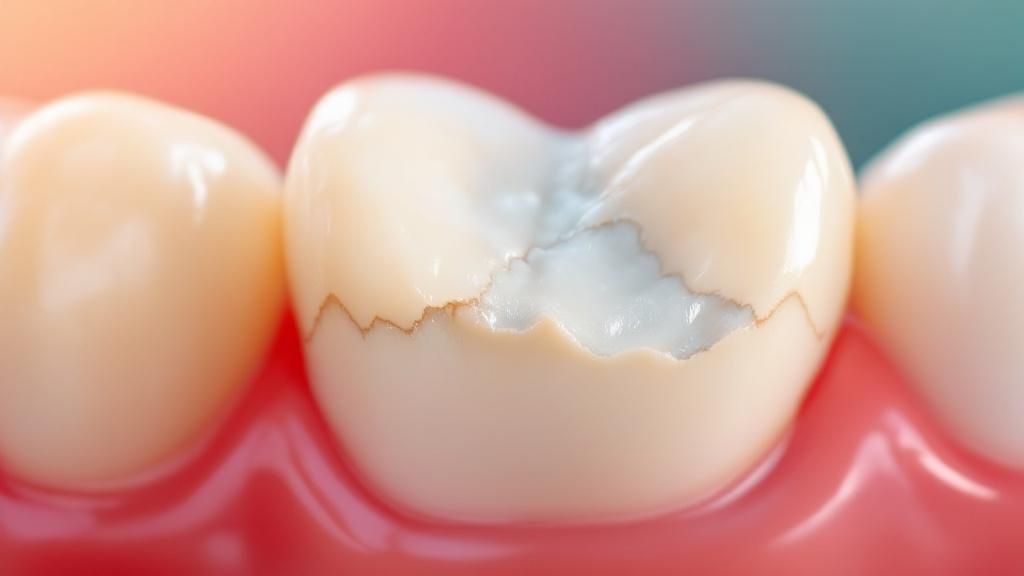
It’s happened to many of us: you're enjoying a meal when you feel that dreaded crunch. A broken filling in tooth can be jarring, but understanding why it happened is the first step in preventing it from happening again. While biting down on something hard is a common trigger, the real reasons are often more complex and build up over time.
Think of it this way: your fillings are incredibly durable, but they live in a harsh environment. They're constantly under immense pressure from chewing and face a relentless onslaught from oral bacteria. After years of this, even the strongest filling can start to show signs of wear.
Do Filling Materials Make a Difference?
Absolutely. The material used for your filling has a major impact on its lifespan. For years, silver-colored amalgam fillings were the go-to choice, but modern dentistry has largely shifted to tooth-colored composite resins, and for good reason.
A large-scale study brought some clarity to this, finding that amalgam restorations had a failure rate of 17.38%, while composite restorations failed at 11.87% over a 10-year period (Moraschini et al., 2024). This data shows that the composite fillings we use today are often a more resilient solution. You can read the full research on filling materials for a deeper dive into these findings.
At Trinity Dental Care, we often recommend composite fillings not just for their strength, but because they chemically bond to the tooth. This process actually helps reinforce the tooth's natural structure. We can walk you through all your dental cavity treatment options to find what works best for you.
How Your Daily Habits Impact Your Fillings
Even a perfectly placed filling can fail if it isn't cared for. From what I’ve seen in my practice, a patient's daily habits are one of the biggest factors in how long their dental work holds up.
A filling doesn't just "break" out of the blue. Failure is usually the end result of long-term, accumulated stress—often from habits you don't even realize you have or from new decay creeping in around the edges.
These are the most common culprits I see behind a broken filling:
- Bruxism (Teeth Grinding): So many people clench or grind their teeth at night without knowing it. This habit puts an incredible amount of force on your fillings, creating tiny micro-fractures that can grow and lead to a break.
- Poor Oral Hygiene: When plaque builds up around the edges of a filling, new decay can start to form underneath. This decay undermines the seal between the filling and the tooth, causing it to loosen and eventually fail.
- High-Sugar or Acidic Diet: Regularly consuming sugary drinks and acidic foods doesn't just cause new cavities. It can also weaken the enamel and the bonding agent holding your filling in place, making it far more likely to fail.
This is why regular check-ups in Scottsdale are so important. During your visits, Dr. Fink can spot the early signs of wear and tear, catch new decay before it becomes a major problem, and help you address habits like bruxism before they lead to a broken filling.
Temporary Fixes to Use Before Your Appointment
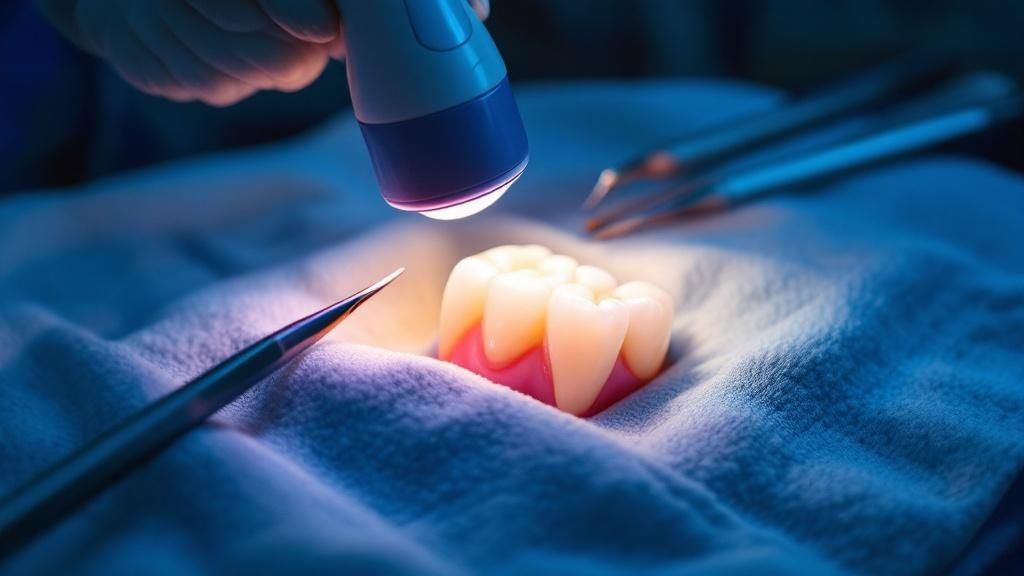
While you're waiting for your appointment at Trinity Dental Care, taking a few temporary measures can make a world of difference for your comfort. When you have a broken filling in tooth, the sensitive inner parts are exposed, but you can shield them with items found at almost any drugstore.
Your best bet is to look for over-the-counter temporary dental cement or even dental wax. These products are specifically designed to be safe for oral use and act as a short-term patch. They create a crucial barrier over the exposed tooth, which helps dial down the sensitivity and keeps annoying food particles from getting trapped inside.
How to Apply a Temporary Filling
Applying these materials the right way is the key to getting that much-needed temporary relief. The most important first step is to always start with a clean, dry tooth—this helps the material stick properly.
- Dental Wax: Just soften a tiny piece of wax between your fingers. Once it's pliable, gently press it over the broken area of the tooth. You can smooth the edges with your finger or tongue so it doesn't feel bulky or sharp.
- Temporary Filling Material: These usually come in a small kit. Make sure to follow the package instructions carefully. Typically, it involves mixing a small amount of the material and then using the little tool provided to place it into the clean, dry cavity.
I can't stress this enough—these fixes are strictly temporary. They are not a substitute for professional dental care and are only meant to help you manage the symptoms until you can get into our Scottsdale office to see Dr. Fink.
These methods are quite effective for managing pain. For some extra ideas, you can explore our guide on 5 natural remedies to relieve toothache pain while you wait for your appointment.
Professional Repair Options in Scottsdale
Once you get settled in our Scottsdale office, the first thing we'll do is take a gentle, thorough look at the problem. Dr. Fink will carefully check the broken filling in tooth and the surrounding area. We’ll often use digital X-rays to see what’s happening beneath the surface—this gives us a crystal-clear picture of the damage and helps us spot any new decay that might be hiding.
This initial check-up is everything. It tells us whether the tooth's structure is still solid or if the break has caused deeper issues, guiding us toward the best, most lasting solution for you.
Choosing the Right Repair
In many cases, a broken filling is a relatively simple fix. If the filling just has a small fracture or came loose without taking a big chunk of your tooth with it, a direct replacement is usually the way to go.
- Replacing the Filling: If the tooth itself is in good shape, Dr. Fink can simply clear out the old material, meticulously clean the area, and place a brand-new, tooth-colored composite filling. It's the most straightforward repair we do for a broken filling.
But sometimes, a broken filling is a red flag for a more serious structural problem. If a large piece of the tooth broke off along with the filling, just putting in a new one won't be enough to prevent it from fracturing again down the road.
A filling is designed to fill a cavity, but a crown's job is to hold a weakened tooth together. When a significant part of the tooth is gone, a crown is essential for providing long-term strength and protection.
In situations where the tooth is more compromised, a dental crown is the ideal solution. Think of a crown as a custom-fitted cap that covers the entire visible part of your tooth, restoring its original shape, size, and strength. You can get a better sense of how these custom restorations work by exploring our dental crown services in Scottsdale.
Occasionally, a break is deep enough to reach the tooth's nerve, which can cause serious pain or lead to an infection. If bacteria have managed to get into the inner pulp, a root canal might be necessary to save the tooth. This involves removing the infected nerve tissue before sealing the tooth and protecting it—usually with a crown. Our ultimate goal is always to save your natural tooth whenever we can.
Frequently Asked Questions About a Broken Filling in Tooth
Finding yourself with a broken filling in your tooth can be a bit jarring, and it naturally brings up a lot of questions. We get it. To help put your mind at ease, we’ve put together answers to the most common questions we hear from our patients here in Scottsdale.
How Urgently Do I Need to See a Dentist?
As soon as you notice a filling is broken, you should call us to schedule an appointment. This is true even if you aren't feeling any pain. A compromised filling leaves your tooth exposed to bacteria, which can quickly lead to new decay or even cracks in the tooth structure.
While it’s usually not a middle-of-the-night emergency, you should aim to be seen within a day or two. Being proactive can be the difference between a simple fix and a more complex, expensive problem down the road, like needing a crown or a root canal.
Can a Broken Filling Be Simply Refilled?
In many situations, yes. If the break is small and there’s no new decay or major damage to the tooth around it, Dr. Fink can often just clean out the area and place a new filling. This is the most common and straightforward fix.
However, if the tooth itself has become weak or a large piece has broken off along with the filling, a new filling might not provide enough support. For these cases, a dental crown is often the better long-term solution to give the tooth the strength and protection it needs.
What Happens If I Swallow a Piece of My Filling?
First, don't panic. Swallowing a small piece of a filling—whether it’s an older amalgam type or a modern composite resin—is generally not a cause for alarm. The fragment is usually tiny and will simply pass through your digestive system without any harm.
Your primary concern shouldn't be the swallowed piece, but the now-unprotected tooth. The best thing to do is gently rinse your mouth with warm water and then focus on contacting our office to get it looked at.
Will My Insurance Cover the Repair?
Most dental insurance plans do offer coverage for repairing or replacing a broken filling. These procedures are almost always considered medically necessary to restore your tooth's health and function.
That said, the exact amount of coverage can differ quite a bit depending on your specific plan. Our team at Trinity Dental Care is fantastic at navigating insurance benefits. We can help you understand what your plan covers and give you a clear cost estimate before we start any treatment.
How Can I Prevent My Other Fillings from Breaking?
Prevention is always the best medicine. The longevity of your fillings has a lot to do with your daily habits and lifestyle.
Here are a few things that can make a huge difference:
- Practice Excellent Oral Hygiene: Brush twice a day, floss daily, and think about using an antiseptic mouthwash. Keeping the areas around your fillings clean and free from plaque is crucial.
- Be Mindful of Your Diet: Try to avoid chewing on extremely hard things like ice, un-popped popcorn kernels, or hard candies. These can create tiny fractures that weaken your fillings over time.
- Address Teeth Grinding (Bruxism): If you think you might be grinding your teeth at night, let's talk about it. A custom-fitted nightguard is a simple device that can save your teeth and dental work from incredible pressure.
- Attend Regular Check-Ups: Those routine visits to our Scottsdale office are your best defense. They allow us to keep an eye on your existing fillings and catch any potential problems while they’re still small and easy to fix.
It's surprising how much lifestyle choices matter. For instance, one study highlighted that men who smoked and were regular alcohol drinkers had the highest failure rates for their fillings in just two years. It’s a powerful reminder that your personal habits are a key part of your dental health. You can discover more insights about filling failure rates and see just how much of a difference these habits can make.
Conclusion: Get Your Broken Filling Fixed Today
A broken filling is more than a minor annoyance; it's a critical warning that your tooth's health is at risk. By acting quickly, you can prevent further damage, avoid pain, and keep a small problem from escalating into a complex dental issue requiring a crown or root canal. Remember to manage the situation at home by keeping the area clean and avoiding hard or sticky foods, but recognize that these are only temporary measures.
The most important step is to seek professional care. At Trinity Dental Care, Dr. Christine Ann Fink and our dedicated team in Scottsdale are ready to provide the expert diagnosis and treatment you need. We will assess the damage, discuss your best options—from a simple replacement filling to a protective crown—and restore your tooth with a gentle, patient-centric approach.
Don't wait for a small issue to become a big one. Contact Trinity Dental Care today to schedule an appointment. Book your visit online or call our Scottsdale office now to get the compassionate care you deserve.